


An article by Richard James Rogers (Award-Winning Author of The Quick Guide to Classroom Management)
Illustrated by Pop Sutthiya Lertyongphati
This post was featured by Twinkl in their Exams and Revision Blog
April is here already and I find myself bewildered.
A year ago I was in China preparing my students for their final ‘A’ – Level and IGCSE exams. Now I’m in Thailand doing the same thing with ‘IB’ and IGCSE students.
Time flies when you’re having fun – and it really has been a lot of fun!


This can be quite a stressful time of the year for many of our learners. They’ll soon have a two-week holiday (some schools in the U.K. have already started theirs). In that holiday they’ll be expected to revise like crazy for their final exams.
A Guidance System
Do our students really know ‘what’ to revise? Do they know ‘how’ to revise?
I’ve realized for a while now that preparing students for exams is really easy – they need to have good resources that teach them the content, and they need to be made aware of the self-discipline tactics that will ensure that they cover everything thoroughly.
Addressing the ‘What’
Rule #1: The syllabus is your ultimate guide
Our students must have access to the syllabus (in fact, they should have been using it throughout the course itself).
If at this stage of the year your students have never seen the syllabus then you ABSOLUTELY MUST share it with them.
If we are going to really prepare our kids for their exams, then they’ve got to know all of the topics that could come up on their papers.


Students should be encouraged to make notes on each part of the syllabus as part of their revision.
Rule #2: Complete lots of past-papers under timed conditions
Some exam boards release their past-papers for free, and some don’t.
For my IGCSE Chemistry students I’ve been quite lucky: Edexcel publish all of their past-papers and mark schemes online for free, and my students have had lots of practice in navigating through their past-paper site.


For the IB Diploma the papers have to be purchased. I’m lucky because my school has purchased lots of IBDP past-papers and mark schemes.
Now I’ve got to be intelligent enough to share all of those papers with my students.
- Use your school’s VLE to upload past-papers (I’m currently using Google Classroom and it’s great for this)
- Print out a past-paper booklet for each of your students to take home over the Easter holidays. You don’t have to mark this – provide the mark schemes so that the students can do self or peer-assessment.
- Provide topic-specific exam papers (with past-paper questions that are focused on individual topics). Save My Exams is a great website that provides lots of these ‘topic tests’ for IGCSE, GCSE, ‘A’ – Level and ‘O’ – Level subjects.

At this stage our students should be completing past-papers under timed conditions too. It’s so easy to run out of time in the real exam. Our students must understand the importance of completing past-papers at home under the same time-constraints as the real exams.
Rule #3: Use more than one textbook for each subject
I didn’t have a lot of money when I was a GCSE student. I couldn’t buy a lot of books, but that didn’t matter. I had some great textbooks that school provided, and my dad bought a great maths book for me, but I needed more.
My local library in Flint, North Wales, was well stocked with great books. My Easter strategy in 1999 was simple: Spend every day at the library using every textbook I could find to revise every topic I could.
Going to the library had two advantages for me:
- I couldn’t fall asleep at home, or have a midday nap, or get distracted by TV. I was in the library and I had to work.
- The library was quiet and very stimulating – there’s something about sitting amongst rows and shelves of books that’s really soothing and conducive to studying


The strategy worked – I came out with A’s and A*s across the board.
But here’s the sad thing – I was the only kid at the library that Easter (that I can recall). No other kids were revising there. I was alone.
It seemed to me like scores of high school students in Flint had really missed out on the opportunity to enrich and discipline their revision that year.
Students need to get the same information from a wide variety of sources. My best students over the past 12 years of my teaching career have been those that used at least three textbooks per subject to study from.


It’s a tactic that works, and our students must know about this!
Rule #4: Use the internet
There are lots of great websites out there that have good quality notes, tests and interactive activities to learn from. My three favorites are:
- BBC Bitesize: Perfect for GCSE and ‘A’ – Levels, but there’s lots of crossover with IBDP and the American SATs too
- S-cool: This site has been going for around 20 years and it’s brilliant. The videos are particularly good.
- UKEdChat: Tons of great resources for revision here. Check it out.
Addressing the ‘How’
Students need to know ‘how’ to revise, as well as what to revise.
We must pass on these fundamental tips to our learners:
- Revise in small sections: 30-40 mins per session with a 5-10 minute break in-between
- Revise for around 7 hours per day: Some may not like this, but the students who’ll get the top grades will be putting in this much time every day. Former headmaster of Harrow School, Barnaby Lenon, made headlines this week by stating that “All topics should be revised at least three times before the exam; studies should start at 9am and finish by 6pm with regular 30-minute breaks and a good night’s sleep at the end. Good exam results are made in the Easter holidays,” (Quote courtesy of The Guardian newspaper). I have to admit that Barnaby’s advice does reflect the truth of the situation – students who want the top grades have to work this hard. It really is that simple (albeit not easy to accept).
- Use a variety of methods to get the information to sink in: Record yourself reciting your revision notes and listen to the audio for an hour in bed before you sleep. Make revision notes. Use concept maps, Complete past-paper questions. Use flashcards.
- Exercise every day: A nice walk in the morning, or a light jog each day, will get the blood flowing and will boost alertness. You’ll also feel good too (because of endorphin release) which will make your revision more productive.
- Revise in groups: Get together with friends for a revision session. BEWARE: Make sure you meet to revise, not to chat and play around.
- Get up early every day – no sleeping in!: It’s up early, exercise, shower, breakfast and start revising. This self-discipline is necessary to achieve top grades.
In the infographc below I’ve summarized the key strategies for revision success. Please feel free to COPY AND SHARE WITH YOUR STUDENTS:


Recommended Further Reading
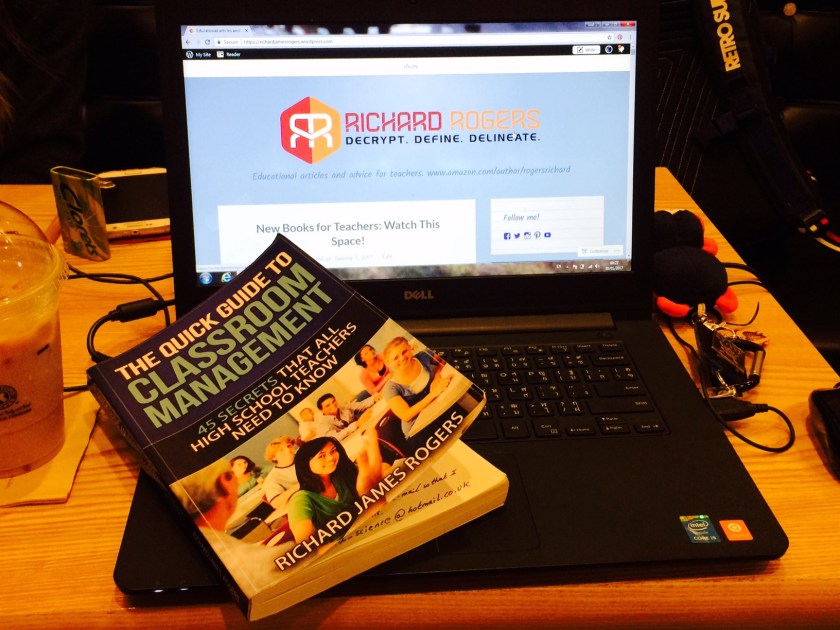
Click on the book image to take you to the Amazon sales page.
The Revision Toolbox by Georgia Heard
Just great, direct, no-nonsense tips on training your students to revise thoroughly and smartly.


How to Pass Exams by Dominic O’Brien
Should be compulsory reading for all students, everywhere. Enough said.


We welcome you to join the Richard Rogers online community. Like our Facebook page and follow us on Twitter for daily updates.

