

Tag: classroom
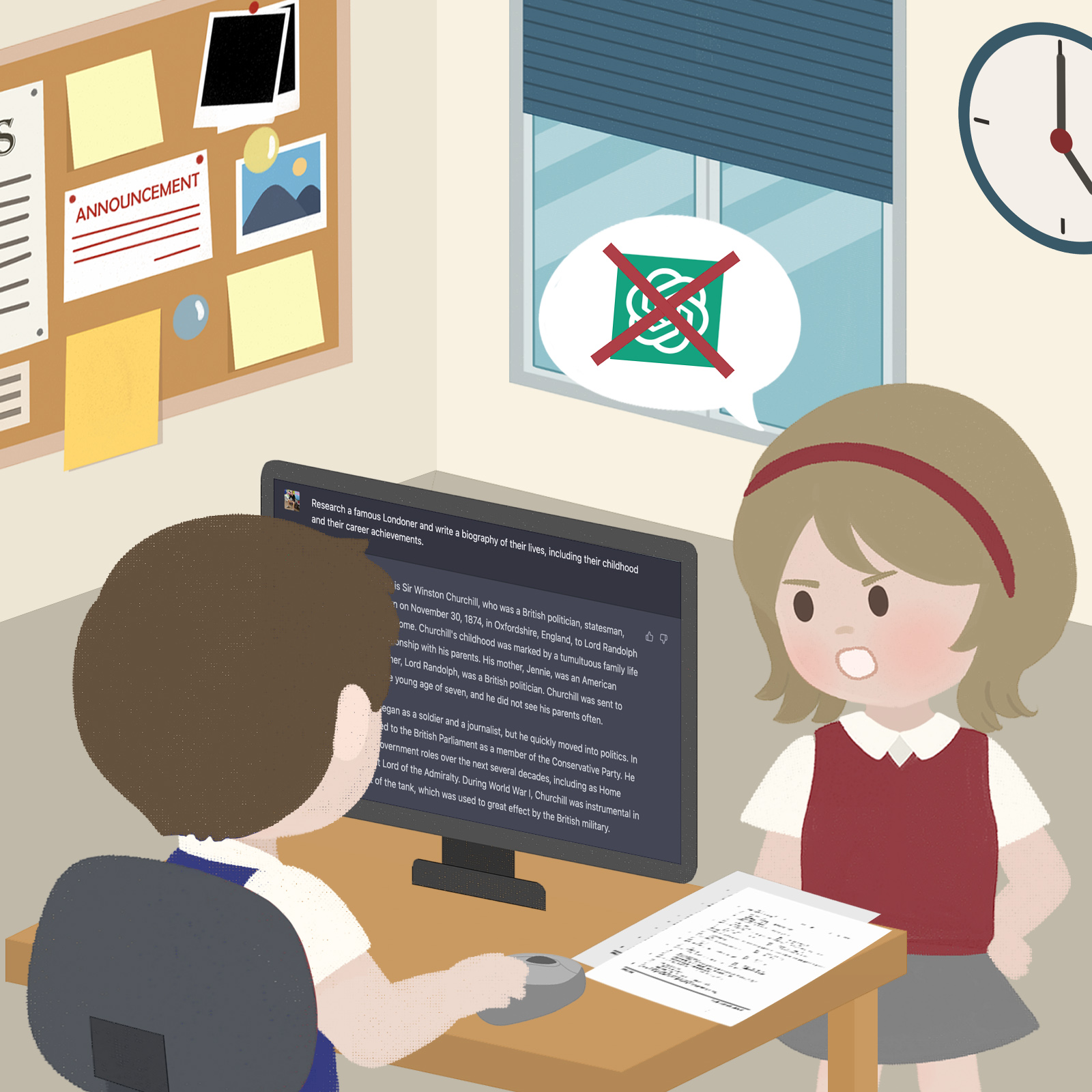
ChatGPT 5 and Beyond: My Top 3 AI Tools for Teachers in 2025 and Beyond
An article by Richard James Rogers, award-winning author of The Quick Guide to Classroom Management: 45 Secrets That All High School Teachers Need to Know and The Power of Praise: Empowering Students Through Positive Feedback
This blog post has been beautifully illustrated by Pop Sutthiya Lertyongphati.
Accompanying podcast episode:
We’ve all been swept up by the hype that has come in the wake of the creation of generative AI (aka GenAI) systems. Back in 2023, when ChatGPT was launched, its capability was limited to text generation, spell checking and rudimentary admin work. Now, however, the form factors of GenAI come in so many shapes and sizes. People are using AI to create slide presentations, images and videos, to record meeting notes, to generate complex documents such as spreadsheets and academic papers and even to act as virtual therapists.
One thing that I would like to assure all of my readers about is that I have NOT used GenAI to write this blog post. I believe that bloggers, journalists, reporters and writers have a duty to be genuine and sincere. That’s why, from now on, you’ll see this badge on my blog posts as a verified symbol of my authenticity:

And, before we begin, I think this juxtaposition is a good place to launch my tips from: AI tools can save us tons and tons of time, but they cannot replicate human authenticity. For someone who’s an award-winning author, like myself, it’s actually very easy to tell when an email, for example, has been created solely from prompt engineering. And that doesn’t necessarily mean that GenAI is a bad thing: it’s just that there are optimal and sub-optimal ways of using such systems, which I will outline today.
DISCLAIMER: Always check your school’s policies and procedures before using any GenAI system. If in doubt, check with your school’s senior leadership team.
My Top Three Use Cases for GenAI Systems as a Teacher
#1. Creating slide presentations: Gamma.app
I recently discovered this system when preparing to deliver one of my corporate training workshops. Here’s what I love about it:
- You can generate very high quality slides from simple prompts, in a matter of seconds. It’s very good for quick slide preparation (even quicker than sourcing slides from places like the TES, for example).
- The content produced is really, really good!
- Slides come with AI generated images (which are brilliant), which saves you the hassle of having to include citations/captions when attributing images to their sources.
Things to consider:
- The text produced on the slides can be quite small, in parts, so you may have to change font sizes afterwards.
- A free trial only gives you so many generations, and the slides come with the Gamma logo on them. However, the logo is removed if you pay for the full subscription, which is only US $8 per month (billed annually at US $96). This plan gives you unlimited AI generation for slide decks up to 20 slides per time (which fulfills most of my needs as a teacher).
Here’s an example of a slide that Gamma created for me recently:

Overall, Gamma is an excellent system and I recommend teachers everywhere to give it a go. Do the free trial and see if it is the right app for you. I personally signed up for the Plus plan, as I can see Gamma being an excellent assistant for a lot of the presentations I deliver.
#2. Recording meeting notes: Otter.ai
This is probably the app that will make you gaze in wonder the most when you first try it – at least that’s what happened to me! Gone are the days when you need to hurriedly write down everything you could manage to hear in a meeting, and then figure what to do (and by when) once the meeting was over. Otter does all of that for you.
By listening to the meeting conversation, Otter can identify speakers and transcribe the meeting as it happens, in real-time. It’ll even provide a summary of what was said at the end, along with a list of key action items (you’ll be amazed at how much it picks up, and how much you missed, when you see it!). The action items even come with check boxes for you to tick off when they’re done!
Like Gamma, Otter allows you a limited free trial (300 monthly minutes of meetings). For the Pro version, which gives you 1200 transcription minutes per month (with a maximum of 90 minutes per meeting), the price is US $8.33 per month (billed annually as US $99.99).
I’ve not (yet) gone for the pro version of Otter, but it is something I’m considering. One thing I hate about meetings is the inability to be fully present as I feel the need to constantly make written notes. With Otter, I can see myself relaxing and being fully attentive whilst the system transcribes everything for me.
#3. Your Overall Personal Assistant: ChatGPT 5 (and further iterations)
GPT 5 has been hailed as a “PhD Level” assistant by its creators, Open AI. Interestingly, as if by a weird mixing of Murphy’s Law with a slap-in-the-face, I made a video all about the three apps I’ve mentioned today on August 7th, which you will see below. In that video, I mentioned ChatGPT 4 as one of my favourites. Later that day, I found out that ChatGPT 5 had just been released (that very same day!). Talk about a coincidence!
I’ve only had two days to test ChatGPT 5 and, to be honest, I’ve not seen much of a difference (yet) between it and ChatGPT 4. However, if it really is a better version of GPT 4, then it is destined to be absolutely awesome!
ChatGPT is my go-to app for a variety of generative needs. Here’s what teachers all around the world have told me about how they use ChatGPT:
- A personal therapist: ChatGPT is capable of participating in complex conversations, which makes it ideal for therapy. It offers non-biased, factual advice that can really make people feel reassured. I recently went through a mini-crisis in my life, which is very personal to me, and I found ChatGPT to be an amazing ‘friend’. It analysed my situation fully, and in a balanced way, and made me feel a lot better. It also gave me great advice. Please be aware, however, that some researchers do have legitimate concerns about using AI systems as personal therapists, so definitely consider this before using ChatGPT in this way.
- Creating student report cards: ChatGPT can create report cards in a matter of seconds, which you can easily copy and paste into your school’s system. As mentioned in the disclaimer at the top of this blog post: please CHECK WITH YOUR SCHOOL FIRST before using GenAI in this way. If you get the green light from SLT, then remember to be a good ‘prompt engineer’: you may need to iterate outputs as they are generated. Don’t forget to specify the genders of the students you are reporting on, and provide the system with enough information to create accurate report cards. ALWAYS double-check for accuracy.
- Other generative needs: ChatGPT can create pretty much anything that you ask it too: images, Excel files, slides, and so on. However, the quality of these outputs can vary. I recommend using specialised apps (such as Gamma for slides, Otter for meetings, etc.) if you have special, and regular, use cases.
The dreaded em dash: a penultimate thought
One dead giveaway of GenAI content is the dreaded em dash, which looks like this: (—). It’s basically a very long hyphen, which is very, very rarely used in everyday situations. Even as an award-winning author, I never use em dashes in my books (unless my proofreader inserts them). There isn’t even an em dash key on standard computer keyboards. Instead, it is accessed through alt codes or special inputs. If you want your GenAI content to look more genuine, then I recommend specifying in your prompts that em dashes should not be used, or tell the system to remove em dashes during the iteration process.
My thoughts on the current stigma surrounding GenAI usage in schools
Unfortunately, whilst the corporate sector is scrambling to create smart workflows using GenAI systems, schools are woefully lagging far behind. In the teaching profession generally, the use of AI systems for the reasons I have specified today is still frowned upon. Even sourcing slides that other people have made is looked upon unfavorably by some school leaders. This, sadly, has caused a lot of teachers to go ‘underground’ and use GenAI covertly.
Things will have to change soon, however. I have been doing a lot of courses in AI this year (check out my LinkedIn profile to see my certs) and I can tell you sincerely: it’s FRIGHTENING how advanced GenAI has already become. These systems are already breathtakingly good, and they’re only going to get better. Sooner or later, the stigma surrounding teachers usage of GenAI in schools will have to dissolve: it’s the only way that schools are going to be able to stay relevant.


Does the Gender Gap in Education Really Exist?
An article by Richard James Rogers, award-winning author of The Quick Guide to Classroom Management: 45 Secrets That All High School Teachers Need to Know and The Power of Praise: Empowering Students Through Positive Feedback
This blog post has been beautifully illustrated by Pop Sutthiya Lertyongphati.
Accompanying podcast episode:
As a teacher who’s worked with students across a range of schools and contexts, I often hear colleagues say, “The gender gap? Isn’t that old news?” At first glance, that might seem fair. After all, in many parts of the world, girls are now outperforming boys academically. But when you take a closer look, a much more complex picture emerges.
A gender gap in education does, actually, exist. However, it is not a simple case of one gender consistently falling behind. Instead, it reflects a range of disparities that shift depending on region, subject, and socioeconomic status. Over the past few years, researchers have taken a fresh look at how gender intersects with learning. The findings are as relevant as ever for us in the classroom, and in this blog post I’d like to take a deep dive into what the latest research tells us.
Girls are Leading in Academic Performance, But at What Cost?
Recent international data shows that girls continue to outperform boys in reading, writing, and overall academic attainment in many high-income countries (OECD, 2022). The Programme for International Student Assessment (PISA) results indicate that girls significantly outperform boys in reading across almost all participating countries, and the gap is getting wider.
However, this success often comes with a price. Girls report higher levels of school-related stress and anxiety, particularly around exams and future expectations (UNESCO, 2023). A global study by the World Health Organization found that adolescent girls are much more likely than boys to experience internalising mental health issues such as anxiety and depression, which can be exacerbated by academic pressure (WHO, 2021).
Boys and Disengagement: A Persistent Problem
On the other hand, boys are consistently more likely to struggle with engagement and behaviour in the classroom. Data from the UK’s Department for Education (2021) shows that boys are overrepresented in exclusion rates and more likely to underachieve in language-based subjects. In many classrooms I’ve observed, boys are often the ones more likely to act out, resist extended writing tasks, or show reluctance to participate in group discussions. This pattern has shown itself throughout my entire teaching career, which now amounts to almost twenty years of full-time practice.

The pandemic appears to have made this worse, however. Research from McKinsey & Company (2021) indicates that male students in the United States experienced greater learning loss in reading than female students during school closures. That is a trend echoed in other countries, particularly among lower-income and marginalised groups.
The STEM Gender Divide Persists
Despite progress, the gender gap in STEM (science, technology, engineering and mathematics) remains a global challenge. While girls now often match or even outperform boys in school-based STEM assessments, they remain underrepresented in STEM degrees and careers (UNESCO, 2021). The issue is not about ability. It is about confidence, self-concept and (dare I say it) personal choice.
A recent report by the European Institute for Gender Equality (2022) revealed that girls are less likely to see themselves as good at maths, even when they perform at the same level as boys. This lack of confidence discourages them from pursuing further studies in technical fields. As teachers, we need to be aware of the subtle messages we send that may reinforce these patterns.

I think this is an apt moment for me to suggest some further reading that may be of use to anyone who wants to empower their students and build their confidence:
- Check out the power of Subtle Reinforcement, a concept I formalized and outlined back in 2018, which is a very impactful way to build character and self-belief in our students over time.
- As teachers we tend to praise our students a lot, but praise is something that has to be deployed carefully in order for it to be effective. Read my blog post on the Four Rules of Praise to find out how you can give positive feedback that truly inspires, empowers and builds your students up.

All of our students deserve to be recognised for their efforts and have their work acknowledged, regardless of their gender. However, I think it’s important to bear in mind the findings of European Institute for Gender Equality cited above and remember that many of the girls we teach may have self-confidence issues, and we should aim to build them up, encourage them, empower them and refer them to other professionals if the need arises (e.g. school counsellors).
Mental Health and Gendered Experiences in School
Gender gaps in education are not only about achievement. They are also about well-being. A recent OECD study (2023) found that girls are more likely to report anxiety about schoolwork and a fear of failure, while boys are more likely to report boredom and a lack of connection with school.
This suggests that educational environments may not be equally supportive for all students. Girls may feel pressure to excel, leading to perfectionism and anxiety. Boys may feel alienated or disengaged, leading to underperformance. Both groups need support, but in different ways.
So What Can We Do?
As teachers, we are in a unique position to break cycles and challenge stereotypes. Here are some simple strategies I’ve used that can make a difference:
- Model gender-neutral attitudes in classroom discussions. Avoid statements that imply certain subjects are more “for boys” or “for girls.” Everyone brings skills and abilities to the table, and we should acknowledge all of our students’ hopes, dreams and career aspirations.
- Provide diverse role models in your curriculum. Highlight both male and female scientists, writers, leaders and thinkers. As a mathematics and science teacher, I have sometimes found it more challenging to find female examples of experts in these fields than male ones, but that has not deterred me from trying. I’ve certainly found that girls tend to connect more with the content when they can see that other females have accomplished greatness in the subject. Let’s keep our role models that we cite and reference varied!
- Encourage all students to take risks, ask questions, and reflect on their learning. Confidence-building matters just as much as content. The classroom should be a space where questions, inquiry and problem-solving are welcomed. This, after all, promotes deep-learning (as opposed to surface learning) and keeps things inclusive.
- Track participation patterns. Who is speaking the most? Who is holding back? Use this data to plan for more inclusive engagement. Make a mental note (or maybe a written one) of who your ‘shy’ students are and utilize techniques to reach them. Read my blog post on Five Strategies for Engaging Quiet, Shy and Withdrawn Students for specific advice.

Final Thoughts
So, does the gender gap in education really exist? Yes. But it is not always where we expect to find it. Girls may be topping the leaderboards academically, but they are also more likely to suffer from stress and pressure. Boys may seem carefree, but they are falling behind in literacy and disengaging from school.
As educators, our job is to stay curious and informed. Gender equity is not just about access anymore. It is about ensuring that every student feels safe, empowered, and supported to succeed. The more we understand the complex realities behind the data, the more we can make a meaningful difference in our classrooms.
Let’s keep listening, adapting, championing every learner, regardless of gender.
Bibliography
Department for Education (2021) Permanent and Fixed Period Exclusions in England: 2019 to 2020. Available at: https://www.gov.uk/government/statistics/permanent-and-fixed-period-exclusions-in-england-2019-to-2020
European Institute for Gender Equality (2022) Gender Equality Index 2022: The COVID-19 Pandemic and Care. Available at: https://eige.europa.eu/publications/gender-equality-index-2022
McKinsey & Company (2021) COVID-19 and Education: The Lingering Effects of Unfinished Learning. Available at: https://www.mckinsey.com/industries/education/our-insights/covid-19-and-education-the-lingering-effects-of-unfinished-learning
OECD (2022) PISA 2018 Results: Are Students Ready to Thrive in an Interconnected World?. Paris: OECD Publishing. Available at: https://www.oecd.org/pisa/publications/
OECD (2023) Education at a Glance 2023: OECD Indicators. Paris: OECD Publishing. Available at: https://doi.org/10.1787/eag-2023-en
UNESCO (2021) To Be Smart, the Digital Revolution Will Need to Be Inclusive. Paris: UNESCO. Available at: https://unesdoc.unesco.org/ark:/48223/pf0000377193
UNESCO (2023) Global Education Monitoring Report 2023: Technology in Education. Paris: UNESCO. Available at: https://www.unesco.org/gem-report/en/2023-technology
World Health Organization (2021) Adolescent Mental Health. Available at: https://www.who.int/news-room/fact-sheets/detail/adolescent-mental-health


The Global Teacher Shortage: Causes, Consequences, and Solutions
An article by Richard James Rogers (Award-Winning Author of The Quick Guide to Classroom Management and The Power of Praise: Empowering Students Through Positive Feedback). This blog post is illustrated by Pop Sutthiya Lertyongphati.
Don’t forget to check out the full bibliography and recommended reading list at the end of this blog post.
The world is grappling with a significant teacher shortage crisis. According to UNESCO, an additional 44 million teachers are needed by 2030 to achieve universal primary and secondary education (UNESCO, 2024). This shortage is not just a statistic; it has profound implications for the quality of education and the future of societies worldwide.
A simple glance through teacher forums, such the incredibly popular International Schools Review, reveals a dark abyss that’s peppered with bleak testimonials:
“I believe that many of my colleagues feel unheard and mistreated – this has been shown time and again in our staff surveys. Of course, someone in the inner sanctum would not be subject to the toxic, exclusionary, bullying behaviour meted out by SLT; it does not mean it does not exist. Some colleagues are leaving this academic year due to feeling disenfranchised.“
– A teacher at a school in Singapore, May 2025
“The school is working to improve vertical curriculum alignment, but since the school has been in operation for many years, it is surprising that the curriculum is such a mess, at least in the department I taught in. I think that will get better in the next few years though. If you order your materials the year before, you can get things, but don’t expect to have them at the beginning of the school year. If you need classroom supplies like pencils, markers, erasers, etc, good luck.”
– A teacher at a school in Brazil, May 2025
“Walking through the corridors is akin to walking through a zoo. Children scream, shout and run about with no regard for safety. No teacher dares make an attempt to challenge this behaviour for various reasons. Two of which are fear of the parents and lack of support from the principal.”
– A teacher at a school in Kazakhstan, May 2025

These reviews, and others like them, offer some insight into the world of teaching at an international level, and go some way to explaining why so many teachers are quitting the profession. In today’s blog post, I aim to describe the key factors that are driving this exodus, and describe some much needed advice for all stakeholders who want to retain their brightest and best teachers for years to come.
Understanding the Crisis
Several factors are contributing to the current global teacher shortage:
- High Attrition Rates: Many teachers are leaving the profession due to burnout, low salaries, and lack of support. In the United States, for example, 51,000 teachers quit their jobs in 2023 alone (Devlin Peck, 2025).
- Uneven Distribution: Rural and underserved areas often struggle more with teacher shortages, exacerbating educational inequalities (UNESCO, 2024).
- Aging Workforce: A significant portion of the teaching workforce is nearing retirement, and there aren’t enough new teachers to replace them (Devlin Peck, 2025).
Impacts on Education
When there aren’t enough teachers in schools, this leads to:
- Larger Class Sizes: Overcrowded classrooms make it challenging to provide individual attention to students (UNESCO, 2024).
- Reduced Educational Quality: Unqualified or overburdened teachers may not deliver the curriculum effectively, impacting student learning outcomes (Education Week, 2025).
- Increased Inequality: Disadvantaged communities suffer the most, widening the education gap between different socioeconomic groups (UNESCO, 2024).

Strategies for Addressing the Shortage
To mitigate the teacher shortage crisis, stakeholders can consider the following approaches:
#1: Enhancing Teacher Training and Support
- Mentorship Programs: Implementing structured mentorship can help new teachers acclimate and reduce early-career attrition (Frontline Education, 2025).
- Professional Development: Ongoing training opportunities keep teachers engaged and improve teaching quality (Education Week, 2025). One of my favourite platforms for this is the excellent Great Teaching Toolkit. My Blog Index for Teachers is also a very popular for those seeking free, yet high-quality, CPD material.
#2: Improving Compensation and Working Conditions
- Competitive Salaries: Offering salaries that reflect the importance of the teaching profession can attract and retain talent (Devlin Peck, 2025). If pull factors, such as decent pay, are not present to begin with then many fresh graduates are simply not going to choose teaching as a profession.
- Work-Life Balance: Flexible working arrangements and manageable workloads can reduce burnout (The Guardian, 2024).
With respect to managing workloads we must not forget about teachers who work online, too. Jessica Robinson from The Speaking Polymath write this great post for me back in 2022 with some good tips for preventing burnout whilst teaching online.
#3: Alternative Pathways into Teaching
- Career Changers: Encouraging professionals from other fields to transition into teaching can bring diverse experiences into the classroom (Education Week, 2025).
- Residency Programs: Programs like Urban Teacher Residencies provide hands-on training and have shown success in retaining teachers in high-need areas (Wikipedia, 2023).
#4: Policy Interventions
- Legislative Support: Policies that provide financial incentives, such as student loan forgiveness or housing assistance, can make teaching more attractive (UNESCO, 2024).
- Streamlining Certification: Simplifying the certification process without compromising quality can help fill vacancies more quickly (New York Post, 2025).

What does the future hold?
In addition to the above points, there’s a massive issue looming in the background that virtually no one is talking about: People simply aren’t having as many babies as they used to. Fertility rates have been falling steadily across much of the developed world for decades, and many countries are now well below the replacement rate of 2.1 children per woman. For example, South Korea’s fertility rate hit a record low of 0.72 in 2023, while countries like Japan (1.26), Italy (1.22), and China (1.09) are also experiencing unprecedented demographic decline (World Bank, 2024; United Nations, 2023).
This trend has profound implications for the future of education. While teacher shortages are currently critical, the long-term demand for teachers is likely to decline as school-age populations shrink. According to projections by the UN Department of Economic and Social Affairs, the number of children aged 5–14 will decline significantly in many high-income countries by 2050. This suggests that some of today’s recruitment pressures may ease over time: not due to systemic reform, but because of demographic inevitability (UN DESA, 2022).

In essence, what this means is that current teacher shortages are likely to persist for a good while yet but by around 2050 we may see an inversion of this scenario as far fewer children exist to begin with. With the advent of generative AI, and it’s subsequent widespread adoption, we may soon see the role of educator becoming fully automated as schools cut back on salaries due to low student numbers.
Conclusion
The teacher shortage is a multifaceted issue requiring coordinated efforts from governments, educational institutions, and communities. By investing in teacher support, improving working conditions, and implementing innovative recruitment strategies, we can work towards a future where every child has access to quality education delivered by qualified and motivated teachers.
In terms of the longer term plan for teachers (i.e. 20 – 40 years down the road), I advise everyone to keep busy with studies and acquire as many skills as you can – we may soon be replaced by automated systems, and the ability to seamlessly transfer to another profession, or to capitalise on your skills in a business capacity, will be a tremendous advantage (hence my development of Corporate Training programs, which are becoming incredibly popular).
References
- Devlin Peck, 2025. 15 Teacher Shortage Statistics (2025). [online] Available at: https://www.devlinpeck.com/content/teacher-shortage-statistics [Accessed 3 May 2025].
- Education Week, 2025. Want to Retain Teachers? Try These Strategies. [online] Available at: https://www.edweek.org/leadership/opinion-want-to-retain-teachers-try-these-strategies/2025/02 [Accessed 3 May 2025].
- Frontline Education, 2025. Professional Development Driving Teacher Retention. [online] Available at: https://www.frontlineeducation.com/blog/professional-development-driving-teacher-retention-2025/ [Accessed 3 May 2025].
- New York Post, 2025. New Jersey Ends Basic Reading and Writing Skills Test Requirement for Teachers. [online] Available at: https://nypost.com/2025/01/06/us-news/new-jersey-ends-basic-reading-and-writing-skills-test-requirement-for-teachers/ [Accessed 3 May 2025].
- The Guardian, 2024. Teachers Should Be Allowed More Flexible Working, Bridget Phillipson Says. [online] Available at: https://www.theguardian.com/education/2024/dec/21/uk-teachers-should-be-allowed-to-work-from-home-education-secretary-says [Accessed 3 May 2025].
- UNESCO, 2024. Global Report on Teachers: What You Need to Know. [online] Available at: https://www.unesco.org/en/articles/global-report-teachers-what-you-need-know [Accessed 3 May 2025].
- Wikipedia, 2023. Urban Teacher Residency. [online] Available at: https://en.wikipedia.org/wiki/Urban_Teacher_Residency [Accessed 3 May 2025].
- United Nations Department of Economic and Social Affairs (UN DESA). (2022) World Population Prospects 2022: Summary of Results. New York: United Nations. Available at: https://www.un.org/development/desa/pd/sites/www.un.org.development.desa.pd/files/wpp2022_summary_of_results.pdf (Accessed: 4 May 2025).
- World Bank. (2023) Fertility rate, total (births per woman) – Korea, Rep. Available at: https://data.worldbank.org/indicator/SP.DYN.TFRT.IN?locations=KR (Accessed: 4 May 2025).
- World Bank. (2023) Fertility rate, total (births per woman). Available at: https://data.worldbank.org/indicator/SP.DYN.TFRT.IN (Accessed: 4 May 2025).
- United Nations Department of Economic and Social Affairs (UN DESA). (2021) Changing Population Age Structures and Sustainable Development. New York: United Nations. Available at: https://www.un.org/development/desa/pd/sites/www.un.org.development.desa.pd/files/files/documents/2021/Dec/changing_population_age_structures.pdf (Accessed: 4 May 2025).
- United Nations Department of Economic and Social Affairs (UN DESA). (2017) World Population Prospects – 2017 Revision: Data Booklet. New York: United Nations. Available at: https://www.un.org/development/desa/pd/sites/www.un.org.development.desa.pd/files/files/documents/2020/Jan/un_2017_world_population_prospects-2017_revision_databooklet.pdf (Accessed: 4 May 2025).

Starting Out as an SLT Member: What I Learned from the Experts
A blog post by Richard James Rogers (Award-Winning Author of The Quick Guide to Classroom Management and The Power of Praise: Empowering Students Through Positive Feedback). This blog post has been beautifully illustrated by Pop Sutthiya Lertyongphati.
Accompanying podcast episode:
Stepping into a senior leadership team (SLT) role for the first time can be both exhilarating and daunting. Recently, I was appointed as the Acting Head of Secondary at an international school in Thailand, and to gain deeper insights into the role, I reached out to SLT members in other schools for their best advice. Their responses provided me with invaluable lessons that I am now applying in my leadership journey.
1. SLT Isn’t as Powerful as It Seems
Many teachers assume that SLT has the final say in all matters, but in reality, leadership is often constrained by a Board of Governors, school owners, or a Board of Directors. These higher authorities set overarching policies, approve budgets, and have the last word on major decisions. SLT members must navigate these constraints while trying to implement the best possible strategies for students and staff.
2. Deadlines Matter More Than You Think
As teachers, we often view deadlines as an administrative requirement, but from an SLT perspective, meeting them is crucial for the school’s smooth operation. For instance, exam data must be submitted on time so that SLT can analyze results, track progress, and prepare official entries for exam boards. When one deadline is missed, it creates a domino effect, leading to further disruptions down the line.
3. Gossiping Teachers Are Known
While it may feel harmless to engage in workplace gossip, SLT is aware of staff who indulge in it. This kind of behavior can damage professional reputations and undermine trust within the school community. Maintaining professionalism in discussions about colleagues and policies is always the best approach. In fact, this is such an important issue that I wrote about it explicitly in my award-winning book (The Quick Guide to Classroom Management). I have also written a special blog post on the subject matter of gossiping, and its particularly harmful effects in a school setting, here.

4. Complainers Are Noticed
Constructive feedback is always welcomed, but chronic complainers do get noticed. A teacher who frequently complains without offering solutions can be perceived as negative, which doesn’t reflect well when SLT considers leadership potential or responsibilities. Handle day-to-day frustrations professionally, and you’ll soon be recognised as someone who is resilient, trustworthy and likeable.
5. SLT Work Extensively—Even During Holidays
Many assume SLT members simply delegate work, but in reality, they work tirelessly, often sacrificing their holidays to ensure the school runs smoothly. From recruitment to budget planning, from curriculum development to policy implementation, the workload is substantial and ongoing.

6. Awkward Conversations Are Necessary
No one enjoys difficult conversations, but SLT members have a responsibility to address issues such as poor performance, safeguarding concerns, and disciplinary actions. These conversations are rarely personal; they are about ensuring the highest standards for students and maintaining a professional working environment. If you find yourself sitting in a conversation like this, with an SLT member who feels the need to call you out about something, then read my advice on how best to deal with that, here (look for tip #3)
7. SLT Is Built on Trust
Senior leadership is a high-trust position. You don’t get there without demonstrating integrity, reliability, and a strong work ethic. Trust is the foundation of effective leadership, and once lost, it is difficult to regain.

8. SLT Members Communicate With Each Other
If you fall out with one SLT member, assume that others will be aware. Leadership teams function best when there is unity and transparency, meaning that significant issues, concerns, or conflicts are often discussed collectively.
9. Hard Work and Dedication Stand Out
One of the most reassuring pieces of advice I received was that SLT recognizes hard work. Dedicated, competent teachers who go above and beyond are always noticed, even if appreciation isn’t always vocalized. If you want to stand out for the right reasons, being consistent, reliable, and proactive is key.
10. SLT Looks at Patterns to Make Decisions
Leadership isn’t about making decisions based on isolated incidents. SLT analyzes trends in staff absences, exam performance, student behavior, and other key indicators to make informed decisions. Understanding this broader perspective helps in appreciating why certain policies and actions are taken.

Final Thoughts
Becoming a member of SLT is a journey filled with learning curves, challenges, and opportunities for growth. The advice I received highlights the importance of professionalism, trust, and diligence in leadership. As I navigate my new role, these insights serve as guiding principles, helping me to become a more effective and understanding leader.
To those stepping into leadership for the first time: embrace the learning process, build strong relationships, and remember that every decision you make has an impact beyond what is immediately visible. Leadership is not about power—it’s about responsibility, vision, and making a difference in the lives of students and staff.
We welcome you to join the Richard James Rogers online community. Check out our official Facebook Page, Instagram and Podcast for regular updates.

Building a Strong School Community: Lessons from Experience
A blog post by Richard James Rogers (Award-Winning Author of The Quick Guide to Classroom Management and The Power of Praise: Empowering Students Through Positive Feedback). This blog post has been beautifully illustrated by Pop Sutthiya Lertyongphati.
In addition to writing this blog post for you today, I’ve also recorded a podcast episode on the same topic. You can listen to it here:
Creating a strong school community is one of the most vital yet often overlooked aspects of school leadership. Whether you are a senior leadership team (SLT) member, a school principal, a middle manager, or a frontline teacher balancing a full schedule, fostering a sense of belonging among students and staff is crucial for a thriving educational environment.
I have recently stepped into the role of Acting Head of Secondary at my international school in Thailand. After spending 20 years in the classroom teaching science, mathematics, and other subjects, this transition has been a profound learning experience. It has given me fresh insight into what makes a school function effectively and how community building is at the heart of it all.
A Tale of Two Schools: The Power of Community
Reflecting on my own school experience, I remember the stark contrast between my Record of Achievement celebrations and those of my friend from another school. My Roman Catholic school’s event was filled with singing, speeches, and a clear sense of togetherness. My friend’s event, in contrast, felt sterile and devoid of any real community spirit.

This comparison serves as a reminder: schools are not just places of academic instruction but communities where students, staff, and parents should feel connected. So, how can we, as educators, foster a strong sense of school community? Here are some key strategies.
#1: Meaningful and Well-Designed Assemblies
Assemblies, when planned thoughtfully, can be a powerful tool for community building. The key is to ensure they are engaging, purposeful, and inclusive. Here are some ways to make assemblies effective:
- Showcase student achievements: In my first assembly as Acting Head of Secondary, I invited teachers to contribute to a Google Slides presentation featuring student work. Mathematics notes, science experiment photographs, coding projects, and sports achievements were all highlighted. This not only celebrated student success but also encouraged peer recognition.
- Welcome new students: A simple introduction and round of applause for newcomers can make a world of difference in making them feel at home.
- Incorporate student-led contributions: Allow students to share announcements, projects, or school events to give them a voice and foster engagement.
- Share important updates: Assemblies are a great time to reinforce school values, rules, and upcoming events in a unified setting.
- Keep a theme: Whether it’s perseverance, kindness, or academic excellence, having a clear message ensures assemblies are more than just announcements.
#2: The Power of Collective Praise
One of my core beliefs, which I wrote about in The Quick Guide to Classroom Management, is: Praise must be collective in order to be effective. When a student excels, their achievement should not only be acknowledged by their subject teacher but also by their homeroom teacher, the head of secondary, and even their peers. This creates a culture where excellence is recognized and reinforced throughout the school.
For example, when our school principal mentioned two students with exceptional artistic talent, I made sure to acknowledge them personally. This small act had a significant impact—it showed the students that their work mattered and was valued beyond the art department.
#3: School Events and Theme Days
Special events and theme days are excellent ways to foster school spirit. Here are some ideas:
- Charity fundraising events: Simple initiatives like ‘own clothes days’ (or ‘mufti days’) where students donate to a cause can create a sense of collective purpose.
- Student-led events: Science fairs, talent shows, or Model United Nations conferences encourage student participation and leadership.
- Cultural or theme weeks: Mental health awareness, sustainability, or literature weeks can bring the community together around a shared focus.
- Car boot sales or parent engagement days: Involving parents in school activities strengthens the home-school connection.

#4: Leveraging Your School’s Unique Identity
Every school has something that sets it apart. Whether your school specializes in science, the arts, environmental education, or mindfulness, use that unique aspect to create a shared sense of purpose.
For example, if your school is an eco-school, organizing sustainability projects, eco-friendly challenges, or themed assemblies around environmental responsibility can reinforce that identity while strengthening community ties.
#5: Effective Communication Through Newsletters and Social Media
Transparent and engaging communication is key to keeping the school community connected. Consider these approaches:
- Weekly newsletters: Highlight student achievements, upcoming events, and important school updates. These can be distributed via email or through homeroom teachers.
- Student announcements: Having homeroom teachers read daily or weekly notices fosters a more connected student body.
- Social media engagement: Sharing photos of assemblies, student projects, and school events (with appropriate permissions) helps parents and the wider community stay involved.

#6: External Engagement: Speakers and Field Trips
Bringing in guest speakers or organizing field trips enhances learning while strengthening school-community links. Consider:
- Guest speakers: Experts in various fields can provide students with valuable insights and inspiration.
- Local partnerships: Universities, museums, and businesses often have programs that align with school curricula.
- Community visits: Taking students to local cultural centers, science labs, or art galleries broadens their horizons and connects learning to the real world.

#7: Student Voice and Leadership Opportunities
Giving students a voice in school governance enhances their sense of belonging. A well-structured student council, for example, allows students to take ownership of initiatives, fostering leadership and community spirit.
Conclusion
Building a strong school community requires intentional effort from all members of the school—from leadership to classroom teachers, students, and parents. Assemblies, collective praise, school events, effective communication, and external engagement all contribute to a vibrant, inclusive environment where students feel valued and motivated.
If you found these insights useful or have your own strategies to share, feel free to reach out. And if you have a topic request for future blog posts, email me at info@richardjamesrogers.com. Let’s continue the conversation on building stronger, more connected school communities!
We welcome you to join the Richard James Rogers online community! Join us on Facebook for regular updates, giveaways of Richard’s books, special offers, upcoming events and news.
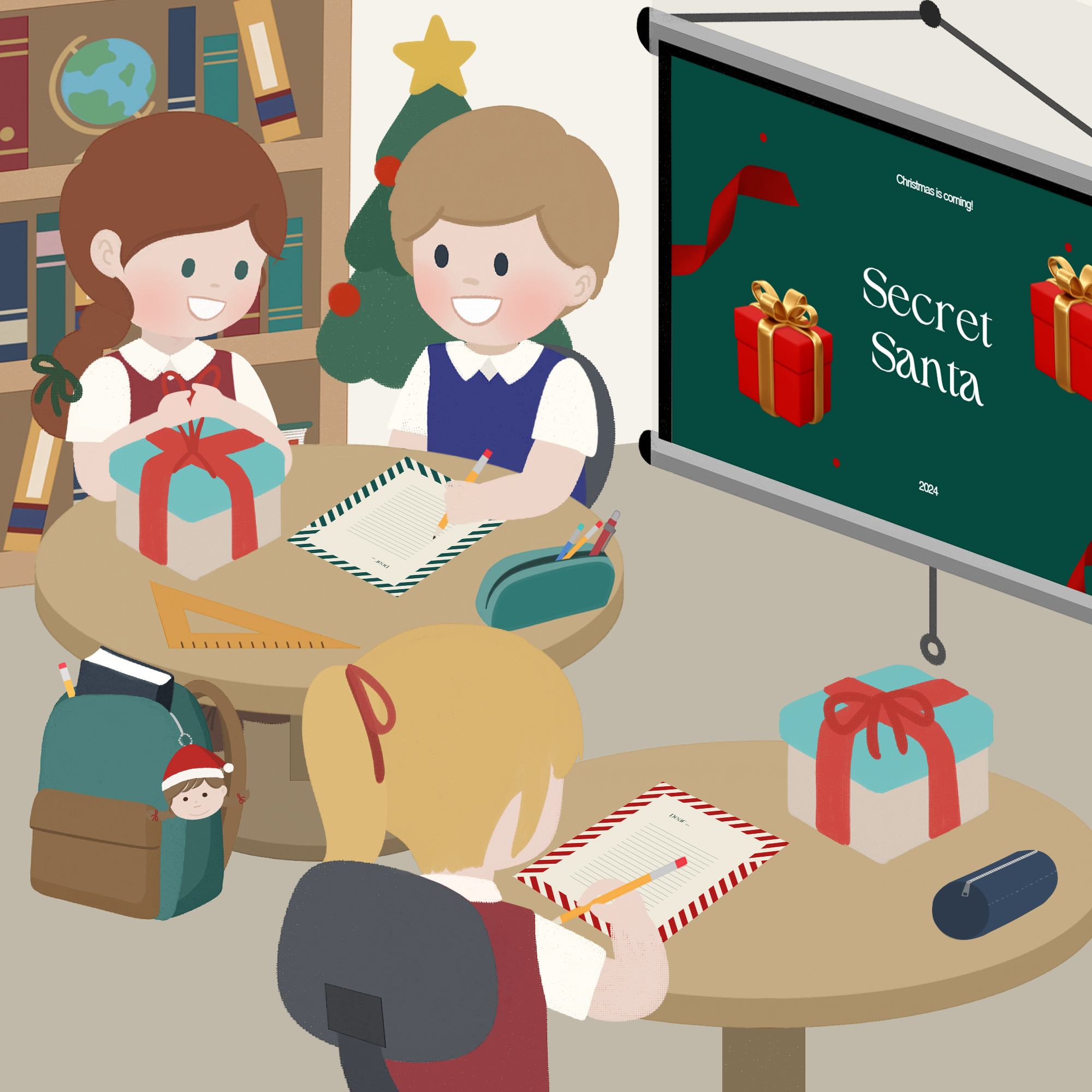
10 Festive Activities to Use in Your High School Classroom
A blog post by Richard James Rogers (Award-Winning Author of The Quick Guide to Classroom Management and The Power of Praise: Empowering Students Through Positive Feedback). This blog post has been beautifully illustrated by Pop Sutthiya Lertyongphati.
With the holiday season approaching, it’s a great time to add some festive flair to the classroom. A little Christmas cheer can go a long way in boosting motivation, engagement, and excitement while keeping learning on track. In today’s blog post, I will describe ten fun and educational Christmas-themed activities to bring the season to life in your high school classroom. So, put on your Santa hat, hang up your stockings, put your feet up, sip a mug of hot chocolate and enjoy today’s article!
#1: Get Creative with Christmas Writing Prompts 🎄
Nothing sparks creativity quite like a holiday story! Give students some festive writing prompts, such as:
- “Tell the story of Christmas from the perspective of an ornament.”
- “Describe a winter holiday in a futuristic, dystopian world.”
These prompts let students flex their storytelling skills while channeling the spirit of the season. Encourage them to share their stories with the class or display them around the room for a festive reading gallery. Journal Buddies has a great website containing 54 Christmas writing prompts that you may wish to use.
#2: Dive Into Holiday Economics 💰
Even if mathematics or economics is not your subject specialism, bringing numeracy into your lessons will help with your students holistic development. With this in mind, it’s important to note that the Christmas season provides a fascinating case study for economics/mathematics/numeracy lessons. Ask students to research topics like the impact of holiday spending on the economy, or the marketing strategies of big brands during the holiday season. For example, they might explore the rise in spending on Black Friday vs. Christmas Eve or compare global holiday traditions and their economic impact. This kind of activity makes economics relevant and relatable by connecting it to topics that students may already find intriguing.
This brilliant article by University of Lincoln lecturers, Davina Bird and Jane Charlesworth, explores how historical economic philosophers, such as Adam Smith and John Stuart Mill, might view modern Christmas spending habits. Articles like this could be used as great resources for group Google Slides presentations in your PSHE lessons, for example.

#3: Crack Some Christmas Mathematics Puzzles 🎅
Add some holiday fun to maths with Christmas-themed puzzles and codebreaking activities. Students can calculate the cost of each gift in “The Twelve Days of Christmas” (hello, multiplication and percentages!) or decode holiday-themed messages through basic cryptography. These activities make math hands-on and festive, giving students a fresh perspective on how math applies to real-world (and holiday!) scenarios.
A great resource for Christmas codebreaking activities is Christmas Unplugged Coding Activities for Kids by ourfamilycode.com. The site contains eight brilliant activities that help students to develop their logical reasoning and problem-solving skills, whilst utilizing Christmas themes. It’s well worth a visit!
#4: Secret Santa Book Swap 📚
Spread the gift of reading by organizing a Secret Santa-style book exchange. Each student brings in a book they’ve read and loved, wrapped and labeled with hints instead of a title. Students then choose a book “blindly” based on the hints alone. This activity adds a fun surprise element and might just introduce students to new genres they hadn’t considered before. This may be something that you wish to get the school librarian involved in, too.
#5: Chemistry of Gingerbread Baking Experiment 🧪
Who says chemistry can’t be delicious? Use gingerbread or holiday cookies to teach students about the Maillard reaction (the browning that occurs in baking). Discuss how different ingredients interact and cause chemical reactions. If possible, take it a step further by baking in class: nothing says “hands-on learning” like a classroom that smells of gingerbread!
If you’re keen to do the gingerbread thing with your students, then Science Sparks have created this page that has clear instructions, printouts and loads of ideas. Check it out!
#6: Christmas Traditions Around the World 🌎
Bring global awareness to your holiday festivities with a “Christmas Around the World” presentation project. Assign each student (or group) a country and have them research how it celebrates Christmas or similar winter holidays. Students can share unique customs, foods, and music with the class, providing everyone with a glimpse into different cultures while developing research and presentation skills.
History.com has produced this brilliant site that covers Christmas traditions in fourteen different locations. Perhaps you could use Wheel of Names to assign a country from this list to each group of students?

#7: DIY Christmas Ornaments 🎨
Combine art and science by having students design and make ornaments based on physics concepts like balance and center of gravity. For example, they can make hanging decorations that are symmetrically weighted or create ornaments that stay upright through clever balancing. It’s a creative way to bring physics to life, and you’ll get some unique classroom decorations out of it, too!
Sitter.co.uk have come up with this brilliant blog post that outlines fifteen types of Christmas decorations that kids can make in the classroom, or at home. My personal favourite are the homemade snow globes (number 7).
#8: Historical Christmas Debate 🎤
This is a great one for your Model United Nations club, PSHE, History, English or Drama lessons.
Dive into the origins of Christmas traditions with a lively classroom debate. Students can research topics like “Has Christmas become too commercialized?” or “What are the true origins of Santa Claus?” Not only does this get students talking, but it also encourages critical thinking and research. Plus, debates are a fun way to mix things up and get everyone involved.
ESL Kids Games have got a webpage up that provides some ideas, and instructions, for such a debate.
#9: Christmas Movie Analysis 🍿
Why not bring some holiday classics into the classroom? Choose a Christmas movie or episode of a series and analyze its themes, characters, or symbolism. A Christmas Carol could be an interesting choice, or something like Home Alone for a more contemporary twist. You could even discuss the impact of holiday movies on popular culture. This activity helps students apply literary analysis to popular media, making the skills they’re learning more accessible and relatable.
Marisa Lascala at goodhousekeeping.com has complied an excellent list of 74 Christmas movies that are suitable for kids (i.e., not Die Hard!). Check it out!
#10: A Classroom Charity Project 🤝
Finally, what better way to celebrate the season of giving than with a classroom charity project? Organize a drive to collect canned goods, clothing, or toys for a local shelter. Alternatively, students could make holiday cards for a nursing home or even bake treats to sell, donating the proceeds to a cause they choose. A holiday charity project fosters empathy, encourages teamwork, and shows students the impact they can have on their community.
If you’re struggling to find local charities to donate to, then fear not: Whit Hunter at betterworld.org has written this great piece that provides step-by-step instructions and tools to help you find local organizations that are working with the needy.
Conclusion
These ten activities will bring the spirit of the season into the classroom, creating a festive environment where students can learn, share, and grow together. Whether you’re tackling mathematics problems, analyzing movies, or baking gingerbread, a dash of holiday cheer can make the classroom a magical place. 🎄
Recommended further reading

10 Rookie Blunders New High School Teachers Make (and How to Avoid Them!)
A blog post by Richard James Rogers (Award-Winning Author of The Quick Guide to Classroom Management and The Power of Praise: Empowering Students Through Positive Feedback). This blog post has been beautifully illustrated by Pop Sutthiya Lertyongphati.
Starting your teaching career is an exciting adventure, but it can also feel overwhelming. When I first starting teaching high school science back in 2005, for example, I soon found myself struggling to succeed at (what I see today as) basic tasks, such as marking, lesson planning and managing behaviour. So many aspects of the job were completely new to me, despite the limited teaching experience I gained from the Army Cadet Force as a teenager. I even found it difficult to think straight with so many students making requests and needing attention at the same time. Even writing basic sentences on the classroom whiteboard, in a large and tidy format so that the students could read the words clearly, was a challenge for me at first!
The reassuring news is that every teacher makes mistakes – it’s part of the learning process. To give you a head start, here are ten of the most common rookie blunders new high school teachers make (and, that I have made at some point on my journey!), along with some friendly advice on how to avoid them!
1. Doing Too Much Marking
Marking mountains of work is a fast track to burnout. Many new teachers feel they need to mark everything in detail, but that’s not sustainable! Start exploring alternatives like peer assessment, self-assessment, verbal feedback or even automated tools like online quizzes. You could also try live marking during class, where you give immediate feedback as students work. This not only saves time but also boosts student understanding.
2. Trying to Be Too Friendly with Students
It’s natural to want to be liked by your students, but remember: you’re their teacher, not their buddy. Building rapport is important, but you still need to maintain a professional distance. Being too friendly can blur the lines, making it difficult to manage behavior or assert authority. Keep your role clear, and your students will respect you more in the long run.
3. Inappropriate Use of Social Media
We live in a digital world, and social media can be a fun way to share ideas, but it’s important to be cautious. Avoid posting anything that could reflect poorly on you, your school, or the profession. It’s always better to keep your personal and professional online presence separate. Remember: once it’s online, it’s forever!
4. Oversharing with Colleagues
It’s great to get to know your colleagues, but be mindful of what you share, especially in the early days. Oversharing personal information can blur professional boundaries and lead to awkward situations. Keep conversations friendly, but professional – save your deeper personal stories for your friends outside of work.
5. Not Pacing Lessons According to Long-Term Plans
Pacing is one of the trickiest things to get right. New teachers often get caught up in the moment, spending too much time on early topics and falling behind on their curriculum goals. It’s important to balance the desire to be thorough with the need to stick to long-term plans. Keep an eye on your timeline and adjust your lessons to stay on track.
6. Being Too Lenient with Grading
Being too kind with your grades can do more harm than good. New teachers sometimes grade work too generously, not realizing that they aren’t preparing their students for the higher standards of external exams. Make sure your grading reflects the rigor of official exam boards so students get used to working at the correct level.
7. Relying on Quickly Sourced Content from the Internet
The internet is a treasure trove of resources, but not everything online is classroom-ready. Some teachers fall into the trap of quickly grabbing videos, slides, or worksheets without checking them thoroughly. Always preview your resources before using them in class to ensure they’re accurate, appropriate, and aligned with your lesson goals.
8. Not Preparing Marking Schemes
Without a clear marking scheme, grading assessments can become a time-consuming nightmare. Having a well-prepared scheme not only saves you hours but also ensures consistency and fairness across all students. It’s worth the extra effort upfront to develop marking rubrics and criteria that make assessment straightforward and manageable.

9. Making Promises You Can’t Keep
As a new teacher, you want to impress your students, but making promises you can’t keep – like grading a mountain of work in just a few days – will quickly erode their trust. Be realistic with your deadlines and commitments. It’s always better to under-promise and over-deliver than the other way around!
10. Engaging in Gossip
Gossip can be tempting in any workplace, but in a school environment, it’s especially toxic. Avoid conversations that focus on negative chatter about colleagues, students, or policies. Instead, foster positive, professional relationships. Being a person of integrity will earn you respect from your peers and create a healthier working environment generally.
Recommended further reading


What is Dual Coding?
A blog post by Richard James Rogers (Award-Winning Author of The Quick Guide to Classroom Management and The Power of Praise: Empowering Students Through Positive Feedback). This blog post has been beautifully illustrated by Pop Sutthiya Lertyongphati.
Accompanying podcast episode:
As educators, we’re always on the lookout for strategies that can enhance our students’ understanding and retention of information. One such strategy that has gained significant attention in recent years is dual coding. But what exactly is dual coding, and how can it be applied in our classrooms to make a tangible difference? Drawing from my own experiences since I started teaching Science and Maths in 2006, let’s dive into the concept and its practical application.
Dual coding in one sentence
Combine good visuals with good verbals, and combine good verbals with good visuals.
Dual coding fundamentals
Dual coding is the process of combining verbal and visual information to improve learning. The idea is simple: when students are presented with both words and images that complement each other, they are more likely to understand and remember the material. This approach taps into the brain’s ability to process visual and verbal information through separate channels, creating a more robust memory trace.
The main thing that educators misunderstand about dual coding is that it’s ‘something we do all the the time as teachers’. But is this really true? How often do we slow down and take the time to pair a good visual with a clear verbal description?
Why dual coding works
From my experience, dual coding works because it leverages the strengths of both visual and verbal memory. When I first started teaching, I noticed that some students struggled to grasp complex concepts through words alone. It wasn’t until I began incorporating diagrams, flowcharts, and other visual aids that I saw a noticeable improvement in their understanding. For instance, explaining the water cycle in a science lesson became much more effective when I paired my explanation with a simple, clear diagram that illustrated the process. In mathematics, verbally describing each stage of a long calculation slowly, as I wrote the steps or delineated schematics, tended to help students understand the operations they had to follow better than if I just wrote the method without commentary.

Dual coding also reduces the cognitive load on students. When information is presented in both visual and verbal formats (and is presented slowly), students don’t have to work as hard to understand the content. This allows them to focus more on processing and retaining the information rather than trying to decode what’s being said or shown. In my maths classes, using visual representations of problems (like number lines or geometric figures) has helped students better understand abstract concepts, leading to more successful problem-solving.
Practical Tips for Using Dual Coding in the Classroom
- Combine Text with Images: Start by integrating simple visuals with your explanations. For example, when teaching trigonometry, pair each formula with a corresponding triangle diagram. This helps students see the connection between the abstract formula and its practical application.
- Use Flowcharts and Diagrams: When covering processes or sequences, such as the steps in solving an algebraic equation, use flowcharts to visually represent each step. This not only helps students follow along but also allows them to see the logical progression of the solution.
- Encourage Students to Create Their Own Visuals: Involve your students in the dual coding process by having them create their own diagrams or sketches. This could be as simple as drawing a quick sketch to represent a concept or creating a more detailed Mind Map® of a topic. I’ve found that when students take ownership of the visuals, their understanding deepens.
My Experience with Dual Coding
One of the most memorable successes I’ve had with dual coding was when teaching a particularly challenging topic in physics: electromagnetic induction. Despite my best efforts to explain it verbally, many students were still confused. I decided to create a step-by-step visual guide that illustrated the process of induction, from the movement of the conductor through the magnetic field to the generation of current. The combination of this visual guide with my verbal explanation transformed the lesson. Students who had previously been disengaged suddenly became more confident, asking questions and even helping their peers understand the concept.

In another instance, while teaching a maths class on probability, I used tree diagrams alongside verbal explanations. The visual representation of different outcomes made the concept much clearer, and students were better able to tackle complex problems involving multiple stages of probability.
Final thoughts
Dual coding is a powerful tool in the educator’s toolkit, one that can make a significant difference in how students process and retain information. By combining verbal explanations with visual aids, we can cater to different learning needs, reduce cognitive load, and make our lessons more engaging and effective.
As I reflect on my teaching journey since 2006, I can confidently say that dual coding has been a game-changer in my classroom. I encourage you to experiment with it in your own teaching practice. The results might just surprise you!


Maintaining Professional Distance as a High School Teacher: Ten Essential Guidelines
A blog post by Richard James Rogers (Award-Winning Author of The Quick Guide to Classroom Management and The Power of Praise: Empowering Students Through Positive Feedback). This blog post has been beautifully illustrated by Pop Sutthiya Lertyongphati.
As teachers, we often form strong connections with our students as we guide them on their learning journeys. This can be incredibly rewarding for us – we gain much joy from helping our students to improve. However, it’s essential to maintain a professional distance to ensure that our relationships with students remain appropriate and conducive to learning. The following ten guidelines, adapted from research by Willing and Haney (1994), provide a framework for maintaining this balance. Please note that William and Haney’s research was aimed at ABE (Adult Basic Education) teachers, so I have attempted to back-extrapolate the guidance to cover high-school teaching.
Before we begin
An important note on context before we start – the guidelines described in today’s blog post are exactly that – general principles to consider. ALWAYS follow your school’s official guidance regarding professional distance – and if you’re not sure about what the expectations are for a particular scenario, then seek advice from a member of your school’s senior leadership team.
Rule #1: Know Your Own Vulnerabilities
Understanding your own personal “shadows”; unmet needs, motivations, and expectations; is crucial. As teachers, we often enjoy the appreciation we receive from students, but it’s important to avoid crossing the line into a co-dependent relationship. Recognizing this helps ensure that your role remains that of an educator, not a confidant. Whilst our students may wish to divulge sensitive information to us, it’s important that this information is passed on to the appointed safeguarding individuals in your organization in a professional manner (more on this later).
Rule #2: Understand the Temporary Nature of the Relationship
Teaching is a temporary relationship. While it’s easy to feel close to students, allowing them to perceive you as a friend can imply a level of commitment that neither party is prepared to uphold. This understanding helps in setting clear boundaries from the outset. In addition to this, the teaching role requires there to be a level of authority present within the classroom – and that authority belongs in the hands of the teacher. It is difficult to exercise a level of authority when students perceive you as a ‘friend’. We are not our students’ friends – we are their educators, and that means our focus must be on maximizing our students’ attainment and progress, and not on anything else.

Rule #3: Know Professional Standards for Behaviour
Familiarize yourself with your institution’s guidelines for out-of-class interactions with students. These rules are in place to protect both you and your students, ensuring that all interactions remain professional.
If you are someone who is designing a child safeguarding policy for your school, or if you’re seeking extra guidance, then you should definitely familiarize yourself with national and international guidelines. Some useful documents are linked below:
- Keeping Children Safe in Education [UK Government]
- Child Protection [US Department of State]
- Child Safe Policy [Australian Government, Department for Education]
- Provincial and territorial child protection legislation and policy, Government of Canada
Please note that these resources may be updated at any time, so make sure you are accessing the latest versions of the guidance.
Rule #4: Be Mindful of Your Communication
The way we communicate, through touch, language, or self-disclosure, sends messages to students. What might seem like a harmless gesture, or a casual conversation, can be misinterpreted, potentially blurring professional boundaries.
In the context of a high school teaching scenario, self-disclosure on the part of the teacher can be damaging – not least because it leads to excessive familiarity, which we should aim to avoid. Some forms of disclosure, such as describing the study habits and techniques we successfully implemented when we were students, may potentially be helpful to our learners – so, of course, there are levels to this! Revealing a personal story of pain and tragedy, however, may be not an appropriate activity for a lesson.
Seek official school guidance on the matter. In addition, when describing useful scenarios that involve a level of storytelling to students, you may wish to precede the description with….
- Some people experience/find that…………………………..
- In my experience, students who perform well do these things……………………..
- I once knew someone who…………………………
Keeping stories in a kind of ‘third person’ context can help to maintain professional distance.
In terms of touch, it is essential that you adhere to your school’s Code of Conduct and guidance. In the majority of high-school scenarios, touch should NEVER be initiated by the teacher unless:
- There is an educational purpose to the physical contact, such as adjusting body posture in a physical activity (e.g. adjusting a student’s stance in a martial arts lesson), music lesson (e.g. holding a violin bow correctly), art activity (e.g. holding a paintbrush correctly) or other scenarios. ALWAYS ask the students’ permission before initiating the physical contact and double-check with your school’s senior leadership team before beginning the course.
- There’s an essential Health and Safety purpose, such as rescuing a child from drowning, administering first aid, preventing an accident (e.g. in science class) or other scenarios.
Rule #5: Express Clear Expectations
Clearly outline the time boundaries, the learning process, and what is expected from both you and your students. This helps in establishing a professional relationship where everyone knows their roles and responsibilities.
You may to consider giving your students some time to create a class list of expectations that everyone will agree to follow. In my experience, students will often approach this with maturity and will come up with sensible suggestions, such as….
- We will raise our hands if we have questions, and we will not shout out.
- We will not play on our phones in class, and we will ask for permission to use our phones if we need to.
- We will complete our homework on time.
- We will be punctual to class.
It may be useful to bring out this list from time to time during the academic year to remind the students of the rules and expectations they have come up with.
Rule #6: Consider Students’ Perceptions of Interaction
Recognize that students may interpret personal information sharing or familiar language as signs of a personal relationship. Understanding this helps you maintain a professional distance.

Rule #7: Be Aware of Cultural Differences
Cultural expectations regarding interactions between teachers and students can vary widely. What may seem normal in one culture could be inappropriate in another. Being culturally sensitive helps in maintaining professional relationships.
Rule #8: Use Names Appropriately
The use of first names or nicknames can unintentionally create a sense of intimacy, especially when it comes to how students are expected to address their teachers. Be mindful of how you address students too, as this can affect the professional nature of your relationship. Only use the students’ official names as recorded in the school register and double-check with a senior teacher if a student requests to be addressed by a different name. Check your school’s guidance on how students should address teachers, too.
Rule #9: Dress Professionally
Your attire sends messages about how seriously you take your role. Dressing too casually can give the impression that the educational process is not important, while overly provocative clothing can cause discomfort in diverse cultural settings.
Unfortunately, whilst the issue of teacher dress codes was pretty much cut-and-dry in the twentieth century and earlier, it has become quite a controversial topic to discuss in recent years. I think it is useful to remind ourselves that, as teachers, we are representing the process of education (not just our own personal fashion preferences) through the way that we choose to dress.
Case in Point: An Anchorage District teacher was put on administrative leave after posting a clip of herself in the classroom, on X. The clip was shared by the hugely popular Libs of Tik Tok account, and the teacher in question received much criticism online due to the way she was dressed at school. You can read the full story, here. You may also wish to read my blog post which contains guidance on how teachers should behave on social media, here.
Rule #10: Know Referral Resources
Familiarize yourself with resources available for student referral and how to guide students to them. This helps in addressing students’ issues without becoming personally involved in their problems. For example, you may be lucky enough to have a school counselor employed on-site that you can refer students to. If not, then look into official partnerships the school has with local agencies and professionals.
Conclusion
By following these guidelines, we can maintain a healthy balance between being approachable and upholding the professional standards necessary for effective teaching. It’s about fostering a positive learning environment while protecting both yourself and your students from unwanted issues.
Bibliography
Willing, D.C., & Haney, H. (1994). Maintaining “Professional Distance”: A Dilemma for the ABE Teacher. Developments, 10(4), 6-7. Available at: https://files.eric.ed.gov/fulltext/ED372265.pdf (Accessed: 18 August 2024).
Alaska Daily News (2024) Anchorage teacher put on administrative leave after post by prominent right-wing social media account. Available at: https://www.adn.com/alaska-news/education/2024/03/07/anchorage-teacher-put-on-administrative-leave-after-post-by-prominent-right-wing-social-media-account/ (Accessed: 18 August 2024).
