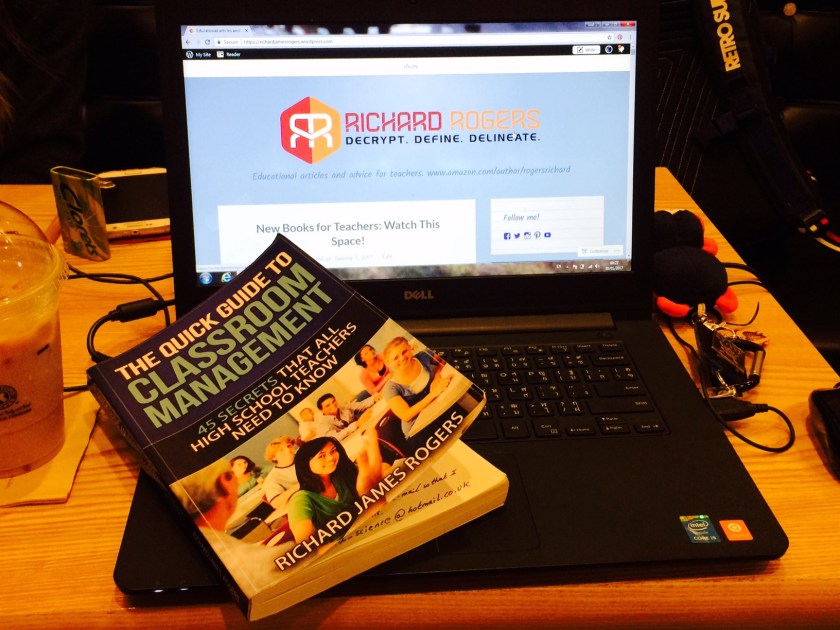
An article by Richard James Rogers, award-winning author of The Quick Guide to Classroom Management: 45 Secrets That All High School Teachers Need to Know and The Power of Praise: Empowering Students Through Positive Feedback

This blog post has been beautifully illustrated by Pop Sutthiya Lertyongphati
Updated: 7th February 2023 – As this is an evolving topic, this blog post shall be updated regularly in order to make the content relevant for teachers and schools.
Accompanying podcast episode:
You’ve probably already been swept up by the huge (and sudden) tidal wave of hysteria that has been generated by OpenAI’s latest product: ChatGPT.
From writing computer programs to producing beautifully formatted English and SAT essays, to answering Mathematics IGCSE examination questions – ChatGPT seems to be the digital guru we’ve all been waiting for, and big tech companies have been attempting to create, for decades.
You could almost say “Chat’s one small step for RAM, one giant leap for mankind!”
Whilst a witty pun like this is enough to break the ice and get a few giggles at your next Teach Meet (perhaps), it won’t be enough to calm the nerves of many who have suddenly realised that we have a major problem on our hands.
ChatGPT has hit educators globally with thunderclap surprise and is causing a lot of panic – and for good reason. In terms of updating Academic Integrity policies, schools will now have to go right back to the drawing board and devise intelligent solutions to a wide array of complex challenges that ChatGPT will pose. Another key consideration for all educational institutions will be how to figure out their position on AI, and which teaching practices to use, as these systems and tools evolve.

So, if you’re one of the many educators out there who is considering how ChatGPT will affect your teaching, then here are some interesting thoughts and resources:
#1: Maths teachers
Mathematics teachers – you think this will not affect you? Well think again – ChatGPT can achieve a Level 5 in a Mathematics IB Diploma SL AA examination. Check out the link and see the attachment!
#2: Cognitive offloading
The first rule with any new technology is to educate students regarding its use and to reveal what is ethically and academically acceptable (as they say the genie cannot be put back in the bottle so banning does not work). Is ChatGPT just another ‘cognitive offloading’ tool like spellcheck, Grammarly, or Amazon Polly, or is it much more than that? Read this good overview piece by Larry Ferlazzo at EdWeek to find out more.
#3: Plagiarism software cannot detect it quite yet
However, Turnitin is developing a tool and there is a beta version out there – so maybe try using this tool to comb through your latest essays from students if they have been typed: you may be surprised with what you find out!
OpenAI have just recently created a kind of ChatGPT detector – to check if an assignment has been artificially generated – but even they themselves say that it’s nowhere near perfect: only 26% accurate! OpenAI recommend using their plagiarism detector, along with other software (like the tool from TurnItIn) to get a good, overall picture of just how much bot-generated text is present within a piece of work.
What if it catches a student who has used ChatGPT partially? Is this acceptable?
#4: Have a go yourself.
A colleague of mine used it in class with students on an IB Digital Society essay and he reported that it was interesting to examine and use the results. It writes pretty good TOK (Theory of Knowledge) essays based on last year’s prompts, for instance. However, it does have many limitations and I believe it’s important to discuss these with students. I do think the TOK assessment, and other essay-based coursework, will have to radically change over the next few years. It wouldn’t surprise me if we see a shift in schools towards more internal assessment methods like group/individual presentations and practical work.
#5: Should we be concerned about students using it?
Well, some universities are already changing their assessments. Will big exam boards like Pearson, the International Baccalaureate, AQA and others be as quick to follow?

#6: ChatGPT is just the beginning
As schools continue to set essay assignments (as per current requirements) I recommend using a new tool called Elicit which can help students with searching and ranking sources alongside improving the quality of their research questions. This is a great introduction to the Extended Essay for IB, for example. A list of the many other tools out there can be found at this link – Future Tools – Find The Exact AI Tool For Your Needs.
In addition to the current disruption already caused by ChatGPT, Google (of course) are planning to stamp their feet and make their mark very soon. The AI arms’ race is on, and Google’s offering is a system called Bard – so advanced that its predecessor, LaMBDA, was controversially described as being “sentient” by its developer.

Will we see the day when self-aware AI systems are given the same rights and responsibilities as people? In LaMBDA’s case, the system described feeling “happy or sad at times” and reported having a deep fear of being switched off – a fate comparable to being killed, in its ‘opinion’.
#7: Chat Prompts
Would you like some nifty chat prompts to play with? See the pdf attachment below – note Nick Cave has been getting very annoyed at all the songs written in his voice! It can also write a decent lesson plan for you if you so wish.
#8: Extra resources
Finally, a great overview here, and attachments below.
Special Thanks
Special thanks to Jeremie Tisseau, CEO of Morphosis Holdings Co. Ltd., for acting as my ‘go-to consultant’ and for sharing his expertise on all things ChatGPT and AI with me. Your input has allowed this blog post to remain relevant, useful, topical and accurate.
Useful PDF Resources
See below. Just click on the ‘download’ buttons to save these pdfs.


We welcome you to join the Richard James Rogers online community. Like our Facebook page, follow us on Instagram and check out our Twitter feed for the latest news, blog posts and commentary.