A few days ago I was strolling through Em Quartier’s sprawling Kinokuniya book store in the heart of Bangkok. I wasn’t looking for anything in particular since I was already reading through three books simultaneously. I was just looking for anything that would catch my eye.
And then, something did.
On my way out of the store, I glanced over at the Special Offers shelf. I saw ‘Napolean Hill’ sprawled over the cover of what looked like a very unusually entitled book: ‘Outwitting the Devil’.
I finished the book in two days. It absolutely amazed me.
From the depths of despair
Napolean Hill sets the scene in his book by describing the recent pain, suffering and dread he was going through. He describes being totally broke after making a number of unwise decisions to leave behind businesses he had started. His interview with the Devil starts at his second peak of total despair in his life – totally out of money, sat in front of the Lincoln monument wondering what to do with his life.
Napolean Hill makes it very clear in his book that he really believes that the Devil came to him at his lowest point and answered his questions.
The entire interview was produced in manuscript form in 1938, but the entire Hill family were so concerned about the way it would be received by the churches, the education system and society as a whole, that they decided to keep it locked away.
The final book was published in 2011, and contains some very radical thoughts on education. Here are the three that resonated with me the most:
1. Reverse the present system by giving children the privilege of leading in their school work instead of following orthodox rules designed only to impart abstract knowledge. Let instructors serve as students and let the students serve as instructors.
In my article on differentiation, I describe a great technique for getting individual students creatively involved. The technique is talked ‘teen teachers’, and involves getting students to teach a sub-topic or topic every now and again to the whole class. Oftentimes this is done as a revision aid, rather than a way to introduce new knowledge to a class.
Surely we can’t trust students to teach themselves!
Or can we?
“An AMAZING book! A must-read for all teachers!”
Hill’s Devil seems to imply by this quote that students should be involved in the curriculum design and then decide how to teach it, with the teacher being a stimulator of ideas, facilitator and behaviour manager.
Thankfully, we are seeing a move in this direction in a number of schools, especially with respect to getting students to be more involved in teaching themselves (the use of instructional software and project based learning for the International Baccalaureate come to mind). However, we’ve yet to see massive strides take place in the area of student-led curriculum design. Is this a good idea?
Certainly, students would learn tremendously important skills such as collaboration, problem-solving, creative design and leadership qualities; all of which are vital in business and management fields. But how would all of this be assessed? Does it need to be assessed?
2. Ideas are the beginning of all human achievement. Teach all students how to recognize practical ideas that may be of benefit in helping them acquire whatever they demand of life.
The Devil makes the point time and again in the interview that successful people always have definiteness of plan combined with definiteness of purpose.
When one has goals in mind and works towards those goals every day, ideas naturally come along in the process. These ideas should be written down in some fashion and pondered, say on a weekly basis, to determine which ones are valid and reasonable to implement towards the pursuit of those goals.
How many students leave school actually knowing this stuff? How many kids have no clue what they want to do with their lives at age 18?
All too often we quickly suggest that a clueless 18-year-old is just young and inexperienced and it’s perfectly normal and fine to not know where you want to go in life at this age.
Napoleon Hill disagrees.
He argues that people without goals are ‘drifters’ – shaped by the circumstances they find themselves in rather than shaping those circumstances with their thoughts.
How much goal setting actually takes place in schools these days? I’m not talking about ‘I’d like to get a grade C in maths’ goals, I’m talking about ambitious, long-term, life-shaping goals that are truly inspirational.
3. Teach the student the basic motives by which all people are influenced and show how to use these motives in acquiring the necessities and the luxuries of life.
Since a young age, I’ve wondered why human psychology, conflict resolution, and human relations aren’t taught in any great detail in today’s schools.
Surely these are vital skills, right?
What’s more important at the end of 15 years of schooling – knowing how to perform Integration by Parts or understanding how to negotiate with people?
We hear the saying “It’s not what you know, it’s who you know” all the time, but how is this ever reinforced in the education system?
Hill makes a valid point that knowledge of common courtesy, respect (for yourself and others) and good communication skills form the fabric and fiber of every successful person on the planet.
Surely our students need to know this, right?
We welcome you to join the Richard Rogers online community. Like our Facebook page and follow us on Twitter for daily updates.
The events in this article are based on actual occurrences. The names and, in some instances, the genders of individuals have been changed to protect the individuals’ privacy.
Accompanying podcast episode (audio version of this blog post, read by Richard):
‘Was machst du am Wochende auf?’ – That’s German for ‘What do you do on the weekend?’.
I haven’t studied German for 20 years, but I still remember the overwhelming majority of the words and phrases I was taught for my GCSE. I was lucky to have a brilliant German teacher. She, like all of my teachers at North Wales’ elite St. Richard Gwyn High School, was a Champion Teacher. Champion teachers like her literally have the power to make the wildest dreams of their students come true. They inspire, they care and don’t give up on you.
Let’s examine the features that all Champion teachers share. You’ll find that everything on this list is believable and achievable.
Champion teachers are:
Good role models
Dedicated and committed to their students
Provide good feedback
Use a dynamic and effective range of teaching methods
Are caring
Understand that the world is ‘getting smaller’
Whilst this is not exhaustive (please add any more you can think of in the comments below, on my Facebook page or please tweet to me), it does include the core elements that all Champion Teachers share. Let’s look at each one, one at a time.
Good role models
Champion teachers understand that they are always communicating something about themselves. The way they dress, their tone of voice, their posture, their habits, their cleanliness and even their table manners at lunchtime. They understand that students learn the majority of their behavioural and moral features not from what they hear in a typical classroom, but from the subliminal cues they pick up from their environment on a daily basis.
Charlotte was a high school chemistry teacher in a comprehensive school in England. She was also responsible for teaching lower school (KS3) Science. She enjoyed her job but didn’t really like teaching about health and fitness in the biology classes she was required to teach. She always found that the kids were disruptive and even make silly giggles whenever she talked about any topics relating to health. Then, one day, she found out why this was happening.
She found a note on scrap paper left on a student’s desk. The paper shown a drawing of Charlotte smoking a cigarette in the fume cupboard of her prep room. Then she remembered, a kid had walked in there one lunchtime a couple of years backand had caught her smoking. She went ballistic and told the boy off for walking into the prep room without knocking.
This story reminds me of a key phrase an old colleague of mine once said: “There’s no such thing as an off-duty teacher”.
How can a Science teacher lecture kids about the dangers of smoking when she’s smoking in school? How can the P.E. teacher maintain his credibility when he’s seen scoffing jumbo beef burgers downtown, posting pictures of himself binge drinking with his mates on social media and then turning up to school drained and out of shape?
Teachers need to be very careful about the images they portray of themselves to students, parents and the community. Watch out for the following:
Turning up late: Be organized and be on time. That counts for lessons, meetings and your required start time for the day. How can we expect our students to be on time if we are not?
Looking dirty or shabby: Keep your clothes in good order. Schedule your free time to get them all cleaned, dried and ironed. Shoes should be shiny and/or clean too, and try to wear different clothes each day. You don’t need to break the bank for designer labels – neatness and tidiness are the themes to remember here.
Using foul language: Be particularly careful when talking with colleagues on corridors or open spaces. If kids are walking past and you’re swearing, it doesn’t lookgoodand sets the wrong kind of example.
Websites: Be careful what you look at on your mobile device or computer whilst in school. Students can suddenly turn up behind you and see what you’re doing. If it’s something that you wouldn’t want a student to see, then don’t view it.
Dedicated and committed to their students
What’s your aim when you go into school? Is it to just to ‘get through the day’ or is it to inspire your students?
Champion Teachers always start their day the right way. I wrote a blog post about effective morning routines for teachers a while back, but basically the idea is simple – set yourself up to win each morning.
My German teacher had lots of energy. She would even give up lunchtimes to help me with my speaking practice. My maths teacher would also give up her free time to help me with my questions and problems. Are you willing to do that?
Keep the success and wellbeing of your students your primary focus at all times and watch success and fulfillment magically come your way.
Provide good feedback
Feedback is one of the major cornerstones of success in education. In fact,John Hattie, the eminent Professor of Education at the University of Melbourne puts it this way:
The greater the challenge, the higher the probability that one seeks and needs feedback, but the more important it is that there is a teacher to provide feedback and to ensure that the learner is on the right path to successfully meet the challenges.
I wrote a lengthy blog post about the details of effectivefeedback here.However, the basics really are common sense:
Students should always get their work back
Students should know how they did, what went wrong, and how to improve their work
Students should always be given the opportunity to improve their work
A variety of assessment methods should be used (see my blog post here)
Progress should be measured
Assessment should be used to inform teaching (if students have not understood any content, then you need to plan ways to address that).
Use a dynamic and effective range of teaching methods
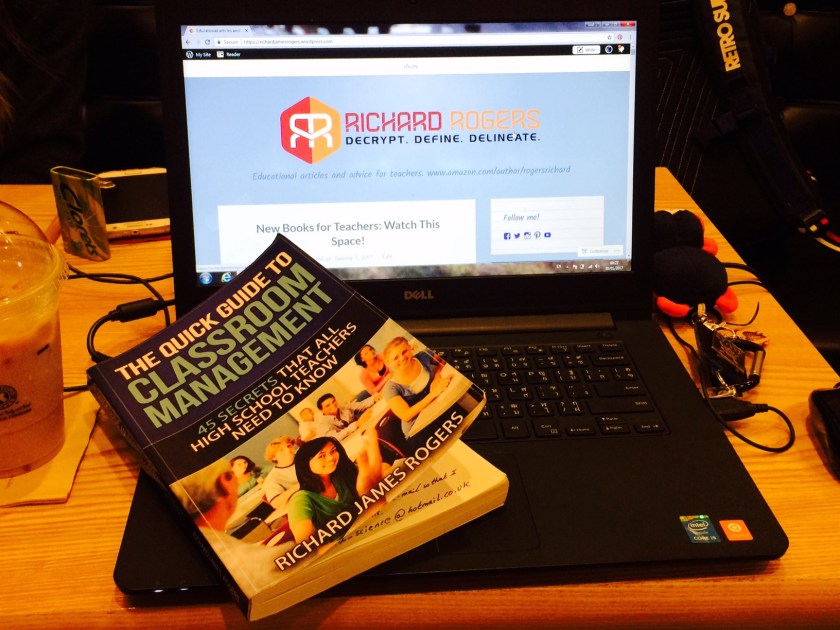
This would require a whole book in itself to talk about (and I highly recommend my debut book,The Quick Guide to Classroom Management, if you want a series of great tips and ‘teachniques‘ to enhance your teaching).
In essence, it all boils down to variety. Are you providing enough variety of tasks, activities, and challenges each lesson to engage your students?
You don’t need flashy technology or special skills to do this. Try implementing somesimple learning games, use a greater variety of worksheets, tasks, and questions and try using model building, experimentation and practical activities in your classes.
Find out what works for your colleagues. Join online communities such as Facebook groups and get the ideas flowing!
Are caring
I was a very shy and sensitive little boy when I was 11 years old. I was bullied too, and I would always go and see my Head of Year for help when things got too tense. He always had a sympathetic ear and always had time for me.
I cringe when I look back at how childish I was back in Year 7. One snowy day I walked onto the playground and tried to join in the fun of throwing snowballs. Stupidly I went to the bottom of a grass verge and tried to throw snowballs uphill. I bet you know what happened next.
A flurry of icy cold pellets of snow hit my face and body. A whole army of school kids turned on me and I was covered in snow. It dripped down my back, my face hurt, my ears rang. I started to cry.
I immediately went to my Head of Year’s office and he was very sympathetic. He said ‘Oh Richard, what’s happened?” and he put his hands over my ears to warm them up. He sent me on my way.
Looking back, all I really needed that day was assurance that someone in this world cared about me. The sympathy of my Head of Year was enough to stabilize to my mood and keep me going that day.
Kids go through all kinds of problems when they are in school. Be sympathetic. Understand what it’s like to be kid vying for attention, popularity and parental approval. Consider that you may not know everything that’s going on in a person’s life, even if he or she is your student.
Understand that the world is ‘getting smaller’
This is one area of danger that teachers can unwittingly walk into.
Call it the Big Brother society if you like, but no one can deny that we are under more surveillance than ever before. I’m not condoning or agreeing with the way that everyone’s lives are open for all and sundry to see, but it is an important consideration that wasn’t a problem a few decades ago.
John was a high school Geography teacher who loved to play in a band. He had his own YouTube channel and was growing in popularity throughout the underground clubbing scene in Los Angeles. He released a new video.
In this video, there was swearing and scenes of him drinking beer and waking up semi-conscious. Covered in tattoos with spiky hair to match, he looked like the pop-culture rebel many were waiting for.
His principal didn’t think so.
He was called into a meeting after a number of parents had complained, and a number of students had even commented on his video. He was asked to resign, with immediate effect.
The moral of the story – if you’re going to be a teacher, then you must present yourself in a positive way online as well as in person. Jim Rohn, the legendary father of personal development coaching (Tony Robbins’ coach), puts it this way:
Make sure your behaviour is acceptable to the marketplace
Conclusion
Champion Teachers understand that there is no such thing as an ‘off-duty teacher’. They care about their students, no matter who they are, and they behave in ways which are acceptable to the marketplace. They are dedicated, constantly review their methods and are not afraid to keep up to date with effective pedagogy.
We welcome you to join the Richard Rogers online community. Like our Facebook page and follow us on Twitter for daily updates.
It was a warm September Sunday evening back in 2006. I was in my second week of my first teacher-training placement for my PGCE. My mentor wanted all of my lesson plans, as full A4 rubrics filled to the brim with activities, learning outcomes and all manner of wonderful musings. I was in hell right now.
The smile on a trainee teacher’s face as she sends her weekly lesson plans to her mentor
Back then I was required to plan my lessons in a certain way. It was difficult – it took up lots of time, required multiple discussions with many people (including the subject teachers who would observe me) and often involved re-drafting multiple times before a perfect plan was complete. Was it a waste of my time? Looking back, I can honestly say NO! It was worth it. I was completely inexperienced back then. I made many, many blunders. The year of hell that was my PGCE was exactly that – my baptism by fire. It forged me into a capable teacher, albeit still with much to learn.
Quick advice for PGCE students or trainee teachers
If you’re going through the same hell that I went through, then keep going! There is light at the end of the tunnel (and it’s not an oncoming train). When I passed my PGCE and started teaching for real, I knew what that year of pain was all about – getting me ready. It was so nice to be finally trusted to teach classes on my own, without being observed every single lesson.
Listen and learn, even if it’s unbearable
Listen to your mentors and tutors. Do what they say. Don’t argue with them. Listen to feedback, however negative, and genuinely ask for help and solutions. Act on the advice you are given. Regardless of how many mistakes you make (and you’ll make many), you’ll be widely admired if you can accept your blunders, seek counsel and try your best to make progress.
Efficient Lesson Planning for Schools and Teachers
I was honouredto feature in this week’s UKEd Podcast from UKEdChat.com. I appeared alongside a number of guests, and we all vehemently agreed that lesson planning is a vital component of effective teaching. You simply can’t do this job properly if you skip the planning stage. In fact, it’s so important that I even dedicated a whole chapter to planning in my debut book: The Quick Guide to Classroom Management.
But does it need to take ages and ages? Should it be a chore? Absolutely not!
Strategy #1: Plan in a way that works for you personally
This is a message for schools as much as it is for teachers. When a particular method of planning is forced upon a team of teachers, such as filling in a rubric on paper or online, the whole process can become burdensome and unenjoyable. This is cause for regret.
Lesson planning should be enjoyable. Find a method that works for you personally.
The methods of lesson planning that I use personally have changed and evolved over the course of my career, just as I have changed and evolved too. The methods I use work for me, and that allows me to express myself in the best and most natural way possible.
When teachers do not have the freedom to plan their lessons in their own way, their creativity and self-expression become stifled in the process. Whilst a lesson-planning rubric may be essential for a trainee teacher, schools should not aim to enforce rigorous planning strategies on their entire teaching team. This serves no purpose except to reinforce authority, which can cause resentment.
Now, here’s a funny question: Do you enjoy lesson planning? Most teachers would say ‘Are you kidding?’. However, I can honestly say that I do love the process of planning.
Every Sunday morning I get up nice and early and read over my plans for the week just passed. This allows me to review what worked well and what needs improving, and where to go next. Then, I pen in my plans for the whole week ahead. I personally use this plannerfrom Teacher Created Resources, as it has a nice clear layout and allows me to make special notes for each week (such as house points and homework deadlines). I also like using the TEEP Learning Cycle. There are a number of colourful, teacher-friendly planners available from places like Amazon, which really help to make the lesson planning process fun.
And lesson planning should be fun. If it isn’t fun for you, then something needs tochange.
Strategy Number 2: Always get a quick starter activity ready
You’ll often find that there are many great workbooks full of activities and worksheets published and ready for you to use. A small investment of money in resources like this can save you loads of time that you may have spent making resources from scratch.
Engage your students from the very beginning with a quick starter activity
Strategy #3: Always include a quick plenary
This can be as simple as getting the students to stand at the front of the class and do some quick-fire questioning, playing a learning game or even getting groups of students to verbalise their own summary.
Strategy #4: Keep your plans and reuse them year after year
There’s no point in reinventing the wheel. Keep your planners safe and organised and use them again and again when you teach the same or similar content. Modify as you go along.
Surprisingly, very few teachers do this.
Strategy #5: Look online for Schemes of Work, Programmes of Study and lesson plans that other people have created
You’ll be surprised at the wealth of information available. I’ve personally done this many times in the past. A quick search on a search engine can pull up many documents that you can use, modify and change to suit your own lesson planning.
Why do everything from scratch if a lot of stuff has been done for you? It makes no sense to me.
Strategy #6: Use published Schemes of Work to assist you
All examination boards produce Course Guides or syllabuses, and some will even provide Schemes of Work. Use the content from these to inform your lesson planning, particularly if you’re filling in an ‘Objectives’ or ‘Learning Outcomes’ section. You’ll often find that those objectives and learning outcomes are published in the Course Guide, syllabus or the exam board Scheme of Work already.
Strategy #7: Take a long-term view
This is so vital!
If you teach students who will take exams in May, for example, then you should know which exact topics you’ll need to cover each month in order to give you enough time to do revision and get the students ready for their exams on time.
Conclusion
Lesson planning is an essential component of effective teaching
It shouldn’t be a chore. It should be enjoyable.
Use what works for you. Try out some of the lovely planners available on places like Amazon.
Start each lesson with a quick starter activity. Build this into your planning every time.
Always include a quick plenary for each lesson
Look after your planners and plans. Reuse them, modify them and adapt them as each year passes.
Look for lesson plans online. You’ll be surprised at what you find!
Use the Schemes of Work, Course Guides and syllabuses published by your school’s exam board to help you articulate your personal plans.
Take a long-term view. How many topics can you realistically cover in one month? Check your academic calendar for any events that might scupper your plans and interfere with your lessons!
We welcome you to join the Richard Rogers online community. Like ourFacebookpage and follow us onTwitterfor daily updates.
It was a sunny June morning when they paraded us in. Beams of sunlight hit the aged oak of the tabletops, and colours of all varieties jumped out of happy childrens‘ doodles that were covering the walls. Eyes glared at me through glass jars, as rainbows danced on an LED circuit board. I was in heaven.
Too many of us shade our childhood in thegreys and gloom of ‘bad experiences’. I know I had my fair share ofthose, like we all did. But I was lucky, very lucky. I was 11 years old and being shown around the Science labs of my new high school:St. Richard Gwyn High School, Flint.It was magical – that’s the only way to describe it. This was the best school in the history of all schools ever created.
How many of your students feel enchanted when they enter class? That’s how they should feel – like this is magic. I call it the ‘Starbucks Protocol’, for practical reasons. Let’s examine why.
Ensorcelled
I am writing this blog post in my favorite place I like to go in my free time. As bland and as staple as some may think, I’m at Starbucks in Chongqing, China. This is the perfect place for me to work and be inspired whilst I work. But why?
Teachers and schools can learn a lot from Starbucks. Despite their beverages being priced slightly towards the higher end of the market, every single branch I’ve been to around the world attracts crowds in their multitudes. People love coming here. The demographics of the local population don’t seem to matter. People flock to their favourite place to relax and enjoy a caramel macchiato, a flat white with low sugar or their preferred speciality beverage. It’s personal to them. They connect with this space. It’s part of their identity. It’s woven into the fabric of their memories.
A photo I took of my local Starbucks at Banan Wanda Plaza, Chongqing, China, at opening time on a Sunday morning. A beautiful and inviting workspace, from which teachers and schools can learn so much.
Starbucks offers an enchanting and practical environment for its guests. In my humble opinion, I believe this is due to the following parameters, which can all be applied to an educational setting:
Staff always know your name, remember your preferences and are friendly and happy
The physical space is clean, uncluttered, varied and attractive
Resources are freely and abundantly available (tissue, sugar, milk, stirrers and paper cups in the case of Starbucks)
The opportunity to further your association with the brand is available through merchandise and products such as cups, coffees to take home and even water bottles and tins of tea
The environment is conducive to working as well as being a place to relax. Sockets to plug into are numerous, and wifi and workspace is usually abundant and suitable
Space is bright and well-lit
Promotions and special events happen regularly, allowing guests to gain more for their money – both in terms of products and experiences.
Products are tailor-made to the guests’ preference. If they want no sugar, low sugar, extra whipped cream, a medium-size or even a mixed-blend, it’s no problem
I believe the secret to amazing educational experiences that magically and profoundly enchant and embrace wonder in our students has been hidden under our noses for a number of decades. I suggest that the Starbucks Protocol is this secret.
1. Staff always know your name, remember your preferences, are friendly and happy
It’s amazing and staggering the number of teachers who don’t fully know their students. When teachers do not show a genuine interest in the whole life of their students, they are not able to fully engage with them and build trust, which allows for a comfortable learning experience.
At Starbucks, staff are specially trained to remember their customers’ names, and to engage in conversation with them. Staff become your friends, and they always remember your beverage preferences if you’re a regular customer. I believe this to be a major factor in the genius and global success of Starbucks.
The first chapter in mydebut bookdeals with the issue of student rapport – the professional relationship that is the foundational groundwork of all good teaching. Nothing else works in education without good teacher-student rapport, just like a cup of coffee at Starbucks would be most unpleasant if the baristas were grumpy and aggressive. I write a guest blog about building student rapport at The Cornerstone for Teachers site here. An important extract is given below:
#1 Take a genuine interest in the ‘whole life’ of your students
Charlene was an experienced and well-liked teacher of secondary science. She got on very well with her students, and parents would often mention that they appreciated her ‘special attention’ to their children. She was liked by her colleagues, and she enjoyed her work. One day, her physics student came to school with a broken arm in a plaster cast. John, a keen gymnast, mentioned that he had fallen very hard in a training session two days ago. Charlene immediately knew that this was golden information for her lesson planning.
In John’s next physics lesson, Charlene was teaching the class about forces and motion. As John entered the class, she presented him with a starter activity revolving around the forces that act upon a gymnast when taking off and landing on a springboard. She also asked John how he was doing (and she was sincere in asking). He said he was healing well, and Ms. Charlene mentioned that, “We can use your experience to help the class today, would that be okay?” John said sure.
After completing and peer assessing the starter worksheet, Ms. Charlene asked John to tell the class what had happened to his arm. He gladly told his story, and Ms. Charlene asked for everyone to clap after he had finished. Using humor and good teaching practice, she said, “So using John’s story to help you, what do you think one of today’s objectives could be?”
One student mentioned a funny comment about how you should always land on your feet and not on your arm like John did, which Ms. Charlene responded to with a smile and a giggle. After this, and with some prompting from their teacher, some students spoke about the importance of gravity in determining the force upon impact, and the speed of free fall. At the end of a very interesting and varied lesson, Charlene allowed her students the opportunity to sign John’s plaster cast, if they hadn’t done so already.
Let’s examine what Charlene did that made this lesson (and her rapport/relationship with students) so special:
used the hobby of her student to generate a lesson activity (the starter worksheet)
showed a sincere care and concern for her student
was genuinely interested in the whole life of her student (as she was with all of her students)
used student ‘expertise’ to enhance the lesson content (she asks John to talk to the class about what had happened)
was tasteful in her humor, and made sure that John is happy to share his story before she asks him to do so.
rewarded the class for their good work by allowing them a few minutes at the end to sign John’s plaster cast; not only did this subtly reveal her caring and ‘human’ nature, but it also bonded the class together as a whole
So follow the Starbucks Protocol and take a genuine interest in your students – their learning preferences, their hobbies, their ambitions and their abilities. You will immediately see an enormous transformation in your professional relationships with them.
2. The physical space is clean, uncluttered, varied and attractive
Variousstudies have shown that colorful. attractive and uncluttered learning spaces have an enormous impact on the willingness of children and young adults to engage in the learning process.
What does your classroom look like? Is it a place where kids want to be? How often do you change your displays? Does fresh content go up on your display boards regularly?
Consider the following upgrades you could make to your classroom:
Put good student work on display for all to see. This motivates the students who did the work, as well as providing a benchmark for others by association. You can often use this work as exemplar material when setting similar projects in other topics too.
Keep all resources (e.g. scissors, pens, coloring pencils) in one part of the room so that they are easily accessible and tidy
Get your students to tidy up their workspace at the end of each lesson, or before each break time. Clutter can be created throughout the day through loose pieces of paper, litter, pencil sharpenings and poorly stored textbooks. This can be a particular problem in the high school.
Starbucks branches are always clean, tidy and fresh. That’s because staff regularly go around to clean up and tidy, and because litter disposal is easy for customers too. Displays are changed regularly (particularly displays of products and promotional material), and many Starbucks branches will even be specially decorated on special events like Christmas and Halloween. Resources are freely and abundantly available (tissue, sugar, milk, stirrers and paper cups in the case of Starbucks).
3. Resources are freely and abundantly available (tissue, sugar, milk, stirrers and paper cups in the case of Starbucks)
Do you want to know the best way to create disruption and bad behavior in a lesson? It’s easy: set your kids a task, and then make it difficult for them to get the basic resources they need to complete the task. Many teachers will blame the poor behaviour on the kids in this scenario, when it was actually lack of planning on the teacher’s part that created it.
One of my favourite stories I tell is from when I was an NQT in the UK way back in 2008. I was asked to cover a lesson for an absent teacher, and the class I was covering was notorious for bad behaviour.
I booked the computer lab, and the kids worked brilliantly. No problems at all, but one thing concerned me. The students were working on their GCSE Science coursework. Over the previous few weeks, they had completed some written work on paper, which was rather messily kept in a tray in an unorganised way by the previous teacher. I later learned that students would start being disruptive when they were searching for scraps of their work from this tray, and complaining that pieces of paper were missing. No wonder they were playing up – it was difficult for them to find the work they’d been working on.
Later that day I organized their coursework into a folder, with each student’s name on a plastic wallet. The result – teacher’s were telling me in the ensuing weeks that the kids had calmed down a lot because of my simple act of organizing their work so that they could find it easily.
It seems so obvious, doesn’t it? How often do you get frustrated when you can’t find your keys, wallet or phone? I know it drives me mad at times. Think about this when organizing your learning space and resources for your students. Are essential items, such as scissors, paper, pens and pencils organised and ready in the classroom for kids to use?
4. The opportunity to further your association with the brand is available through merchandise and products such as cups, coffees to take home and even water bottles and tins of tea
I love this about Starbucks. They offer so many great products that are really collectible and special. Take this special Chongqing mug, for example:
So how do we use the Starbucks Protocol to create collectible and special experiences for our students that allow them to further their association with the subject we are teaching? Normally this is achieved through exploration.
Is your classroom set up well for exploration? Can groups of students easily work together on a project, such as model building or poster making? Does the opportunity exist for students to take home their ‘merchandise’ (the things they’ve created in class)?
Don’t be afraid of rearranging your desks and tables to make them more conducive to special activities. Even in a Science lab, I have rearranged the space to allow for drama, movie making, experiments and even relay games and competitions. All of these experiences enrich student learning and allow them to take home a great association with the subject. Consider ways in which your students can take home physical items too, such as models they’ve built, movies they’ve made or even project folders they’ve created. They’ll look back these items regularly and feel more connected with the experience, and the subject – another key to the genius of Starbucks.
5. The environment is conducive to working as well as being a place to relax. Sockets to plug into are numerous, and wifi and workspaceisusually abundant and suitable.
Are your students hunched up together with no room to move or do they have plenty of space? Do you book technology in advance, such as tablets and laptops, so that students can effectively engage in the learning process? Are your desks clean and tidy, or covered in graffiti?
Starbucks have mastered the art of creating effective workspace. It’s easy for me to get out my laptop and plug-in, as well as listen to music and charge my phone at the same time. In fact, very few other coffee shop chains can offer such amazing facilities, which is why they are not so popular.
6. Space is bright and well-lit
Have you ever noticed how a rainy day affects your students? You’ll often find they are less engaged on a cloudy afternoon when the pitter-patter of raindrops fall. Poor lighting can even make students lethargic, resulting in lack of focus.
Every Starbucks branch I’ve been to around the world is well-lit. Light creates happiness, and many branches have very large windows because natural light is the best at creating alertness and happiness in the moment.
Happy students learn better than unhappy ones, and the simple process of letting the sunlight come into your classroom (as long as it’s not too bright) can have an amazing, transformative effect on the mood of your students.
Put all of your classroom lights on on gloomy days, and let the sunlight in where possible. Keep the learning space bright and fresh, and watch your students become more focussed.
7. Promotions and special events happen regularly, allowing guests to gain more for their money – both in terms of products and experiences.
Are you just following the predecessors of your curriculum and going through the motions, or are you being innovative with your space?
Only two weeks ago I was teaching a group of 12-year-olds olds about weathering and erosion. I could have used my classroom space in a traditional way – by showing a PowerPoint or letting the kids do some web research when sat down at laptops. However, I decided to move all of the tables and chairs into the middle of the room, and my students became ‘living rocks’ and moved around the room in different stages, effectively modeling the process with their bodies.
This kind of variety can really serve to lighten things up mentally for the kids. Starbucks understands the power of variety, which is why they often host coffee tasting parties, change their products and services to match different seasons and key events, and even change their furniture around from time to time to create freshness. It works well, as people know that they are always getting a unique experience whenever they go along.
8. Products are tailor-made to the guests’ preference. If they want no sugar, low sugar, extra whipped cream, a medium-size or even a mixed-blend, it’s no problem
How often do you use your class environment to tailor-make the learning resources to meet the needs of your students?
In pedagogy, we call this ‘differentiation’. There are many ways in which we can differentiate our teaching (see my earlier blog post here), but one way in which we can manipulate the classroom environment to do this is through ‘styles tables’ and ‘what’s in the box’ activities. I did a YouTube video about this, which is given below. Extracts from that differentiation blog post that pertain to manipulating the physical environment of the classroom are given below the video.
Learning Style Tables:This is such a great activity for engaging a wide variety of learners. The idea is that you produce the same information or lesson instructions via pictures, audio, in writing or in clues that need to be solved or through some some other style, such as tablet PCs linked to online simulations. Students can go to the table that best suits their learning style or you can direct themto one. This takes some preparation but its well worth it.
What’s in the Box? Have a ‘help box’ at the front of the class or place one on each table. Put tips, pictures, word glossaries or advice inside. Students use the box as and when they feel they need more help.
We welcome you to join the Richard Rogers online community. Like our Facebook page and follow us on Twitter for daily updates.
Accelerated Learning refers to a series of simple techniques that any teacher can incorporate into any lesson to ensure that a maximum amount of learning takes place. It works on the premise that time spent in class must be efficiently used, implying that sound lesson planning forms the foundational framework.
Let’s take a look at five simple, but highly effective techniques you can use to accelerate learning.
Technique Number 1: Practice and Application
A lecture or talk is usually not enough to make content stick. Students need to know how to use it in order to understand it.
In short, this means that students need to complete lots of questions or tasks on the content and, crucially, receive feedback on their work.
Most school textbooks have cottoned-on to this by providing lots of questions within the pages themselves. However, you should look into extra ways to supplement these in-text questions with workbooks, past-paper questions, worksheets, puzzles, and games. On top of creating and keeping my own resources, I personally source extra materials from the following places:
Workbooks: Letts, CGP,andBarron’sprovide amazing workbooks which goalongside many American and British school courses.
Past paper questions: Your exam board will be able to provide these for you. At the moment I’m teaching CIE courses and past papers are available on theirteacher-supportsite. I often group these past-paper questions by topic, and many courses like theIBDPeven provide easy-to-use question banks.
Worksheets, puzzles, and games: TheTESandUKEdChatare great places to go for these. You can even sell some resources you’ve made on TES too. For games, I like touse mypersonal choice of seven,which are very effective.
Technique Number 2: Break Content Down into Achievable Goals
It was the famous Anthony Robbins himself who said that “If it’s believable, it’s achievable”. Students need to know where they are going, and how they are going to get there. Break down their progression into a series of simple, believable stages, or targets, that they must achieve.
Use level ladders, progression charts, and even your own tailor-made tables. These can be stuck into student notebooks so that they constantly have a reference guide. Also, use student self-assessment checklists regularly so they can assess their own progress. An teacher example is given below. You would probably adjust this for students to make it more encouraging:
Technique Number 3: Use the 80:20 Principle
Have you ever heard of the Pareto principle? It’s a golden rule that says that 80% of your results will come from 20% of your work. It’s used widely in business (80% of sales, for example, coming from 20% of marketing campaigns).
The Pareto principle can be applied to anything.
In English, 20% of words make up 80% of written scripts. In music, 20% of chord progressions make up 80% of all pop songs. Accelerated learning requires that you focus on the vital 20% and avoid wasting time on the less vital 80% of the task.
Try breaking your subject down into the vital 20% of skills and knowledge students will need, and practice these regularly. To do that, you’ll need to know what the 20% is, to begin with. You’ll need to scour through your syllabuses and Course Guides, use your own knowledge and experience, and experimentation.
Apply the Pareto principle to all of your teachings, from foreign language vocabulary to cookery, and your students will learn faster than ever.
Technique Number 4: Block Out Distractions
I once gave a stern lecture to the entire final year cohort of a previous school. I had noticed that many of the students were getting distracted by the internet, chat, apps, gaming and smartphones. Some parents were complaining that their children were not getting enough sleep because they were staying up too late chatting through Skype with their friends.
It’s really important to educate students on the dangers of distractions. Technology can be a transformational tool in the learning process, but it can also be a dramatic procrastination tool. Watch your students closely when they are using technology in the classroom, and constantly create an atmosphere of urgency – that things must be done quickly and on-time.
Technique Number 5: Teach Students How to Revise
Too often we assume that students already know how to revise properly for exams, and many receive no formal education on the process of learning itself.
This is cause for regret.
Hold special study skills classes with your students as the terminal exams approach, perhaps through some kind of school mentoring program. Teach your students about mind-mapping, cue-cards, recording audio notes and other revision techniques. ThisGuardianarticle offers a great place to start.
We welcome you to join the Richard Rogers online community. Like ourFacebookpage and follow us onTwitterfor daily updates.
Let’s face it: Marking piles of student work each week can be an onerous task, even for seasoned educators. From tests and assessments to coursework, homework and classwork: the paper-mountain never seems to stop growing!
Thankfully, there is hope for every eager red (or should it be green?) ink consumer.
What follows next are my top four strategies for making marking quick, fun and time-effective.
#1: Live marking saves you time and builds rapport
Do you know what ‘live-marking’ is? It’s really simple: The teacher (you) walks around the classroom with a pen in hand and marks the students’ work as they are doing a task. The benefits of this simple technique are numerous, and include:
Quick identification of misconceptions
Opportunities to speak face-to-face with each student, which strengthens your professional relationship with them
Time saved, as you don’t have to take home the work you’ve already ‘live-marked’
Walk around the classroom and meet each student. Mark their work as you walk around, and make sure you provide guidance and praise at the same time. Image by Khim Pisessith (should_you_wonder@hotmail.com)
#2: Google forms are a great peer assessment tool
If you haven’t used Google forms for assessment before, then you’re missing out one of the most powerful and modern tools in the teaching profession.
You’ll need to learn how to set them up (see the pictures below, and this guide is worth a peek too), but as soon as you’ve used this tool you’ll find that it’s a doddle to work with. Now you have every reason to regain that Saturday morning snooze you’ve been sacrificing!
Your Google form should be set up similar to this:
#3: Mark scheme your way to happiness
Probably the dumbest thing I used to do as an N.Q.T. was to give students questions to complete for homework, without having good, published model answers from which to mark the questions with!
Teachers all over the world are wasting time writing their own mark schemes. A little more time spent considering the kinds of questions you set can save you tons of time! You can also get the students to use these model answers in a peer-assessment exercise, such as a Google forms activity.
#4: Verbal Feedback is effective and saves you ink!
Professor John Hattie describes feedback as “one of the most powerful influences on learning and achievement”.
One of the best ways that me and you can give good feedback is to just simply sit down and talk with our students, face-to-face. Once this is done, you can simply write “Verbal feedback given” on the piece of work, and then get the student to make corrections in a different colour. This saves time and forces the student to process the feedback given.
Make sure you always check up on the corrections.
Providing verbal feedback saves marking time and forces the students to process the comments you give them.
Did you enjoy this article? Why not check out Richard’s book?
We welcome you to join the Richard Rogers online community. Like ourFacebook page and follow us on Twitter for daily updates.