Stepping into a senior leadership team (SLT) role for the first time can be both exhilarating and daunting. Recently, I was appointed as the Acting Head of Secondary at an international school in Thailand, and to gain deeper insights into the role, I reached out to SLT members in other schools for their best advice. Their responses provided me with invaluable lessons that I am now applying in my leadership journey.
1. SLT Isn’t as Powerful as It Seems
Many teachers assume that SLT has the final say in all matters, but in reality, leadership is often constrained by a Board of Governors, school owners, or a Board of Directors. These higher authorities set overarching policies, approve budgets, and have the last word on major decisions. SLT members must navigate these constraints while trying to implement the best possible strategies for students and staff.
2. Deadlines Matter More Than You Think
As teachers, we often view deadlines as an administrative requirement, but from an SLT perspective, meeting them is crucial for the school’s smooth operation. For instance, exam data must be submitted on time so that SLT can analyze results, track progress, and prepare official entries for exam boards. When one deadline is missed, it creates a domino effect, leading to further disruptions down the line.
3. Gossiping Teachers Are Known
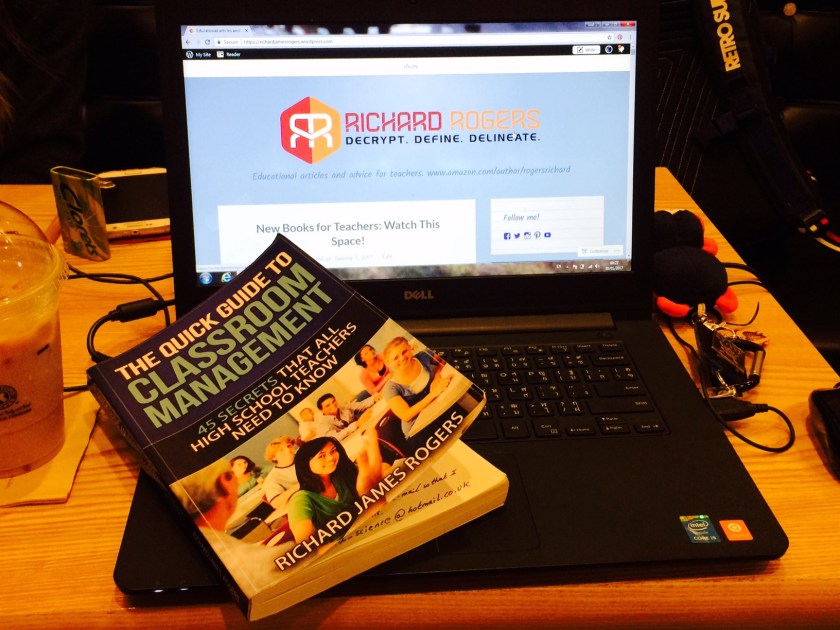
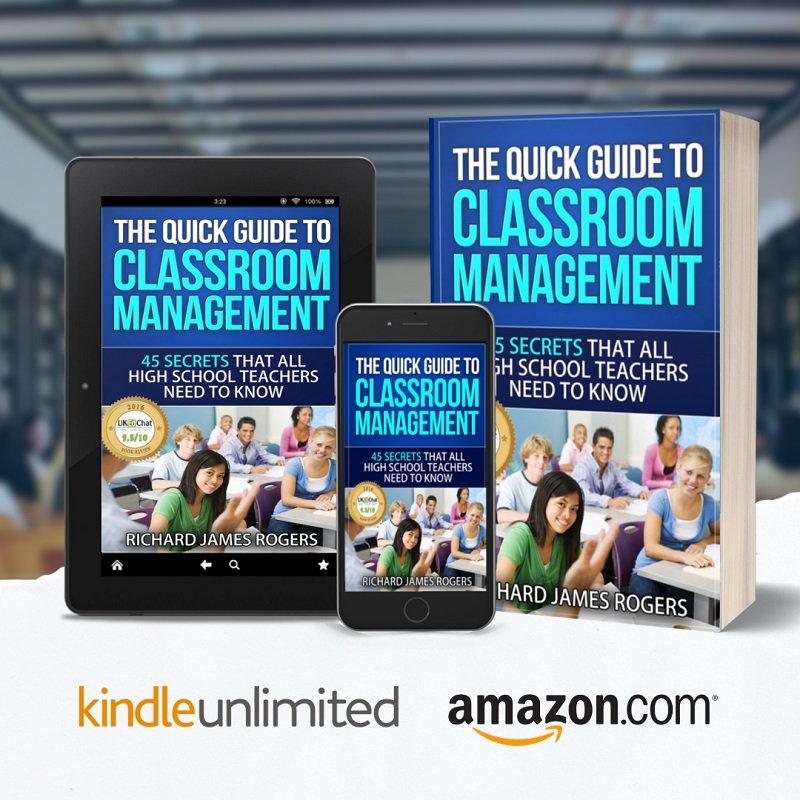
While it may feel harmless to engage in workplace gossip, SLT is aware of staff who indulge in it. This kind of behavior can damage professional reputations and undermine trust within the school community. Maintaining professionalism in discussions about colleagues and policies is always the best approach.In fact, this is such an important issue that I wrote about it explicitly in my award-winning book (The Quick Guide to Classroom Management). I have also written a special blog post on the subject matter of gossiping, and its particularly harmful effects in a school setting, here.
4. Complainers Are Noticed
Constructive feedback is always welcomed, but chronic complainers do get noticed. A teacher who frequently complains without offering solutions can be perceived as negative, which doesn’t reflect well when SLT considers leadership potential or responsibilities.Handle day-to-day frustrations professionally, and you’ll soon be recognised as someone who is resilient, trustworthy and likeable.
5. SLT Work Extensively—Even During Holidays
Many assume SLT members simply delegate work, but in reality, they work tirelessly, often sacrificing their holidays to ensure the school runs smoothly. From recruitment to budget planning, from curriculum development to policy implementation, the workload is substantial and ongoing.
6. Awkward Conversations Are Necessary
No one enjoys difficult conversations, but SLT members have a responsibility to address issues such as poor performance, safeguarding concerns, and disciplinary actions. These conversations are rarely personal; they are about ensuring the highest standards for students and maintaining a professional working environment. If you find yourself sitting in a conversation like this, with an SLT member who feels the need to call you out about something, then read my advice on how best to deal with that, here(look for tip #3)
7. SLT Is Built on Trust
Senior leadership is a high-trust position. You don’t get there without demonstrating integrity, reliability, and a strong work ethic. Trust is the foundation of effective leadership, and once lost, it is difficult to regain.
8. SLT Members Communicate With Each Other
If you fall out with one SLT member, assume that others will be aware. Leadership teams function best when there is unity and transparency, meaning that significant issues, concerns, or conflicts are often discussed collectively.
9. Hard Work and Dedication Stand Out
One of the most reassuring pieces of advice I received was that SLT recognizes hard work. Dedicated, competent teachers who go above and beyond are always noticed, even if appreciation isn’t always vocalized. If you want to stand out for the right reasons, being consistent, reliable, and proactive is key.
10. SLT Looks at Patterns to Make Decisions
Leadership isn’t about making decisions based on isolated incidents. SLT analyzes trends in staff absences, exam performance, student behavior, and other key indicators to make informed decisions. Understanding this broader perspective helps in appreciating why certain policies and actions are taken.
Final Thoughts
Becoming a member of SLT is a journey filled with learning curves, challenges, and opportunities for growth. The advice I received highlights the importance of professionalism, trust, and diligence in leadership. As I navigate my new role, these insights serve as guiding principles, helping me to become a more effective and understanding leader.
To those stepping into leadership for the first time: embrace the learning process, build strong relationships, and remember that every decision you make has an impact beyond what is immediately visible. Leadership is not about power—it’s about responsibility, vision, and making a difference in the lives of students and staff.
We welcome you to join the Richard James Rogers online community. Check out our official Facebook Page, Instagram and Podcast for regular updates.
Anyone who is new to the teaching profession is bound to make mistakes. There’s so much to learn and so much is at stake: the future careers of young people are literally in your hands. The pressure can be overwhelming at times, and this can cause trainees to panic.
Relax! This blog post was made for you!
I will go through the top five mistakes that trainee high school teachers are making all over the world as I write this – and please do not be embarrassed if this article reads like a self-summary of what you are doing wrong at the moment. We’ve ALL been there. We’ve ALL made mistakes, and I’ve personally made every mistake in this list too (so I’m a real expert on this subject matter).
Let’s get started!
#1: Getting the marking balance wrong
We are eager to impress when we are trainees, but there’s no need for that eagerness to translate into late evenings, busy weekends and overloaded school holidays in which we are covering every piece of student work with lengthy written feedback. I’ve been there, and I can tell you from first-hand experience – it’s not worth it!
Grading every single piece of student work by hand is not the most effective, or efficient, means to provide feedback anyway. Consider utilising the following techniques:
‘Live’ Marking: This is a personal favorite of mine, as ardent followers of this blog and my podcast will know. The reason I love ‘live’ marking so much is because it is the ultimate feedback strategy – it’s efficient, personal and effective. It’s also simple to do – either walk around the class with a marking pen in your hand and mark student work in real-time, as they are doing a task, or call each student to your desk one at a time. Make sure you have a short conversation with each student as you write feedback on their work.
Verbal Feedback: This needs to be done properly, but it can be just as efficient and effective as ‘live’ marking. Have conversations with your students and either write/stamp ‘VF’ or ‘Verbal Feedback Given’ on the students’ work or (even better) ask the student to write down what you said in a different colour (e.g. “Mr Rogers said that I should label my diagrams using a ruler”). Since the students must process what you said in order to write down the feedback you have given, it acts as a great tool for building long-term memory.
Peer and self-assessment: Get your students to swap their work and mark each other’s or allow them the opportunity to assess their own work. Just make sure that the students have the official mark scheme/set of answers (otherwise this whole technique won’t work as efficiently as it should – and, before someone says it, no – I don’t think students should be spending time thinking about what the answer ‘should be’ and trying to upgrade answers without a mark scheme – unless you have a surplus of time in which to carry out this very exhaustive activity). Students should be encouraged to make corrections to wrong questions rather than just putting a cross or a zero next to answers, and they should be using a different coloured pen/text than the original answer was written in.
Automated assessment: There’s so much software available today that will set student work and grade it all for you. If your school has such systems available, then use them! Live quiz apps, such as Blooket, Kahoot!, Rolljak and others can be used for this purpose (set them in ‘assignment’ mode) as well as bespoke software such as MyMaths (for maths), Educake (for various subjects), Lexia Learning (for English) and others.
Learning Journals – as a recurring method of reflection, summarizing and revision, it really doesn’t get better than this. Used digitally (e.g., through Google Docs) or manually (e.g. through physical notebooks) learning journals offer stduents a creative and personal way to record their learning journeys. Make sure that you collect them in on the same day every week (or two weeks) and return them as per an agreed schedule too. In terms of satisfying a homework timetable, learning journals offer an interesting and feasible solution too – students are very unlikely to forget this ‘recurring’ homework due to its regularity and, due to their personable nature, learning journals can be really fun tools to work with. The students can fill them with whatever they like – mind maps, flash cards, past-paper questions, lists, etc.
The essential message here is to increase the range of assessment methods you are using – focusing heavily on efficiency and quality rather than how many scribbles you are able to pen onto student assignments during your weekends (which, by the way, is time that you should be spending relaxing).
I’ve written at length about efficient and effective marking strategies in the past. If you are interested in learning more about the various techniques available (and how to implement them), then check out these blog posts of mine:
My second book, entitled The Power of Praise: Empowering Students Through Positive Feedback, is also a great read if you are serious about exploring a range of feedback methods that that have a positive impact on your students’ learning experiences. Click on the image below to be taken to its Amazon page:
#2: Trying to be friends with the students
There’s a concept in education that has, unfortunately, become somewhat forgotten these days: Professional Distance.
The best description I could find on the concept of Professional Distance comes from an article by James Barron at start-teaching.com:
In the context of education, the concept of “professional distance” plays a vital role in maintaining clear boundaries between teachers and students. As emphasised by Gould and Roffey-Barentsen (2014), teachers must be mindful of preserving a degree of professional distance to prevent any blurring of lines between their personal lives and their roles as educators.
In today’s world of social media, IG influencers and digital side-hustles, maintaining Professional Distance between us and the students we teach has become more challenging than ever before. In essence, however, the fundamental concept is the same as it always was: whether you are a 22-year-old trainee or a 52-year-old seasoned educator, you are seen as an authority figure in the classroom. The students are NOT your friends. They are young people that we help, support and educate, and that’s where our professional relationship with them ends. We do not add them as friends on social media. We do not accept their follow requests. We do not chat with them on any non-school approved channel.
#3: Failing to consult with colleagues or line-managers
As a trainee teacher, or even a seasoned educator with twenty years under your belt, you are not expected to know everything. No question is too stupid to ask, so please ask!
I remember feeling really anxious one day as a relatively new 29-year-old teacher at an international school in Thailand. I had a question about the next topic to teach in a program of study, and I THOUGHT THAT MY HEAD OF DEPARTMENT WOULD THINK I WAS INCOMPETENT IF I ASKED ABOUT IT. Sure enough, after fretting over the issue for a day or two, I had to go and see him and ask about this – I needed the information.
I’ll never forget what he said at the end of the conversation: “Richard, I just want to say thank you for asking about this. Because when people don’t ask, they mess things up.”
Wow! That wasn’t what I had expected. My nervousness over asking questions, no matter how silly I thought they were, vanished that instant.
Your colleagues and line-managers will ALWAYS be your best resources at school. They will know how you should deal with certain students, back stories to issues, which printer to use and for what purpose, and who the key people are in school who can help you with other issues. This is why it is SO IMPORTANT for teachers to be cordial and collegiate with all staff at school.
#4: Engaging in gossip or inappropriate staffroom talk
Gossip is ALWAYS toxic. It generates distrust, adds to an overall atmosphere of negativity in a school and, worse: it can even get you fired. Gossip has this juicy allure to it that is very attractive – it reels people in and can often make one lower their normal professional defenses – causing people to add their ‘two cents’ worth without seriously considering their words beforehand.
Do not engage in gossip and stay away from people who gossip (if you can). Just your physical association with known gossipers can be a red flag for senior management – and, as a trainee teacher, you don’t want that!
I once remember sitting in the staffroom at a North Wales school during my PGCE (teacher training year) back in 2005. Two colleagues in my department had an altercation over something curriculum based and one teacher told the other to “F…. off”, in front of everyone!
The gossip soon followed the next day. Even the science technicians were in on it: “He should have received a slap for saying that” chirped one individual in the prep room that day. My Head of Department was there too, and I was being quiet and minding my own business (i.e. doing what you should do in this situation). Finally, he asked me, “What do you think about this whole thing, Richard”.
I replied with “I’m staying out of it. I have enough to focus on with my day-to-day work as it is.” (or something like that). My Head of Department was clearly impressed and responded with “That’s the best way to be, Richard”.
I later found out that he wrote a glowing review of my performance to my university.
In line with the subject of gossip is that of inappropriate information. You DO NOT need to share all of the details regarding your personal life with your colleagues – in fact, the less you share, the better!
One of my favourite quotes regarding this subject matter is as follows:
Never talk about your salary, your love life or your next move”
Unknown
If anyone can help me cite that quote (or its derivative), then please let me know. Whilst it is a little tongue-in-cheek, it does point to a very important concept in the workplace: your colleagues are not your friends – they are the people you work with. Whilst you can, of course, have very positive professional relationships with your colleagues (and they should be willing to help you out when you need it too, and you should help them when they need it), you must remember that egos are involved at the workplace, competition anxiety is real thing and that your colleagues are always capable of reporting you to senior management at any time.
In short – keep every interaction with your colleagues professional. Keep personal information to yourself.
#5: Planning day-by-day and not taking a long-term view
This is a common mistake that trainee teachers make but, thankfully, it’s usually an easy one to solve.
As trainees, we are often very new to the lesson planning process, and it can be difficult to think in the long and medium term as we are often so fixated with just planning lesson-by-lesson, or week-by-week.
It is crucial, however, that you know what the overall plans are for the academic year as a whole. This is called ‘curriculum mapping’, and the best teachers are also the best curriculum mappers.
In essence, it means that you must know when topics are supposed to be taught and what the key milestones are during the academic year, such as:
End of unit tests
Half-termly/mid-semester tests
End of term/semester tests
End of year exams
Coursework deadlines for students
Having a long-term view like this will allow you maintain an appropriate pace and will also ensure that you maintain consistency of instruction with some of your more experienced colleagues in the department – you certainly don’t want to be behind them in the teaching schedule, unless there’s a good reason (e.g. you are teaching a bottom set at a slower pace).
Summary
These are the top five mistakes that I have witnessed trainee teachers making over the past 17 years of my career, and I have also been guilty of all of these on occasion:
Marking inefficiently
Trying to be ‘friends’ with the students
Failing to seek help from colleagues when in doubt (remember, no question is too stupid to ask)
Engaging in gossip and/or revealing too much personal information about yourself to your colleagues
Planning in the short-term rather than the long-term
Review your own practices and daily behavior against the five points above to see if there are things that you could do differently.
We welcome you to join the Richard Rogers online community. Like our Facebook page and follow us on Twitter for daily updates.
Good teaching is built upon the foundations of effective classroom management. Most teachers recognise this, and I believe that’s why my 2015 book, The Quick Guide to Classroom Management, became an award-winning bestseller within a very short timeframe. We know that order must be maintained in the classroom for deep learning to take place, but how do we maintain that order in a way that is not confrontational, or stifling, for our students?
Thankfully, we have the wise words and fresh perspective of a great expert to guide us today. I’ve invited Mitch Metzger from Destination TEFL, Bangkok, to share his top tips for using proactive and reactive classroom management strategieswith our students.
Let’s face it, classroom management is the hardest part about teaching abroad.
Managing a classroom in ANY country is an immense challenge. It requires emotional intelligence and a deep understanding of human behavior. It involves aspects of psychology, educational pedagogy, and even philosophy.
Managing a classroom abroad means doing all of this on TOP of the fact that your students don’t speak your language!
ESL classroom management is a unique and, honestly, daunting challenge. Even with all of the right books and the best TEFL training, it can still take years to truly master managing student behavior.
But there are simple mindset and habit changes you can make that will immediately improve your ability to manage a classroom abroad. Mastery may take years, but applying what you learn in this post can have you managing like a pro in a matter of weeks.
ESL classroom management is a challenge, but it’s also an incredible opportunity. An opportunity to improve your EQ. An opportunity to become an expert at body language and non-verbal communication. An opportunity to learn transferable professional, personal, and leadership skills that will change your life even once you move on from the classroom.
Studies have also shown that these skills in teachers have a direct and significant impact on student achievement. At the end of the day, it’s all about our students.
Working to change their lives is what truly changes our lives.
So grab a notepad and pen (or, let’s be real, your phone), and let’s dive into some strategies that will put you on the path to classroom management mastery!
What is Classroom Management, actually?
Before we get into the secret sauce, it’s essential to first understand what we’re actually talking about when we say “classroom management”.
Because it’s not what most people think it is.
For many people, those words elicit memories of teachers yelling, sending kids out of the room, and otherwise strictly enforcing a set of rules “because I said so”.
Think about it, how did most of your teachers enforce classroom rules when you were growing up? Yeah, ours too…
Unfortunately, monkey see monkey do and we’re just really smart monkeys. Many of us, myself included early on in my career, fall back on the same disciplinary tactics of our teachers.
But that’s not what classroom management is supposed to be. At least, not great classroom management!
Great classroom management is about getting the most out of your students. Creating a safe space where they can make mistakes and try again. Developing deep bonds and trust with your students. Helping them to create a better vision for their own futures.
Most of all, it means being a true role model. We can’t expect students to do as we say and not as we do. After all, did we when we were young?
So how can we change the paradigm of classroom management? Good question, probably a bit too big to be solved in a single blog post (I smell a series). However, there is one simple shift that can make an immense difference.
Simple, but not necessarily easy.
Proactive vs. Reactive Classroom Management
Understanding (and actually creating habits around) proactive versus reactive classroom management strategies seems like a small change. However, it will forever change the way you manage your classroom, especially while teaching English abroad.
The difference is in the fundamental approach you take to potential issues in your classroom.
Reactive strategies involve solving problems that have already occurred. Disciplining “bad” behavior, what most people think of when they hear classroom management, falls into this category.
Proactive strategies are about anticipating potential problems and putting systems in place to prevent them from happening in the first place.
I like to say reactive strategies are putting out the fire. Proactive strategies are not putting a candle near the drapes.
After all, an ounce of prevention is worth a pound of cure.
This is all nice in theory, but what do these different approaches look like in practice? What are some concrete strategies you can actually use in the classroom?
Reactive Classroom Management
Let’s start with reactive management behaviors. Now this isn’t necessarily “what not to do” (though some of these definitely fall into this category). Problems will inevitably arise in the classroom, and sometimes you’ll need to ‘react’.
However, these should be more of a last resort. Only leaning on these strategies, or using the wrong reactive strategies, is where problems can arise.
So, let’s look at various reactive strategies and see which might be effective and which should be left behind.
Reactive strategies to avoid
Some habits you’ll want to be careful to NOT get into include:
Yelling at students
Using shame as a discipline strategy (easier to fall into than it sounds)
Removing students from the classroom
Getting emotional or visibly frustrated
Not checking your biases
Expecting compliance
One thing we always train our teachers to take special note of is this: You can’t expect immediate compliance.
The truth is, respect and trust have to be earned. It doesn’t matter if the people you’re leading are 50 years old or five, you have to do the work to earn their buy-in.
Too many teachers expect their students to immediately listen to everything they say and get distraught or upset when that doesn’t happen.
Available at Amazon, Barnes & Noble and all good retailers.
But students are people too, and we don’t particularly like taking orders from people we barely know and trust. Right?
Effective reactive strategies
Like we said, problems in the classroom are inevitable. Occasionally you’re going to have to put out some fires (hopefully not literally), so it helps to have a good extinguisher.
Some effective strategies include:
Practicing patience and empathy, even in stressful situations
Having a word or action that refocuses attention on you (e.g., clapping patterns, short phrases, etc.)
Keeping other students busy with a task while addressing issues
Having a calming space in the classroom students can go to when feeling overwhelmed.
This is NOT a timeout. It should be a comfortable space (seating, plants, maybe even a little fountain) students want to go to, you just have to train them on when they can be there.
Adding these strategies to your teacher tool belt will help you solve problems whenever they occur.
Proactive Classroom Management
Now time for the real secret sauce! Proactive classroom management strategies will completely change your classroom when done right.
So let’s learn how to do them right!
Here are 3 simple strategies to prevent problems from arising in the first place.
#1 – Be completely prepared for EVERY class
Let’s be real, it can be tough to prepare 20+ engaging classes per week. As a teacher, it’s easy to slide into a bad habit of not fully preparing for every class.
Whether this is just teaching straight out of the book, or over-relying on worksheets from the internet, underprepared classes are the top culprit for why students misbehave in the first place. We know that young learners (and hell, even people our age) have short attention spans. So it shouldn’t come as a surprise that if students aren’t engaged consistently throughout the lesson they’ll lose focus, and this inevitably leads to classroom behavior issues.
So put in the groundwork and prep your lessons.
Work to make them physically and intellectually engaging. Challenge your students. Find ways to make the material relevant to their lives. And most importantly, have all of your lessons fully resourced and ready to go.
Another pro tip here is to work on your transitions. Any ‘gap’ in the lesson is an opportunity for students to potentially misbehave, so filling those gaps ensures students don’t veer off track.
This tip isn’t really fun, because it requires a bit more work on your part. But a bit more work in the preparation will pay off immensely in the form of better lessons, stronger relationships with your students, and better mental health. After all, nothing is more taxing than an ‘out of control’ classroom.
#2 – Get to know your students
This seems like a given, but you’d be shocked (and appalled) at the number of ESL teachers who don’t even bother to learn all of their students’ names.
In their defense (kind of), I’ve had jobs where I have taught hundreds of students. It can be tough to learn that many names, let alone get to know them all.
Yet too many teachers lean on that excuse as a reason not to really get to know their students at all. They spend all of their time in the ‘teachers’ lounge’, or only interact with their students for the 55 minutes of English class each day.
The truth is, though, there is NO better classroom management strategy than strong bonds with your students. If they trust you, if they respect you, if they like you, they will listen to you.
So what can you actually do to bond with your students?
Get a class roster, make name cards, or employ other strategies to learn their names
ASK them about their interests, and talk about yours
Eat lunch with them or play with them at recess from time to time
Come to school a bit early, or do your grading at school and leave a bit late
This doesn’t have to be too much, maybe 15 minutes. But you can get a lot of informal facetime with your students in those quiet little moments before or after school.
Learn a bit of their language (and practice where they can see you!)
If you follow these simple tips you’ll be amazed at how quickly you can get to know your students!
#3 – Let the students make the rules
I know, it sounds crazy. But hear us out…
Letting your students make the rules can be a powerful technique when it comes to actually enforcing the rules. Think about it: aren’t you more likely to follow rules you come up with yourself?
People naturally don’t like being told what to do, so if you give the students the power to decide what rules are fair then they’re much more likely to follow through.
It also makes it way easier for you to enforce the rules. Instead of saying “do this because I said so” you get to fall back on “Hey, these aren’t even my rules. YOU came up with these!”. Trust me, the latter is far superior.
Now, you’ll have to steer the conversation a bit to make sure some essential rules are hit. But this can be as easy as one or two leading questions. “Is it a good idea to talk if the teacher is talking?”
In the ESL classroom, you may also need the help of a co-teacher that speaks the students’ native language. It doesn’t take a really high level of English to make some of these rules, but if your students are at a lower level it’ll be good to have someone there to help formulate their thoughts if they don’t have the vocab for it.
The final proactive management tip
To wrap things up, I want to leave you with one more proactive tip.
Take care of YOURSELF!
Yes, proper self-care and work life balance is absolutely essential for classroom management. If you’re overwhelmed or burnt out, it will inevitably impact your students. Energy is contagious, and as the leader you are the conduit for the classes’ energy. This makes it important to learn to control your own energy.
So meditate, journal, go for walks, do yoga, eat healthy, travel on the weekends, pursue hobbies that interest you. Set up good, sustainable systems for work life balance. Grow in areas you feel are important for your life. The best teachers by FAR are happy teachers (not an opinion, studies show this to be true), so be sure to do things that make you happy.
If you do that, then teaching itself will become one of those things!
We welcome you to join the Richard James Rogers online community. Like our Facebook page, follow us on Instagram and check out our Twitter feed for the latest news, blog posts and commentary.
Originally posted December 2017. Updated December 2022.
The Christmas vacation is finally here. Many of us in the teaching profession can now look forward to a good couple of weeks of much-needed rest and recuperation.
Our students deserve a break too.
I agree that time spent with family and friends is an absolute essential right now, but I’m also mindful of the workload and duties that will hit me like a tornado when I return to school in January.
When it comes to school holidays, I always see them as time to ‘go at my own pace’. The way I see it, I have two choices:
Do nothing for the whole holiday and totally chill out, returning to the normal barrage of work that hits every teacher at the start of Term 2
Still have a holiday and some rest but do some little things to get a head-start on things before I return to school
I’ve always found that trying to do option 2 is the best, even if I don’t get through all of the ‘head-start’ work that I plan to do.
Is this an admission of failure before I even begin? Maybe, but here are my plans made as realistic as possible: meaning that I can have a rest and do around 50% (minimum) of these things too:
Requisitions and orders: I’m a Science Teacher, so I need to order chemicals and equipment for my lessons each week. This Christmas my first priority will be to get all of my requisitions done for each week of Term 2, ahead of time. This will save me many a long night when I get back to school, and will help me to plan ahead and reinforce my long-term curriculum mapping.
Termly review: Every Christmas I make it a priority to evaluate where I am at now, and where I want to be with my classes by the end of the term. This kind of self-analysis allows me to see where I’m behind and where I’m ahead and how to address those issues. This is really important for final-level exam classes as they must have covered the whole syllabus and have revised by the time the terminal exams come along.
Getting back to gym: I’ve been slacking off lately (I said this back in 2017 too!). No excuses this time. I’ve got every day free for a few weeks so I’ll be up early and out for a jog before hitting the weights later in the day.
Responding to student e-mails: Some students in my exam classes will be e-mailing me with questions about past-papers, coursework and subject-specific stuff. If I can help, then I will help. However, if not urgent, then I will deal with these queries when I am back at school.
Clothes: I’m running out of a few things (such as shirts that actually fit me!). Time for a wardrobe mini-makeover so that I continue to look half-decent at work.
Writing my next book: My first book was quite well-received, as was my second (The Power of Praise: Empowering Students Through Positive Feedback) so I’ve decided to have a go at writing another. Ten Techniques Every Teacher Needs to Know will explore the themes of classroom management and assessment to inform learning in even greater depth and breadth than my first book, and will build upon the fundamentals covered in one of my most popular blog posts. I see this as ‘downtime’ for me because I really love writing. Can I count this as ‘relaxation’?
Going back to karate: Another thing I’ve been putting off. Time to get a regular schedule set up.
Contacting people I should have contacted ages ago. Chasing up old leads and projects that I’ve allowed to slip.
Of course, as well as all of this I plan to enjoy my freedom in Thailand as much as possible. A trip to Pak Chong (where The Big Boss was filmed), along with my long-awaited visit to the Death Railway in Kanchanaburi (still haven’t done that yet – it needs to go on the list!).
How will you use your free-time this Christmas? Is it all one-big holiday or can you think of some small ways to make your life easier when you get back to school?
Like ourFacebookpage and follow us onTwitterfor daily updates.
It was a mid-spring morning in 1996. I was 13 years old enjoying Science class with one of my favourite teachers up on the top-floor lab at North Wales’ prestigious St. Richard Gwyn R.C. High School.
I loved Science. The feel of the lab, decorated with preserved samples in jars and colorful posters and periodic tables and famous Scientists on the walls, along with the cool gas taps and Bunsen burners that rested on each desk. This was my favorite part of the school.
Today’s lesson was special though, and I remember it for a very unexpected reason.
We were receiving back our Forces and Motion tests today. I loved getting my tests back, not least because I always revised really hard and was used to getting at least 75% on each one.
I always used to do two things whenever I got my tests back:
Check that the teacher had added up the scores correctly
Check how to improve my answers
On this particular day I had lost marks on a question that was phrased something like this: ‘If a rocket is travelling through space, what will happen to the rocket if all of the forces on it become balanced?’
In my answer I had written: ‘The rocket will either continue travelling at a constant speed or will not move at all.’
Now, how do I remember this seemingly obscure moment in a sea of moments from high school, most of which I cannot recall? Well, that’s simple: My teacher came over and took the time and effort to verbally explain where I’d gone wrong.
I should have just written that the rocket will continue at a constant speed, not “or will not move at all”.
A one-to-one conversation that I’ll remember forever
This moment of personal, verbal feedback from my teacher was powerful and precious. Not only did it serve to maintain my momentum in Science learning, but it left me with visual impressions of the memory itself: My friends in the Science lab, the posters on the wall and even the sunlight shining over the glistening Dee Estuary which was visible from the Science lab windows.
This little story shows us the power of verbal feedback, and therefore the caution we should place on what we say to our students. Young girls and boys grow up to become men and women, and their teachers leave a number of impressions on them, some of which are permanent.
The trick is to ensure that the permanent impressions are useful, positive and productive: As was the case with my conversation with my teacher that day.
And not all impressions need to be verbal. Written feedback can be just as memorable.
Do you empower your students with the feedback you give?
Let’s now explore the fundamentals of effective student feedback that are easy to implement, and useful.
Peer Assess Properly – The Traditional Method
I first learnt the power of peer assessment back in 2008, when I had just moved to Thailand.
As a keen young teacher with two years of UK teaching experience, I found myself teaching students who were all very keen to do their best. Homework assignments and classwork seem to come my way on a real-time, live-stream basis, and I soon found myself inundated with work to mark.
At first, I tried the traditional methods of using a green or red pen to write lengthy comments on each piece of work. I had learned from my training in Assessment for Learning in the UK, that written comments that help the student to improve were much better than a letter grade or a score followed by a ‘Well Done’. I’d learnt about the ‘two stars and wish rule’ where I’d write two positive things about the work and then one item or target for improvement.
These ideas were great in theory, but I found that my weekends became shorter and shorter as I tried to write effective comments on every piece of work that came in. I was spending less and less time doing the hobbies I enjoyed, and I became quite the old grouch.
I finally expressed my concerns in the staff room one day and a colleague of mine said “You should do more peer assessment”. She was right.
I instantly started getting my students to mark their own work, and reflect upon it, and the results were astounding: My weekends became ‘me time’ again, and students seemed to learn better than they would from receiving my comments.
When students reflect on their work they develop a ‘growth mindset’
As I continued to develop my skills in assigning proper peer-assessment, I discovered that I was sometimes making some catastrophic errors. I refined my strategy over the years, and came up with this six-step system:
Step 1: Make sure that the work you set has an official mark scheme or set of model answers associated with it. There’s nothing worse than trying to ‘guess’ the best answers along the way as you’re trying to get the kids to assess the work. Make your own mark scheme if necessary, but make sure the answers are clear.
Step 2: When it comes time for the kids to assess the work, ask them to swap their work with someone else in the class. Alternatively, if this doesn’t work for your particular class, then collect the work in and redistribute it.
Peer assessment saves you time and energy, and is effective
Step 3: Ask each student to get a colored pen ready to mark with. Red and green are good. You may wish to have a set of special ‘marking pens’ somewhere in class that the kids can use whenever they mark each others’ work.
Step 4: Print the official mark scheme and give a copy to each student. This has the advantage of providing a permanent copy for each student to keep, and allows you time to help students as they mark. Projecting the answers onto a screen canalso work, but you may find that students cannot see and that you may have to scroll through at a pace that’s not suitable for every student. Printing a copy, or sharing it on the schools VLE so that students can access it via a tablet or laptop, is best.
Step 5: Make it very clear that students should tick the answer if it’s correct, and make full corrections if it is wrong. The mere act of writing out the model answer onto the work being marked will reinforce the concepts into the subconscious mind of the student.
Step 6: Let the students give the work back. Collect it in at the end of the lesson so that you can glance through and check that everyone has peer assessed properly. If anyone hasn’t, then make them do it again.
Once work has been peer-assessed, you can sit down with individual students and have ‘progress conversations’ designed to pin point areas of weakness and highlight areas of strength
You have to be quite organised with this method (e.g. making sure you print the mark schemes on time). However, this will save you loads of time and will definitely help the kids to learn properly.
Experiment with automated assessment
I wrote a blog postabout the effective use of ICT in lessons some weeks back, and I mentioned the first time I came across MyiMaths.
It was back in 2013, and it totally transformed my work life.
Why? That’s simple. Students would go into the ICT lab, or use their laptops or tablets in class, and literally be taught mathematics by the computer! The program would even assess the work immediately, and differentiation wasn’t a problem because students could work through the tasks at their own individual pace. The benefits were enormous:
All of the students were focused and engaged
All of the students were challenged
The teacher had more time to spend with individuals working on specific problems
The content was relevant and stimulating
No behavior management issues as the students were all quietly working
No time was needed by the teacher for marking and assessment. The program did all that for you. All you had to do was collate the data.
Instructional software can provide quick and comprehensive feedback to students, with little involvement from the teacher
There are numerous instructional software programs on the market today that save the teacher lots of marking time, and provide the students with engaging material to learn from, Whilst I wouldn’t advocate using instructional software every lesson, it certainly can become a big and effective part of your teaching arsenal.
Give verbal feedback the right way
Verbal feedback is a great way to have a personal one-to-one conversation with a student. It can help you to address systemic, widespread issues (e.g. not writing down all of the steps in calculations) and it can be a great way to motivate each student.
However, many teachers are only going so far with verbal feedback and are not using it as the powerful tool it is.
Take this piece of KS3 Geography work for example:
Geography work from an 11 year old, shown to me on 21st June 2016
I received this work from a parent at dinner, who knew I was an educational author, on 21st June 2016.
You’ll undoubtedly have noticed the dates on the work: 1st December and 8th December 2015. I’m sure you’ll have shuddered upon the realization that this work hadn’t been marked in seven months! No peer-assessment, no self-assessment and no comments from the teacher. There aren’t even any ticks! Add this to the fact that this boy’s entire notebook was completely unmarked, just like this, and you can begin to understand why I nearly had palpitations in front of several avid noodle and rice connoisseurs!
When I asked the boy about why it wasn’t marked, he said that this teacher never marked worked, he just gave the occasional verbal feedback. My next obvious question was to ask what verbal feedback he’d received about this work. He said he
With teacher workloads increasing globally, this kind of approach is, unfortunately, not uncommon, However, verbal feedback need not be time-consuming and can be executed in a much better way than is seen here in this Geography work. Here are my tips:
1. Set your students a task to do and call each student one-by-one to have a chat about their work. Be strict with your timings – if you have a 40 minute lesson and 20 students in the class then keep each conversation to two minutes.
Mention the points for improvement and use sincere praise to address the good points about the work. Ask the student to reflect on the work too.
Once the conversation is over, write ‘VF’ on the work, and ask the student to make improvements to it. Agree on a time to collect it in again so that you can glance over the improvements.
As you can see, this simple three step approach to verbal feedback generates a much more productive use of time than simply having a chat with the student. Action has to be taken after the discussion, and this places the responsibility of learning solely in the hands of the student, which is where it should be.
Be specific in your comments
Sometimes it is appropriate to collect student work and scribble your comments on it with a colored pen. When you do this, make sure your comments are specific and positive, Take a look at these examples, which all serve to empower the student:
A piece of IBDP Biology homework. Comments are designed to empower and motivate the student, and address areas of weakness
An end of semester test. Comments refer to specific progress made, and areas that require further attention.
This piece of work was sent as a photograph via Skype. The teacher has added word-processed comments and an encouraging smiley.
Peer Assess Properly – The Technological Method
A growing trend that is proving popular with teachers is to use Google forms in the peer assessment process. I wrote about this in my book, and I’ve included the extracts here:
A good form for students will look something like this:
There are many alternatives to using Google forms. For example, you may wish to create a form via your school’s VLE, or even get the students to send each other their work through e-mail or a chat application (although this will remove anonymity). Either way, peer assessment with technology will save you time and provide your students with quick, detailed feedback.
Make sure students improve their work
A common theme you may have spotted in this week’s blog post is that of improvement. Students should always improve the work that’s been marked or assessed. This serves two purposes:
The student will get into the habit of giving their best effort each time. After all, a great first attempt means less effort needed in the improvement phase
The process of improving a piece of work serves to firmly cement concepts in the subconscious mind of the student, aiding memory and retention
Don’t forget to use rubrics, mark schemes and comments – students can’t possibly improve their work without these.
We welcome you to join the Richard Rogers online community. Like our Facebook page and follow us on Twitter for daily updates.
Advertisements
Occasionally, some of your visitors may see an advertisement here
Updated: October 2022 (Originally posted May 2017)
I received a message from a very stressed out Newly Qualified Teacher a few weeks ago. It pertains to a problem that many educators face: dealing with homework. When I told her that I was planning to write an article about this very issue, she agreed to share her message with all my readers:
Dear Richard. I’m about to finish my first year in teaching and I’m really ashamed to admit that I haven’t been able to mark my students’ homework on time each week. In fact, I’ve set so much homework that it has just piled up and piled up over the course of this year, to the point where I now have a literal mountain to deal with! I’m kind of hoping that most of my students will forget that I have their work, and this seems to be happening as some of it is months old. I’m so stressed out! How can I make sure that this never, ever happens again?! – G
A letter from a stressed-out NQT. Are you facing similar challenges?
Being overwhelmed with marking, particularly that caused by homework, is a common problem for new and experienced teachers alike. In this article, I’ll examine the best ways to design and organise homework, as well as ways to avoid being bogged down and ‘up to your eyeballs’ in paperwork. If you would like an audio version of my strategies, then please listen to this excellent UKEdChat podcast (highly recommended for anyone who wants to get better at assigning and organizing homework)here.
An AMAZING book! A must read for all teachers!
Consideration #1: Homework is not pointless
It’s really important to make this point from the outset. A number of articles have come out in recent years causing us to question the merits of setting homework. At one point, this mindset became so mainstream that I remember sitting-in on a departmental meeting in which a number of teachers suggested that we shouldn’t set homework at all, as it is totally pointless!
This might be a nice excuse to use to avoid some paperwork and marking, but unfortunately it’s not true at all.
In my experience, homework is only pointless if the kids never ever receive feedback, or if the homework doesn’t relate to anything on the curriculum. Then, of course, their time has been wasted.
I’ll always remember one school I worked at where all of the teachers had set summer homework for their students. Piles and piles of homework were set, including big, thick booklets full of past-papers. Guess what happened when those students returned to school the next academic year; many of the teachers had changed, and the work was piled up in an empty classroom and never marked. What a tragedy!
We’ll explore some ways in which we can give feedback in a timely manner today, as well as ways in which we can design our homework properly.
Consideration #2: Think carefully about the purpose of each piece of homework you set
This is crucial. Ideally, all homework should fall into one of four categories:
To review concepts covered in class
To prepare students for new content they will cover in class
To prepare students for examinations (e.g. with exam-style questions, revision tasks and past-papers)
A combination of two or three of the above
If the homework you are setting does not fall into these categories then you are wasting both your time and the students’ time by setting it.
Consideration #3: Think carefully about how much time the students will need to complete each piece of homework
Homework affects whole families, not just the kids you teach
This is an important consideration. Put yourself in the students’ shoes. Is this homework too demanding, or too easy for them? Will they actually have enough time to complete it? Is your deadline reasonable?
Consideration #4: How much self-study or research will your students have to do to complete your work? Where will they get their information from?
If the piece of work you are setting involves preparation for content or skills soon to be covered in class, then your students might have to do some research. Is the level of self-study you are asking of your students reasonable? Are they old enough, and mature enough to be able to find this information on their own? If not, then you may need to give some tips on which websites, textbooks or other material to look at.
Consideration #5: Can you mark this work?
This is such an important consideration, but can be overlooked by so many teachers who are in a rush.
Think carefully: if you’re setting a booklet of past-paper questions for ‘AS’ – Level students, then how is it going to be marked? Crucially, how will the students receive feedback on this work? And remember: homework really is pointless if students don’t get any feedback.
Be honest with yourself. If you honestly don’t have enough time to mark such large pieces of work, then it’s much better to set smaller, manageable assignments. At least that way your students will get some feedback, which will be useful to them.
Also, don’t try and do everything yourself when it comes to marking. Use peer-assessment, self-assessment and even automated assessment (such as that found on instructional software) on a regular basis. Be careful though – make sure you at least collect in your peer-assessed and self-assessed assignments afterwards just to be sure that all students have done it, and so that you can glance over for any mistakes. Students can be sneaky when they know that the teacher is trusting them with self-assessment each week by simply providing the answers to the work.
Another good tip is to spend some time on the weekend planning your homework for the week ahead. What exactly will you set, and when, to allow you enough time to mark everything? How can you set decent homework that’s not too big to mark? An hour spent planning this on a Saturday is much better than four hours cramming in a marking marathon on a Sunday because you didn’t think ahead.
Consideration #6: Are you organised enough?
Not to sound patronizing, but are you, really?
If you’re a primary school teacher then you’ll be collecting in assignments relating to different subject areas each week. If you’re working in the high school, then you’ll you’ll be collecting in work from potentially more than a hundred students on a regular basis.
You need to have some kind of filing system in place for all of this work. Maybe a set of draws? Folders? Trays? Electronic folders?
One strategy that absolutely works for me is that I get all of my students to complete their homework on loose sheets of paper, not their notebooks. Why? Because if they do it in their notebooks, and I haven’t had time to mark their work by the very next lesson, then it’s a nightmare having to give back notebooks again and collect them in continuously.
With loose paper its easy. I collect it in, and put each group’s assignments in a set of trays. I have one set of trays for work collected in, and one set for work that is marked. It stops me from losing students’ work and losing my sanity at the same time! The students then glue the work into their notebooks afterwards.
In addition to organizing my paperwork, I also organise my time. I use every Saturday morning for marking, which really saves me lots of headaches during the week. Do you set aside a fixed slot each week to do your marking?
Summary
Think carefully about the purpose of each piece of work you set
Don’t set work that will take the students too long, or too little time, to complete
Think carefully about the demands of any research that students will have to do. Maybe you need to point them in the right direction?
Use a variety of assessment strategies to mark student work. Don’t make assignments so big that you just don’t have time to make them.
Make sure you have some kind of filing system in place, so that you don’t lose work.
We welcome you to join the Richard Rogers online community. Like ourFacebookpage and follow us onTwitterfor daily updates.
Originally posted on August 18th 2019. Updated on September 3rd 2022.
Accompanying video:
Getting back into the swing of things can be a challenge: especially after a long summer vacation. Our body clocks are normally out of sync and we’ve probably been taking life a bit easy for a while (and rightly so).
The new academic year pounces on us like a monkey from a tree.
In order to be prepared for the craziness ahead I’ve devised a list of ten things to do prior to the first day back at school. Follow these magic tips and you’ll be energized, prepared and ahead of the game.
Tip #1: Create a regular sleeping pattern
Get up at your normal ‘work day’ time each day for at least a week before school starts. This will calibrate your body clock so that it’s easier to get up when school begins.
It’ll be hard at first – if you’re like me then you’ll be exhausted at 6am. Just try it – force yourself to get used to getting up early.
Tip #2: Set up a morning ritual
Come up with a sequence of events that will inspire, empower and energize you each morning. For me, my morning routine looks like this:
Get up at 4.30am
Go to the gym (it opens at 5am)
Work out at the gym
Shower at the gym
Have coffee and breakfast at the gym lounge
Read over e-mails and lesson plans for the day ahead
Leave the gym and be at school by 7am
Getting the hardest things done in the morning (e.g. exercising) is a very empowering way to start the day. This ritual of mine also serves to give me energy – I’m not rushing to school and I’m fully breakfasted, coffee’d-up and mentally prepared before the school day even starts!
Tip #3: Learn about the A.C.E. method of post-pandemic teaching
The best way that we can re-integrate our students after so much disruption due to lockdowns is by facilitating the following:
Action: Include lots of kinesthetic activities in your lessons.
Collaboration: Get students working together in groups (see my blog post here for more advice about how to do this).
Exploration: Encourage deep learning through problem-solving and research-based tasks.
I’ve a quick video all about the A.C.E. strategy here:
Tip #4: Read ahead
Whether you’re teaching the same subjects again this year, or if you’re teaching something totally new – it always helps to read ahead.
Go over the textbook material, watch out for subtle syllabus changes and make sure you read over the material you’ll actually give to the kids (PPTs, worksheets, etc.).
Tip #5: Prepare ahead
Linked to reading ahead but involves the logistics of lesson delivery – make sure your resources are prepared.
Don’t forget – every teacher will be scrambling for the photocopier on the first day back. Prepare your paper resources in advance, or plan to do photocopying at ‘off-peak’ times (e.g. late after school one day).
Tip #6: Set personal targets
Is there anything that you could have done better last year?
If you’re a new teacher, then what are some life-challenges that have held you back in the past? Procrastination? Lack of organization?
We all have things that we could do better. Think about what those things are for you and write down a set of personal targets in your teacher’s planner. Read them every day.
One of my targets, for example, is not to set too much homework but to instead select homework that achieves my aims most efficiently.
Available for Pre-Order on Kindle now. ONLY $3.99
Tip #7: Get to know your new students
Spend time talking with your new students and take an interest in their hobbies, skills and attributes.
Look at previous school reports if possible and find out if any of your new students have any weaknesses in any subject or behavioral areas. Talk with members of staff at your school about ways to accommodate and target such needs if necessary.
You may be working very closely with certain individuals this year. Perhaps there’s a school event coming up after Christmas that will involve collaboration with a colleague.
Maybe you’re running an after-school club that requires assistance from another person.
Find out who these ‘key colleagues’ are, and start reaching out to them early. Professional relationships between colleagues are built on trust and, crucially, time.
Tip #9: Get your planning documents ready
These documents may include:
Schemes of Work
Curriculum Maps
Unit plans
Individual lesson plans in your teacher’s planner (the absolute minimum)
Here’s a video I made about efficient lesson planning which you may find helpful:
Tip #10: Prepare your marking schedule
Look at your new timetable, when you get it, and figure out:
When you’ll set homework and when you’ll collect it in (you may need to refer to your school’s homework timetable too)
When you’ll mark notebooks
Look at your free periods, after-school time and times when you’re not in-contact with the kids. Try to maximize on this time by getting a regular marking schedule in place.
Don’t forget – your weekends belong to you. Don’t use those for marking (I recommend) – life is too precious.
Tip #11 – Get your clothing sorted
Don’t under-estimate the importance of this. We don’t need to break the bank and splurge on a new wardrobe every year, but we do need to:
Make sure we look presentable
Make sure our clothes are in good condition
Think about:
Making repairs to old clothes (three of my suit jackets needed buttons replacing this summer, for example)
Shoes – I like to have a few pairs so that they last longer. When I’ve worn the same pair of shoes every day for a year they’ve tended to wear out quickly.
Socks – they get holes in them and the elastic can fail
Dry cleaning – some of my ties and suits really needed a good dry-clean this summer
We welcome you to join the Richard Rogers online community. Like our Facebook page and follow us on Twitter for daily updates.
Students and teachers the world over faced unprecedented challenges as the pandemic raged through its first and second waves. Staff and children were sent home (and back to school) on multiple occasions in many cases, and teaching methodologies had to undergo a massive revamp out of the sheer necessity to adapt to the immediate situation schools were (and, in some cases, still are) faced with. This ‘jolt’ of circumstance has changed education forever.
In today’s blog post I will explore the main ways in which I believe teaching and learning have changed, and what the implications are for students and teachers today.Readers should bear in-mind that this is an opinion piece, albeit based on my experience in the field as a high-school science teacher (at an international school) and my own research.
#1: Students have realized that traditional university education offers little return-on-investment
Coronavirus had a double-whammy effect on universities and colleges:
Students were sent home and had to learn online, raising questions about the effectiveness of instruction delivered at traditional lecture halls crammed with hundreds of students.
Overseas students stopped applying for courses in the UK and the United States in large numbers, and sought local alternatives.
These issues have been further compounded by the fact that a university degree no longer prepares a person for a lifelong career.
The Association of American Colleges and Universities (AACU), for example, surveyed about 400 employers and 613 college students about how prepared those students were to enter the professional world in 2015. Somekey findingswere:
65 percent of the students surveyed felt their writing skills were strong enough for the professional world, but only 27 percent of employers felt the same way.
55 percent of students felt they were well prepared to work with people in which they had little in-common, but only 18 percent of employers agreed.
You can download the AACU’s research paper as a pdf for freehere.
The merits of a university-level education have been questioned for decades, and now that the pandemic has forced so-many to ‘learn from home’ we are experiencing a new realization that education needs to be modern and delivered in real-time. As a result, online courses arebooming, and students are now quickly realizing that there are affordable, higher-quality alternatives to a traditional university degree.
#2: Practical skills training has gained in popularity
There are many skills that students can’t fully acquire via remote-learning:
Dangerous/specialized science experiments (e.g. dissections and chemical reactions)
Woodwork, metalwork, carpentry, plumbing and other vocational skills
Mechanical and electronic engineering and robotics
Specialized cookery
As a result, many schools focused heavily on practical-skills training when students returned to school after the first-wave subsided (in large part due to fear of losing this opportunity in the event of a second-wave, which many schools did actually experience later on). In my opinion, this has caused a renewed interest in the practical skills enrichment activities that are often non-compulsory, yet very useful, components of school courses. I believe that we will see schools incorporating more hands-on tasks and activities in the years to come as a product of this realization.
#3: High-quality online courses are booming
Remote-learning is all-the-rage right now, and the numbers are staggering:
According to arecent surveyby China Youth Daily, more than 87 percent of Chinese parents have signed their children up for online tutoring sessions to enrich their education
Financing for education technology start-ups has more than doubled, rising to $12.58 billion worldwide in 2020 – up from $4.81 billion in 2019, according to a report fromCB Insights
Students are becoming increasingly aware that short-certificate courses from high-quality providers like EdX and Udemy are not-only affordable, but will provide the very latest industry-leading, accredited information. This poses a big challenge for traditional schools that are somewhat stuck-in-the-past following syllabuses and curricula that are at least several years old. In my opinion, schools will need to adopt fluid schemes of work and modernize fast, so that students can learn relevant, current, topical information in a traditional classroom setting.
#4: EdTech used for remote-teaching is now being used in traditional classrooms
Video-conferencing skyrocketed during the pandemic:
Zoom’s sales in the last three months of 2020were up 370%compared to the same period in 2019, hitting $882.5 million.
During the peak of the first wave of the pandemic, Google Meets was addingaround 3 millionusers per day.
Schools are now using video-conferencing within the school buildings themselves for assemblies, staff-meetings, whole-school quizzes and even screen-share tasks (a newly realized application for many teachers).
Video-conferencing’s adoption will make teachers more accountable, in my opinion, as illness may not be accepted as a reason to miss meetings which can be accessed remotely from home (even if only audio is activated). Schools will also adopt new ways to allow students to showcase work in real-time, as the screen-share features offered by video-conferencing systems facilitate this process quickly and easily (especially as student-work becomes more and more digitized).
#5: Schools are appreciating the need for kids to catch-up
Gaps in knowledge and misconceptions acquired during the remote-learning phase are surfacing quickly as students return to classrooms. This is generating a renewed interest in traditional pedagogical techniques such asaccelerated learninganddifferentiation. Another positive is that many teachers are realizing further the importance of pace, and how students often have to have information presented in a number of ways, multiple times, before it is truly embedded. These discoveries will challenge schools to adopt the very-best instructional techniques and offer catch-up camps and classes for students who fall behind, long after the pandemic is over. This may provide school teachers with extra sources of income, as well as offering students the enrichment they need to succeed.
The problems presented by students needing to catch-up are not easy to solve, however. The British government’s recent programme to help pupils who missed school to catch up may not be reaching the most disadvantaged children, according to a recentreportby the National Audit Office. The issues here seem to relate to tutoring not being provided in the first place to disadvantaged children, as opposed to any flaws in the methodologies being used [BBC News]. Schools will therefore need to ensure that attendance for catch-up courses is being monitored, along with the methodologies being executed.
#6: Terminal examinations have lost some of their credibility
Many exam-boards have cancelled examinations for the 2020/2021 academic year, as was the case last year. Grades have been assigned on the basis of teacher-predictions and coursework, and I believe that this has caused many students to question the validity of terminal examinations as an effective assessment tool. This shift in thought has also rippled into the online-learning market, which is gaining in popularity due to the very fact that terminal examinations are often absent from key course assessment components. Qualifications and certificates that are awarded on the basis of a student’s portfolio of achievements (such as course assignments) are gaining respect and kudos, and I foresee this trend continuing well-into the future.
#7: Students and teachers have become more tech-savvy
Classwork, homework, coursework and exams are being assigned, completed and assessed by evermore creative means. Students have had to learn to how to use specific learning apps out of necessity, and teachers have benefitted from automated assessment systems such as Google Forms, Educake, MyMaths, Lexia Learning and others. If the pandemic has had only one positive effect on education, then it is this: computer literacy has improved across the board.
This emergence of teaching and learning software and disruptive EdTech systems is not all sunshine and rainbows, however. It threatens to destroy the very fabric of conventional teaching. It is not inconceivable, for example, to foresee human teachers being fully replaced with software, droids and surveillance systems within a decade from now (easily). The main takeaway for teachers, in my opinion, is this: skill-up in EdTech, coding and computer science fast – we may be out of a job if we don’t.
This gradual erosion of a teacher’s role from ‘sage on a stage’ to ‘guide on the side’, and perhaps even one day to ‘chieftaincy to see with infrequency’, is something I’ve written aboutbefore. I’ve also made a video about this very subject matter which I’ve embedded below.
#8: More support is being made available for staff and student mental-health and wellbeing
The pandemic has had a devastating effect on staff and student mental health. Reuters, for example, surveyed school districts across America in February 2021 to assess the mental health impacts of school shutdowns. These districts serve more than 2.2 million students. Of the 74 districts that responded, 74% reported multiple indicators of increased mental health stresses among students. More than 50% reported rises in mental health referrals and counseling. [Yahoo News].
One positive of this is that school leaders are recognizing that staff and student well-being matters, and that can only be a good thing. Schools would do well to recruit counselors to assist with student referrals. and staff workload should be monitored closely. Happy teachers make happy students, and downtime gives teachers time to plan better lessons.
#9: The dangers of excessive screen-time and gaming addiction have been highlighted
I’ve written about the dangers of screen-timebefore, and we must not forget that an EdTech revolution brings with it some nasty realities, highlighted by one expansivereport:
On-screenbehavior is often compulsive, with young people typically spending no longer than one-minute looking at any particular page of content before swiping to something else
Social media takes up hours and hours of teenagers’ free time
Children from ‘low-income’ households seem more prone to compulsive use of social media than others
Many children in the study admitted to falling asleep at night whilst on their phones
Many children admitted that they felt that their compulsions were “mindless” and “pointless”, but felt compelled to use their smartphones on a near-constant basis anyway because there’s a feeling of incompleteness or ‘losing out’ when the phone is not being checked.
Some children in the study felt the need to check their phones whilst actually being interviewed by the research panel
The supervision of students whilst using EdTech is going to become a bigger and bigger issue as we move forward as educators. How many times, for example, have you walked around the classroom during some student-centered online activity to find students abruptly switching/closing some gaming/chat screens? I know I have, on much more than one occasion.
The solution may be a technological one – allow students to connect only through LAN or school WIFI and filter/monitor usage. Another solution may be surveillance systems inside classrooms, or perhaps even mandating that screens be always visible to the teacher (e.g. by having students sit in rows with their screens facing the teacher’s desk). There are obvious pros and cons to each of these proposals, and the decisions made will depend strongly on school culture and individual course/student aims.
#10: The pandemic pointed anew to blatant inequalities of income
Students in low-income areas have had to contend with less access toschool counselors, technologyand the training needed to access said technology. Some school districts in various countries around the world have responded by shipping laptops to schools and individual students.
As teaching continues to digitize, the needs of low-income students will continue to grow. Schools will need to address these issues, and that may put financial strain on districts and education authorities. Eventually, we may even see technology investment being pitted against the salaries of human teachers, and this will make our need to compete more immediate. As teachers, we are no longer fighting for jobs with each other – we’re contending with educational technology that threatens to completely replace us.
We welcome you to join the Richard James Rogers online community! Join us on Facebook and Twitter for regular updates, giveaways of Richard’s books, special offers, upcoming events and news.
In the quest to better ourselves on a daily basis we often consume self-help advice from places like YouTube, blogs and books. Most of this advice focusses on proactive things we should do to achieve success. With titles to choose from such as4 Straight Forward Steps to Success and If You Commit to Yourself, Here’s What Will Happen, there’s certainly is no shortage of motivational and personal growth guidance out there.
Most of this self-help material, however, focusses on new things we should implement on a regular basis. Strategies that provide us with new things to do to improve productivity, health or wealth.
Many people use to-do lists to clarify priorities for the day, week or longer. How many of us, however, have thought to use not-to-do lists?
Few resources focus on what NOT to do, and this is a pity as such advice can often be the clearest and simplest to understand.
This video resonated with me because of its simplicity, and my somewhat skewed opinion that it’s easier to stop myself doing destructive things than it is to implement a completely new habit. Perhaps I felt that I should stop doing destructive things first, and get used to that, before implementing some new strategies in my life.
So, let’s get right into how the past 14 days of trialing these 10 habit-stoppers went.
Habit Stopping Tip #1: Don’t hit the snooze button
This is something I’ve ashamedly preached aboutbefore, but in my daily life I’ve found it really difficult to implement. My warm bed entices me to climb back into it when my alarm goes off, and this is further compounded by an extreme feeling of tiredness for at least 10 minutes after waking (something that has gotten worse, I think, as I’ve grown older).
I managed to do this on 9 out of 14 days.
On those days that I did get right out of bed as soon as the alarmsounded, I found that I was in a much better mood during my teaching day (and in a state of better physical alertness) than on those days when I snoozed. I also found out that if I have an immediate ‘get out of bed’ ritual to follow, then I am much more likely to actually get out of bed. At the moment, that ritual involves switching off my alarm and immediately walking to the nearest 7-11 convenience store to buy coffee and breakfast – this acts as a kind of reward for not hitting snooze. If I were to snooze, then I probably wouldn’t have time for this.
As a result of not hitting the snooze button on 9 out of 14 days I was able to eat breakfast before school started, read over lesson plans and even avoid traffic because I left my home earlier, which brings me on to tip number 2…………
Habit Stopping Tip #2: Don’t get mad at traffic
Leaving home earlier (because I didn’t snooze) meant that there was less traffic to get mad at, so tip number one definitely rippled into tip number 2.
I have gotten mad at traffic many times in the past – and at my taxi driver for not driving fast enough; not turning quickly enough or even for going along a route I didn’t prefer. All of this mental complaining would put me in an angry frame of mind before my school day had even started.
“An AMAZING book for teachers!”
I managed to not complain at traffic for 14 out of the 14 days, and I found that I was in a better mood at school because of it.
Habit Stopping Tip #3: Don’t be late
This is one I’ve always advocated, and it’s significance will surely be obvious to the readers of this blog. When we’re late, then what we are saying is that ‘Your time is not valuable enough for me to be on-time’.
A good analogy I was once told is that if you had to turn up at a designated location to receive 10 million pounds in cash at 6am tomorrow, then you would certainly be there on-time, perhaps even arriving very early for this appointment.
We turn up early and on-time to those things we consider important enough to be punctual for. We therefore need to assign a high-level of importance to meetings, duties and any other activities/events that require us to be punctual.
Once again, tip number 1 (Don’t hit the snooze button) allows us to be on-time, every time.
Habit Stopping Tip #4: Don’t tolerate gossip
This is a principle I have (thankfully) had the sense to follow since day one of my teaching career, and I wrote about the devastating effects that gossip can have for teachers in my debut book,The Quick Guide to Classroom Management.
When we gossip, we show people that we cannot be trusted. Secretly, our coworkers are thinking “I can’t trust him – what if he gossips about me one day”. Gossip also circulates quickly, and so-called friends can very often be duplicitous: acting as ‘double-agents’ who pass on information to those who have been gossiped about.
Just don’t gossip – it’s that simple.
Not tolerating gossip takes this principle to another level – the advice being that if you hear gossip, then you should shut it down with, perhaps, a statement like “I don’t think it’s appropriate for this conversation to be happening”. This advanced-level step, however, requires bravery, and its consequences will depend on your workplace ethos and culture. You may just wish to take the easy way out by simply standing up and walking out of the room, or walking away from the gossip, whenever you hear it.
Habit Stopping Tip #5: Don’t watch the news
I found this one SO DIFFICULT to implement, and this really surprised me! By consciously attempting to stop myself from reading the news, I discovered that I often scroll through news websites because I’m simply bored. I’m hooked – and it was hard to break to this habit.
The idea behind this is that news is a distraction, and is very often biased anyway. The majority of the news we read is bad news, and most of it describes events that are beyond our control. Why waste our time and energy feeling sad about things we can’t change?
On those days that I stopped myself reading the news, I found myself with little else to distract me besides work. This increased my productivity.
Habit Stopping Tip #6: Don’t pass judgement
I’ve fallen out of the sky many times in my life. I started from nothing, and I know what it feels like to have nothing. I’m not trying to paint myself as someone special here – many people can relate, I’m sure. However, I try my best not to look down on people where possible because:
I never know the full story
I’m far from perfect myself
I know what it feels like to be inadequate – both in terms of skill and finances
Passing judgement is just another one of life’s energy drainers that we could all be better without.
Habit Stopping Tip #7: Don’t eat and scroll…….
…………and don’t scroll at any social gathering, for that matter.
When I see couples or families at restaurants and coffee shops, and all they are doing is playing on devices, it makes me very sad (but also happy that I have a great relationship with someone in which this never happens). People are quickly losing the ability to interact physically, in my opinion.
The principle behind this habit-stopper is presence – we should be present in everything we do if we’re to get the most out of it. As I write this blog post, for example, I’ve mostly ‘gone dark’ – my phone is out of reach as I know that if I check it I’ll never get this blog post finished.
I’m more productive and present when I’m not on my phone, unless I’m using my phone for a specific purpose.
Habit stopping tip #8 – Don’t check e-mail before noon
Does this apply to teachers? I’m not sure.
E-mail has become an essential part of my job, but some would say it is yet another distraction. I’m still on-the-fence about this one, as important announcements often come to me by e-mail, and they often need to be acted upon quickly.Are there e-mails that I don’t need to check before noon? Probably. E-mail is evolving quickly into a messaging tool, however, and as teachers we are fast-approaching a stage where we need to be reachable at all times at work. GMail, for example, is becoming more skewed towards Google Hangouts and instant messaging. As workplace messaging technology evolves, teaching will surely evolve with it.
Habit Stopping Tip #9: Don’t leave dishes in the sink
I loved seeing how this particular habit affected my life. It was very powerful.
I am typical ‘dish-leaver’, and once I started to pro-actively wash dishes as soon as I used them I found myself also doing laundry right away; tidying up after myself right away; putting my work clothes in my wardrobe instead of over the back of a chair; putting old cosmetics’ bottles in the bin right away, and on and on it went.
My home became tidier more quickly – and less clutter at home meant an overall sense of happiness.
I highly recommend this tip.
Habit Stopping Tip #10: Don’t wait for perfect
In the video provided at the start of this blog post, Ben uses the phrase “Jump, and grow wings on the way down”. As a result of this one statement, I found myself going to the gym more often, despite being in not-so-perfect shape.
That’s got to be a good start, right?
Have you grown your wings yet, or are they still growing?
We welcome you to join the Richard James Rogers online community! Join us on Facebook and Twitter for regular updates, giveaways of Richard’s books, special offers, upcoming events and news.
I had this crazy idea, some years ago, to offer a Computer Games Coding after-school club for the students to take part in. I had absolutely no idea how to code, but I thought it would be pretty cool.
I was rather the maverick back then.
I picked up a book about coding withScratch(check it out by the way – it’s brilliant) to read up on the basics, but I didn’t have the self-discipline to actually read that book.
I picked up the book, but I didn’t read it!
I stopped after the first few pages.
Around 20 students signed up for this club, making it one of the most popular in the school. I was two days away from teaching my first coding lesson and I was panicking – how could I teach this stuff if I didn’t even know how to do it?
I decided on Emergency Plan B – I would share extracts from Scratch textbooks for kids (and my book that I’d bought) with the students through our school’s online learning platform. There were a number of games that the students could decide to build: Ghost Hunter, Boat Race, Space Mission, Chat Bot, etc. I decided to let them choose and build the games in pairs or small groups
It worked like an absolute treat!
The teacher explores with the students
In those early days I would call students to my desk one-at-a-time and I would ask them: “How’s the coding going? What have you done so far? Show me the blocks you’ve created.” – Guess what: the kids were teaching me how to code!
As each lesson went by I picked up more and more tips and knowledge and I was able to help the students out with more complex problems. The club culminated at the end of the year with a big assembly in which my best coders shown the whole school the games they created.
Go on the journey together
My message in this article is that it’s not always necessary to know everything about your subject, especially if you’re new to teaching it. When I first came to Thailand in 2008, I was much less knowledgeable about Chemistry than I am now (I was a Biology Teacher in the UK). The strategy I took was this – I will learn with the students.
So, get some fundamentals under your belt and think of ways to get your students to explore the topics they are learning. Get your students to use source material to:
CreateGoogle Slidespresentations (these are great, by the way, as multiple students can work on the slides in real-time)
Create infographics (don’t go with ‘posters’ – they’ve been done to death)
Create a website or blog (Google Sites is brilliant for this, and is yet another reason why schools should take on Google Suite)
Create models of the concepts (simple materials are all that’s needed – bottle caps, plastic bags, cardboard boxes, etc)
Create a table display (e.g. for a Science Fair)
Don’t forget to reward the effort in some way: house points, merits, certificates, etc.
Try the I.E.S. Method
Introduce the topic to the students via some kind of engaging starter activity (see my blog post on starter activities for some ideas to get you started). Use the three As (Assign, Analyse and Ask) where possible.
Give the students a ‘menu’ of different ways in which they can choose to explore the topic in a creative way (e.g. by creating a collaborative Google Slides presentation, making a Kahoot! quiz for the class to complete, designing an infographic, etc.)
Showcase the work to the class (or allow students to showcase their own work) so as to provide acknowledgement. a sense of accomplishment and a useful opportunity for class reflection. Do this important step the next lesson if time runs out, Do not skip this vital step.
Subject Knowledge Does Help
It is worth pointing out that it is always better to actually know the intricacies of the topics you are teaching. This always gives the teacher more confidence and more ability to help the kids.
The point I’d like to make, however, is that it’s not essential.
We welcome you to join the Richard Rogers online community. Like ourFacebook page and follow us on Twitter for daily updates.