The ‘Care Factor’: Changing Lives One Student at a Time

An article by Richard James Rogers (Author of The Quick Guide to Classroom Management)

Illustrated by Pop Sutthiya Lertyongphati 

They were each given a stack of small cards as they entered the classroom. Each set was unique. No two students had the same stack of cards.

The kids were intrigued.

with-ukedchat
An AMAZING book!

Attached to the classroom walls were ten large diagrams of different human body systems – the digestive system, the respiratory system, the circulatory system and so on.

The kids had to stick their cards to the diagrams to effectively label the different organs.

Some cards had names, some had descriptions.

It was a lot of fun. The kids were moving, talking about the work and learning new things just by doing this activity.

Following this the students played some learning games, completed a textbook question and ended the lesson with a ‘Think, Pair, Share’ plenary activity. 

Some would say that this was a great lesson. But why?

alphabetic mat

The push protocol

Is a grade D an acceptable grade for any student?

Keep that question in mind for a minute or so.

A 2013 study by researchers at the University of California found that increased student engagement and excitement in class can, actually, lead to less effort being put into assignments and homework. In striking and surprising addition to this, increased engagement within lessons did not lead to increased results on tests and assessments. 

This study is corroborated by what I’ve found to be true time and time again: that singing, dancing and keeping the kids entertained is just not enough to ensure high attainment takes place (but we need to do it anyway, because it still serves an important purpose).

Teachers in Western pedagogical systems have unfortunately been conditioned to believe the following:

  1. That as long as the kids are engaged, well-behaved and enjoying their lessons then that’s all that matters (especially for a formal observation)
  2. That progress, not attainment, is the defining factor in a child’s success and the benchmark against which teacher-quality should be assessed. If a 16 year-old student, for example, has achieved a grade E in Term 1, and then gets a D in Term 2, then good progress has been made.

In fact, what I’ve found is that active engagement strategies coupled with effective and regular feedback and coaching/mentoring are the ingredients needed to push students to achieve top grades. 

Relentless vigilance

So, for that kid who’s not on the S.E.N. register and who’s not operating with English as a second language: is moving from an E to a D in one term in the final year of IGCSE studies really acceptable?

box seats

We often try to quantify predicted grades with ‘intelligence tests’ too, such as ALIS, CAT4 and CHEM. Certainly, if a student is achieving lower than their predicted score from these tests, then that is a cause for concern. But what if a student is meeting their target: is that enough?

In my honest opinion, we can all get students to exceed their targets by genuinely showing our care for them through Relentless Vigilance. But what is that?

Imagine the kid who rushes a homework and hands in an incomplete mess, when normally he hands in good stuff. Do we let it go with just a low grade and brush it off as a ‘one-off’, or do we take more action?

How about the kid who consistently scores poorly on tests for no apparent reason? Do we just record the grades, spot any minimal progress the student might be making and leave it at that? Do we consign ourselves to the belief that “She’s just a low achiever”, and leave it there?

The answer to all of this is that student achievement should concern us so much that we simply cannot allow or accept poor achievement to take place at all.

Continent Investigation

Relentless Vigilance is when we follow everything up. That messy homework? – a one-on-one conversation and the chance to do it again is appropriate. If we allow the mess to happen once, then it’ll happen again. 

The kid who consistently scores poorly on tests – set up an intervention strategy. Maybe get the student to keep a learning journal every week, so that he or she absolutely must revise for the tests. Set up a weekly meeting with him to record progress and discuss learning. Set differentiated work that matches the child’s learning style (but don’t spend an unreasonable amount of time on this). Find out what his or her learning style actually is. Explain the importance of regular revision. Get the student to e-mail a paragraph to you every day to describe what they’ve revised in their own time and at home.

Professional Intelligence and The Care Factor

I’ve written about professional intelligence before but I believe its power requires a second mention.

I’ll illustrate its use with a true story.

Just the other week one of my students came to see me to show me a video of her dancing in a local dance competition. She described the people there, how long she had trained and the upcoming competitions and her future goals. I asked her questions about the whole thing. I was genuinely interested.

studying with com

Now you might be thinking “Okay, so what the hell does that have to do with her attainment in Chemistry”. Answer: everything!

  1. Why did she come to show me the video? – She saw me as an approachable teacher. She likes me. She wanted a sense of validation through praise from someone she respected (whether consciously or unconsciously). She wanted to share a life experience, and her goals for the future.
  2. How does this help with her attainment? – I have written her achievement in my Professional Intelligence Journal  – a catalogue of all of the professional things I learn about my students. In a few weeks time I’ll ask her about her dancing, using vocabulary that is specific to her context. I may even be able to use her interest in dancing in a future science lesson (e.g. by delivering a lesson on forces and motion acting on a break-dancer).

What does this all boil-down to in the end?:

Students perform well in subjects in which they like their teachers, and in which the teachers genuinely like them and enjoy teaching them. Students respect a teacher who follows things up, provides regular feedback and is genuinely and profoundly concerned abut their future welfare and success. 

Stories personal to me

Two tales that illustrate the above emboldened proverb (okay, that’s a generous self-appraisal ;-D ):

My mathematics teacher in high school – He was super strict and scared the living daylights out of anyone who dared to disrespect him. Excellent teacher. Gave clear and concise lessons each time, marked work quickly and spoke with you face-to-face if there was an issue. Most of his students got A’s and A*s.

Me at 22 years old – I was at a high school reunion and I boyishly wanted to tell my old teachers about my success in getting my degree and being accepted onto a PGCE course. Even in my early adulthood I was seeking validation from people who I knew would care, would listen, who I respected and, at least in my imagination, would be proud of me. 

img_5938
richard-rogers-online

We welcome you to join the Richard Rogers online community. Like our Facebook page and follow us on Twitter for daily updates.

Latest hybrid

How Can Teachers Earn Extra Money?

An article by Richard James Rogers (Award-Winning Author of The Quick Guide to Classroom Management and The Power of Praise: Empowering Students Through Positive Feedback)

Illustrated by Pop Sutthiya Lertyongphati 

Updated August 2022

“Opportunities don’t happen. You create them.” – Chris Gosser

Teachers are incredibly skillful individuals. We’re good communicators, we’re patient (that’s a no-brainer) and we’re good listeners.

with-ukedchat

With ingenuity and a bit of personal drive, we can utilize these skills in a number of ways to gain some much-appreciated extra money and experience:

#1 – Private Tutoring

A teacher’s staple when it comes to cash-on-the-side. If you’ve not tried it, then you’re missing out on a massive opportunity!

High five

As a veteran of 12 years of tutoring, my top tips are as follows:

  • Become confident in teaching more than one subject: I’m a Science teacher but I’ve successfully tutored students in German, English, Science, Maths, UKCAT and BMAT over the years. Expand your skill’s portfolio and willingness to leave your comfort zone and reach a larger market!
  • Post on websites where parents are looking for tutors: Facebook groups and pages, Craigslist and Learn Pick are all good and have all generated student leads for me in the past
  • Try to find out the exact topics the student wants to learn in advance of the lesson – this will give you time to create great resources
  • Teach well! – Be yourself, be professional. Students will love your style and will tell their friends: bringing extra customers to you via referrals!
  • If the students live far away, then bring them to you – I’ve tutored at coffee shops and even at my home in the past. When students need tuition they’ll be prepared to travel.
  • Offer group classes – $70 for one student for two hours or $10 an hour per student for 5 students for two hours? Group classes can offer benefits in terms of teaching (peer-assessment and group activities) and help you to maximize revenue.

I strongly advise anyone reading this who wants to be a private tutor (or is currently a private tutor) to listen carefully to this excellent podcast episode in which I interview Ash Bignall, Owner of the British Learning Centre in Pattaya, Thailand:

#2 – Becoming an examiner

Most exam boards recruit examiners on a yearly basis. It’s hard work and deadlines are tight (generally), but the money can be very, very good. Check out exam boards like Edexcel, CIE, the IBO, AQA and others.

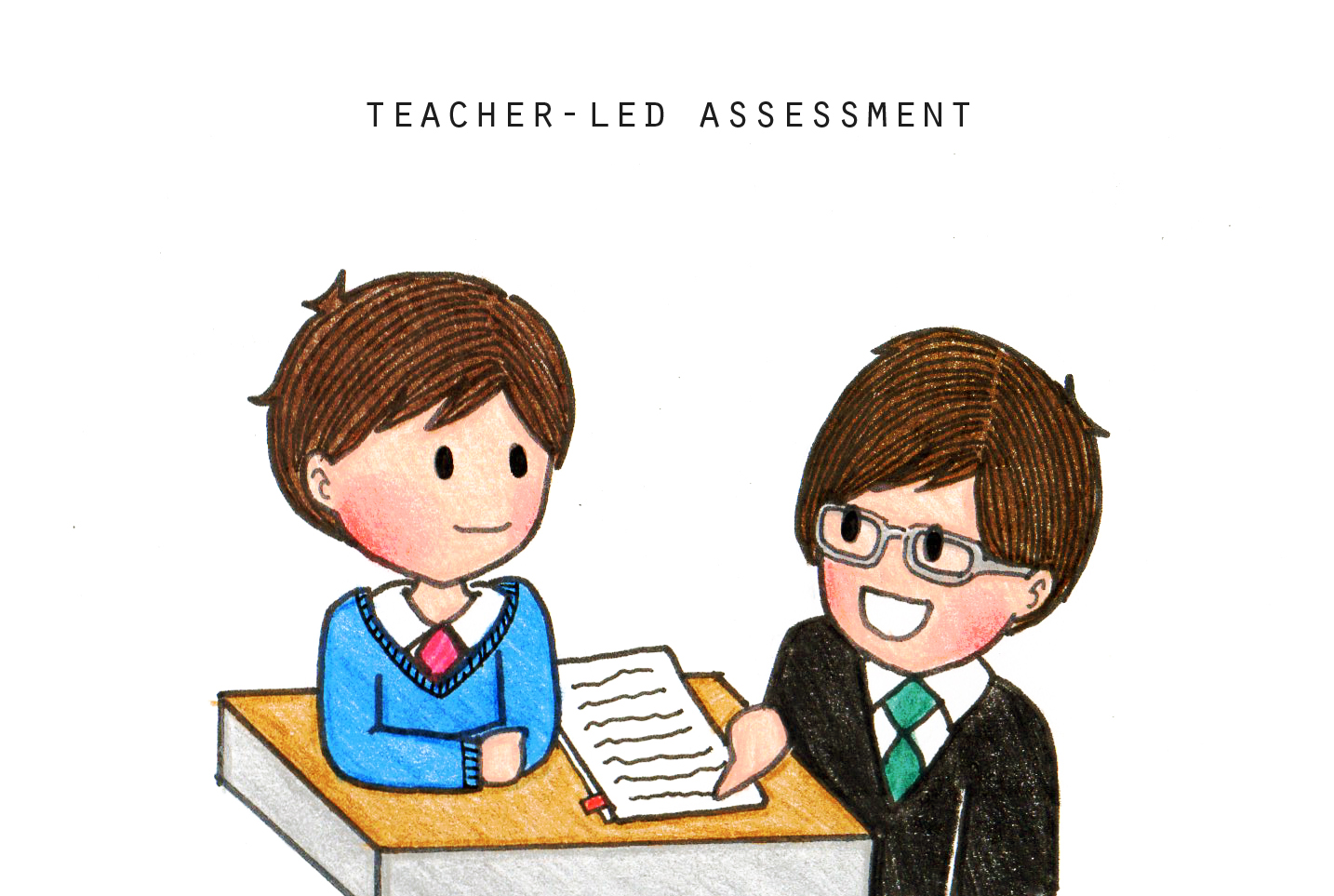
Teacher-led assessment

#3 – Selling your resources

A number of platforms on the web allow you to sell your worksheets, presentations and other resources to other educators. Check out the following:

#4 – Writing

Set up a blog to inform teachers about good techniques, or even a subject-specific blog for students. After a few years or less, convert the posts into an e-book and sell your knowledge to others!

714symbol
richard-rogers-online

We welcome you to join the Richard Rogers online community. Like our Facebook page and follow us on Twitter for daily updates.

richardjamesrogers

Easter Revision Tips to Share With Your Students

An article by Richard James Rogers (Award-Winning Author of The Quick Guide to Classroom Management)

Illustrated by Pop Sutthiya Lertyongphati 

This post was featured by Twinkl in their Exams and Revision Blog

April is here already and I find myself bewildered. 

A year ago I was in China preparing my students for their final ‘A’ – Level and IGCSE exams. Now I’m in Thailand doing the same thing with ‘IB’ and IGCSE students.

Time flies when you’re having fun – and it really has been a lot of fun!

walking around wt laptop

This can be quite a stressful time of the year for many of our learners. They’ll soon have a two-week holiday (some schools in the U.K. have already started theirs). In that holiday they’ll be expected to revise like crazy for their final exams.

A Guidance System

Do our students really know ‘what’ to revise? Do they know ‘how’ to revise?

I’ve realized for a while now that preparing students for exams is really easy – they need to have good resources that teach them the content, and they need to be made aware of the self-discipline tactics that will ensure that they cover everything thoroughly. 

Addressing the ‘What’

Rule #1: The syllabus is your ultimate guide

Our students must have access to the syllabus (in fact, they should have been using it throughout the course itself).

If at this stage of the year your students have never seen the syllabus then you ABSOLUTELY MUST share it with them.

If we are going to really prepare our kids for their exams, then they’ve got to know all of the topics that could come up on their papers.

High five

Students should be encouraged to make notes on each part of the syllabus as part of their revision. 

Rule #2: Complete lots of past-papers under timed conditions

Some exam boards release their past-papers for free, and some don’t.

For my IGCSE Chemistry students I’ve been quite lucky: Edexcel publish all of their past-papers and mark schemes online for free, and my students have had lots of practice in navigating through their past-paper site.

With UKEdChat

For the IB Diploma the papers have to be purchased. I’m lucky because my school has purchased lots of IBDP past-papers and mark schemes.

Now I’ve got to be intelligent enough to share all of those papers with my students.

  • Use your school’s VLE to upload past-papers (I’m currently using Google Classroom and it’s great for this)
  • Print out a past-paper booklet for each of your students to take home over the Easter holidays. You don’t have to mark this – provide the mark schemes so that the students can do self or peer-assessment.
  • Provide topic-specific exam papers (with past-paper questions that are focused on individual topics). Save My Exams is a great website that provides lots of these ‘topic tests’ for IGCSE, GCSE, ‘A’ – Level and ‘O’ – Level subjects. 

sit n talk

At this stage our students should be completing past-papers under timed conditions too. It’s so easy to run out of time in the real exam. Our students must understand the importance of completing past-papers at home under the same time-constraints as the real exams. 

Rule #3: Use more than one textbook for each subject

I didn’t have a lot of money when I was a GCSE student. I couldn’t buy a lot of books, but that didn’t matter. I had some great textbooks that school provided, and my dad bought a great maths book for me, but I needed more. 

My local library in Flint, North Wales, was well stocked with great books. My Easter strategy in 1999 was simple: Spend every day at the library using every textbook I could find to revise every topic I could.

Going to the library had two advantages for me:

  • I couldn’t fall asleep at home, or have a midday nap, or get distracted by TV. I was in the library and I had to work.
  • The library was quiet and very stimulating – there’s something about sitting amongst rows and shelves of books that’s really soothing and conducive to studying

flint-library
Flint Library: The place where I made my dreams come true

The strategy worked  – I came out with A’s and A*s across the board.

But here’s the sad thing – I was the only kid at the library that Easter (that I can recall). No other kids were revising there. I was alone. 

It seemed to me like scores of high school students in Flint had really missed out on the opportunity to enrich and discipline their revision that year.

Students need to get the same information from a wide variety of sources. My best students over the past 12 years of my teaching career have been those that used at least three textbooks per subject to study from.

card games

It’s a tactic that works, and our students must know about this!

Rule #4: Use the internet

There are lots of great websites out there that have good quality notes, tests and interactive activities to learn from. My three favorites are:

  • BBC Bitesize: Perfect for GCSE and ‘A’ – Levels, but there’s lots of crossover with IBDP and the American SATs too
  • S-cool: This site has been going for around 20 years and it’s brilliant. The videos are particularly good. 
  • UKEdChat: Tons of great resources for revision here. Check it out. 

Addressing the ‘How’

Students need to know ‘how’ to revise, as well as what to revise. 

We must pass on these fundamental tips to our learners:

  • Revise in small sections: 30-40 mins per session with a 5-10 minute break in-between
  • Revise for around 7 hours per day: Some may not like this, but the students who’ll get the top grades will be putting in this much time every day. Former headmaster of Harrow School, Barnaby Lenon, made headlines this week by stating that “All topics should be revised at least three times before the exam; studies should start at 9am and finish by 6pm with regular 30-minute breaks and a good night’s sleep at the end. Good exam results are made in the Easter holidays,” (Quote courtesy of The Guardian newspaper). I have to admit that Barnaby’s advice does reflect the truth of the situation – students who want the top grades have to work this hard. It really is that simple (albeit not easy to accept).
  • Use a variety of methods to get the information to sink in: Record yourself reciting your revision notes and listen to the audio for an hour in bed before you sleep. Make revision notes. Use concept maps, Complete past-paper questions. Use flashcards
  • Exercise every day: A nice walk in the morning, or a light jog each day, will get the blood flowing and will boost alertness. You’ll also feel good too (because of endorphin release) which will make your revision more productive.
  • Revise in groups: Get together with friends for a revision session. BEWARE: Make sure you meet to revise, not to chat and play around. 
  • Get up early every day – no sleeping in!: It’s up early, exercise, shower, breakfast and start revising. This self-discipline is necessary to achieve top grades.

In the infographc below I’ve summarized the key strategies for revision success. Please feel free to COPY AND SHARE WITH YOUR STUDENTS:

Final Exams Revision

Recommended Further Reading

Click on the book image to take you to the Amazon sales page.

The Revision Toolbox by Georgia Heard

Just great, direct, no-nonsense tips on training your students to revise thoroughly and smartly.

Revision Toolbox

How to Pass Exams by Dominic O’Brien

Should be compulsory reading for all students, everywhere. Enough said.

How to pass exams

714symbol

richard-rogers-online

We welcome you to join the Richard Rogers online community. Like our Facebook page and follow us on Twitter for daily updates.

richardjamesrogers

What is an ‘Authentic’ Teacher?

An article by Richard James Rogers (Author of The Quick Guide to Classroom Management)

Illustrated by Pop Sutthiya Lertyongphati 

It was lunchtime but I didn’t mind. Neither did my German teacher.

I ran upstairs and entered her room. She was free – success! I pulled out my listening exam script: a set of learned responses to verbal questions that could come up in my GCSE exam.

With UKEdChat

I’m sure she was hungry and I’m sure she wanted lunch. I didn’t think about that when I was 16 years old. I probably should have. 

She sat with me and helped me with my responses. Her dedication lunchtime after lunchtime was a major factor in the grade ‘A’ I achieved in the final exams. She went on to praise me publicly for my efforts and nominate me for a prestigious school award, which I won.

What makes some teachers go beyond the call of duty?

Not every teacher was like my German teacher, and understandably so. As teachers we work long hours and often give up parts of our weekends and school holidays for planning, marking and perfecting our work.

If I could write one phrase to describe my German teacher it would be this: She really cared.

Art class

That’s not to say that my other teachers didn’t care – they did. But my German teacher really cared.

The desire and drive within her to help one of her students had a profound effect on me – so much so that it acts as a huge reminder to me of the duty of care I have to my students today: almost two decades later. 

poll everywhere

How does ‘authenticity’ manifest itself?

I’ve been fortunate to receive wholehearted care from a number of great teachers in my life. I think their authenticity can be summed up in these main ways:

  • They don’t just teach their subject: My best teachers tried to help me out with problems I was having in life, not just in my studies. When I broke up with my girlfriend, my Biology teacher gave me some great advice and told me not to let it bother me. “It’s her loss”, he said. When I came into school looking exhausted because I’d had no sleep the night before, a number of teachers expressed concern for me and asked how I was and recommended that I get some sleep. When I was pelted with snowballs and came into my Head of Year’s office crying, he put his hands on my ears to warm them up and helped me to calm down.  
  • They take their duty as ‘role models’ seriously: “There’s no such thing as an off-duty teacher” – words spoken to me when I was an NQT. I think those words are true. I never saw any of my teachers drunk or smoking, and even on my graduation evening when some teachers came out for a drink at a local restaurant with the students, they acted responsibly.
  • They remember you after you leave: At high school reunions and when bumping into each other in the street, authentic teachers and former students talk with each other like it was yesterday. “How are you getting along, Richard”. “I’m doing fine”, I said. “I always knew you would be a success, you were always a very dedicated student”, my old physics teacher responded in 2006. That felt great. It was a reminder of who I was at my core, and a motivator to keep me on track for the future. 
  • They leave no student behind: I was in Year 10 when me and my classmates took a ‘formulae of ions’ test in Chemistry. About half of the class, including me, failed the test. To this day I still don’t know why that happened, but my Chemistry teacher just couldn’t let it go. She pulled aside all of us as a group, had a talk with us and made us resit the test the following week. On the second attempt, we all got above 80% (and it was an equally difficult test). Afterwards she said “Can you now see that the concept was really simple”. We all agreed. 
  • They give up some of their free time: I already know that this is not going to be a popular one with some of my readers, but it is true. Authentic teachers care so much about their students that they are happy to run classes or tutoring after school or at break and lunch times to help students out. They know that this dedication will pay dividends in terms of the rapport they are building and the results the students will get in the final exams. These payoffs are more valuable to them than their free time, which is very admirable. 

instructional software

What are the effects of ‘authenticity’?

Authentic teachers literally change their students’ lives. They realise that their influence doesn’t just last a day, or an academic year. They know that they are part of a mission to mold their learners into happy, responsible, good adults of the future. 

There’s a saying that was used in a Teacher recruitment campaign in the UK in the early 2000s – No One Forgets a Good Teacher.

I would say that no one forgets an authentic teacher, because only authentic teachers can be good teachers. 

img_0071

richard-rogers-online

We welcome you to join the Richard Rogers online community. Like our Facebook page and follow us on Twitter for daily updates.

richardjamesrogers

World Book Day 2025: Every Teacher is an English Teacher

UPDATED: 1st March 2025

An article by Richard James Rogers (Award-Winning Author of The Quick Guide to Classroom Management and The Power of Praise: Empowering Students Through Positive Feedback). This blog post is illustrated by Pop Sutthiya Lertyongphati.

Related article –  Vocabulary Values: Helping Students to Learn Key Words

He waddled his way through the corridor like a happy duckling. Amid the giggles and cries of small children he looked liked a giant orange with tentacles as he waded through the masses on his way to the library. Mr Jones was dressed as ‘Mr Tickle’ from the ‘Mr Men’ series of books. 

The outfit must have taken an astronomical amount of time to create. With orange fur and controllable arms it was clear who was going to win the ‘Best Dressed Teacher’ competition. 

I, on the other hand, tend to be a little too lazy with my outfit on World Book Day. This year was no exception. Can you guess who I am?:

James Bond World Book Day

If you said ‘James Bond’ then well done: you’re right! It’s a quick (and a little too lazy) conversion for me: change my tie to a bow, add a dinner shirt and a white pocket square and I’m ready to serve on Her Majesty’s Secret Service!

“Who have you come as?” one of my friends says to me as I walk into the staff room on Friday (we held our World Book Day a day later because Thursday coincided with a religious holiday here in Thailand — something that happens most years) “I’m James Bond — a classic literary icon who’s been thrilling readers and moviegoers alike for over 70 years” I say (rather upset that I wasn’t instantly recognizable). “Is that even a book” he says. “It’s a whole series of books, written by Ian Fleming”

“Wow. I had no idea”

Costume Capers

World Book Day is great for getting people to ask good questions. Often, the characters we dress up as are in fact movie stars which we never knew existed in books. This can really get kids inspired to read more as they gradually realize that good books are often the basis for their favorite movies or TV shows. Good examples include:

  • Harry Potter – The all-time legendary series of fantasy books written by J.K. Rowling. These books have formed the basis for 8 beloved movies, with new adaptations and spin-offs continuing to keep the magic alive.
  • The Hunger Games – These action packed dystopian novels featuring stoic and passionate heroine: Katniss Everdeen, have been transformed into five excellent films. 
  • Twilight – Popular with teenagers and young adults: these fantasy/romance novels were brilliantly conceived and written by legendary author Stephenie Meyer

What message does all of this send to kids when they are fully aware of the facts? That’s simple: Books are cool! Books are inspirational. Books change lives. Read books!

It’s a shame that World Book Day is only once per year. In reality, every day should be a World Book Day as we should encourage our kids to read books and enjoy learning English on a daily basis. 

As a teacher at an International School in Bangkok, I have the unique privilege and pleasure of working with classes where, in many cases, more than 90% of the students are working with English as an additional/second language. One of my unique missions every day is to help my students to see why English is a beautiful language. To help them notice patterns and sounds. To ensure that they use the correct language in their answers to exam-style questions.

Examination language

Try putting up a ‘command-terms’ display in your classroom (like the one below):

Command Terms Blooms Display.JPG
A command terms hierarchy display that follows Bloom’s Taxonomy

I use this display on a daily basis to teach my students how to phrase their answers. I like to turn the command terms into kid-friendly language when going through exam-style and past-paper questions. For instance:

  • Describe: Tell me ‘what’
  • Explain: Tell me ‘why and how’
  • Deduce: Work out the answer and show every step in your work

Eventually, the students can build up a long list of command terms in their Learning Journals or notebooks, coupled with their ‘kid-friendly’ descriptions. The display also follows Bloom’s Taxonomy, with command terms demanding more sophistication in written responses as you go up the pyramid.

The result: Students learn good English vocabulary and score better on exams. What could be better than that! 

Command terms are so important, in fact, that many textbooks are now emphasizing them as students work through the chapters. Take this extract from a book my students were using in one of our Science tutoring sessions this week:

Command Terms Hw
Command terms emboldened in a Science textbook

As I was helping these students, I found that explaining the command term first, before tackling the question, really helped in getting a suitable answer. The two girls who I was tutoring would say “Ah, I get it now” when the command term was made clear.

Do you think that students will use these command terms in their daily and future lives? Absolutely! Command terms come up in a range of contexts when operating through the medium of English. For example: “How can we justify this business decision?”, “On the basis of the previous two-years sales, can you predict likely sales for the first quarter of this year?”, “How can we determine who is the best candidate for this role?”, and on we could go ad infinitum.

Isn’t this what language-learning is all about? Getting students to learn key words, then to enjoy using those words and then to apply them to a range of contexts?

sit n talk

In my honest opinion, command terms offer the ultimate key in cross-curricular learning and should be explored by curriculum leaders as a way to really ‘gel’ their subjects together. The result of this: deep learning and an added sense of importance attached to each subject as students see how they link together. 

Learning Journals

I have a system set up where students in Year 11, 12 and 13 (ages 15-18, or Grades 10-12 in American/International schools) bring me a journal filled with revision notes, key words, past-paper questions and answers every Monday. It’s such an effective way to boost confidence and performance, but it does require a bit of organisation and leadership from the teacher.

If you have identified students who could use such a journal to focus specifically on learning key words and command terms, then here are the steps to take:

Step 2: The students should divide the first page into three columns:

  • Key word
  • Meaning
  • Pronunciation

For example: Moment, The force applied to a lever multiplied by the distance from the pivot, mo-men-t

For an EAL student you can include a fourth column:

  • Translation

In this column, the student can write the word in his/her native language.

Step 3: The students should write down the key words they learn every week into this journal, along with all of the other information.

Step 4: CRUCIAL! The key words and information must be CHECKED every week. Check the words, the meaning and the pronunciation (you can even get the students to say the words to you – this reinforces their memory of the terminology). 

Explaining

Don’t forget to reward students for good work too: use your school’s points/merits system, write nice comments on their work and even think of special rewards: a ‘star of the week’ for example, where you display the student’s work on the class noticeboard. 

Use voice inflections

Science is great for teaching kids new words. When we, as teachers, genuinely love to pronounce and say key words then our kids will love doing that too.

I have quite a funny little system I use in class. When a key word comes up, I’ll give it a rank:

“Precipitate. Precipitate. Such a beau-ti-ful word. Say “Pre-ci-pi-tate”

Class: Precipitate

“Excellent! Precipitate is number 3 on my ‘Favorite Words in Science’ list”

Student: “What’s number one”

“That’s a secret! One day you’ll find out! A prize to first person to e-mail me my number one Science word when they hear it!”

Of course, my number one word will come at the end of the academic year when the suspense and excitement has been building up for two terms. 

Use vocabulary jokes

I’ve recently started experimenting with this and it’s working like a treat! It does take some planning and skill though, and is best described through some examples:

Vocabulary Joke 1: ‘Formal Charge’

I recently used this joke with my Year 13 students to reinforce the term ‘Formal Charge’ – a concept in Organic Chemistry. 

“I was walking to the coffee shop yesterday and Mr Davies asked me “Mr Rogers, what is your favorite F.C.? Is it Liverpool F.C.?’ And guess what?”

Class: “What?!!!”

“I said ‘No. My favorite F.C. is ‘Formal Charge'”

Class: (laughing)

I then laugh and say “This is the life of a Chemistry Teacher.  Hashtag #chemistrylife”

Class: (giggles and laughter)

This has long-term effects outside of the classroom too. Effects which fully embed the phrases. For example: when I was actually walking to the coffee shop one of my Year 13 students passed me and I said “What is your favorite F.C.?” and she said “Formal Charge”.

Chapter 5 - drones and hacking

Vocabulary Joke 2: ‘Alkali’

An alkali is the opposite of an acid, having a pH higher than 7 (think of soap, for example). I used this joke recently with my Year 10 students:

“A student of mine in Year 9 asked me: ‘Mr Rogers, do you like my homework?’, and guess what happened!'”

Class: “What?!!” (they know that a joke is coming!)

“I said I more than like your work, I ‘alkalike‘ your homework”

Class: (laughing)

I then laugh and say “This is the life of a Chemistry Teacher. Hashtag ChemistryLife — still trending strong in 2025!”

Class: (giggles and laughter)

Clean and fun jokes can like this can be very powerful. The kids will say them to their parents and friends, and if you refer to them outside of the classroom (e.g. John, do you like my new notebook? John: I ‘alkalike’ it), then you can really embed these key terms. The result: Kids will love English, will repeat the words you say and will eventually use these key terms frequently in their written responses. 

Other strategies

There are many more strategies you can use to get your learners to enjoy learning the English language. Check out my blog posts on Learning Journals and Vocabulary Values for more tips. 

Conclusion

Our aim must be to get our students to LOVE English – speaking it, reading it, listening to it and writing it. Encourage good language learning by:

  • Using and embedding command terms
  • Creating a Learning Journals system
  • Pronouncing key words in a funny way and getting students to repeat them out loud (elocution)
  • Making full use of powerful ‘Vocabulary Jokes’
  • Using other strategies, such as vocabulary games, which you can find on my blog posts here and here.
IMG_5938

richard-rogers-online

We welcome you to join the Richard Rogers online community. Like our Facebook page and follow us for daily updates.

Latest hybrid

Peer or Self-Assessment? Benefits and Challenges

An article by Richard James Rogers (Author of The Quick Guide to Classroom Management). Illustrated by Pop Sutthiya Lertyongphati

instagram-button

Supplementary article to read (highly recommended): Effective Feedback – The Catalyst of Student Progress

There’s no doubt about it – getting students involved in their own assessment and marking has a wide-variety of benefits.

walking around wt laptop

Take this great summary by Rosario Hernandez at University College Dublin for example, which explains that peer-assessment benefits students in four key ways:

  • Promotes high quality learning
  • Contributes to skills development
  • Furthers personal development
  • Increases students’ confidence, reduces stress and improves student motivation

That’s quite a convincing list!

Peer assessment

Not surprisingly, similar things can be said of self-assessment. This great overview by the University of Sydney advocates for the wide-use of self-assessment with students for the following key reasons:

  • It encourages student involvement and participation, so it’s great for students who normally find group activities or active class tasks a little uncomfortable
  • When used in conjunction with group work it can be a great way to assess one’s personal role and contribution in the group experience and learning process

self-assessment

Academic appraisals aside, I’ve found from my personal experience that both self and peer-assessment are absolutely invaluable to the modern practitioner. They save you oodles of time as a teacher and students learn so much from each process.

But how should we use self and peer-assessment?

There are a number of different ways that self and peer-assessment can be used in the classroom. My experience has taught me (the hard way!) that the following tasks work really well:

  • Making corrections to tests and assessments: When any important test or assessment comes up, I don’t think it is appropriate to have students marking these themselves. They’ll get it wrong, even with a mark scheme to use, and will be overly generous on themselves and their peers (unless they’ve been trained for a period of time – more on that next). However, a great activity is to mark the tests yourself, then give the tests back to the students along with the a printed or online mark scheme. The students could then use a coloured pen to make full and detailed corrections to their test papers. You could turn this into an AfL exercise, with students writing down the question numbers they got wrong on the whiteboard, or on an anonymous piece of paper. You could then go through these questions afterwards to clear up common misconceptions. If you run a regular learning journals system (as I currently do), then students could write down the questions and the model answers in their learning journals. This causes very deep-learning to take place and is great for building long-term memory!
  • Assessing homework, classwork and regular assignments: A great time-saver for teachers. Just make sure the kids have access to the model answers. Don’t forget to collect the work in too – you need to know that the kids actually did the work you asked them to do.
  • Past-papers: Exam-level students really need to become familiar with the official mark schemes provided by exam boards. They need to become comfortable with key vocabulary, language and command terms. Provide exam-level students with regular past-papers to do as homework. Provide mark schemes too, so that they can self and peer-assess their work in class later. For older students (e.g. ‘AS’ – Level, SAT and IBDP learners) I’ll sometimes give them past papers and mark schemes to take home. Their task is to complete the past-papers under timed conditions and mark them using the mark schemes. The student then hands me the papers completed and marked (this is essential – I need to know that they have completed the assignment). I then check the papers for common misconceptions and target those in class. 
  • Technological means: There a number of ways in which technology can assist in the peer and self-assessment process. Google forms are great; as are online quizzes provided by trusted third parties (e.g. BBC Bitesize and MyiMaths) and online quizzes that teachers can build by themselves (e.g. Quizlets). Make use of these and others (e.g. Kahoot – great for getting kids to use their mobile devices), as they are really interactive and can offer a nice break from traditional methods. 

Art class

Training students to assess themselves

img_0413

This is a gradual process and basically involves exposing students to exam-style questions and past-papers; along with their mark schemes, over a prolonged period of time. The process is straightforward but can be monotonous: provide past-papers as homework, classwork, projects and even through a special past-paper ECA club (which I’m currently doing with my IGCSE and IBDP students – it’s very effective). 

There are a number of creative ways to train students up in proper exam-technique:

  • Cut up the questions and answers to past-papers and hand them to students one-at-a-time. They can only come and get the next question when they’ve effectively answered and marked the previous one.
  • Give students the answers to questions and get them to write the questions! Use the same method as the previous bullet-point above, or set up a large display and get students to put their answers on post-it notes which they can stick to the display.
  • Get a big container filled with cut-up exam questions. Students have to pick out questions from the container in pairs or threes, and work on them. No two groups should have the same question. 
  • Students can make revision videos, websites and even stop-motion animations that contain exam-style questions and answers. Get students to record the process through a learning journal system. 

sitting on the carpet

Challenges when using self and peer-assessment

There are a few challenges, but these are greatly outweighed by the the benefits. I’ll offer some notes from my own personal experience and some solutions.

  1. Some students won’t want to swap during peer-assessment. This can be an issue in some classes. Some students can find themselves isolated and excluded by social groups, and may not be able to find someone to wants to swap their work with them. Whilst this kind of social exclusion is totally unacceptable, and must be dealt with through the appropriate school channels, there is a way to mitigate it in the first instance: collect in every piece of work and hand them out again randomly to different students. That way, they should all have someone else’s work to mark. 
  2. Different ability levels: There will be some students in the class who have such a limited knowledge of the subject that they won’t be able to effectively mark the work in front of them, even if they have access to the mark scheme. You could offer a ‘clinic-style’ system, where you sit at a special desk in the room and offer ‘consultation’: where students walk to see you to clear up misconceptions if they don’t understand the work or the mark scheme. You can also walk around the classroom and sit with individuals to have one-to-one discussions.
  3. Students being too generous: This is a common problem, especially for exam-level students who are new to past-papers and the peer/self-assessment process. At first, you might want to project the answers on the whiteboard and go through each question one at a time, but you’ll find that this takes ages (unless it’s an MCQ test) as students will have lots of questions to ask along the way, and you’ll have to answer verbally to the whole audience (which isn’t ideal in every case). Even better – you could collect in the assignments afterwards and double-check them. Speak to students who have lost marks after you’ve double-checked the papers and really make sure they understand the mark scheme and where they went wrong.
  4. Poor handwriting: This can be an issue for some students. It’s really important that examiners can actually read a student’s work. Students with poor handwriting need to be identified quickly and intervention measures put in place (e.g. special classes). You don’t want anyone to lose marks just because the examiner couldn’t read what the student wrote!

card games

Conclusion

The benefits of peer and self-assessment are numerous and incontrovertible. However, students must have access to official mark schemes and model answers for the process to work properly, and they must be involved in actually correcting their work (not just ‘ticking’ and ‘crossing’ and working out a score/percentage).

Students need to be trained in proper peer-assessment. Do not tolerate over-generosity: collect the work in afterwards and double-check that it was marked properly. 

Watch out for common misconceptions – these crop up a lot in a peer-assessment. See this as a good thing: you can use this information to inform your teaching. 

Use a wide-variety of technological means in the peer and self-assessment process. This will keep students on task and provide exposure to vital Information and Communication Technology: building skills that will be essential in the future.

Be on the lookout for students who refuse to swap their work (or accept another student’s work to mark) and address this issue promptly. No student should feel excluded by a peer group at school – this is tantamount to bullying and must be addressed appropriately.

Be aware that some students will not have the ability to peer and self-assess effectively, even when they have access to the model answers. Provide one-to-one assistance in these cases, either by walking around the room and helping out or having students walk to you for help. 

Recommended further reading

Click on the images to go to the Amazon page for the book. 

  • Peer Feedback in the Classroom by  Starr Sackstein. Great for gaining a deep understanding of what meaningful feedback looks like. Highly recommended!

peer feedback in classroom sackstein

  • The Perfect Assessment System by Rick Stiggins. Great for all educators and those involved in education management. Really puts assessment into a whole-school context and is a great read for anyone who wants to up their game and empower their students through effective feedback. 

Perfect assessment system.jpg

img_0071

Facebook

Proud sponsor of:

We welcome you to join the Richard James Rogers online community! Join us on Facebook and Twitter for regular updates, giveaways of Richard’s books, special offers, upcoming events and news. 

richard-rogers-online

Marking Week 2: What Should Teachers Actually Mark?


An article by Richard James Rogers (Author of The Quick Guide to Classroom Management)
Illustrated by Pop Sutthiya Lertyongphati

This article follows on from last week’s popularMarking: Why, What and How? blog post: A highly recommended read!

Week 2: What and How?

The long, dark journey of my PGCE was long over. Gone were the constant lesson observations, full-page lesson plans and intense work-scrutiny from my university tutors and in-school mentors. Now I had autonomy. Now I was trusted.

With the onset of my first year as a qualified teacher came the intense sense of duty that one acquires when realizing that this is your chance to ‘sink or swim’.

And swim I did: as hard as I could with the tools I had at the time. But it wasn’t enough.

At about this time of the year in 2006 I was entering my February half-term holiday with an absolute ton of marking to complete. I took inventory of my week’s stock of coffee-inducing baggage and found that it contained:

  • Classwork
  • Homework
  • Tests
  • Online work
  • Journals (which I’d just started after receiving the idea from a friend)
  • Classwork/homework in the form of loose bits of paper and worksheets
  • Coursework for GCSE Science
  • The data entry that would come with recording all of this stuff

with-ukedchatIt was quite a sight to see and I remember Friday drinks with my colleagues that week in which I brought a huge sports bag into the pub. “What’s in the bag, Richard” some said; to which I replied “Marking”. The place erupted with laughter as my friends saw the gritty and not-so-pleased look on my face!

I’m sure they sympathized with me deep-down inside as they were merrily propping-up the bar.

Get a Marking Timetable in Place!

Back then I didn’t have a marking schedule in place and that was a bad idea! Work would just come to me as and when I set the deadlines and I would let it accumulate until I had some semblance of free time in which I would mark, say; four notebooks!

It just wasn’t sustainable.

Nowadays, I follow a very strict marking timetable so that I spread out my marking evenly across a recurring two-week period. I’m happy because I’m getting things done, my students are happy because they are receiving acknowledgement and feedback and parents are happy because they can see measurable steps of improvement due to the way that I mark (more on that later).

walking around wt laptop

I know, for example, that on Tuesday Week 2 I am marking Year 10 IGCSE books. I see them that day so I can easily collect their books. I also know that I’m marking Year 13 IB Diploma books on Friday Week 1; so I’d best get those done on Friday otherwise I’ll have two loads to do the following Monday.

Get a marking timetable in place if you don’t already have one. It’s a self-discipline tool that will set you apart as an organized teacher who actually cares about the everyday work that your students do.

Prioritizing

Some types of marking must take priority over others. 

Take Year 11 GCSE coursework, for example. Now if you had a choice between marking that on-time or marking Year 7 notebooks, then you’re definitely going to go for the coursework. It’s a greater priority.

As teachers we are messing up our schedules and creating added stress because we do not ruthlessly prioritize enough. It’s absolutely essential.

All marking is important: every student must receive feedback and acknowledgement for their efforts. However, you may have to give your exam-preparation classes more detailed feedback than your younger classes at certain points in the year. You may also have to give it back in a more swift and timely manner too (e.g. when you’ve just finished the mock exams, or when you’ve had an end-of-unit test). 

High five

Learn to prioritize. I’ve known some teachers in their first year who were desperately trying to cover every single scrap of work with ‘two stars and wish’, ‘targets’ and literacy/numeracy feedback. This level of dedication is admirable, but it does not accurately reflect the differing needs of different classes. It may also cause long-term health problems for the teacher!

The Students Should be Doing More Work Than The Teachers!

Lazy teachers are the best teachers because they get the students to do all of the work

These words spoken to me in 2008 by a former colleague got me wondering about my workload as a teacher. Was I spoon-feeding my students too much? Was I giving them too much guidance without giving them the chance to think for themselves?

After a difficult self-appraisal, I took a rough-guess that I was somewhere in the middle.

It was at this point that I started to write questions on students’ work. “What is this part called” on a diagram, for example, or simply a “?” next to something that wasn’t clear. 

Mai's wprk
Have you spotted the question I wrote in this IBDP Biology homework? 

Make sure to check that students have actually improved their work! You can set ‘work-improvement’ as a short homework or classwork task. 

Use Marking as a Means of Encouragement and Motivation! 

We all love positive feedback: especially when it’s sincere.

Make your feedback useful and sincere by writing (or saying) “Well done for….” from time to time. It will help the student to store the concept in their long-term memory and will prop-up their confidence so that they enjoy your subject more and more in the future.

Be aware that this must be constantly reinforced. Once or twice won’t be enough – we should be praising the positive attributes of our students’ work on a regular basis for maximum effect. 

IMG_0574

 You should definitely use your school’s reward system for this. If your school doesn’t have one, then create one (stickers, class points, the chance to win chocolate at the end of the month, etc.)

img_1470

Showcasing

Placing students’ work on display is an excellent way to take the motivation and inspiration element a step-further.

In my current school we have a weekly ‘Science Stars’ noticeboard where every teacher pins up an excellent piece of work for that week. Students regularly stop by to see their friends’ work, and it offers a great sense of achievement for those students who have been selected to be ‘Stars’.

Showcasing provides a benchmark for other students to aspire too. It shows examples of work considered to be detailed, presentable and accurate, and should aim to teach about the importance of effort in achieving the desired outcome. 

Showcasing doesn’t have to be done on a weekly noticeboard. It can be done electronically on a VLE or school website or blog, and can even be as simple a task as standing in the middle of the class and showing the students an excellent notebook. 

Showcasing also adds an extra level of effectiveness that day-to-day marking doesn’t always reach – it shows that the teacher is noticing things! It makes it really clear what stands out and what does not, and raises the bar for all students to aspire too (when done regularly). 

Recurring Work (Very Powerful)

I use journals a lot in my teaching. It’s a shame they are not used more in the profession as a whole (I write about the amazing effectiveness of student journaling in an earlier blog post here)

Every Monday my Year 11, 12 and 13 Chemists bring me a journal filled with:

  • Revision notes
  • Answers to exam style questions and test corrections done in class
  • Mind maps and memory joggers, such as acronyms and mnemonics
  • A summary of what they’ve learnt that week

Journals used in this way are designed to instill self-discipline in students as they require one to regularly review work done in class. They are also a very excellent way for me to see and address weaknesses quickly, and I can provide feedback on a weekly basis, which helps a lot with focus and improvement.

The students bring their journals to class on Monday and sign their names on the big sheet on the wall. I then read through every book and write one sticky note of feedback in each (this keeps my feedback focused on the essentials, reduces my marking time and ensures that students get a rapid response).

Every Tuesday my students collect their journals from my room, read my feedback and hand them in again the following Monday. 

The kind of regular, recurring feedback is great for me and my students. Common misconceptions become clear very quickly (allowing me to address those issues) and my students feel that their teacher cares deeply about their learning (which he does). 

Conclusion

I’ve found that consistency is key; no matter what methods of marking I use. My students need to know that I care about the work they produce. Often, this sense of ‘someone actually gives two hoots about the work I do’ is the major factor in a student’s success at school.

I think John Hattie summarizes the importance of feedback as a tool for improving performance much better than I can: 

The aim is to get the students actively involved in seeking this evidence: their role is not simply to do tasks as decided by teachers, but to actively manage and understand their learning gains. This includes evaluating their own progress, being more responsible for their learning, and being involved with peers in learning together about gains in learning. If students are to become active evaluators of their own progress, teachers must provide the students with appropriate feedback so that they can engage in this task.

Recommended books for further reading (click on the book images to go to their Amazon pages):

Visible Learning for Teachers by John Hattie. Includes excellent strategies for using feedback to dramatically enhance learning.

hattie.jpg

Formative Assessment by Margaret Heritage. Great for new and experienced teachers alike as it really shows how assessment can be used inform teaching in a practical and easy-to-understand way. 

Heritage


NEXT WEEK: Peer-assessment vs. Self-assessment – The Best Methods to Use

cropped-facebook.png

Proud sponsor of

We welcome you to join the Richard James Rogers online community! Join us on Facebook and Twitter for regular updates, giveaways of Richard’s books, special offers, upcoming events and news. 

richard-rogers-online

Mock Exams: Preparing Your Students The Right Way

An article by Richard James Rogers (Author of The Quick Guide to Classroom Management)

Illustrated by Pop Sutthiya Lertyongphati 

For many of us the next few weeks will be very eventful. Christmas is just around the corner and we’re all looking forward to spending time with our families and enjoying the festivities.

For our final year students, however, the festive period will be very busy. They’ll be preparing for mock examinations in IGCSE’s, GCSE’s, ‘A’ – Levels, IBDP subjects and others. Many, unbeknownst to us, will also be topping up their revision time with private tuition and extra classes. 

The pressure is on: as it should be. 

My view point has always been that if students are going to give up a whole Christmas break revising and studying in this way, then they need to be doing it properly. 

As teachers, I feel we have a duty to train and monitor our students thoroughly as they get ready for the most difficult exams they’ve ever taken. 

In many schools, students are simply told that they have mock exams coming up in January and that they’d better revise or else! But is this really fair?

We sometimes assume that our students are old enough to take responsibility for their own learning. Sometimes we are content to take a back seat and let the students take ownership of their own revision.

snacking

I believe that standpoint neglects the true needs of our learners in terms of guidance and assurance. By adopting the idea that we can leave these kids to their own devices over the Christmas vacation, we are essentially being negligent in our duties. 

So how do we make sure that our students are really making the best use of their time? What can we do to truly help them achieve success in the mock exams?

#1: Provide Past-Papers

We must not assume that our students can, or will, find past-papers online.

We must not assume that our students can, or will, find mark schemes and model answers online.

a guy sitting

Consider doing the following:

  1. Print out booklets filled with past papers and mark schemes. Give these to your students just before they set off for the Christmas vacation. Perhaps set the papers as a homework? Between 10 and 15 past-papers usually suffices.
  2. If you’re conscious of the cost and/or environmental impact of printing so many past-paper booklets, then simply share the pdfs with your students. You can publish these online via your school’s VLE or even set up a padlet or bulk e-mail. 
  3. Encourage your students to complete the past-papers under timed conditions: this will train them to answer efficiently without leaving blank spaces.
  4. Provide the examiner’s reports for each exam paper: these offer rich information which the official mark schemes don’t offer. Show your students how to use these.
  5. Just prior to the mock exams (i.e. just after or just before the Christmas break), consider holding some past-paper ‘clinics’. These can be run after-school if class time is taken up with whole-school exams. Use these clinics to go through the mark schemes to specific papers. Whilst you’ll be sacrificing some of your time, the pay off is that you’ll be helping your students immeasurably and at exactly the right moment for maximum impact. 

#2: Teach your students how to revise

Just recently I held a very active Year 11 revision class. It was a summary session on polymers and plastics. 

Providing material for revision: such as websites and printed summaries, I gave the students a menu of options from which to complete their topic overviews:

  • Mind-mapping
  • Flash cards/revision cards
  • Writing bullet points
  • Recording notes on their phone (spoken verbally)
  • Creating a website summary
  • A Google slides presentation
  • Build a game or quiz
  • Past-paper question hunt
  • Anything else they could think of

Sessions like this encourage the students to find out what their preferred methods of revision are. They also show students new methods they may never have thought of before. 

studying with com

Try to increase the frequency of revision sessions like this as the terminal exams approach. Use tried-and-tested methods you already know about, and draw upon the ideas of your students for new creative inspiration. 

#3: Do your students know when to revise?

Have you done the research yourself? How many hours per night should students be revising? Are morning sessions better than afternoon sessions? How many breaks should they have? When should they have breaks? What should they eat? When should they eat? When should they sleep, and for how long? 

Surprisingly, the vast majority of educators do not know the answers to these questions. As a consequence, our students are often misguided and left to figure all this out by themselves. 

Whilst research in the area of effective revision and knowledge retention can be conflicting, there are many startling consistencies. I’ve summarised this research in my ‘Mock Exams Preparation!’ infographic below. Please feel free to share this with your students, colleagues and parents. They need to know this information!

mock-exams-richardjamesrogers

#4: Monitor their revision over the school vacation

Yes, I know that we’re on holiday too. 

Yes, I know that we deserve a break too.

What I’m suggesting is not massively time-consuming, but it will have a MASSIVE impact on the success of your students. 

Set up some kind of online journal, where the students can record a few sentences each day describing what they revised. Consider the following ideas:

  • Make the journal open for all students to see, maybe by creating a Google doc that every student has access to. This will provide other students with ideas as the vacation progresses and they see what their peers are revising. It also adds a thin layer of accountability, as it’s easy to see who hasn’t added to the class journal. Use your judgement of your students to see if this is appropriate. Maybe ask them for their opinion about it before you set it up. 
  • Make the journal closed, perhaps by setting up a Google doc for each student that you can check each day. Maybe an e-mail system works better for you: where students e-mail you a few sentences each day. 
  • Market the idea as a ‘help tool’: an online journal where students can record what revision techniques worked well for them that day, and ask any questions they have. The other students in the group can then answer those questions, comment on the suggestions and the teacher can even offer written guidance too. This ‘collaborative’ form of journaling can have an amazing motivational effect, and can even raise students’ enjoyment of your subject. 

There’s one experience in my sixth-form schooling that I’ll never forget as long as I live. It shows the impact that a dedicated teacher can have on his or her students.

on the bike

It was Christmas 2001. I was 17 and getting ready for my mock exams, but I was slacking off. One week into the holiday and I hadn’t done any ‘AS’ – Level Physics revision.

Then, the telephone rang. I picked it up and to my shock and embarrassment it was my Physics teacher.

“How’s the revision going, Richard?”

“Err, err, it’s going okay, sir” 

“Do you have any questions so far?”

“Err, no I think I’m good”

“Okay then. Don’t forget that the exam is only 10 days away”

“Okay. Thank you, sir, bye”

“Bye Richard”

If ever there was a wake-up call in my life, that was it. I was embarrassed to have to lie to my teacher. The revision wasn’t going well – I hadn’t done any.

That day I pulled up my socks and went at my studies like a steam train. It was the phone call that did it – a call from someone who cared. Someone I respected.

Sometimes a little bit of pain does a lot of good. Left to my own devices I would have crammed my Physics revision into the last few days of the holiday. 

Summary

  • Provide plenty of past-papers, mark schemes and examiner’s reports. Crucially: go through the papers when the students have completed them.
  • Teach your students the science of good revision. Feel free to share my infographic with them!
  • Monitor revision over the Christmas vacation (very powerful!). Set up some kind of online journaling system that suits your students. Ask for their input on it before you set it up. 

cropped-facebook.png

Don’t miss the Christmas Giveaway for 2017! From 25th – 29th December, Richard’s book will be free to download on the Amazon Kindle store globally. Merry Christmas and enjoy (and tell your friends)!

richard-rogers-online

Like our Facebook page and follow us on Twitter for daily updates.

Latest hybrid

Developing Independent Learning Skills: Teaching Our Students to Teach Themselves

An article by Richard James Rogers (Author of The Quick Guide to Classroom Management)

Illustrated by Pop Sutthiya Lertyongphati 

The ability to learn independently is a key aspirational skill of all of our students; or at least it should be.

Not only do our top students need to learn how to study independantly when they get to university, but all of our students need to be prepared for careers that may not yet exist.

Empower students through marking

When you first meet your advanced learners, or when they are starting out on their ‘independent learning training’, empower them with encouraging comments on their work.

Take this recent example of mine for instance:

img_1470

with-ukedchat
“Excellent advice!”

This work is from a final year IBDP student. She’s done a good job of finding and filtering relevant information by herself. I’ve praised the things she’s done well, and offered tips on how to extend her research.

Over time, the amount of written comments I give on this kind of project work/research will definitely decrease. This is only needed in the initial stages.

For her next piece of work, peer assessment and some verbal feedback from me may be all that she needs to be encouraged to keep on track and continue to improve.

Design project work with a creative outcome in mind

Here are some ideas for group and individual projects:

  • Create an infographic about a particular topic, to be displayed on the classroom wall
  • Create a class presentation, perhaps on Google slides, to be presented to the class at some future date
  • Create a website summary of a topic
  • Build a model or a demo to show the class
  • Create a dramatized play/news report about a topic
  • Create a song/rap
  • Create a stop-motion animation of a process
  • Create a spatial Learning activity (kids might need some training for this one: see my blog post here for help)
  • Create a leaflet or brochure, to be distributed to another class or Year group (cooperate with other teachers on this one – perhaps a leaflet exchange is a good idea)

Can you think of more to add to the list?

Use Imaginative Evaluation

When people think of an ‘evaluation’ they’re often drawn to their early memories of their Science lessons at school.

In those kinds of evaluations students have to decide what worked well, what didn’t work well and what changes could be made to methods and equipment to make the experiment better next time.

With Imaginative Evaluation, students use their ingenuity to think of what they could do better if there were no limitations in terms of equipment, time, resources and technology.

In an attempt to create the innovators of tomorrow, Imaginative Evaluation aims to get kids thinking about what technology, currently not available, that they would invent to solve the problem they’re facing.

This excerpt from my book shows a planning and evaluation form that can be used with any assignment, in any subject, to encourage Imaginative Evaluation:

Slide1
Slide2
Slide3

Build things

Get your students to build what they are learning in some way. You don’t need fancy equipment: straws, bottle caps, crumpled paper, cardboard, paints and even plastic bottles can all be mashed and mangled together by students to create amazing models.

I’ve used this technique across my teaching in Science to get students to create everything from atomic models (a recent example is given below) to makeshift ‘eco gardens’.

Can you think of times where you could use this technique in your curriculum area?

cropped-facebook.png
richard-rogers-online

We welcome you to join the Richard Rogers online community. Like our Facebook page and follow us on Twitter for daily updates.

Latest hybrid

Spatial Learning: A Powerful Teaching Tool

An article by Richard James Rogers (Author of The Quick Guide to Classroom Management)

Illustrated by Pop Sutthiya Lertyongphati 

It was a cold October morning in North Wales. I was a fresh, Newly Qualified Teacher at Denbigh High School. 

Young and inexperienced with rose-tinted goggles: I was mindful of my responsibilities as a new Science teacher. Expectations were high.

When the Deputy Head of the school suddenly asked to observe one of my Year 9 Physics lessons I knew I had to perform well. As a thriving school with a great reputation, Denbigh definitely set the bar high.

My Year 9 kids were typical 13 and 14-year-olds. Some days they were great and some days they’d just had enough. Keeping them on-task was a challenge for an unskilled teacher like me. 

Frantically thinking of ideas for this major lesson observation that was coming up, I thought about how to keep the kids interested whilst maintaining challenge at the same time. I was going to be teaching a lesson about series and parallel circuits, but I’d made the mistake of not ordering circuitry and equipment from my Science technician. A class practical was simply out of the question at such short notice, and the circuitry was booked by a number of other teachers that day anyway. I could only order enough equipment for a class demo.

What on Earth was I going to do?

with-ukedchat
“An AMAZING book! 5 stars!”

Simulations and online learning was out of the question – this was 2006 and kids didn’t have the right mobile devices and they didn’t carry laptops. Online resources were also limited.

I felt uneasy about taking the kids to the computer lab, even though it was available. My Deputy Head wanted to see me teach, not watch the kids work on computers for 40 minutes (or so I assumed).

In a moment of despair and perplexity I was suddenly given a flash of inspiration: what if I could turn the lab into a giant circuit? The kids could become ‘model electrons’ and could walk around the classroom holding up little signs, pretending to be flowing around a circuit. I could even hold up a sign saying ‘cell’, and a few kids could be model ‘switches’ and ‘bulbs’. Hell, it might just work!

The day comes

I frantically printed a class set of A4 signs – just simple sheets which said ‘electron’, ‘switch’ and ‘bulb’ in big letters. 

‘This crazy idea might save my day after all’, I thought!

The kids came in and sat down. Back then I hadn’t mastered the art of giving students something quick to do as soon as they enter the door (see my three A’s in my book). I got right into this activity as a starter (which turned into a semi-main body of the lesson). 

robot

I lined all the kids up and gave them each a sign. Most of them would pretend to be electrons and a few would be switches and bulbs (‘switch on’, ‘switch off’, ‘bulb on’ and ‘bulb off’ signs were given to these pupils). 

The desks were arranged in rows, so I started with a series circuit. I explained the route the kids had to take and they started walking, holding up their signs. They smiled and giggled along the way. When the ‘electrons’ passed the ‘bulb’ it ‘lit up’, and when the ‘switch off’ student held up his sign, the ‘electrons’ stopped moving and the ‘bulb off’ sign was held up, proudly.

To my astonishment, the kids absolutely loved it. More importantly: they understood the concepts of the lesson brilliantly. They completed a short worksheet after the ‘circuit walk’ (which they all could answer with ease) and then I gave my short circuit demo with actual wires and bulbs and switches. 

Feedback

My deputy head was very impressed. She praised my creativity and said that the ‘circuit walk’ was very effective.

Not bad for a freshy who prepared in rush!

That day I became a hardcore Spatial Learning fan. Fast forward to today and all of my students will tell you that I use spatial learning in almost every lesson I teach. It’s effectiveness speaks for itself.

But what is Spatial Learning?

There are many definitions and interpretations of spatial learning on the web and in various books. Some of this pedagogical mumbo-jumbo can be really confusing, but I believe I’ve nailed it down to one sentence:

Spatial Learning is when students use bodily movements to express themselves, solve problems and model situations. 

Spatial Learning has both general and specific applications. I’ll now go through some great examples that illustrate the power of this excellent teaching tool. 

Here’s a quick video I made about Spatial Learning:

A human graph and true or false?

Do you want to know the opinions of your students on a subject matter? Maybe you’re taking a survey (e.g. which day is the best for canteen food). Maybe you have a list of multiple choice questions and you want a fun way to get the kids through them.

A human graph might be the right tool for you!

What if you just want to quickly check your students’ conceptual understandings (e.g. as a plenary)? You could ask some true/false questions and get the kids to raise their hands, or you could use a way cooler (and more fun) method! 

Choose one wall to be the ‘True’ wall and one to be the ‘False’ wall.  Once you’ve asked the question, get the kids to walk to the correct wall. It’s that simple! Just make sure that the kids walk back to the middle of the classroom before each question. 

This great illustration from Pop shows you the steps to take for each of these activities:

Human graph and true or false

Body numbers

Do your kids need to express numerical answers sometimes? Maybe they need to work out a percentage or a fraction, or translate numbers from one language into another. Maybe they need to express something in Binary Code. Well it’s time to put pen and paper down and get your kids moving!

Turn your students into ‘human numbers’ by following Pop’s beautifully illustrated instructions:

Human numbers

For double and triple-digit numbers you can put students into groups for added fun!

Modelling

The vast majority of the Spatial Learning I do involves modelling a situation, concept or solution. Like the example I gave earlier about the electrons travelling around the circuit, the students actually become the things that you’re teaching about. 

I find that almost everything I teach can be modelled spatially in one form or another. 

I’ll provide some examples to show just how easy it is, with just a little creativity, to turn any monotonous textbook paragraph into a living, breathing, exciting and stimulating task. 

Modelling example one: Diffusion

Textbook definition: Diffusion is the passive movement of liquid or gas particles from a region of high particle concentration to a region of low particle concentration. The speed of diffusion of any given particle is dependent on its molecular mass. This means that a particle of ammonia, for example, will diffuse faster than a particle of hydrogen chloride as ammonia is the lighter of the two particles. 

Modelling activity: As you can see, the textbook definition is rather hard to swallow. So, to jazz things up a little, you can turn the students into ammonia and hydrogen chloride particles and tell them to diffuse! In this activity, the students simply walk across the classroom at different speeds, depending on which molecule they are. Quick, easy to do and a nice break from writing, reading and listening to a lecture. More importantly: it’s really useful as a tool to help kids understand this concept.

See this illustration I drew below (my art work is dire compared to Pop’s, so I hope it’s understandable!):

Spatial Learning Diffusion Richard James Rogers

Modelling example two: A Typical Home Network

In an attempt to show you just how pliable spatial learning is, I’ve designed a task for a subject area I don’t specialise in: ICT

Concept: A typical home network may be wired, wireless or a combination of both. Hardware components process and convey the data message from from part of the network to another.

Spatial learning task: For this task you need moving and stationary students. The stationary students stand at predetermined positions in the classroom (you can put signs on desks or on walls to help). These students represent the hardware. The rest of the students are the ‘data message’, and they move from one component to another. I hope the illustration below helps you to see just how easy this is to implement and how much fun it can be. Students should shout out the name of the hardware component they reach at each stage as they walk around the room. 

Spatial Learning ICT Richard James Rogers

Can you think think of ways to use modelling in your subject area?

Further reading

My debut book is filled with great spatial learning and active engagement tips. After the enormous success of that book I’ve decided to work on a new book that will be released mid-2018 which goes into even greater depth and breadth about the range of classroom management tactics available to teachers. Also, if you’re looking for a great book to build up spatial learning skills in small children, then I strongly recommend Julie Dillemuth’s Lucy in the City:

61rOmEopr7L._SX397_BO1,204,203,200_

Also, a great manual for designing great spatial-learning activities is Dr. Thomas Armstrong’s Multiple Intelligences in the Classroom (highly recommended):

51W5tQ-Y1ML._SX384_BO1,204,203,200_


IMG_5938

cropped-facebook.png

richard-rogers-online

We welcome you to join the Richard Rogers online community. Like our Facebook page and follow us on Twitter for daily updates.

Latest hybrid