How I Use SEL in My High School Lessons (And How You Can Too!)

A blog post by Richard James Rogers (Award-Winning Author of The Quick Guide to Classroom Management and The Power of Praise: Empowering Students Through Positive Feedback)This blog post has been beautifully illustrated by Pop Sutthiya Lertyongphati.

10 Rookie Blunders New High School Teachers Make (and How to Avoid Them!)

A blog post by Richard James Rogers (Award-Winning Author of The Quick Guide to Classroom Management and The Power of Praise: Empowering Students Through Positive Feedback)This blog post has been beautifully illustrated by Pop Sutthiya Lertyongphati.

5 Mistakes Teachers Are Making With Slide Presentations

An article by Richard James Rogers (Award-Winning Author of The Quick Guide to Classroom Management and The Power of Praise: Empowering Students Through Positive Feedback)This blog post has been beautifully illustrated by Pop Sutthiya Lertyongphati.

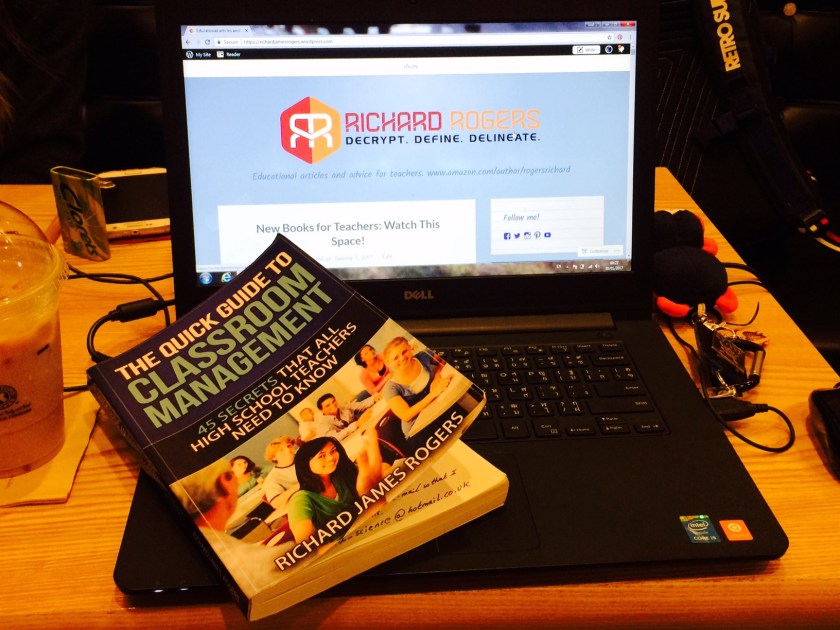
My Award-Winning book for high-school teachers.

We welcome you to join the Richard Rogers online community. Like our Facebook page and follow us on Twitter for daily updates.

Empowering Hope: How Teachers Can Make a Difference for Children Living in Poverty

An article by Richard James Rogers (Award-Winning Author of The Quick Guide to Classroom Management and The Power of Praise: Empowering Students Through Positive Feedback)

Illustrated by Pop Sutthiya Lertyongphati 

Accompanying podcast episode:

We welcome you to join the Richard James Rogers online community. Like our Facebook page and follow us on Twitter for daily updates.

Unleash Your Students’ Brilliance: Exploring Genius Hour in High School Teaching

Check out my award-winning book on Amazon!

We welcome you to join the Richard James Rogers online community. Like our Facebook page and follow us on Twitter for daily updates.

Creating Safe Schools: Local, National, and International Considerations

An article by Richard James Rogers (Award-Winning Author of The Quick Guide to Classroom Management and The Power of Praise: Empowering Students Through Positive Feedback).

Illustrated by Pop Sutthiya Lertyongphati.

Teachers are crucial for creating psychologically and physically safe school and classroom environments, and their relationship with the learners entrusted to them is key in preventing and responding to all kinds of school violence.

UNESCO Bangkok

Recommended further reading

We welcome you to join the Richard James Rogers online community. Like our Facebook page and follow us on Twitter for daily updates.

Embracing the New Academic Year: Key Considerations for Teachers in 2023 and Beyond

An article by Richard James Rogers (Award-Winning Author of The Quick Guide to Classroom Management and The Power of Praise: Empowering Students Through Positive Feedback).

Illustrated by Pop Sutthiya Lertyongphati.

We welcome you to join the Richard James Rogers online community. Like our Facebook page and follow us on Twitter for daily updates.

Mastering the Art of Public Speaking: Tips for Rocking the Stage with Confidence

An article by Richard James Rogers (Award-Winning Author of The Quick Guide to Classroom Management and The Power of Praise: Empowering Students Through Positive Feedback).

Illustrated by Pop Sutthiya Lertyongphati.

Hello, fellow speaker! Are you ready to conquer the stage and captivate your audience with your words? Public speaking can be a nerve-wracking experience, but fear not! In this blog post, we’ll explore some invaluable tips to help you become a confident and engaging ‘sage on a stage’. So, grab a cup of coffee, sit back, and let’s dive in!

#1: Know Your Audience

Understanding your audience is the first step towards delivering a memorable speech. Research their demographics, interests, and knowledge level to tailor your content accordingly. Speak their language, incorporate relatable anecdotes, and address their pain points. Remember, your ultimate goal is to connect with your audience on a personal level.

#2: Structure Your Speech

A well-structured speech can make all the difference in keeping your audience engaged. Begin with a compelling opening that grabs attention, followed by a clear introduction of your topic. Organize your main points logically, supporting them with relevant examples or stories. Finally, end with a strong conclusion that leaves a lasting impression.

#3: Practice, Practice, Practice

Rehearsing your speech is crucial. Familiarize yourself with the content and practice it aloud multiple times. Pay attention to your tone, pace, and body language. Consider recording yourself or rehearsing in front of a mirror to assess your delivery. The more you practice, the more confident and natural you’ll become on stage.

#4: Embrace Non-Verbal Communication

Effective communication extends beyond words. Pay attention to your body language, facial expressions, and gestures. Stand tall, maintain eye contact, and use appropriate hand movements to enhance your message. Be mindful of your posture and avoid fidgeting. Confident body language will help you establish a strong presence and connect with your audience.

#5: Utilize Visual Aids

Visual aids can reinforce your message and make it more memorable. Use slides, props, or multimedia presentations to complement your speech. However, be cautious not to overload your audience with too many visuals. Keep them simple, clear, and visually appealing, while serving as a visual support to your spoken words.

#6: Engage Your Audience

Interaction is key to keeping your audience engaged throughout your speech. Encourage participation by asking rhetorical questions, inviting volunteers, or using audience polls. Incorporate moments for small group discussions or brief activities to break the monotony. Consider using live quizzes that the audience can participate in using their devices (e.g. Kahoot!, Blooket and Quizlet Live). Remember, an engaged audience is more likely to retain your message. They’ll also be happier and will enjoy themselves during your presentation, and you’ll be more likely to get referrals afterwards.

#7: Connect Through Storytelling

Humans are wired for stories. Incorporate personal anecdotes, real-life examples, or relevant narratives to connect with your audience emotionally. Stories evoke emotions, enhance relatability, and help your audience connect the dots. Make your speech memorable by sharing stories that resonate with your audience.

#8: Be Authentic

Authenticity is the secret ingredient to captivating your audience. Embrace your unique voice, personality, and style. Avoid imitating others or trying to be someone you’re not. Embrace your imperfections and let your genuine passion for the topic shine through. Audiences appreciate speakers who are genuine and relatable.

#9: Handle Nervousness

Even the most seasoned speakers experience nervousness. Embrace it as a natural response and use it to your advantage. Channel that energy into enthusiasm and excitement. Practice deep breathing, visualization, or other relaxation techniques before stepping on stage. Remember, nervousness is a sign that you care, and your audience wants you to succeed.

#10: Seek Feedback and Learn

After each speaking engagement, seek feedback from trusted sources. Analyze what worked well and areas that need improvement. Join public speaking clubs or workshops to refine your skills further. Remember, mastery takes time, so be patient and committed to continuous growth. If you would like to earn a Certificate in Public Speaking, then check out my Powerful Public Speaker programme, which can be delivered online wherever you are in the world (or on-site, if you happen to live in Thailand).

Conclusion

Congratulations! Armed with these public speaking tips, you’re well on your way to becoming an exceptional speaker. Embrace the opportunity to share your ideas, inspire change, and leave a lasting impact on your audience. Remember, every great speaker started somewhere, so don’t let fear hold you back. Embrace the stage, believe in yourself, and let your voice be heard!

We welcome you to join the Richard James Rogers online community! Join us on Facebook and Twitter for regular updates, giveaways of Richard’s books, special offers, upcoming events and news.
Instagram Threads: A Fun Tool to Enhance Teaching and Learning!

An article by Richard James Rogers (Award-Winning Author of The Quick Guide to Classroom Management and The Power of Praise: Empowering Students Through Positive Feedback).

Hey there, fellow educators and Instagram enthusiasts! Today, I want to talk about a nifty feature on everyone’s favorite photo-sharing platform: Instagram Threads. We all know that Instagram is great for sharing snapshots of our lives, but did you know it can also be a fantastic tool to support teaching and learning? That’s right! In this blog post, I’ll walk you through some creative ways teachers can leverage Instagram Threads to engage their students and make learning a whole lot more exciting. Let’s dive in.

#1: Creating a Private Classroom Community

Imagine having a space where you can interact with your students outside the traditional classroom setting. Instagram Threads provides just that! You can create a private group solely for your class, allowing for open discussions, sharing resources, and fostering a sense of community. It’s an excellent platform to keep the conversation going beyond the classroom walls and make learning a collaborative experience.

#2: Sharing Timely Updates and Reminders

Remember those times when you had to make last-minute announcements or reminders, and you wished your students could see them instantly? With Instagram Threads, you can quickly post updates, reminders, or even schedule them in advance. It ensures that important information reaches your students promptly, and you can bid farewell to those “I didn’t know about it!” excuses.

#3: Encouraging Visual Storytelling

Instagram is all about visual content, and Threads takes it up a notch! As a teacher, you can leverage this feature to encourage your students’ creativity through visual storytelling. Assign projects where students can capture and share images or short videos related to the topics they’re studying. It adds an exciting dimension to learning and allows students to express themselves in unique ways.

#4: Instigating Dialogue and Debates

Discussion is an integral part of education, and Threads provides an ideal platform for fostering meaningful conversations. Teachers can initiate discussions by posting thought-provoking questions or prompts related to the lesson material. Students can then respond, share their perspectives, and engage in healthy debates. This helps develop critical thinking skills and encourages active participation.

#5: Showcasing Student Work

Who doesn’t love recognition and appreciation for their hard work? Instagram Threads can be an excellent avenue for showcasing student achievements. Create a designated space to highlight exceptional projects, artwork, or any other outstanding work by your students. Not only does this motivate them, but it also inspires others and creates a positive classroom culture.

#6: Conducting Virtual Q&A Sessions

Want to provide additional support or address student queries outside regular class hours? Instagram Threads offers a seamless way to organize virtual Q&A sessions. Dedicate specific time slots where students can post their questions, and you can respond with detailed explanations or clarifications. It promotes active learning and demonstrates your commitment to student success.

Remember, while Instagram Threads can be an incredibly useful tool, it’s crucial to prioritize privacy and ensure all interactions are conducted in a safe and secure manner. Always adhere to your school’s guidelines and obtain necessary permissions from parents or guardians.

Conclusion

So, there you have it! Instagram Threads can be a game-changer when it comes to supporting teaching and learning. By tapping into its features, teachers can create engaging, interactive, and visually appealing learning experiences for their students. So why not give it a try? Your classroom is just a click away from a vibrant online community.

Stay connected, stay inspired, and let’s explore the incredible possibilities that Instagram Threads brings to our educational journey. Happy teaching, everyone!

Disclaimer: Instagram Threads is a third-party application and has its own terms of service and privacy policy. Please review and adhere to these policies when using the application for educational purposes. The minimum age for a child to have an Instagram account, at the time of writing, is 13 years old.

We welcome you to join the Richard James Rogers online community! Join us on Facebook and Twitter for regular updates, giveaways of Richard’s books, special offers, upcoming events and news. 

Enhancing Learning: 10 Ways to Harness the Power of Metacognitive Strategies in Your Classroom

An article by Richard James Rogers (Award-winning author of The Quick Guide to Classroom Management)Illustrated by Pop Sutthiya Lertyongphati.

In the ever-evolving landscape of education, it is crucial for teachers to empower their students with not just knowledge, but also the tools to become self-regulated learners. Metacognitive strategies provide a powerful framework to cultivate students’ ability to think about their thinking, leading to enhanced learning outcomes. By explicitly teaching metacognitive skills, educators can help students become more aware of their learning processes, develop effective problem-solving approaches, and ultimately become lifelong learners. What follows next are ten practical ways to incorporate metacognitive strategies into your lessons and promote student growth.

#1: Set Clear Learning Goals

Begin each lesson by explicitly stating the learning objectives. Encourage students to reflect on what they already know about the topic and identify what they hope to achieve. This metacognitive approach helps students understand the purpose of their learning and fosters a sense of ownership over their educational journey. One creative way that I advise you do this is by using the Three As technique.

#2: Think Aloud

Model the thinking process by verbalizing your thoughts as you solve problems or analyze information. Demonstrate how to monitor comprehension, clarify doubts, and adjust strategies when faced with challenges. This modeling helps students develop metacognitive skills by providing them with concrete examples of how to approach different tasks. Use my blog post on the Metacognition Cycle if you’re looking for ideas on how to verbalise your thoughts correctly.

#3: Reflect on Learning

Introduce reflective practices, such as journaling or class discussions, where students can express their thoughts, insights, and challenges encountered during the learning process. Regular reflection encourages metacognition by prompting students to evaluate their progress, identify areas for improvement, and consider alternative approaches. This great blog post by Martyn Kenneth describes some excellent self-reflection tools that can be used by students and teachers, so check it out!

#4: Promote Self-Questioning

Encourage students to ask themselves questions throughout the learning process. Teach them how to generate thought-provoking questions that assess their understanding, probe deeper into a topic, or anticipate potential difficulties. Self-questioning helps students activate prior knowledge and monitor their comprehension, fostering metacognitive awareness.

#5: Scaffold Metacognitive Strategies

Teach students specific metacognitive strategies, such as summarizing, predicting, visualizing, and self-monitoring. Provide step-by-step guidance initially, gradually shifting responsibility to the students. These strategies become valuable tools for students to manage their learning independently, fostering critical thinking and problem-solving skills.

#6: Use Graphic Organizers

Incorporate graphic organizers, such as concept maps, flowcharts, or KWL charts, to help students organize and visualize their thoughts. These visual aids facilitate metacognition by enabling students to connect new information to existing knowledge, identify knowledge gaps, and track their progress. A good place to start for ideas is this blog post on differentiating texts, which provides examples of some types of graphic organizers that can help students to digest large bodies of information.

#7: Encourage Peer Collaboration

Promote collaborative learning activities where students work together, discuss ideas, and provide feedback to their peers. Peer interactions create opportunities for metacognitive dialogue, allowing students to articulate their thinking processes, challenge assumptions, and gain alternative perspectives.

#8: Provide Timely Feedback

Offer constructive feedback that focuses not only on the final product but also on the thinking and problem-solving strategies employed. Help students reflect on their performance, identify strengths and weaknesses, and suggest strategies for improvement. Effective feedback promotes metacognitive development by guiding students’ self-reflection and self-adjustment.

#9: Foster Metacognitive Reading

Teach students reading strategies that enhance metacognitive awareness, such as previewing texts, making predictions, asking questions, and summarizing key ideas. Encourage them to monitor their comprehension while reading, using strategies like self-questioning or visualizing to deepen understanding. Reading can often be coupled with group or self-reflection to encourage deep learning (as opposed to surface learning). Please see my blog post about developing a passion for reading in students, here.

#10: Teach Metacognitive Transfer

Guide students in applying metacognitive strategies across various subject areas and contexts. Help them recognize the transferability of metacognitive skills and encourage their application beyond the classroom, fostering lifelong learning habits.

Conclusion

By incorporating metacognitive strategies into your teaching practice, you can equip your students with essential tools for self-regulation, critical thinking, and lifelong learning. The deliberate cultivation of metacognition empowers students to take ownership of their learning processes, fostering a sense of autonomy and self-efficacy. As they become more aware of their thinking and learning strategies, students can monitor their progress, identify areas of growth, and adapt their approaches accordingly.

Integrating metacognitive strategies into your lessons not only enhances academic performance but also nurtures valuable life skills. By encouraging students to reflect on their learning experiences, set goals, and analyze their own thinking, you are fostering metacognitive transfer—the ability to apply these skills in various contexts beyond the classroom. This transferability prepares students to navigate the challenges of higher education, careers, and personal growth.

All of this promotes deeper engagement and active learning in the classroom. Students who are metacognitively aware are more likely to approach tasks with a growth mindset, embracing challenges as opportunities for growth rather than being discouraged by setbacks. They become more resilient learners, willing to persevere through difficulties and develop strategies to overcome obstacles.

As educators, it is our responsibility to empower students with the tools they need to become self-regulated learners and successful individuals in an ever-changing world. By incorporating these ten strategies into your teaching repertoire, you are setting the stage for transformative learning experiences that will equip your students with the metacognitive abilities they need to thrive academically, professionally, and personally. Embrace the power of metacognition, and watch your students blossom into confident, self-directed learners who are prepared to tackle any challenge that comes their way!

We welcome you to join the Richard James Rogers online community! Join us on Facebook and Twitter for regular updates, giveaways of Richard’s books, special offers, upcoming events and news.