Artificial Intelligence is transforming education, but the real opportunity isn’t replacing teachers. It’s helping them work smarter, save time and deliver better learning experiences.
As we approach 2027, here are ten AI tools every forward-thinking educator should explore.
1.ChatGPT: An excellent all-round assistant for lesson planning, creating assessments, generating teaching resources and explaining difficult concepts.
2. MagicSchool AI: Designed specifically for educators, offering tools for lesson plans, rubrics, differentiated activities and classroom communication.
3. Brisk Teaching: Works directly within your browser to create resources, adapt materials and provide draft feedback on student work.
4. Diffit: Particularly useful for differentiation, transforming reading passages and learning materials into accessible resources for students with varying abilities.
5. Google NotebookLM: Upload curriculum documents, research papers and teaching materials to generate summaries, study guides, quizzes and source-grounded explanations.
6. Canva for Education: Create professional presentations, worksheets, posters and interactive learning materials using AI-powered design tools.
7. Khanmigo: Khan Academy’s AI teaching assistant helps educators develop lesson plans, assessments and personalised learning activities.
8.Wayground: Formerly Quizizz, this platform combines AI-supported assessment creation with engaging quizzes, interactive lessons and formative assessment. You can upload your slides and Wayground’s built-in AI will generate questions for you.
10.SchoolAI: Allows teachers to create supervised AI learning environments where students can practise, explore concepts and receive personalised guidance.
My Advice for 2027 and Beyond
The secret isn’t mastering every AI application. It’s selecting the right tools and combining them into efficient, reliable workflows.
AI should enhance professional judgement, not replace it. Always verify AI-generated materials, protect student information and retain human oversight of assessment decisions.
I also offer Corporate Training Workshops, particularly my Smart Workflows course, which focuses on making AI and digital tools part of practical, repeatable and productive working processes.
The future belongs not to those who use the most technology, but to those who use technology most intelligently.
For many years, “school is a child’s second home” was a promise that existed largely on paper. In reality, students could sense a clear divide in the warmth and engagement within their classrooms. The focus was primarily on maintaining discipline, covering the syllabus, and helping students recall what they had learned during lectures.
Emotions, if they surfaced at all, were often treated as distractions to be managed quickly. While it would be inaccurate to say that emotional awareness was entirely absent, it was certainly pushed to the periphery.
To some extent, this was understandable, as emotions can be complex, subjective, and difficult to measure. However, student performance began to reveal the limitations of this rigid approach. In a 2024 report, 97% of classroom teachers said they had witnessed children and young people having difficulty engaging with their learning in the previous week. This disengagement may point to deeper issues, including students’ emotional experiences and wellbeing.
As educators increasingly recognise this, emotional awareness has moved to the forefront. This blog post explores how teachers are drawing on emotional awareness to make learning more engaging. The four approaches discussed here demonstrate that meaningful change often arises not from sweeping reforms, but from small, intentional moments embedded within everyday teaching practice.
Listening Gets Equal Importance During Lectures
There is a reason why the term lecture often carries negative connotations. Few people enjoy being part of a one-sided monologue, even when delivered by a teacher. Traditionally, lectures centred on the teacher explaining content, an approach that is now often viewed as overly mechanical.
Today, equal importance is placed on understanding how students respond to a lesson, both verbally and emotionally. Active listening helps students feel valued, creating a safe space in which they can share their ideas, questions, and concerns. As a result, many teachers are careful not to rush through their lessons.
During lessons, effective teachers pay close attention to subtle cues such as hesitation, silence, and shifts in behaviour to gauge student understanding and engagement. In addition to silent observation, teachers may:
Ask open-ended questions to gain insight into students’ thinking
Provide students with time to articulate their thoughts and concerns
Adapt their teaching based on student responses, not just prior knowledge
A 2024 peer-reviewed article argues that active listening can strengthen educational relationships and give students greater confidence to express themselves. In essence, listening helps build rapport between educators and learners, making it an active relational practice rather than a passive classroom behaviour.
Teachers Recognize the Limits of Instinct Alone
In addition to subject knowledge, effective teaching requires empathy and compassion. Encouragingly, many educators now recognise that instinct alone is insufficient when navigating complex classroom situations.
Every student is unique, and similar behaviours can stem from very different underlying causes. This is where in-depth professional learning becomes essential. Most teachers already hold a bachelor’s degree, so further study is not about starting again, but about deepening expertise in a specific area of practice.
For example, a master’s-level programme in counselling can develop a deeper, research-informed understanding of emotional development and intervention strategies. Importantly, many of these programmes are available online, allowing teachers to continue working while advancing their qualifications.
MSW Degrees highlights that selecting the right programme is a key step towards licensure and a potential career in counselling. While most educators do not pursue this path to become full-time counsellors, such qualifications can provide valuable expertise in supporting student well-being within schools.
With this deeper understanding, whether gained through formal study or professional experience, teachers are better equipped to:
Reassess initial interpretations of student behaviour after class
Recognise when similar situations produce different outcomes, even with the same response
Seek colleagues’ perspectives rather than relying solely on personal judgment
Identify underlying causes rather than treating each issue in isolation
Student Behavior Is Seen as Communication
What characterised the disciplinarian classrooms of the past? Many were defined by a “stop the negative behaviour immediately” approach. A student speaking during a lesson would be disciplined, while incomplete homework often led to increasingly severe consequences.
This focus on school discipline prioritised control and compliance. Today, however, there has been a significant shift. Teachers are less likely to draw immediate, especially negative, conclusions. Instead of reacting instinctively, they pause to interpret the message behind the behaviour.
For example, a student who interrupts may be seeking clarification or reassurance. Similarly, a student avoiding homework may be experiencing feelings of overwhelm. In practice, this approach may involve:
Considering the possible causes of behaviour before responding
Identifying patterns rather than focusing on isolated incidents
Holding calm, private conversations instead of addressing issues publicly
Adjusting tasks and expectations to better meet student needs
A 2024 study published in the European Journal of Psychology and Educational Research highlighted the connection between teachers’ instructional and behaviour management practices and students’ emotional and behavioural difficulties. The study found that teachers’ classroom practices were significantly associated with teacher-rated student emotional and behavioural risk, suggesting that how teachers respond to classroom needs can shape students’ behaviour and engagement.
Behaviour is rarely random, and modern educators are increasingly recognising its significance. Viewing behaviour as communication requires a high level of emotional awareness to ensure accurate interpretation.
Emotional Safety Has Become the Foundation of Learning
In many cases, it is not unwillingness or lack of ability that holds students back, but fear of judgment. Students who feel emotionally safe are more likely to ask questions, even seemingly simple ones, make mistakes, and remain actively engaged.
Encouragingly, creating emotional safety is now a key priority for many teachers. This shift reflects a growing awareness of how teacher responses shape the classroom environment.
Many educators avoid overly negative feedback, recognising that it can discourage participation. Instead, supportive responses help students remain engaged. In practice, this may involve:
Avoiding harsh criticism when correcting mistakes
Acknowledging and encouraging student effort
Allowing sufficient thinking time before expecting answers
Maintaining calm and predictable classroom interactions
Addressing sensitive issues privately rather than publicly
A 2025 study further emphasised this point, demonstrating that emotional support from teachers has a significant positive impact on student engagement. It also contributes to increased confidence and resilience, both of which are essential for effective learning.
Ultimately, students are more likely to participate when they feel supported. Emotional safety is not optional; it is fundamental. This is especially important given the growing concerns around youth mental health in today’s hyper-connected world.
Are your teaching approaches aligned with emotional awareness? A lesson plan alone may not provide the answer. Instead, consider the smaller, everyday moments, students speaking freely, or subtle behaviours that may indicate avoidance. These patterns often reveal more about a classroom environment than formal structures.
If this reflection feels slightly uncomfortable, that is perfectly acceptable. Treat it as valuable feedback and begin with small, deliberate adjustments. Pause before reacting to behaviour, ask one more question before forming a conclusion, or respond to mistakes with curiosity rather than judgment.
At its core, effective teaching relies on thoughtful, practical strategies that refine pedagogy. When students feel positive about their learning environment, everything else begins to fall into place. It ignites their intrinsic motivation to understand and engage with what is being taught, something that exists within every learner.
Bibliography and References
Pearson. (2024). Pearson School Report 2024: Your voices, our future. Pearson.
Newton, A. (2024). “Active listening for effective student engagement.” Journal of Learning Development in Higher Education, Issue 32. DOI: 10.47408/jldhe.vi32.1409
Poulou, M.S., Reddy, L.A., Dudek, C.M. and Lekwa, A.J. (2024) ‘How teachers’ instructional and behavior management practices relate to students’ emotional and behavioral difficulties following teachers’ observations and performance feedback: An initial study of Greek classrooms’, European Journal of Psychology and Educational Research, 7(4), pp. 207–223. doi: 10.12973/ejper.7.4.207.
Guo, W., Wang, J., Li, N. and Wang, L. (2025). “The impact of teacher emotional support on learning engagement among college students mediated by academic self-efficacy and academic resilience.” Scientific Reports, 15, Article 3670. DOI: 10.1038/s41598-025-88187-x
Arciaga, M. (2025) ‘Discipline is Not Security: Dismantling Disparities Should be Top of Mind When Developing School Safety Policy in Georgia’, IDRA Policy Brief, February. Intercultural Development Research Association. Available at: https://www.idra.org/education_policy/discipline-is-not-security/ (Accessed: 1 May 2026).
It’s been said that the impact of an educator never ceases. Most importantly, one cannot tell what possibilities their teaching can open up in others’ lives.
The best part about this profession is that it is not static. Like the currents of the ocean, it moves with constant ebbs and flows. Well, most educators even know this feeling.
They start out with their lesson plan, and halfway through it, a student asks a question that steers the discussion in a completely new direction. Not only do these moments enrich the classroom, but they remind teachers that their own professional growth is equally important.
If you are already in this field, you wouldn’t want to disrupt your work. However, since career growth is also vital, take the middle path. This article will share three ways for educators to advance in their careers without leaving their classrooms.
Leverage Advanced Learning Opportunities
Just like any other field, those in education can also grow through advanced learning opportunities. In many cases, maximum professional growth happens when educators continue their learning while working in the classroom. Through advanced study, you can develop leadership skills and refine your existing expertise.
One pathway many experienced educators explore is that of a Doctor of Education (Ed.D.). Ed.D. programs are designed for working professionals who want to improve their educational practices. As Marymount University shares, the ability to transform and adapt as leaders to the demands of an ever-changing working environment is crucial.
Through advanced study, you will be equipped with analytical thinking and a leadership perspective required to navigate evolving demands. According to a 2024 survey, 58,131 research doctoral degrees were awarded by US universities in 2024. Of these, the Doctor of Education accounted for about 0.9%.
Today, flexible learning formats make these opportunities more accessible to practicing teachers. For instance, online Doctor of Education degree programs allow educators to pursue advanced training without leaving their existing careers. To make the most of such learning opportunities, educators must:
Apply their coursework directly to their classroom practice
Pursue flexible programs designed for working professionals
Use research projects to address real-world challenges across educational institutions
Tap Into Mentorship Networks
Formal training programs lay down the foundation, but steady professional growth equally depends on what you build on that foundation. This is about leveraging opportunities to collaborate with other educators.
You’d be surprised at the wealth of different experiences and teaching styles you encounter this way. Mentorship networks allow teachers to exchange ideas and gather valuable feedback.
Now, this may take many forms. There are formal school programs that pair experienced educators with their newer colleagues. You may also find helpful informal networks where educators come together to discuss challenges and better ways for student engagement.
This is a golden opportunity. It will help build confidence in your professional decisions. So, here are some practical ways to tap into mentorship networks:
Connect with experienced colleagues in your school who can offer guidance on classroom management and lesson planning.
Participate in professional learning communities (PLCs) where educators share classroom experiences and discuss improvements in curriculum.
Join online educator groups or forums to exchange ideas with teachers from other schools or regions.
Ask for constructive feedback by inviting a colleague to observe your lesson and share better instructional practices.
Mentor teachers who are new to the field, which will, in turn, sharpen your own leadership skills.
As per a 2024 survey, nearly four in five educators work in schools that offer mentorship programs. This tells us that schools widely recognize mentorship as a key driver for teacher development.
What’s more is that new teachers who are assigned a mentor report higher job satisfaction and better professional outcomes. The best part is that it’s possible to experience these benefits as you continue your current work.
Experiment With Innovative Teaching Strategies
Another effective way educators grow in their careers is through intentional improvements to daily classroom practice. For instance, when you test new methods of teaching, it refines your skills.
In turn, you will be able to create richer learning experiences for your students. This also makes it easy to understand diverse learning needs. Again, the keyword to remember is ‘experiment.’
The goal is certainly not perfection, and the excellence you’re after doesn’t come overnight. Trying out different methods of instruction and adjusting the next lesson based on your findings is all part of the progress. To keep things practical, experiment with new strategies in the following ways:
Introduce learning activities that require problem-solving through analysis and collaboration.
Utilize flipped classroom elements so students get the time they need to review study materials independently.
Lead through group projects that strengthen student engagement and understanding.
Take the help of technology for real-time feedback.
Assess the outcomes of each new instructional change to identify which strategies worked the best.
In a 2024 study, it was discovered that methods such as problem-based learning and flipped classrooms improved critical thinking and learning outcomes. By this, you can understand that it isn’t about creative experimentation. It is equally a powerful form of professional development where you get to grow alongside your learners.
Take a sigh of relief that you don’t need to take a complete 360-degree turn for professional growth. Just small intentional steps, even as you continue to teach, will suffice. Perhaps start with a new teaching strategy or a course that caught your eye.
The modern classroom has transformed into a professional laboratory. Well, this aligns with the fact that education itself is constantly evolving in light of new technologies and pedagogies.
You can rest assured in the good news that professional development today is more flexible than ever. So, are you ready for growth like never before? Now is the time to act and change your career trajectory.
For years, the narrative in education was clear: more technology means better learning. Classrooms filled with devices, digital textbooks replaced print, and innovation was measured in the number of screens a school could acquire.
Now, after a decade of high-tech experimentation, something fascinating is happening.
Teachers are rediscovering the power of traditional, low-tech methods. Not because they are nostalgic, but because research is proving that these approaches work. As Dylan Wiliam said,
“Not all innovations improve learning. Sometimes, the most effective tools are the simplest.” – Dylan Wiliam
The future of teaching might just look a little like the past.
1. Simplicity Improves Thinking
Too much digital stimulation can overload working memory and reduce focus. According to the Education Endowment Foundation (2020), simplifying lesson design leads to better learning outcomes, especially in problem solving subjects.
Sometimes a whiteboard and a pen allow deeper thinking than a touchscreen ever could.
2. Handwriting Helps Students Remember More
The research is clear: writing notes by hand improves memory and understanding.
“Writing by hand is a stronger cognitive process than typing.” – Dr. Virginia Berninger
Mueller and Oppenheimer (2014) found that handwritten notes encourage students to summarise and process information, which boosts long-term recall.
When students write by hand, they engage more brain systems than when typing.
3. Teacher-Led Instruction Works
Student autonomy can have a place in education (especially for older students), but explicit teaching often leads to stronger progress.
“Direct instruction is one of the most powerful teaching tools available to educators.” – Barak Rosenshine
Reports from the Institute of Education Sciences (2018) show that clear modelling and guided practice significantly increase achievement in literacy and numeracy.
4. Retrieval Practice Builds Long-Term Knowledge
There is a reason that quizzes, tests and assessments are back with a vengeance.
“Testing is not a mere assessment tool. It is a learning event.” – Henry L. Roediger III
Roediger and Karpicke (2006) found that retrieval practice produces far better retention than re-reading or highlighting.
Flashcards and low-stakes quizzes are not outdated. They are brain-friendly.
5. Balance Matters More Than Tech Integration
Digital tools can enhance learning, but they are not magic.
“Technology amplifies great teaching but cannot replace it.” – John Hattie
Hattie’s Visible Learning meta-analyses (2018) reveal that teacher clarity has a much bigger impact on achievement than technology alone.
Tech is a support. Not the star of the show.
6. Routines Make Students Feel Safe
Predictability allows students to focus on learning rather than uncertainty.
“Structure creates freedom for students to learn.” – Doug Lemov
Research by Lemov (2021) shows that routines reduce stress and waste less instructional time.Consider building routines for homework, lesson structures, topic reviews, journaling and anything else that may be appropriate.
Are your classroom routines truly embedded?
7. Printed Text Creates Deeper Reading
Screens encourage quick scrolling. Paper encourages processing.
“Digital reading encourages skimming. Print encourages deep reading.” – Dr Maryanne Wolf
A University of Maryland meta-analysis (2018) found that print improves comprehension, especially when reading for detail or analysis.
8. Human Connection Is the Ultimate Educational Technology
The best learning happens in positive relationships.
“A teacher’s relationship with students is the single biggest factor in classroom success.” – Robert Marzano
Marzano (2003) found that strong teacher-student relationships equate to several additional months of learning per year.
9. Back to Basics Because Basics Matter
Employers are noticing that many young people lack essential skills.
“Foundational skills are not optional. They are prerequisites for advanced learning.” – OECD Education Directorate
The OECD Skills Outlook (2021) reports global declines in basic numeracy and literacy. Schools are responding by emphasising phonics, fluency and vocabulary again.
Employers are increasingly reporting that fresh graduates lack basic, essential skills.
10. Paper Helps Students Focus
Digital distraction is now one of the biggest challenges in education.
“Students today face unprecedented levels of distraction. Simpler tools help them concentrate.” – Dr Larry Rosen
Common Sense Media (2022) reports that teens check their phones more than 100 times per day. A paper worksheet can feel like a break for their brains.
11. Blended Learning Works Best When it is Light on Tech
John Sweller’s Cognitive Load Theory reminds us that unnecessary complexity restricts learning efficiency.
“Effective teaching is about the intentional selection of methods, not the novelty of tools.” – John Sweller
The best classrooms blend traditional and digital strategies with purpose.
12. Old-School Methods Now Look Fresh and Innovative
There is a delightful irony in the fact that traditional methods feel new again.
“The future of learning is a balanced classroom where tradition and innovation work together.” – Sir Ken Robinson
UNESCO (2021) recommends hybrid approaches that keep human interaction at the heart of learning while allowing technology to support, not dominate.
Final Thought
Old-school is not old-fashioned. It is evidence-based.
The lesson schools are learning today is simple:The best methods are the ones that help students think deeply, connect with others, and remember what they learn.
Oftentimes that means closing the laptop and opening a notebook.
Bibliography and References
Common Sense Media (2022) Social Media, Social Life: Teens Reveal Their Experiences. San Francisco: Common Sense Media.
Education Endowment Foundation (2020) Cognitive Load: Using Instructional Approaches to Reduce Learners Mental Burden. London: EEF.
Hattie, J. (2018) Visible Learning: A Synthesis of Over 1,400 Meta-Analyses Relating to Achievement. London: Routledge.
Institute of Education Sciences (2018) What Works Clearinghouse Intervention Reports. Washington, DC: U.S. Department of Education.
Lemov, D. (2021) Teach Like a Champion 3.0. San Francisco: Jossey-Bass. Marzano, R.J. (2003) What Works in Schools: Translating Research into Action. Alexandria, VA: ASCD.
Mueller, P.A. and Oppenheimer, D.M. (2014) The Pen Is Mightier Than the Keyboard: Advantages of Longhand Over Laptop Note Taking. Psychological Science, 25(6), pp.1159 to 1168.
Welcome to this first ever blog post in the Back to Basics series: a collection of articles designed to get straight to the point and offer advice that you can implement in the classroom right away.
In today’s piece, I’ll be sharing my tips on how to set a summative test for your students. These tips are based on more than twenty years of secondary school teaching experience so pay attention: all of what I’m about to share was learned through painful, long and arduous trial-and-error.
Tip #1: Always Give Your Students a Topic List to Study From
If your students don’t know what’s going to come up on the test, then how can they study or revise for it? It seems like such simple advice, doesn’t it? Yet, too many teachers are telling students that “You have a test on what we’ve covered so far”, or that “I’ll give you a test on Unit 1”, without explicitly telling the children which sub-topics, or content areas, in “Unit X’ or ‘what we’ve covered so far’ will be tested.
The bottom line is that you must give your students a list of what they need to revise. This could be as simple as writing a list of topics on the whiteboard for them to copy into their books, or sharing the topic list on their VLE (e.g. Google Classroom, Firefly, Moodle, Managebac, and so on).
Pro tip (next level): Don’t simply share the official syllabus or specification with he students. Even older children need the course content broken down into ‘kid friendly’ language. Make the topic list understandable, and accessible.
Testing Tip #2: Give Your Students Advance Warning
Setting a test the next day, or the next lesson, simply isn’t fair. Don’t you remember when you were in school? Didn’t you need time to study for a test?
Give your students advance notice that a test is happening. The bigger the test, the more time for revision will be needed. Small, end of unit tests may only require a week of advance notice to be given to the students, for example. Larger tests, such as mid-terms, end-of-term, or end of year exams may require a month or more of advance warning. Have you shared the topic list in advance too? You need to!
Testing Tip #3: ALL Summative Assessments MUST Come With Official Answers
These ‘marking schemes’ could be pulled from past-exam papers (if you’re building a test from such questions), textbooks, online question banks, rubrics, or (if you’re struggling to find resources), even an official marking scheme you’ve written yourself.
They key thing to remember here is that your students will need to know where they’ve messed up when the exam is finished, and how they could have scored better. This can only happen if there is an official set of ‘model answers’ that can be given to the students once the test has been marked and feedback has been given.
Some teachers are scared of providing marking schemes in case the students find out that they’ve not been awarded a mark or two when they should have been. Please don’t worry: slightly inaccurate marking is something that all teachers make the mistake of doing from time-to-time. I’ve been teaching for more than twenty years and I still sometimes miss marks that should have been awarded. Having an official marking scheme is actually really good for this purpose: it keeps you and your students accountable, engaged in the learning process and invested in making progress.
Testing Tip #4: Feedback Must be Timely and Specific
You suddenly find yourself with stacks of exam papers to mark, a full timetable to teach and no time to get everything done. I get it. I’ve been there many times.
Somehow, however, you’ve got to get that feedback to the chidlren as soon as you can. Feedback that is delayed is less useful because students forget the details, lose context, or have moved on. Immediate or prompt feedback allows students to make corrections while the material is still fresh.
Several studies argue that delaying feedback reduces its impact. In a study by Vattøy et al. (2021), for example, it was shown that feedback should be “provided timely, extensively, and cumulatively”.
Testing Tip #5: Use Tests for Target Setting
This is probably the one step that the overwhelming majority of teachers forget to action. Once a test is finished, and feedback is given, we tend to forget about it and never revisit it.
This is a huge mistake and a massive loss of both leverage and educational capital.
In a previous blog post entitled Using Data to Empower Students, I described how we, as teachers, are generally very good at collecting data but we are often unsure what to do with that data once it’s collected.
The answer is simple: students need to reflect on their assessments and create personal targets (and the teacher needs to know what those targets are). This could be as simple as the students writing targets on the front of the completed paper, with the teacher then taking a photograph of those targets before inputting them into a spreadsheet.
Then comes the real magic! Before the next test, be sure to ask each student “What’s your target for this test?”, or “What targets did you write down last time?”. Ask these questions often: you’ll be amazed at how powerful they can be!
Bibliography and References
Vattøy, K-D., Gamlem, S. M. & Rogne, W. M. (2021) Examining students’ feedback engagement and assessment experiences: a mixed study. Studies in Higher Education, 46(11), pp. 2325-2337. doi:10.1080/03075079.2020.1723523
Sometimes it is necessary for teachers to reflect on the overall purpose of education. After all, knowing the why will often give us new perspectives on the how.
Many thought-leaders have articulated their ideas on what the purpose of education should be. Some notable quotes are given below:
“The purpose of education is to give to the body and to the soul all the beauty and all the perfection of which they are capable.”
– Plato
“The goal of education is the advancement of knowledge and the dissemination of truth.”
– John F. Kennedy
The object of education is to prepare the young to educate themselves throughout their lives.”
– Robert Maynard Hutchins
In my 2019 blog post entitled 5 Things Schools Should be Teaching Kids (But Most Aren’t) I came straight to the point with my thoughts on what the purpose of education is (albeit much less elegantly that the esteemed individuals quoted above):
School must prepare students for life
– Richard James Rogers
My statement is probably most aligned with that of Robert Maynard Hutchins (the legendary American educational philosopher and former Chancellor of the University of Chicago and, to my shame, a person I had only heard about during my research for this blog post). It brings me great satisfaction to know that I and such an esteemed and well-respected educator are pretty much in agreement: even if our opinions are more than a few decades apart! (Hutchins was born in 1899).
Schools must prepare students for life, but what does that actually look like in 2025 (and beyond)? Today, I’ll deliver a condensed version of my research into the top 5 skills employers are looking for, and what schools (and, by inference, teachers) should do about it.
#1 In-Demand Skill for 2025: AI Literacy and Human/AI Collaboration
Unless you’ve been meditating in a remote forest somewhere for the past three years, you’ll know that AI, and particularly GenAI, has skyrocketed in capability, use-applications and accessibility. Everybody who’s anybody in the corporate training or online education sector is offering courses in AI integration and for a good reason: there’s a lot of money to be made! Additionally, the World Economic Forum’s Future of Jobs Report 2025 lists “AI and big data” as the top technological skills that are projected to “grow in importance more rapidly than any other skills in the next five years”.
I will admit openly that I have also jumped on this bandwagon: I have personally completed four very detailed online courses covering AI integration this year (see my LinkedIn profile for details) and I now offer AI integration as one of my corporate training workshops (and it’s proving to be one of my most popular).
Bottom line for teachers:
Learn AI skills and get certified (there’s lots of free and inexpensive courses available online).
Once you have some foundational knowledge (or have access to someone who does) build a spiral AI curriculum (including ethics, prompting, verification, model limits), and embed AI use across subjects in schemes of work (e.g., AI-assisted drafting in English; model evaluation in Science, and so on).
Keep up to date with the latest use cases of AI in education (this topic stream by Edutopia is well-worth bookmarking!)
#2: In-Demand Skill for 2025: Data Literacy and Analytical Thinking
In July 2025, Elon Musk weighed in on the debate about what children should study in the age of AI. Responding to a call for students to prioritise mathematics, he argued that the true focus should be “Physics (with math)”, highlighting his belief that a deep grasp of fundamental principles, supported by mathematics, is more valuable than coding alone in an AI-driven world. Additionally, The World Economic Forum’s Future of Jobs Report 2025 makes clear that analytical thinking is still one of the top core skills employers expect to be in high demand by 2030.
Bottom line for teachers:
Encourage deep learning (as opposed to ‘surface learning’) in all subjects through guided activities (see my blog post here as a starting point).
Require students to source and clean datasets from time-to-time and include activities where students choose appropriate displays, quantify uncertainty, and write claims with evidence. My blog post entitled Putting Numbers Into Everything offers a good launchpad of ideas from which you can start this process in your lessons.
#3: In-Demand Skill for 2025: Cybersecurity and Digital Trust
According to the 2024 ISC2 Cybersecurity Workforce Study (which is the latest available study, at the time of writing), the world is short of nearly 4.8 million cybersecurity professionals, and almost nine out of ten teams say they lack key cybersecurity skills. With AI bringing both powerful new tools and serious new risks, the call is growing for people who can think critically about digital safety and design systems that are secure from the start. For schools, this is a clear signal: cyber-awareness and responsible use of AI should be part of every student’s education, not just for future specialists but for all young people who will live and work in a digital world.
Bottom line for teachers:
Build cyber-awareness into everyday lessons. Connect topics like passwords, phishing, and data privacy to students’ daily digital use, not just to IT classes.
Treat AI as both a tool and a topic. Encourage students to explore how AI can help (e.g. with research and problem-solving) while also discussing its risks (such as bias and security breaches). This great blog by LittleLit gives five AI tools that can be tailored for use by children, and I would recommend all teachers reading this to look at ways to bring a few of these into your lessons.
Practise ‘secure-by-design’ thinking: When students create projects, apps, or even presentations, have them consider safety, privacy, and ethical use as part of the design process. See my blog post about design thinking to get started.
#4: In-Demand Skill for 2025: Sustainability Literacy
Employers are warning about a major shift from 2025 onwards: environmental stewardship is expected to be one of the fastest-growing skill demands globally. Recruitment needs for so-called “green skills” is already rising more quickly than the supply of qualified workers. LinkedIn’s Global Green Skills Report 2024/25 shows that this growth will continue worldwide, with the gap between demand and supply projected to widen steadily through 2030 to 2050.
Bottom line for teachers:
Use real data in lessons: In maths or ICT, have students analyse datasets on carbon emissions or renewable energy growth. This builds both numeracy and awareness of global sustainability trends. National Geographic Kids is a great resource for acquiring some useful data for projects.
Run project-based learning on green innovation: In science or design technology, set tasks like designing a low-waste product, creating a model of a solar-powered device, or calculating the energy savings from switching to LED lighting. Initiatives that encourage students to reduce single-use plastic, or to reduce printing costs, can also raise awareness in powerful ways.
#5: In-Demand Skill for 2025: Communication
According to Lightcast, a leading labour-market analytics firm, 76% of job postings request at least one durable (human) skill, with communication consistently ranking among the most in demand. The World Economic Forum highlights related skills such as creative thinking, resilience, and leadership/social influence as essential for the workforce of 2025 and beyond.
Bottom line for teachers
Do more in-class group/individual presentations. Students can use Google Slides, Canva or other technology to present their ideas. See my blog post on tips for slide presentations (aimed at teachers, but applicable to students) for top tips on getting the delivery right.
Design lessons that force students to work through ambiguity, such as group work, debates, and peer review, so they build resilience, leadership, and creative thinking, which are rising fast as employer priorities.
Conclusion
So what does all of this mean for us in the classroom? The future world of work is crying out for five big things: AI know-how, data smarts, cyber-savvy thinking, green awareness, and those all-important human skills like communication and resilience. The good news is that we don’t need to bolt these on as extra lessons. Instead, we can weave them into what we already do: use AI tools for research, crunch real-world data in maths or science, chat about online safety whenever tech comes up, link projects to sustainability, and give students plenty of chances to work together and present their ideas.
Bibliography and references
Aristotle. (1992). Politics (trans. B. Jowett). Chicago: Encyclopaedia Britannica.
Kennedy, J.F. (1963). Public Papers of the Presidents of the United States: John F. Kennedy, 1963. Washington, DC: U.S. Government Printing Office.
Mann, H. (1846). Twelfth Annual Report to the Massachusetts Board of Education. Boston: Massachusetts Board of Education.
In my twenty years of teaching, I’ve come across numerous pedagogical techniques designed to boost student learning, but few have been as transformative as interleaving. This technique, backed by cognitive science, has the power to enhance long-term retention and application of knowledge: yet it remains underutilised in many secondary school classrooms. Today, I want to explore generalisable rules for interleaving (a structured approach that any secondary school teacher can apply) and one that, to my knowledge, has never been formally outlined before.Out of all of the blog posts I have written to-date, this one has taken me the largest amount of time to research, collate and delineate. I hope that secondary school teachers everywhere will find this guide to be highly practical and transformative. A full bibliography of the research I have cited can be found at the end of this article.
What is Interleaving?
Let’s begin by first exploring this fundamental question: What is Interleaving?
Interleaving is a cognitive learning strategy that involves mixing different topics or types of problems within a single learning session, as opposed to traditional blocked practice, where students focus on one topic at a time before moving on to the next. Research suggests that interleaving improves students’ ability to discriminate between problem types, enhances problem-solving skills, and leads to stronger long-term retention (Rohrer & Taylor, 2007). As many of my readers will remember from an earlier blog post of mine, problem-solving is often a key characteristic of lessons in which deep learning (as opposed to surface learning) takes place.
From my own experience, I first stumbled upon the power of interleaving when preparing my Year 11 students for their IGCSE Maths exams. Rather than structuring revision lessons in the typical topic-by-topic format, I began mixing algebra, geometry, and statistics problems within the same lesson. Initially, students found this challenging, but over time, their ability to recall and apply concepts in different contexts improved dramatically. This worked particularly well when students had finished several topics during their revision sessions, prior to me bringing it all together within interleaved lessons.
The Science Behind Interleaving
Cognitive scientists suggest that interleaving works because it forces students to retrieve and apply knowledge in varied contexts, preventing passive learning and improving memory consolidation (Bjork & Bjork, 2011). A landmark study by Pan et al. (2019) found that interleaved practice led to better exam performance in secondary school students, particularly in subjects like mathematics and science where problem-solving skills are crucial.
Generalisable Rules for Interleaving in Secondary School Classrooms
Despite its effectiveness, interleaving can be difficult to implement without a structured approach. Based on research and my own classroom experiences, I propose the following generalisable rules for effective interleaving in secondary education:
#1: Mix, Don’t Isolate
Traditionally, subjects are taught in blocks, but interleaving requires deliberately mixing topics within lessons or across study sessions. For example:
In a Maths lesson, combine algebra, probability, and geometry problems instead of teaching them separately.
In Science, integrate questions on biology, chemistry, and physics in practice exercises.
In English, interleave different types of writing tasks (e.g. descriptive writing, persuasive essays, and analytical responses) within the same lesson.
In my experience, I have found that interleaving works best if you can connect the separate topics in some way, or if the topics themselves are closely related. In certain cases, project work in groups can lend itself well to interleaved exploration, provided that source material has been directly taught beforehand.
#2: Vary the Practice
Students should not only mix topics but also engage in different types of questions and formats. This can be achieved through:
Interleaved homework: Assign practice problems from multiple topics rather than focusing on just one.
Mixed-question assessments: Instead of unit-based tests, include questions from previous topics to reinforce cumulative learning. If you really must use unit tests, then try to include interleaved questions, or at least some questions that assess knowledge gained in previous units.
Diverse activities: Use a combination of retrieval tasks, discussion-based learning, and problem-solving exercises.
#3: Space it Out
Interleaving is most effective when combined with spaced practice (also known as distributed practice), where content is revisited periodically rather than crammed in one session. This can be structured as follows:
Weekly review sessions that incorporate topics from the past month.
Do Now tasks at the beginning of lessons that include mixed-topic retrieval questions. Live-quiz apps can be utilised if you wish to incorporate a more lively, competitive and upbeat way of implementing these.
Revision timetables that revisit concepts in a cyclic manner.
Learning journals that are filled in, and checked, on a regular basis.
For more information about the Spaced Practice Effect, and how to implement it (beyond the advice I have given in this blog post), then check out this excellent guide by Benjamin Keep.
#4: Scaffold the Difficulty
Interleaving is challenging, and students often find it frustrating at first. To ease them into it:
Start with low-stakes quizzes that mix concepts gradually.
Provide worked examples before asking students to attempt mixed questions.
Allow for collaborative problem-solving before independent practice.
Scaffolding is an interesting and distinct domain of pedagogy in its own right and must not be ignored when designing an interleaved curriculum. Within a lesson, or sequence of lessons, my suggestion for good implementation would be as follows:
Use direct instruction, starting easy then gradually increasing the level of ‘cognitive load‘. Unfortunately, direct instruction has been tarnished with a bad reputation in recent years due to the move towards ‘student-centered’ learning, exploration and phrases such as ” Don’t be a ‘sage on a stage'” and “Don’t ‘spoon feed’ the students” being bandied around school staff rooms (I’ve heard them all!). However, the research suggests that direct instruction, especially when the teacher is mindful of Dual Coding strategies, has a significant and positive effect on learning outcomes.
Go through interleaved worked examples.
Allow students to work in small groups to complete mixed questions.
Provide opportunities for independent practice.
#5: Explicitly Teach the Strategy
Students often resist interleaving because it feels harder than traditional blocked practice. However, just as with metacognitive strategies, we should be encouraging our learners to think about how they think. It’s crucial to explain:
Why it works: Share kid-friendly summaries of research evidence on its benefits (use this blog post if you wish).
How it mimics real-world application: In exams and real life, problems don’t come in neatly organised sets. If you are able to, then provide past-paper questions to demonstrate the fact that the students will be assessed, one day, in an interleaved way.
How to use it independently: Encourage students to interleave their own revision by mixing topics in flashcards, self-quizzes, and study sessions.
Interleaving in Action: My Experience
When I first implemented interleaving, I noticed initial pushback from students. They were used to structured, predictable learning sequences and found interleaved practice to be more demanding. However, after just a few weeks, their ability to transfer knowledge across topics improved significantly. By the time mock exams arrived, they were better equipped to handle unfamiliar questions and apply concepts in novel ways.
For example, in my IBDP Maths AI class several years ago, I introduced interleaved problem sets that combined differentiation, probability, and trigonometry in a single assignment. Students initially struggled but later reported that the varied practice helped them identify links between topics: a crucial skill for higher-order problem-solving.
Final Thoughts: A Call to Action
Interleaving is a powerful, research-backed technique that every secondary school teacher should consider. While it may require a shift in lesson planning, the long-term benefits in terms of deep learning, retention, and problem-solving ability are well worth the effort.
What are your thoughts on interleaving? Have you tried it in your classroom? Let me know in the comments!
Bibliography
Bjork, E. L., & Bjork, R. A. (2011). Making things hard on yourself, but in a good way: Creating desirable difficulties to enhance learning. Psychology and the Real World: Essays Illustrating Fundamental Contributions to Society, 56-64.
Pan, S. C., Tajran, J., Lovelett, J., Osuna, J., & Rickard, T. C. (2019). Does interleaved practice enhance foreign language learning? The effects of training schedule on vocabulary learning. Journal of Educational Psychology, 111(8), 1172–1181.
Rohrer, D., & Taylor, K. (2007). The shuffling of mathematics problems improves learning. Instructional Science, 35(6), 481-498.
Stepping into a senior leadership team (SLT) role for the first time can be both exhilarating and daunting. Recently, I was appointed as the Acting Head of Secondary at an international school in Thailand, and to gain deeper insights into the role, I reached out to SLT members in other schools for their best advice. Their responses provided me with invaluable lessons that I am now applying in my leadership journey.
1. SLT Isn’t as Powerful as It Seems
Many teachers assume that SLT has the final say in all matters, but in reality, leadership is often constrained by a Board of Governors, school owners, or a Board of Directors. These higher authorities set overarching policies, approve budgets, and have the last word on major decisions. SLT members must navigate these constraints while trying to implement the best possible strategies for students and staff.
2. Deadlines Matter More Than You Think
As teachers, we often view deadlines as an administrative requirement, but from an SLT perspective, meeting them is crucial for the school’s smooth operation. For instance, exam data must be submitted on time so that SLT can analyze results, track progress, and prepare official entries for exam boards. When one deadline is missed, it creates a domino effect, leading to further disruptions down the line.
3. Gossiping Teachers Are Known
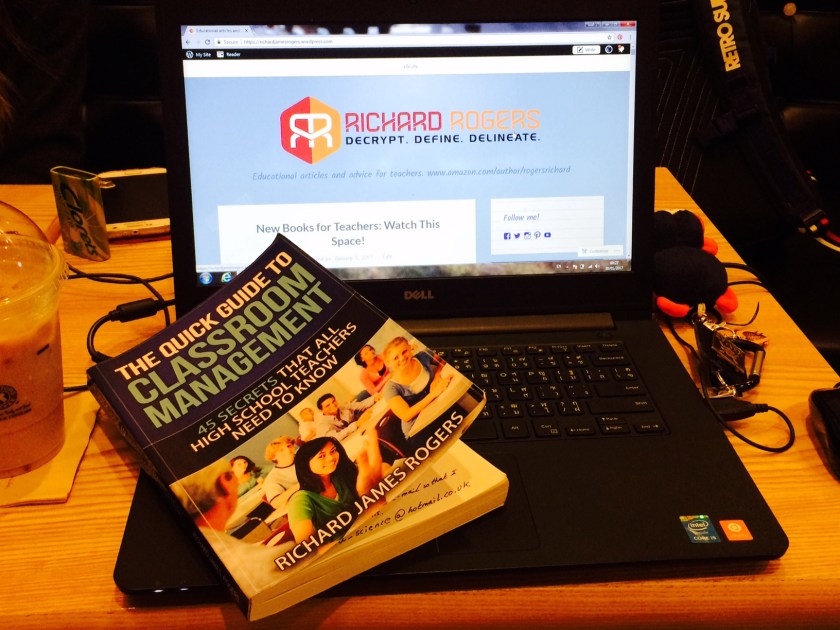
While it may feel harmless to engage in workplace gossip, SLT is aware of staff who indulge in it. This kind of behavior can damage professional reputations and undermine trust within the school community. Maintaining professionalism in discussions about colleagues and policies is always the best approach.In fact, this is such an important issue that I wrote about it explicitly in my award-winning book (The Quick Guide to Classroom Management). I have also written a special blog post on the subject matter of gossiping, and its particularly harmful effects in a school setting, here.
4. Complainers Are Noticed
Constructive feedback is always welcomed, but chronic complainers do get noticed. A teacher who frequently complains without offering solutions can be perceived as negative, which doesn’t reflect well when SLT considers leadership potential or responsibilities.Handle day-to-day frustrations professionally, and you’ll soon be recognised as someone who is resilient, trustworthy and likeable.
5. SLT Work Extensively—Even During Holidays
Many assume SLT members simply delegate work, but in reality, they work tirelessly, often sacrificing their holidays to ensure the school runs smoothly. From recruitment to budget planning, from curriculum development to policy implementation, the workload is substantial and ongoing.
6. Awkward Conversations Are Necessary
No one enjoys difficult conversations, but SLT members have a responsibility to address issues such as poor performance, safeguarding concerns, and disciplinary actions. These conversations are rarely personal; they are about ensuring the highest standards for students and maintaining a professional working environment. If you find yourself sitting in a conversation like this, with an SLT member who feels the need to call you out about something, then read my advice on how best to deal with that, here(look for tip #3)
7. SLT Is Built on Trust
Senior leadership is a high-trust position. You don’t get there without demonstrating integrity, reliability, and a strong work ethic. Trust is the foundation of effective leadership, and once lost, it is difficult to regain.
8. SLT Members Communicate With Each Other
If you fall out with one SLT member, assume that others will be aware. Leadership teams function best when there is unity and transparency, meaning that significant issues, concerns, or conflicts are often discussed collectively.
9. Hard Work and Dedication Stand Out
One of the most reassuring pieces of advice I received was that SLT recognizes hard work. Dedicated, competent teachers who go above and beyond are always noticed, even if appreciation isn’t always vocalized. If you want to stand out for the right reasons, being consistent, reliable, and proactive is key.
10. SLT Looks at Patterns to Make Decisions
Leadership isn’t about making decisions based on isolated incidents. SLT analyzes trends in staff absences, exam performance, student behavior, and other key indicators to make informed decisions. Understanding this broader perspective helps in appreciating why certain policies and actions are taken.
Final Thoughts
Becoming a member of SLT is a journey filled with learning curves, challenges, and opportunities for growth. The advice I received highlights the importance of professionalism, trust, and diligence in leadership. As I navigate my new role, these insights serve as guiding principles, helping me to become a more effective and understanding leader.
To those stepping into leadership for the first time: embrace the learning process, build strong relationships, and remember that every decision you make has an impact beyond what is immediately visible. Leadership is not about power—it’s about responsibility, vision, and making a difference in the lives of students and staff.
We welcome you to join the Richard James Rogers online community. Check out our official Facebook Page, Instagram and Podcast for regular updates.