Teaching Overseas for the First Time: Advice From Teachers

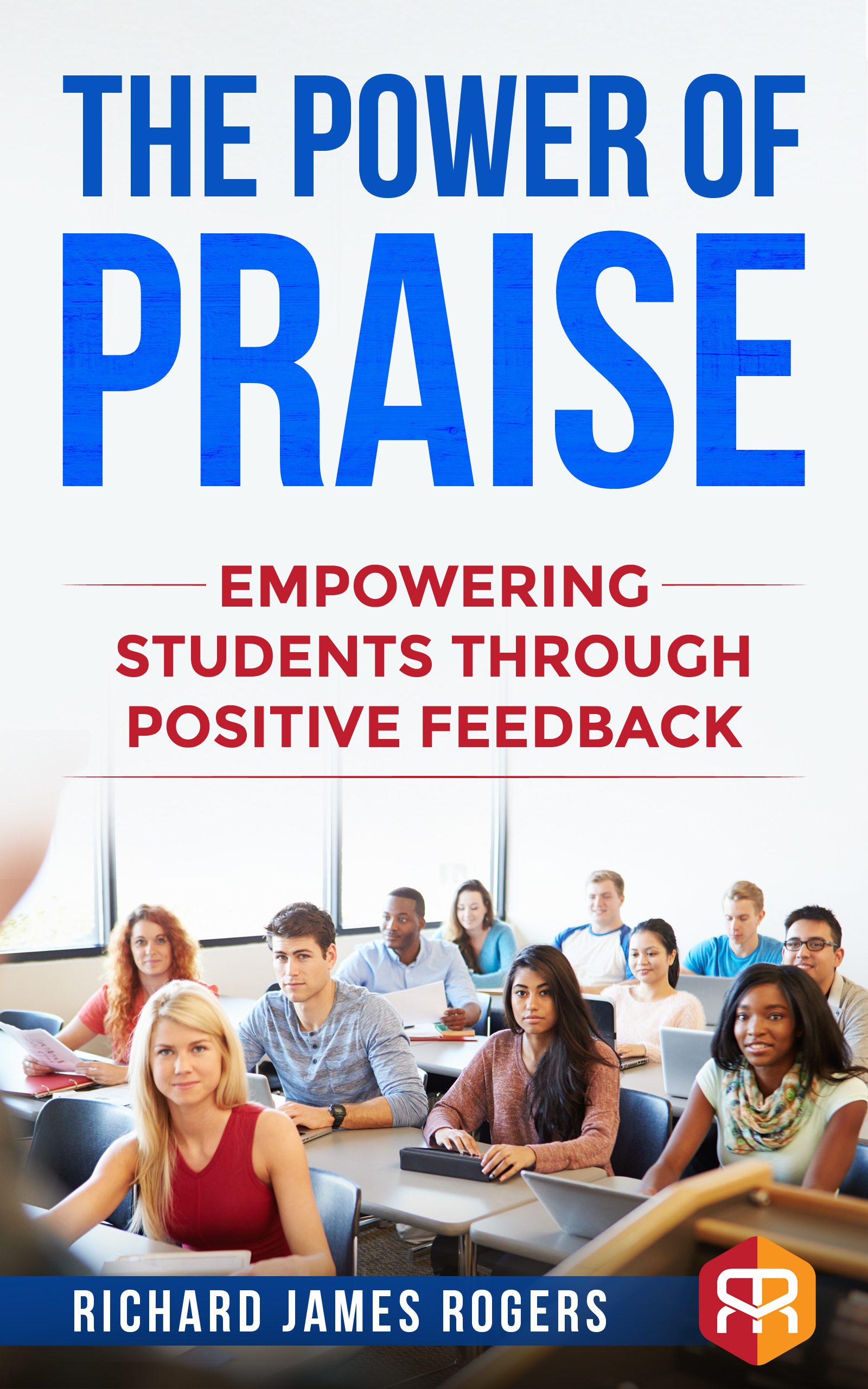
An article by Richard James Rogers (Author of The Quick Guide to Classroom Management, The Power of Praise: Empowering Students Through Positive Feedback, 100 Awesome Online Learning Apps and The Rogers Pedagogical Planner: A Teacher’s Planner for Serious Professionals)

Accompanying podcast episode:

COVID-19 has clearly had a devastating effect on the aviation industry. With international travel brought to a virtual standstill, some airlines have found themselves laying off staff, downsizing and even going bankrupt

This is, of course, an unprecedented and horrific situation for the airline industry as a whole. In addition to this, restrictions on international travel have caused ripples to permeate throughout a wide variety of other industries: not least international education. Some effects that have been experienced by teachers (some of whom are my colleagues) are as follows:

  • Teachers who were appointed to roles overseas cannot leave their current country of residence to actually start their jobs.
  • Dependents, such as spouses and children, are often not able to move abroad with the appointed teacher as it’s difficult for many countries to get the necessary clearance and paperwork approved.
  • Teachers who were ‘on the fence’ about teaching overseas are now regretting the fact that they didn’t ‘take the plunge’ and move abroad sooner, as now their ability to travel has been restricted.
card games

That last bullet-point is an interesting one. It’s an ‘imaginary’ scenario based only on the anecdotal evidence I could currently acquire – a number of my readers have written to me to say that they regret not having made the decision to teach overseas sooner. 

Whilst I cannot be sure that this is a systemic or widespread regret that applies to the teaching profession as a whole, it is an understandable and logical emotional response to COVID-19 that we can consider. I imagine that when COVID-19 is ‘over’ (will it ever be really over?), and flight paths reopen, we will see a surge in applications for overseas teaching posts. 

Class Q and A

In anticipation of this, I’ve conducted a rather unconventional experiment this week. As a teacher with 13 years of overseas teaching experience (12 years in Thailand, 1 year in China), I decided to post my top 5 suggestions/tips for teachers who are considering moving overseas to teach. I posted these tips in the popular Teachers in Thailand Facebook group, to see what kind of responses I would get. After a bit of distillation (tallying up the responses with the most likes), I’ve come up with a fairly comprehensive and balanced list of pre-teach-abroad tips for all budding globe-trotters (I hope!):

Rule #1: Try to learn the local language – even a few words will show others that you are trying and you’ll be respected all the more for it.

In some countries, of course, this won’t be necessary. If you’re a native English speaker moving to Singapore, Australia, America or the UK (or another English speaking country), then you may only have to learn some of the local colloquialisms and get used to some unusual dialect. However, if you move to a country like China, for example, it’s a whole different story. 

Sometimes, learning the local language is essential. When I worked in Chongqing, China; for example; very few people could understand English (Starbucks baristas tended to be the best speakers – so hats-off to them). I had to learn some Mandarin just to survive. Learning the local language does have other benefits, too, however:

  • Language and culture are often very closely intertwined. Learning the local language can help you to understand why the local people think the way they think. This can lead to better relationships, less frustration and more common-ground and mutual understanding.
  • When you at least try to use the local language, you are showing that you have some respect for the local people and the country in which you are a guest (more on that later). In my experience, this goes a long way to building trust with others (e.g. that hairdresser you have to see every week, or that bar tender you see on the occasional Friday night). People tend to admire you more if you show that you are willing to learn, and you don’t just expect everyone around you to speak your language and accommodate you.
new doc 27_4

Teachers in Thailand Response

This rule was generally well-received. A noteworthy response that offers some extra-insight is given below (of course, remember that this is Thai-centric, but could be applied to any native language):

“I had the advantage of a thorough pre-field language training (it leads to some interesting conversations with Thai adults — like “how can my English get as good as your Thai” — but even if you have much less Thai than that it can still be a bridge-builder that can make your life easier — and fortunately, there are now FB groups designed specifically for foreigners trying to learn Thai. Take it easy, and you will gradually get better at it.”  – Edwin Zehner

Rule #2: Do not leave home because you are trying to run away from problems – finances, crime, family issues – get any of these issues resolved first before you move overseas (or your problems might travel with you).

I must admit that this was a tricky one for me to phrase correctly in one sentence, and it did receive a little bit of backlash in the Facebook group. Before I include a noteworthy response or two, I’d like to add an extract from my debut book, The Quick Guide to Classroom Management (final chapter), which goes into this a bit more:

Extract from THE QUICK GUIDE TO CLASSROOM MANAGEMENT

SECRET NUMBER 46: Your Problems May Follow You When You Fly Away

If your motivation to leave your home country revolves around personal
problems you have such as debt, a broken relationship or family
issues, then don’t assume that all of these problems are going to vanish
as soon as the landing gear hits the tarmac in your new city. Certain
problems, especially those concerning money, can actually be
exacerbated when you leave your home country. Here are my top tips
for making sure that a problem at home doesn’t become a nightmare
abroad:

  1. Money: Think long and carefully about any debt-related or financial issues you have, and aim to resolve them before you board the plane. Many expatriates find it difficult to transfer funds back to their home country once they’re abroad, and this can have consequences in terms of meeting credit card and bill payment dates. You must ensure that you’ve inquired beforehand about the ways in which you can deal with your finances abroad, and you must remember to follow through. When one is residing in a foreign country, it can be easy to forget about the financial commitments you have in your home country. In the early stages, this can manifest as an awkward message or letter from your creditor, progressing to international criminal action if the issue is not dealt with. It might be a good idea for you to leave some savings in your native bank account which you can use to pay your bills and loans in the first few months of your new adventure. You may wish to get a trusted friend or family member back home to help you with this.
  2. Relationships: Don’t burn any bridges before you fly away. You may be travelling to an exotic new country to start a wonderful new chapter in your life, but you never know when circumstances may force you to return home to your native country. Try not to upset people before you leave, for example, by venting your pent-up grudges that you’ve had for years. You may also want to keep in touch with people at your old school as you may need to call upon them for advice, resources and help.
  3. Health: Try to bring all of your medical records with you when you travel, and have them deposited at the hospital you plan to use when you start at your new school. Whilst medical care provided overseas can be of an extremely high quality (especially when your school pays for private medical insurance as part of your package), it can be very difficult for doctors to suggest a suitable course of treatment if your exact medical history is unknown. If you end up spending a great deal of time teaching overseas, then you may find yourself moving
    from hospital to hospital, or even country to country! It is essential that you do not underestimate the importance of keeping your medical records safe, accessible and updated. Unfortunately, however, this is the one aspect of international teaching that is most overlooked by teachers.
  4. Crime: If you’ve committed any kind of serious criminal offence in your home country, then you almost certainly will not get a job at a reputable international school overseas. Most will require you to complete a criminal records check before you leave your home country but even if your school does not require this, you must still be upfront and honest about any criminal history you have. The ramifications for you can be severe if your school finds out about it later.
  5. Online: Clean up your online profile. Look at all of the social media channels you have, all of your blog posts, forum replies, comments and any other material you’ve submitted online. Also, remove anything that puts you in a bad light: international school managers are using ‘internet screening’ more and more often these days. Additionally, be very careful about who you connect with through social media, and never connect with current students. Whilst it’s important to keep in touch with your former students (through school-authorized alumni channels), you still have to be careful about what they can read about you, or from you, online. Your former students may be connected with your current students, and they can pass on information easily. You’ll also find that the student world of international teaching is just as small as the teacher world, and students in different international schools do communicate and connect with each other.
Q & A

I received some interesting responses about this in the Teachers in Thailand Facebook group:

“I do not agree with your point 2. We left SA because of a few of your nr 2 reasons and we soooo happy in Thailand!”

“Sometimes it’s impossible to resolve problems at home. Nonetheless you can be an effective teacher.”

I guess a balanced viewpoint on the issue is needed. A fresh start in a new country can offer you the chance to leave the past behind, and build a new future. My point, however, is that you should try to solve as many personal problems as you can before you move over. Avoid ‘burning bridges’ too – you never know when you might need to cross them again. 

Rule #3: Remember that you are a GUEST in a foreign country. Be respectful, and remember that for every action you undertake you will be scrutinized more excessively than the natives.

I’m not sure if being ‘scrutinized more than the natives” applies in EVERY country, but that’s certainly been my experience in Thailand and China – and that’s understandable. I am a foreigner. I have to be respectful of the local rules, culture and environment. 

I think it is important to realise that the world is an incredibly varied place. If you’ve lived your whole life in one country (as I did before moving out to Thailand in 2008) you’re going to find that your new home will be different in many ways. The most profound of these differences, however, is that people probably won’t even ‘think like you think’ on many issues. 

poll-everywhere

Being understanding and accepting of the host culture and environment kind of comes with the job of being an international school teacher. If it gets too much for you, you can always move back home later (or to another country). 

Rule #4: Get as many qualifications as you can (and as much experience as you can) back home before moving out – it’ll all look good on your resume/CV and you’ll definitely use the skills and knowledge you’ve learnt.

International schools tend to have more difficulties recruiting specialists than, say, a domestic school in western country would. This, coupled with the fluid nature of international education (schools at different phases of development) means that you may be asked to teach subjects outside of your specialism. 

Before moving out, try to get skilled-up in anything pedagogical – accelerated learning techniques, Assessment for Learning, teaching ESL students in mainstream classrooms training, etc. The skills you learn on courses like these will definitely come-in handy when you teach overseas.

Online learning is, of course, great for this. There a large number of high-quality, inexpensive courses available on places like edX, Coursera and Udemy. You can also take my Classroom Management Fundamentals certificate course with UK Ed Academy.

img_0064

Some notable additions

“Make sure your social media accounts are private and that your profile pic is respectable. Recruiters often check you out on social media. Do an in-class or hybrid course. There is so much to be said for REAL PRACS with real students. Do an intro video if you can – either just introduction, or even better of you in the classroom showing your rapport with students. Be punctual for any interviews!” – Rose-Anne Turner, Founder of Destination TEFL

“Get someone to proofread your c.v and covering letter. The number of applications we get with poor punctuation and spelling mistakes…” – Kate Lloyd, Director of Studies at London School of English, Ukraine. Check out her website for teachers at What Kate and Kris Did.

“Expect things to go a bit wrong/unplanned from time to time but make sure you’re flexible and ok with that” – Stefan Hines, Secondary Science Teacher

Rule #5: Kinda linked to number 2: make sure you are going overseas for the right reasons – to inspire and help your students, to gain teaching experience and to gain a unique cultural experience. You’re not coming over to have a big, never-ending holiday, or to find a local boyfriend or girlfriend (although that last one might be a nice by-product).

This is quite an important one. If you don’t have the right mindset before you come out, then you could be in for quite a shock. 

International schools (and local public schools) tend to have very high professional standards. In addition to this, there often comes the added pressure of being expected to perform well. Thing about it: your school has most likely paid for your flight, immigration visa, work permit and maybe even housing and a competitive salary. You’ll be expected to measure-up. 

Have a holidays at holiday time. Experience the local culture and food all that good stuff, but remember that you must be just as professional at your job as you were back home. 

box seats

IMG_5938

We welcome you to join the Richard James Rogers online community! Join us on Facebook and Twitter for regular updates, giveaways of Richard’s books, special offers, upcoming events and news. 

richard-rogers-online

Online Learning: A Risk-Assessment List for Teachers

An article by Richard James Rogers (Author of The Quick Guide to Classroom Management, The Power of Praise: Empowering Students Through Positive Feedback and 100 Awesome Online Learning Apps)

Accompanying video:

Teaching online can be a very productive and worthwhile experience for both the teachers and students involved. However, at this time of widespread school closures due to COVID19, many teachers have had to quickly adapt their skills to teaching online without full knowledge of the heightened risks involved. 

This blog post aims to educate teachers everywhere about the things we can do to protect ourselves when teaching online. I believe that this list is so important that I’ve included it in my upcoming book for teachers: 100 Awesome Online Learning Apps (Release date: 8th April 2020 on Amazon globally). 

100 Awesome Final Cover
Available on Amazon from 8th April 2020 onwards

‘The List’: What do we need to be aware of? 

  1. Anything we say or do online can be recorded, stored, edited and forwarded without our knowledge. Google Hangouts Meets, for example, can be set to autonomously record your meetings and auto-generate a transcript of what was spoken and by whom. We must keep every interaction with our students professional and clean. The same high standards of personal conduct that are expected of us in the classroom apply even more when we are teaching online.
  2. Know when your camera and microphone are switched on. When you start doing video conferencing for the first time, you might inadvertently set your students on a task after a live stream video briefing and then proceed to make a coffee; yawn and stretch in front of the camera; or even chat casually about how messed-up life is with your spouse who’s also working from home. Be careful. This is a very easy trap to fall into (I’ve come close to doing this myself on several occasions!). Make sure your camera AND MICROPHONE are switched off when you no longer need to engage with your students in real-time. In addition, be equally aware of video conferencing apps that can auto-generate captions. If you switch your camera off, but fail to switch off your microphone, then that next YouTube video that contains expletives and blares out of your mobile phone will not only be audible to your students, but captions may even appear on their screens!
  3. Parents will watch you teach, so be prepared for that. In my experience, many students like to switch off their cameras towards the beginning of a lesson and, unbeknownst to you, a parent could be watching. This places us, as teachers, under even greater pressure to deliver high-quality lessons than when we are snug and comfortable in our respective classrooms. Be professional and keep standards high. If we aim to be clear, caring and professional, then our students and their parents will respect and appreciate our efforts all the more for it.
  4. Be aware of chat features that are built into apps. These can contain casual emojis that one can choose to use; but we must be careful not to chat casually with any student (even by adding emojis to our messages). Keep all communication conducted through integrated chat as professional as you would in the classroom. I expand on this advice in a separate blog post (How Should Teachers Behave on Social Media?). This section is well-worth a read if you want to see some real examples of teachers who lost everything because of their lack of alertness to this point!
  5. If you are not sure about an app’s appropriateness for use, then check with your school’s Senior Leadership Team or your line manager. Some schools like to keep all their prescribed online learning apps under the control of their domain (e.g. schools that use Google Classroom and Gmail may prefer to use Google Hangouts Meets as their video conferencing system, as opposed to Zoom). A great story that illustrates this point is a slight blunder that a former colleague of mine made several years ago. Knowing that Flipgrid was a popular video-exchange system used by many American schools, she recommended it to her colleagues in an upcoming collaborative teacher-training session. However, the school’s head of ICT followed up on that training session by e-mailing all the secondary teachers to tell them not to use Flipgrid – because it wasn’t a system under direct control of the school.
  6. Check student well-being on a regular basis. When students work from home they can feel lonely, extremely bored and anxious. At this very moment, for example, as I write this prose; the novel coronavirus pandemic has snared much of the world’s population with fear and confusion. This fear and confusion is certainly being felt to varying degrees by many of the students I currently teach. Check that your students are having regular breaks and are sticking to a routine. E-mail parents of the students you are responsible for to find out how things are going. Recommend any tips you can for working from home productively and maintaining a personal sense of happiness and wellness. Share any tips that your school counselor or Student Welfare Officer sends out. When interacting on a video-call, check how your students look and feel. Are they dressed properly? Are they tired or stressed-out? Are there any student-wellbeing issues that come to your attention? Is the technology working correctly for your students?
  7. Effective online teaching requires effective technology. This can be a challenge when using old hardware or software (or both) and when internet connections are slow. We must adapt: no matter what it takes. Set work via e-mail if video conferencing is not an option. Experiment with using the apps listed in my book (100 Awesome Online Learning Apps) on your phone if you don’t have a tablet or notebook/laptop. Figure out how your device’s integrated microphone works if you don’t have a headset. Go through the apps in this book that seem appealing and test the efficiency of each when setting tasks through the technology that’s available to you. Check-up on your students regularly – do they have the technology required to access and complete the tasks you are setting?

IMG_5938

We welcome you to join the Richard James Rogers online community! Join us on Facebook and Twitter for regular updates, giveaways of Richard’s books, special offers, upcoming events and news. 

richard-rogers-online

100 Awesome Online Learning Apps (Release date: 8th April on Amazon Globally)

Release date: Wednesday 8th April 2020 on Amazon Globally [ISBN 979-8629490937]

Great news!: My GAME-CHANGING book, 100 Awesome Online Learning Apps, is now LIVE on Amazon. Copies can be ordered here: https://www.amazon.com/dp/B086PSMYRN/

The book covers:

1. Not-so-obvious things to be aware of when doing online learning
2. A big list of 100 Awesome Apps with suggestions for their use in online learning

100 Awesome Final Cover

Book description

2020 marked a definitive year in the world of teaching. For the first time in history, teachers and schools all around the world were forced to quickly apply their skills to online learning as a result of widespread school closures in the wake of the novel coronavirus pandemic. This book is timely and long-awaited, and meets the needs of educators who are required to deliver high-quality teaching via online apps and platforms. This book takes the reader through 100 tried-and-tested online learning platforms, with suggestions as to how each one could be used to enhance teaching or assessment. As a high-school science teacher and a Google Certified Educator himself, Mr Richard James Rogers has first-hand experience of using each platform and speaks from a wealth of involvement rather than from a lofty and disconnected position in elite academia. This is a practical book for those who want to make a difference in their students’ lives, no matter how volatile local circumstances may be.

About the Author

Richard-James-Rogers.jpg

Richard James Rogers is the globally acclaimed author of The Quick Guide to Classroom Management: 45 Secrets that all High School Students Need to Know. As a Google Certified Educator, he utilizes a wide-variety of educational technology in his day job as an IBDP chemistry teacher at an international school in Bangkok, Thailand. Richard actively writes about all issues related to teaching at his weekly blog: richardjamesrogers.com

IMG_5938

We welcome you to join the Richard James Rogers online community! Join us on Facebook and Twitter for regular updates, giveaways of Richard’s books, special offers, upcoming events and news. 

richard-rogers-online


The ‘Lazy Mindset’ – Some Teachers Don’t Even Try

An article by Richard James Rogers (Author of The Quick Guide to Classroom Management and The Power of Praise: Empowering Students Through Positive Feedback).

It was a typical morning tea break in the school staff room. Typical morning grumbles. Typical morning camaraderie.

“It’s like talking to a brick wall with John”, piped in one colleague.

“Yeah he’s pretty distant isn’t he?”, said another.

“He just doesn’t try. I doubt he’ll even get a grade D in GCSE Maths”, says the colleague who started this conversation.

Then I make the biggest cardinal sin a teacher can make in such moaning contests. It was the ultimate point of flippancy for a 23-year-old like me: “He’s great in my lessons”, I arrogantly say.

img_0413
“An AMAZING book!”

The conversation went quiet.

Back then I wasn’t as polished in my speech as I am now. For some reason my colleagues still put-up with me, and I think they liked me. Perhaps I was given the benefit of the doubt because I was, essentially, a kid myself.

The truth, however, is that John was, actually, great in my lessons. The question is this: Why?

img_0064

Coursework Conundrum

Then there was that time when something I said went down like a lead balloon at a departmental meeting.

A challenging Year 10 class, who were completing Science coursework, were given to me to cover for a lesson. Their teacher was absent that day.

I write about this story in my first book as a classic example of how teacher organisation and rapport-building can generate dramatically different results to the status quo when applied consistently. Basically, I booked the ICT lab and simply walked around the class and helped the students with their work. I also took all of the loose bits of paper that were loosely organised in a blue tray (their ‘coursework’ tray), and put them in plastic wallets with each students’ name on.

A simple tactic, but it worked really well. It meant that the students didn’t have to fish through papers at the start of each lesson and complain that bits were missing – adding to disruption.

chatting in class

I mentioned this story at that meeting, and whilst my Head of Deportment was impressed with me (he was, secretly, the person I was trying to impress anyway), the teachers of that class were not so happy with my ruthless expose’.

“If I was kid in that class and I had to root through a pile of mixed-up papers to find my coursework, then I’d be disruptive too” I said with a judgmental, 23-year-old voice.

I probably would use more tact and subtlety were I to raise the same issue today. Our colleagues are our allies, not our enemies.

So, what’s the point you’re trying to make?

Simply this:

A teacher’s behavior can have a profound, long-lasting effect on student behavior. 

Robert Greene, in his bestselling book The 48 Laws of Power describes something called the ‘Mirror Effect’. Basically, it’s a way of showing someone their faults and failures by mirroring their actions.

self-assessment

For teachers, the Mirror Effect works best by modelling the passion and determination we want to see in our students:

  • When we are passionate, our students become passionate
  • When we are relaxed, our students are relaxed [be careful how far you take relaxation, however. Relaxed demeanor: yes. Relaxed attitude to your professional role: no.]
  • When we strive for excellence ourselves, our students also strive for excellence
  • When we praise and encourage, with passion and real emotion, we inspire our students to work harder, and perform better 

One of my proudest moments as a teacher was when I was given a very shy young girl from Iceland to teach. Starting in Year 11 and studying IGCSE Chemistry with me, she had two main challenges to overcome:

  1. She had never learnt any chemistry before, and was due to take an IGCSE exam in Chemistry in 6 months time (that’s hard, by the way)
  2. English was not her first language, and I was teaching her through the medium of English

After my first lesson with her had finished she told me straight: “Mr Rogers, I didn’t understand anything you taught me this lesson.”

Discussing homework

That’s when I knew that this was serious, because I’d taught a lesson covering the basic fundamentals.

Her first test came back in two weeks – she got a grade U. She was devastated.

“I’m just going to fail Chemistry, aren’t I?” – she said

“No way. We won’t let that happen. Your target for your next test is an E, and come and see me on Monday lunchtimes so I can teach you the fundamentals. I believe in you.”

It saddens me to say this, but I received a massive public backlash about a year and a half ago when I suggested that one way that we can help exam-level classes is by giving up a few minutes at lunchtimes to tutor weak students on the run-up to the finals. One person went so far as to write damning review of my book (which, I assume, he hadn’t even read):

Luch is for losers
Another happy customer!

I’m not suggesting for one minute that top-up sessions are the only way to help students who are falling behind, but in the case of this student (who had zero prior knowledge of chemistry) it was an essential intervention move. 

That student, incidentally, went on to achieve a grade A* in IGCSE Chemistry six months later – beating almost everyone else in Year 11. 

This happened because:

  • The student worked really hard (this is the main reason)
  • The student wanted to work hard because I kept on pushing her, telling her that I believed in her (and I meant it), and because I gave believable and achievable targets for each test (she scored a U, E, E, D, B, A and then an A* in the final).

This is a living testament of the efficacy of my core philosophy, which is this:

I believe that ANY student’s success can be engineered by a great teacher

You’ll find that statement in my bio on Twitter – it’s the personal philosophy that has guided me for more than 15 years. It works, because I’ve seen it work.

award

But how do we implement this philosophy?

Use the four-step T.I.P.S. method:

Step 1: Track progress. Look for patterns in grades. Keep a spreadsheet of scores. 

Step 2: Intervene when grades slip. Have a short conversation with the student in which you use……..

Step 3: Professional Intelligence: Gather and use knowledge about the students’ past achievements, achievements in other subject areas and skills used outside of school to praise the student and remind him/her of the ability that he/she naturally possesses. Talk with other teachers to gather this intelligence if needs be. Couple this with…..

Step 4: Subtle Reinforcement: Be on-the-ball and remind your student regularly what his/her target is. Introduce new resources and offer your time to help. Remind him/her about a test that’s coming up and how you believe in their ability to get a good score. Praise small steps of progress along the way, or any positive work in your subject area. 

You can read more about Subtle Reinforcement here. Some info on Professional Intelligence gathering can be found here

TIPS RICHARD JAMES ROGERS

714symbol

We welcome you to join the Richard James Rogers online community! Join us on Facebook and Twitter for regular updates, giveaways of Richard’s books, special offers, upcoming events and news.

img_0549


Exciting New Online Course for Teachers!

UKEd-Acad

The Fundamentals of Classroom Management: An online course designed by Richard James Rogers in Partnership with UKEd Academy 

I’m very excited to announce that I’ve been busy building an online course that covers all of the fundamental concepts in my widely acclaimed debut book: The Quick Guide to Classroom Management, in partnership with my good friends at UKEd Academy. Details are given below:

Course link: https://uked.academy/product/cmf/

Price: £30.00 (which includes a copy of my book) or £20.00 if you’ve already got a copy of my book (you’ll have to enter a discount code found within the book)

Launch date: October 21st 2019 (but you can start the course at anytime)

End of course certificate?Yes, endorsed by UKEd Academy and Richard James Rogers 

Course structure: Videos, quizzes, study notes, reflections and activities

Course schedule: Flexible (work at your own pace)

After successful completion of this course you’ll earn a certificate that will look very impressive on your C.V. and you will gain lots of knowledge, new techniques, tools and skills.  

I look forward to mentoring and guiding you through the key concepts that make an excellent teacher, well, excellent!

If you have any questions at all about this exciting course, then please e-mail me at info@richardjamesrogers.com

IMG_5938

richard-rogers-online

We welcome you to join the Richard Rogers online community. Like our Facebook page and follow us on Twitter for daily updates.

Latest hybrid

The Disconnect: How Over-Rewarding Fails Students

An article by Richard James Rogers (Author of The Quick Guide to Classroom Management and The Power of Praise: Empowering Students Through Positive Feedback).

Illustrated by Sutthiya Lertyongphati

Accompanying podcast episode:

A dangerous culture has quietly found its way into a large number of American and British schools in the past decade. Like a wolf in sheep’s clothing that seems pretty on the surface but harbors malice within; over-rewarding continues to take hold like a malignancy to this day. 

Betty Berdan was an American high-school junior at the time of writing this excellent opinion piece in the New York Times. She eloquently summarizes her thoughts on over-rewarding as follows:

Like many other kids my age, I grew up receiving trophy after trophy, medal after medal, ribbon after ribbon for every sports season, science fair and spelling bee I participated in. Today the dozens of trophies, ribbons and medals sit in a corner of my room, collecting dust. They do not mean much to me because I know that identical awards sit in other children’s rooms all over town and probably in millions of other homes across the country.

Rewarding kids with trophies, medals and certificates for absolutely everything they do, including participation in a sports event, seems harmless at first glance: what’s wrong with encouraging kids to take part, right? 

jenga

My thoughts on this are simple: the real-world doesn’t reward mediocrity, and if school’s are designed to prepare kids for the real world, then they shouldn’t be rewarding mediocrity either. 

Your boss doesn’t give you a pay-raise or certificate for turning up to a meeting: it’s a basic expectation. You don’t get instant recognition and brand awareness for starting an online business: you have to slog your guts out and make it happen.

The world is cruel, but it’s especially cruel to high-school graduates who’ve been babied right the way through their schooling and come out the other side believing that they’re entitled to everything: that they’ll receive recognition for doing the bare-minimum. 

Some teachers may feel that rewarding everyone, but keeping ‘special rewards for winners’ is a good way to go. But what benefits can be extrapolated from removing first, second and third place prizes at a sporting event, or even removing winner’s trophies completely?

award

According to Alfie Kohn, author of Punished by Rewards: 

A key takeaway here is that awards aren’t bad just because the losers are disappointed; everyone (including the winners) ultimately lose when schooling is turned into a scramble to defeat one’s peers

Really, Alfie? So awards are bad because losers and winners feel bitter? I think school culture has got a lot do with that. In school’s where students are encouraged to celebrate each other’s achievements, and aspire to do their best, overall achievement and attainment increases.  A massive study by the University of East Tennessee, for example, found that classroom celebrations of achievement enhanced:

  • Group solidarity
  • Sense of belonging
  • Teacher’s ability to find joy and meaning in teaching

I don’t see much about bitterness there, Alfie. 

Here’s another one I pulled-up: A meta-analysis of 96 different studies conducted by researchers at the University of Alberta found that (look at the last sentence especially):

…….reward does not decrease intrinsic motivation. When interaction effects are examined, findings show that verbal praise produces an increase in intrinsic motivation. The only negative effect appears when expected tangible rewards are given to individuals simply for doing a task.

This confirms what teachers have known for years (at least those with brains in their heads): that awards have no value when they are given to everyone, but have lots of value when they have to be earned. This coincides with the Four Rules of Praise that I wrote about in 2018 (supporting video below). 

Conclusion

Teaching profession, some words of wisdom: Awards and rewards only work to improve motivation, attainment and achievement when the students have had to earn them. Foster a school culture of collective celebration when students achieve success (such as using awards assemblies), and articulate the skills and qualities needed to achieve success to those students who sit and watch the winners, hopefully with smiles on their face and pride in knowing that one of their own made it happen, and they can too. 

richard-rogers-online

We welcome you to join the Richard Rogers online community. Like our Facebook page and follow us on Twitter for daily updates.

Latest hybrid

The Power of Praise: My Second Book

An article by Richard James Rogers (Author of The Quick Guide to Classroom Management and The Power of Praise: Empowering Students Through Positive Feedback).

Illustrated by Sutthiya Lertyongphati

I’m very happy to announce that my second-book, which has (to my shame) been in the pipeline for many years, has finally been published on the Amazon Kindle store. The paperback will be released in mid-September. If you click on the image below, it’ll take you directly to the Amazon sales page. 

The Power of Praise

My new book is split into three sections:

  • The philosophy of praise (why praise is important and what its effects can be)
  • The mechanics of praise (how to actually implement the various tactics available)
  • Ways to accentuate the efficiency of praise (how to ensure that praise and feedback only takes up the time and effort that it needs to)

From the outset I make the point that praise in the form of marking provides acknowledgement for work completed. This is essential, as every student needs to know that their time and effort has been noticed, is being monitored and has been recognized.

The implication of this statement is that quick turn-around of work is necessary so that students understand the reasons behind their feedback, gain empowerment maximally and receive positive reinforcement of the skills, knowledge and concepts that they are currently learning in class.

jenga

Teachers (me included) can find it a challenge to provide high-quality feedback in a timely manner, however. This is where praise mechanics and efficiency come into play. 

There are a number of techniques that teachers can employ to save time whilst providing excellent feedback. In this new book, you’ll find sections on:

  • Peer-assessment
  • Self-assessment
  • The effective deployment of verbal feedback 
  • Automated assessment – the use of software to test our students 
  • Live marking
  • Many others

You can purchase my book here if you’d like a good, deep exploration of of a variety of praise-based techniques. As a little teaser for you, however, I’d like to share a particularly powerful technique with you.

‘Diffusive’ and ‘Absorptive’ live – marking

Diffusive live-marking is when the teacher walks around the classroom when the kids are working on a a task, pen-in-hand, and marks student work in real-time (i.e. ‘diffusing’ through the students).

Absorptive live-marking is when the teacher sits at a designated point in the classroom and calls the students to his or her desk. one-at-a-time, and marks work in real-time (i.e. figuratively ‘absorbing’ the students).

Coupled with verbal feedback, both techniques can be incredibly powerful. If you train the students to write “Mr Rogers said that………….(insert feedback here)” in a different color on their work, then you allow the students to process your feedback on a very deep-level, and this builds long-term memory. Obviously, use your name instead of mine!

Eventually, students will remember key mistakes that are repeating in their work and they will act to rectify those (they won’t like writing the same things over and over again). 

IMG_5938richard-rogers-online

We welcome you to join the Richard Rogers online community. Like our Facebook page and follow us on Twitter for daily updates.

Latest hybrid

Curriculum Clarity: Making Things Clear for Students

An article by Richard James Rogers (Author of The Quick Guide to Classroom Management and The Power of Praise: Empowering Students Through Positive Feedback).

Illustrated by Sutthiya Lertyongphati

Accompanying video:

Preparing resources for students can be a really massive job: especially when you have the responsibility of getting kids ready for external exams. 

They’ll need:

  • Presentations (usually a series of PowerPoints)
  • Worksheets
  • Homework
  • Exam-style questions
  • Practical activities (for Science, D.T. and other practical subjects)
  • Learning activities along the way to make things ‘fun’ and ‘engaging’

mess around in class

In the olden days I used to source a ton of stuff from the web and make some stuff from scratch. The problems this caused were as follows:

  • An inconsistent teaching method/approach for each topic 
  • Inconsistent format and detail of resources (some PPTs were excellent. others only skimmed the surface of the topic)
  • Inconsistent direction and focus of the class (i.e. the ‘road ahead’)

Kids need to be very clear about what they need to learn for their exams, and in what order/topic sequence. So please sit back and relax as I share my consistency-generating tips for exam-level students. 

The Power of Praise
Richard’s new Kindle book. Only $3.99

Share the syllabus with the students on day one 

This will really help to make the ‘road ahead’ clear. Some teachers like to make a ‘kid friendly’ version of the syllabus – using language that is more easily understandable. In my experience, however, I find that this isn’t generally necessary – syllabuses tend to be clear enough. 

In addition to sharing the syllabus, map out the sequence of topics you will teach for the year ahead and share this with your students too. Some more able and hard-working kids will definitely read ahead, and it’ll help prepare your students for end-of-unit tests too. 

snacking

Keep the format and detail of all PPTs the same

I realized the importance of this when I was lucky enough to find Merinda Sautel’s amazing IB Chemistry PPTs on the internet. 

Check them out if you want to really understand the importance of this aspect of Curriculum Clarity – her PPTs follow the same format and layout for each topic and are all detailed enough so that a complete course is created. 

IB Chemistry is split into distinct topics that follow the Course Guide – there’s a PPT at Mindy Sautel’s site for topics 2.1, 2.2, 3.1, 3.2, etc. Everything is sequenced and clear.

Keep homework and questions consistent and linked to the syllabus 

Maybe your syllabus is split into topics A,B,C and D with subtopics for each section. Do you have exam-style questions for topics A1, A2, A3, etc?

Organizing your questions by topic in this way will really build-up the subject knowledge that your students need to pass the final exam.

IMG_5938richard-rogers-online

We welcome you to join the Richard Rogers online community. Like our Facebook page and follow us on Twitter for daily updates.

Latest hybrid


Dealing With Stress as a Teacher

An article by Richard James Rogers (Award-Winning Author of The Quick Guide to Classroom Management and The Power of Praise: Empowering Students Through Positive Feedback).

Illustrated by Sutthiya Lertyongphati

Accompanying podcast episode (audio version of this blog post, read by Richard):

Teaching is definitely a stressful job. In fact, a February 2019 study by England’s National Foundation for Education Research found that 20% of teachers feel tense about their job most or all of the time, compared with 13% of those working in similar professions. Additionally, as if that wasn’t startling enough, a recent Organisation for Economic Cooperation and Development (OECD) survey found that teachers in England have one of the highest workloads in the world. 

The statistics themselves are worrying enough – that’s one-in-five teachers in England carrying a burden of worry and stress on a regular basis.

As a teacher myself, I have certainly had my fair share of work-related stress over the past 16 years. Some of the problems I encountered were the result of self-sabotage and inexperience, and some were beyond my control.

Whatever the causes of your stress are, there are effective ways to deal with them and I’d like to share what I’ve found to be the best ways to do just that.

Stress Tip #1 – When your lessons are not going well

This is often a result of poor or rushed lesson-planning and is normally avoidable. I have fallen into this trap many times in my career – using my ‘free periods’ to write rough lesson plans or spending a few minutes before a lesson to think about what I’ll actually do.

chatting in class

Sometimes this works. Sometimes it causes problems.

Take the time to spend a whole morning or afternoon each week to plan a week’s worth of lessons (I use my Sunday mornings for it). Get a good teacher’s planner and think about:

  • The starter activities you will use (read this blog post about starter activities). Make sure you plan for your lessons to begin promptly (this blog post about a prompt start will help).
  • Where the kids will sit at different points during the lesson. Will they need their books at all times? Do you need a seating plan so that ‘problem’ students are not sat next to each other?
  • Breaking up the lesson into ‘chunks’ – variety is key if you want your lessons to be engaging and ‘fun’. Read my blog post about learning games you can use here.
  • Syllabus content you will cover – with some classes you’ll have a lot of content to get through in a short space of time. Get your PowerPoints, presentations, quizzes, and other resources ready well in-advance of these kinds of lessons. You might also want to read my blog post about keeping up with your teaching schedule here.

Stress Tip #2 – When you have too much marking to do

Marking tends to come in ‘waves’ in teaching: There are times of the academic year when you’ve just got normal, regular homework and classwork to mark; and there are times when high-intensity marking hits us like a bolt of lightning. For example:

  • When a ‘work scrutiny’ comes up and a line-manager wants to see your class notebooks
  • When you have a load of end-of-unit tests or exam papers to mark
  • When parents’ evenings/parents’ consultations come up and you need to mark a lot of work so that you have some good points to discuss in the meetings
work overload

Marking can be a big-problem for teachers, but again: it’s easily avoidable when a little bit of time is spent planning in-advance:

  • In your weekly planning, think of peer and self-assessment techniques you can use to quickly deal with homework and classwork. Read my blog post on peer and self-assessment here.
  • Use the technique of ‘Live Marking’ to keep those notebooks up-to-date. Live-marking is basically when you either call the students to your desk one-at-a-time and mark their work in front of them, or you walk around the classroom with a pen in-hand and mark student notebooks in ‘real time’. Read my blog post about ‘Live-marking’ here.
  • Take a deep breath and plan your time – if you find yourself with a tonne of exam papers to mark within 48 hours (I’ve been there), then the first thing you must do is sit somewhere quiet and plan your time for an hour. Think about your targets – which papers need to be marked by when? Should some papers be marked before others? Is it possible, or appropriate, to use peer/self-assessment for some exam papers?
  • Try using stamps and stickers – they’ll save you some writing time
  • Make sure you’ve got a set of model answers ready for your kids – this will save you writing out the correct answers for the kids by hand in their books (never do that, by the way).
Marking work

Stress Tip #3: When you’re in trouble with your boss over something

One of the main causes of stress for teachers, I believe, is that we are held to a far-higher professional standard than those in most other professions. As ‘role-models’, we have to be extra careful about:

being-told-off

We do need to be mindful of these things on a daily basis, but even then we may make mistakes. If you are called to a meeting with your boss over something, then don’t panic! Take a deep breath and think about your side of the story and the facts of the matter at hand.

In your discussion, focus on:

  • Solutions to what’s happened (‘How can we solve this?’ should be your mentality).
  • If you’ve done something wrong, then admit it. Covering something up will only cause more problems later on.
  • If you feel that you’ve been unfairly treated then speak with a union representative or a lawyer before making any big decisions (e.g. choosing to resign).

I know that this is not a nice subject to talk about, but unfortunately it’s one that does come up. Protect yourself and your reputation, do your best everyday and just let life roll – some things are just beyond our control.

always learn

Another thing, by the way, is that absolutely everyone makes mistakes. I know that’s cliched, but it is true. Keep a written record of the mistakes you’ve made in life somewhere, and read over it on a weekly basis at least. When people tell us to ‘learn from our mistakes’, they can sometimes miss the fact that in order to learn from mistakes we have to remember those mistakes. Keeping a record and consistently reading over it is a good way to do this.

Stress tip #4: When student behavior is poor

It takes time and experience to build up our skills as good ‘behavior managers’.

Things to bear in mind are:

  • ‘Boring’ lessons can cause some kids to play up. Try to introduce a variety of activities into your lessons if possible, and be vigilant in watching your students carefully during practical activities, computer-based work and group work.
  • Praise, when used effectively and with sincerity, can be one of the most powerful behavior management tools out there. Read my blog post about The Four Rules of Praise here, and take the time to watch my video below:

  • Good behavior management can only really be achieved with a long-term strategy: effective lesson planning, good use of praise, fair and consistent use of sanctions if necessary and good use of ‘professional intelligence’ to reinforce our students’ sense of self-worth and character. Read my blog post on Subtle Reinforcement here.
Q & A

There are many facets to being a good behavior manager, but it basically all comes down to the relationship, or ‘rapport’, that you build with your students. Please read my blog posts on building rapport and behavior management.

Stress tip #5: When a colleague doesn’t like you (or is causing problems)

When you begin to have a positive effect on your students and you gain a reputation as a ‘good teacher’, you may create some enemies. Some of your colleagues may not like you simply because you are ‘better’ than they are.

Chapter 7 - gossiping

You need to be careful in these situations. Here are my tips:

  • Control your speech at all times when in the presence of your colleagues. Off-the-cuff remarks like “I’m behind with my marking” or “I got totally wasted on Friday night” can be used against you by conniving and jealous colleagues who want to secure your destruction.
  • Don’t gossip, and don’t associate with gossips. Gossips are notorious for being negative and untrustworthy. Just don’t do it. If you’re asked directly or prompted to gossip about a colleague, for example, you can respond with a “I don’t think I should talk about that” or even a “I don’t like to gossip about people”.
  • If a colleague is genuinely causing problems for you, then make a record of all interactions with that person (hand-written if necessary). Speak with your line-manager about it and ask for suggestions. It’s much better to tackle this issue in a professional way from the outset, rather than submitting a formal complaint when the problem has gotten out-of-hand.
  • If appropriate, speak with the colleague you are having issues with. You may wish to ask a third person to attend as a witness. Be polite. Be respectful. Show that you are the mature person in this scenario.
  • Keep all discussions with colleagues academic in nature. Try not to discuss politics or ‘touchy issues’ in society (e.g. Brexit, 2SLGBT+ rights, third-wave feminism, etc.). We live in a time, unfortunately, in which people can be easily ‘triggered’ by an alternative view you might have that challenges their perception of the world. Feel free to discuss this stuff with close friends or family outside of work, but don’t make the mistake of believing that your colleagues are your friends – they’re not. Your colleagues are the people you work with, and all interactions with them need to be professional in nature. If something is not related to your work or the curriculum, then you don’t need to discuss it. It’s that simple.

Conclusion

Teachers today are more stressed than we have ever been in history. Relax, plan-ahead, deal with issues head-on and don’t worry.

Two books I highly recommend for consistent worriers are given below:

How to Stop Worrying and Start Living’ by Dale Carnegie (click on the image to buy the book):

carnegie worrying.jpg

The Power of Now, by Eckhart Tolle (click on the image to buy the book):

ImageHandler.jpg
IMG_5938
richard-rogers-online

We welcome you to join the Richard Rogers online community. Like our Facebook page and follow us on Twitter for daily updates.

Latest hybrid

5 Super Cool Teacher Hacks

An article by Richard James Rogers (Author of The Quick Guide to Classroom Management)

Illustrated by Sutthiya Lertyongphati

Supplementary video: 

I’m now 36-years-old. The years have flown by, and they have taught me that my life and time are both very precious. 

As a young and rather gullible NQT at 23-years-old, I was a massive time-waster. I wasted time on almost every nuts-and-bolts aspect of teaching. I wasted time writing reports from scratch. I spent hours creating tests and assessements and homeworks, and then hours marking them because I stupidly forgot to source or create an official mark scheme. I put kids on detention and then realised that I had to supervise those detentions, and that ate into my free time. 

Nowadays I have long-since scrapped all of those clumsy behaviours and I now streamline everything I can for maximum effectiveness.

So, grab a cup of tea or coffee and sit back because I’d like to share my new and improved teacher behaviours for maximum effect and efficiency.

Hack #1: Copy, paste and modify school reports

Writing school reports used to be a massive chore for teachers. I still remember receiving hand-written reports when I was a kid – imagine how long those must have taken for my teachers to write!

jenga

Well, the cat’s out of the bag now, and I don’t feel ashamed to say that it’s okay to do a bit of copying and pasting with school reports – so long as you always modify the reports to match each student.

Here are the steps to follow:

  1. Write a really good set of original, unique school reports for your students. Save these to your computer somewhere (e.g. on Microsoft Word® or Google Docs®) and be sure to comment on attainment, progress and overall characteristics. This first stage will take considerable time (but it’s time that’s well-invested).
  2. When the next reporting cycle comes around, look at your student data and and use your own judgement to see which students match your old reports you wrote. For example, Jennifer from this reporting cycle might be very similar to Susan, who you taught last year.
  3. Use the ‘Replace’ feature on a word processor (like MS Word) to quickly change names, adjectives, genders and other key terms.
  4. Add some unique descriptors and features for that student. Make sure the report accurately reflects the student you’re writing about.
  5. Highlight the report you’ve just modified so that you know that you’ve used this one (you don’t want to duplicate copies)
  6. Copy and paste the text into your report-writing system at school.

I like to be quite prosaic in my report-writing – it ensures that my reports are accurate and professional. I sometimes use a template to help me.

Create a S.W.A.P. template

Every report should contain these four elements (at the very least):

  • Strengths
  • Weaknesses (including targets)
  • Attainment
  • Progress

They don’t necessarily have to be in that order, but they should all be present somewhere.

A good template can save you tons of time, and will ensure that your reports are detailed and accurate. I’ve given an example with applications below. Please feel free to copy and paste and use this as you see fit:

x has had a disappointing/steady/good/very good term/half-term/year/semester. He/She has shown strengths in a number of areas including……………………….. . This is pleasing, but even further progress could be made by………………………………. x’s most recent recent assessment score was ……………., which indicates to me that……………………….. Progress has been disappointing/steady/good/very good, as exemplified by the fact that………………… 

Let’s see this in action below:

Example 1: An excellent student

Joshua has had a very good half-term. He has shown strengths in a number of areas including modular arithmetic, definite and indefinite integration and differentiation. This is pleasing, but even further progress could be made by completing more of the Higher Level assigned tasks on MyiMaths, as he does have the ability to challenge himself further. Joshua’s most recent assessment score was 83%, which indicates to me that he is completing the necessary revision at home. Progress has been very good, as exemplified by the fact that he has jumped from a level 6 to a level 7 in the space of just seven weeks.  

Example 2: An average student

Lisa has had a steady half-term. She has shown strengths in a number of areas including balancing chemical equations and completing laboratory practical work. This is pleasing, but even further progress could be made by completing more practice questions on Quantitative Chemistry and using the model answers as a good guide for improvement.  Lisa’s most recent recent assessment score was 54%, which indicates to me that she has a good knowledge of some areas of the subject, but needs to work harder to revise identified weaknesses. Progress has been steady, as exemplified by the fact that Lisa’s assessment scores have been consistently above 50% since the start of the course. 

Hack #2: ‘Live’ Marking

I have personally wasted so much of my free time both at school and at home marking student work. Many late nights; many lost weekends. All for nothing.

Discussing homework

Well, not completely for nothing – at least now I’ve seen sense and can pass on my experiences to you so that you don’t go through the same pain.

You see, I now know that feedback only works if it is relevant, specific and somewhat emotional. How do we achieve this? – we must mark student work with the students. They have to be involved too.

As soon as I started doing these things, my impact skyrocketed:

  1. Simply walk around the classroom with a colored pen in hand. Tick, flick and mark student work as you walk around. 
  2. For larger pieces of work, set the kids on a task and call the students to your desk one-at-a-time. Sit with the student and discuss the work, adding written comments in front of the student along the way. Use praise effectively and remember – praise only works if it is sincere, specific and collective (tell your colleagues and get them to praise the student too). 
  3. Use peer-assessment and self-assessment, but don’t do this for everything. Students still need to receive acknowledgement from their teacher.

I’ve written a useful article about peer and self-assessment techniques here. Some general advice on giving feedback can be found here.

Here’s a video I made about the Four Rules of Praise:

Hack #3: Education Apps

I had the chance to rigorously test out the apps I’m about to show you and, I can tell you: they really do make life easier (and they can do some cool things too!).

1. Nearpod

Where you can get it and use it: App Store, Google Play, Microsoft Store, Chrome Web store and on the web at Nearpod.com

Cool Feature #1: You create a slideshow on Nearpod. Your kids login with a code that Nearpod generates (they don’t need to sign up, which saves tons of time) and, boom!: the slideshow will play on every student’s device. When the teacher changes a slide, then the slide will change on the kids’ screens.

img_0009-1
“An AMAZING Book!”

You can choose to show the slideshow on a front projector screen/smartboard, or simply walk around the class with your iPad or laptop as you’re instructing the kids.

Cool feature #2: Put polls, questions, quizzes, drawing tasks, videos, 3D objects, web links and audio segments into Nearpod presentations to make the experience fully ‘interactive’.

When I tested Nearpod I thought it was super-cool because I could write an answer (as a student) and it would show on the front-screen as a sticky-note with everyone else’s. Chelsea Donaldson shows this excellent image of what I experienced over at her blog:

As you can see, other kids can click ‘like’ and can comment on the responses, making this an ultra-modern, ‘social-media’ style education tool.

Another feature I loved was ‘Draw it’. It’s similar to ‘collaborate’ (the feature above with the sticky-note answers), but this time the students either draw a picture or annotate a drawing you have shared.

I can see this being great for scientific diagrams and mathematical operations.

Students can use a stylus/Apple Pencil, their finger (if it’s a non-stylus tablet or phone they are using) or even a mouse to draw the picture. Once drawn, the pictures will show up on the teacher’s screen together, and this can be projected if the teacher wishes.

Cool feature 3: Virtual reality is embedded into Nearpod (and I need to learn a lot more about it!).

I don’t understand it fully yet, but Nearpod themselves say that over 450 ready-to-run VR lessons are ready on their platform, including college tours, mindfulness and meditation lessons and even tours of ancient China!

Now that sounds cool!

My thoughts about Nearpod

I like apps that are quick, useful and free/cheap to use.

Nearpod ticks all of those boxes.

The features that I tested which were super, super cool include:

  • Kids log in with a code and your presentation appears on their screens. When you change a slide, the slide changes on their devices!
  • You can put polls, drawing tasks and questions into your slides and it’s all fully interactive. Kids’ answers will appear on the projector screen for all to see (if you wish), or simply on the teacher’s screen (for private viewing).

I love this app and I look forward to using all of its features with my students.

2. Noteability

Where to get it: App Store, Mac App Store

Cool feature #1: Noteability has allowed me to make the most amazing notes and save tons of paper and paper-notebooks in the process. Just look at these beautiful notes I made during my Science JAWs training a few months ago:

As you can see, you can select a wide variety of colors and make beautiful notes, Mind-Maps®, concept-maps, flow charts, diagrams and more.

I use this feature of Noteability to:

  • Plan things in my daily life (such as my blog posts, my weekend plans, my fitness plans, etc)
  • Write shopping lists
  • Write lesson plans
  • Take notes in school meetings

Cool feature #2: Noteability allows you to annotate PDFs with the Apple Pencil. This is absolutely brilliant and has allowed me to annotate my IB Diploma Chemistry coursework (Internal Assessment) quickly and clearly before uploading the coursework to the IBIS system.

I can see this feature becoming really useful for schools that want to save paper and for teachers that want to annotate coursework, homework or classwork and then send it back to the student in some way (e.g. by e-mail, through Google Drive or through Google Classroom).

Take a look at this IB Chemistry coursework annotation I recently did with Noteability and the Apple Pencil:

Another way to use this feature is to get the kids to scan their classwork, homework or past-paper answers and then annotate each other’s work with the Apple Pencil. The teacher could also annotate it too:

Cool feature #3: Students can make revision notes, classnotes, homework assignments and submit work all through Noteability. Using the ‘split-screen’ mode on the iPad Pro they can even copy images and charts directly from a web-page they are reading at the same time:

For students, I can see Noteability being using in a range of creative ways:

  • Making revision notes
  • Annotating their own work, or each other’s
  • Creating assignments and presentations (Noteability allows users to copy content from the web seamlessly using ‘split-screen’ mode)
  • Making notes in class

There is the possibility that tablets may even replace traditional school notebooks in future too – removing the need for 11-year-old kids to carry really heavy bags around school all day (and this has already been linked to back problems).

My thoughts on Noteability

I mentioned this a few blog posts ago but I feel it’s worth a second shout-out.

I like this app because it has basically replaced all of my notebooks, and is an excellent planning, note-taking and annotation tool.

A big drawback of Noteability, at the time of writing, is that it is only compatible with iOS. Not all students use Apple devices, and schools won’t always fork-out money for them. However, I have found that my own personal investment in an iPad Pro, along with Noteability, has enchanced my life in many ways and has benefited some of my students as I have been able to annotate their work better than ever before.

3. Flipgrid

Where to get it and use it: Microsoft Store, App Store, Google Play Store and at flipgrid.com

Cool features: Flipgrid is a secure video-commenting/video-conferencing platform. Flipgrid’s mission is to “Empower student voice” and they’ve certainly achieved that with this app.

Basically, the teacher uploads a video of himself/herself asking a question, or posts a question, link, resource or video, and the students respond by taking videos of themselves responding to the material.

It’s super cool!

Once the students have uploaded their videos of themselves, other students can see them and watch them (and comment on them). They can even respond to videos with videos, so it really can get a discussion flowing!

Image courtesy of Flipgrid

Each video a student creates will receive feedback from other students and the class teacher, and the student who made the video can quickly see the feedback they’ve received.

I would recommend all tech-interested educators to check out Jess Bell’s guest blog post over at larryferlazzo.edublogs.org entitled ‘Getting Started with Flipgrid’.

My thoughts on Flipgrid

When I tested it it took me a while to figure out how to use it, and what its purpose was.

Once I’d signed up, however, the website directed me to lots of great help and resources. There’s a load of pre-made lessons and students can sign in with a simple pre-generated code (like Kahoot! and Nearpod) which saves tons of time.

Once you’ve signed up (it’s free) and you’re in on Flipgrid, your dashboard will look something like this:

As you can see: it has a very user-friendly interface.

Hack #4: Learning Journals 

Shortly after getting my PGCE and completing my NQT year in the UK, I came to Thailand to work as a Chemistry Teacher at an international school in Bangkok. I was lucky enough to have been given a very able and hard-working class of Year 10 students to teach. In fact, the illustrator of this blog and my books: Pop Sutthiya Lertyongphati, was in that class. 

I decided to try Learning Journals with these IGCSE Chemistry students. The idea was that they were to buy a special notebook (not their normal class book) and fill it with revision summaries, mind-maps, key words and anything learnt in class each week. I wanted it to be a ‘living journal’, and not just simply a replica of the students’ class notes. 

The students mainly took to it very well. Extracts from Pop’s beautiful Learning Journal are shown below:

2 MARCH

16 MARCH21 MARCH.jpg

25 MARCH

Highly-motivated students like Pop would always hand in beautiful notes, every single week. In fact, CfBT inspectors came to that school that year and they said that Pop’s notes were the best they had ever seen!

Wow! That’s quite a statement.

However, some students didn’t take to it that well and I found out why: I wasn’t giving feedback regularly enough. Some weeks I would be too busy with other school things, so I would sometimes (to my shame) collect in the journals and simply give them back the next day with some simple verbal feedback only.

I discovered that when students were given some written feedback on a weekly basis, however small, they was a marked improvement in the quality of the journals I received each week. 

Back then, when I realised this at 26 years of age, I would write multiple comments on every page in a student’s journal. This almost killed me when I had 20 journals to mark. I soon gave that up and came up with a better way.

Oh, but did the journals work? Well…that class went on to get 100% A*-C in their Chemistry IGCSEs.

Did the journals help them achieve this? I believe so.

My updated (better) journaling system

I’ve set up a Learning Journal system with my Year 11 IGCSE and Year 12 and 13 IBDP classes. Every Monday they must bring their journals to my room and place them in the right place, as shown below:

Learning Journal System

Then, after school every Monday I write one and only one post-it note of feedback for each student; which I stick in their journals. This keeps my feedback focused on the essentials and increases my productivity.

An example of what this feedback might look like is given in this reconstruction below:

IMG_5384

Students pick up their journals (with post-it note feedback inside) every Tuesday, meaning that they are getting recurring, weekly feedback as well as regular, meaningful homework.

I’ve been using this system successfully for a few years now. The student-sign register system allows me to quickly see who hasn’t completed a journal and the fact that I force myself to get all of the post-it-notes filled in on Monday evening means that I can chase up late journals very quickly. 

A little ‘tweak’

I did find that the Monday evenings were becoming quite hard because of all of the journals I was marking. Now, I spread out the days to match my timetable:

  • Year 11 give me their journals on a Monday
  • Year 12 on a Wednesday
  • Year 13 on a Friday

The system allows me to give regular feedback to my students, and it seems to be showing in the progress they are making in tests and assessments.

In addition to this, I’ve turned my Learning Journals into a ‘live-marking’ recurring feedback system: I mark them in class, with the students. It means that I lose no free time, and I am able to give one-to-one feedback to each student that is meaningful and specific. 

Learning Journals Conclusion

  • Journaling is a powerful tool when used correctly
  • It can be applied to any subject area
  • It’s great for exam-level classes doing revision
  • Recurring feedback and meaningful homework come as part of the package
  • The students can be creative and present their journals in any way they choose (online is an option too)
  • The feedback process allows the teacher to get to know their students’ strengths and weaknesses very quickly
  • The Learning Journal is a permanent record that the students can treasure and be proud of
  • Journaling is not used enough in the teaching profession. I aim to change this. 

Hack #5: Self and Peer Assessment

There’s no doubt about it – getting students involved in their own assessment and marking has a wide-variety of benefits.

walking around wt laptop

Take this great summary by Rosario Hernandez at University College Dublin for example, which explains that peer-assessment benefits students in four key ways:

  • Promotes high quality learning
  • Contributes to skills development
  • Furthers personal development
  • Increases students’ confidence, reduces stress and improves student motivation

That’s quite a convincing list!

Peer assessment

Not surprisingly, similar things can be said of self-assessment. This great overview by the University of Sydney advocates for the wide-use of self-assessment with students for the following key reasons:

  • It encourages student involvement and participation, so it’s great for students who normally find group activities or active class tasks a little uncomfortable
  • When used in conjunction with group work it can be a great way to assess one’s personal role and contribution in the group experience and learning process

self-assessment

Academic appraisals aside, I’ve found from my personal experience that both self and peer-assessment are absolutely invaluable to the modern practitioner. They save you oodles of time as a teacher and students learn so much from each process.

But how should we use self and peer-assessment?

There are a number of different ways that self and peer-assessment can be used in the classroom. My experience has taught me (the hard way!) that the following tasks work really well:

  • Making corrections to tests and assessments: When any important test or assessment comes up, I don’t think it is appropriate to have students marking these themselves. They’ll get it wrong, even with a mark scheme to use, and will be overly generous on themselves and their peers (unless they’ve been trained for a period of time – more on that next). However, a great activity is to mark the tests yourself, then give the tests back to the students along with the a printed or online mark scheme. The students could then use a coloured pen to make full and detailed corrections to their test papers. You could turn this into an AfL exercise, with students writing down the question numbers they got wrong on the whiteboard, or on an anonymous piece of paper. You could then go through these questions afterwards to clear up common misconceptions. If you run a regular learning journals system (as I currently do), then students could write down the questions and the model answers in their learning journals. This causes very deep-learning to take place and is great for building long-term memory!
  • Assessing homework, classwork and regular assignments: A great time-saver for teachers. Just make sure the kids have access to the model answers. Don’t forget to collect the work in too – you need to know that the kids actually did the work you asked them to do.
  • Past-papers: Exam-level students really need to become familiar with the official mark schemes provided by exam boards. They need to become comfortable with key vocabulary, language and command terms. Provide exam-level students with regular past-papers to do as homework. Provide mark schemes too, so that they can self and peer-assess their work in class later. For older students (e.g. ‘AS’ – Level, SAT and IBDP learners) I’ll sometimes give them past papers and mark schemes to take home. Their task is to complete the past-papers under timed conditions and mark them using the mark schemes. The student then hands me the papers completed and marked (this is essential – I need to know that they have completed the assignment). I then check the papers for common misconceptions and target those in class. 
  • Technological means: There a number of ways in which technology can assist in the peer and self-assessment process. Google forms are great; as are online quizzes provided by trusted third parties (e.g. BBC Bitesize and MyiMaths) and online quizzes that teachers can build by themselves (e.g.Quizlets). Make use of these and others (e.g. Kahoot – great for getting kids to use their mobile devices), as they are really interactive and can offer a nice break from traditional methods. 

Art class

Training students to assess themselves

This is a gradual process and basically involves exposing students to exam-style questions and past-papers; along with their mark schemes, over a prolonged period of time. The process is straightforward but can be monotonous: provide past-papers as homework, classwork, projects and even through a special past-paper ECA club (which I’m currently doing with my IGCSE and IBDP students – it’s very effective). 

There are a number of creative ways to train students up in proper exam-technique:

  • Cut up the questions and answers to past-papers and hand them to students one-at-a-time. They can only come and get the next question when they’ve effectively answered and marked the previous one.
  • Give students the answers to questions and get them to write the questions! Use the same method as the previous bullet-point above, or set up a large display and get students to put their answers on post-it notes which they can stick to the display.
  • Get a big container filled with cut-up exam questions. Students have to pick out questions from the container in pairs or threes, and work on them. No two groups should have the same question. 
  • Students can make revision videos, websites and even stop-motion animations that contain exam-style questions and answers. 

IMG_5938

richard-rogers-online

We welcome you to join the Richard Rogers online community. Like our Facebook page and follow us on Twitter for daily updates.

Latest hybrid