5 Awesome Live Quiz Apps You Can Use in The Classroom

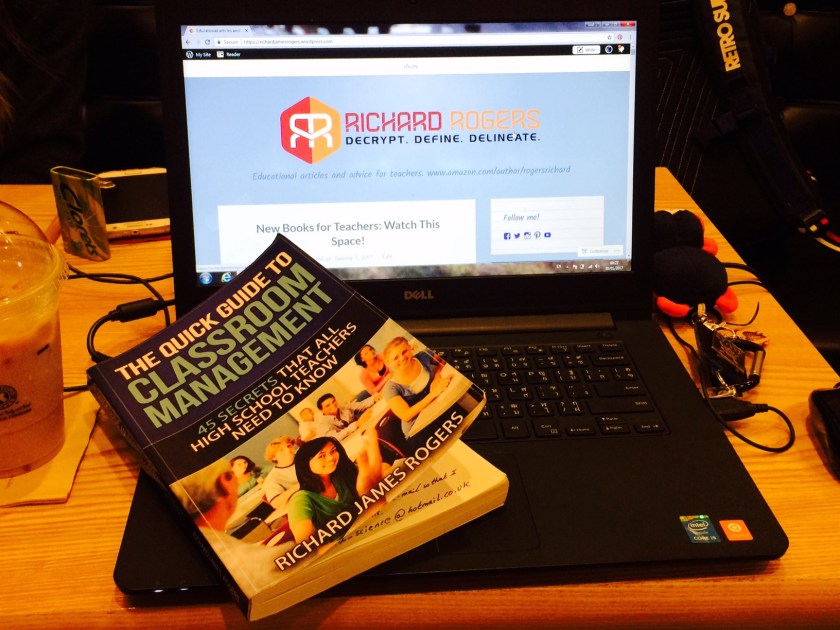
An article by Richard James Rogers (Award-Winning Author of The Quick Guide to Classroom Management and The Power of Praise: Empowering Students Through Positive Feedback). This blog post is illustrated by Pop Sutthiya Lertyongphati.

Accompanying podcast episode:

Children love competition – be that through sports, online gaming, traditional learning games, puzzles or even the drive to acquire more house points/plus points than their peers. Quiz-based apps, however, are unique in that they have finally allowed teachers to bring a healthy level of technology-driven rivalry into the remote, hybrid and traditional classrooms.

One big positive that we can attribute to these apps is that they have become very easy to use, and quick to set up – often requiring the students to simply type in a code on a website to begin the game. For the teacher, there’s the added benefit that games created by other teachers from around the world are often freely available to use on these platforms – saving you tons of preparation time.

What follows next is a list of the top five apps that I use on a regular basis with my students in my high school science classes. They are fun, easy to use and are great for reviewing prior knowledge.

#1: iSpring QuizMaker

With this extremely handy desktop tool, you’ll easily create graded online quizzes and surveys and receive insightful reports on students’ progress.

Choose from 14 question templates for comprehensive knowledge assessment, including matching, drag-and-drop, multiple-choice, and essay. The tool is highly flexible — customize everything from the background to the fonts. Set the number of attempts and time limits, specify a passing score, and even group your questions to assess them separately.

iSpring QuizMaker‘s benefits aren’t only about effective assessment but also about great teaching opportunities. It has branching scenarios and directs students to another question if they give a correct answer or sends them to an explanation slide with detailed feedback if they make a mistake.

#2: Blooket

I’ve only recently discovered Blooket but, I have to tell you: I’m already hooked!

Blooket distinguishes itself from other quiz-based apps in that there are actually ten types of game that you can play with the students (at the time of writing), all based on the much-loved multiple-choice quiz format. My personal favorites are:

  • Crypto Hack: With a dark theme and Bitcoin-centric atmosphere, Crypto Hack is one of the students’ favorites. After answering a series of questions correctly the students are then able to guess fellow students’ passwords (passwords are chosen from a pre-determined list that the game provides). A correct guess allows the player to hack the other player and steal imaginary crypto currency from them.
  • Fishing Frenzy: This one’s a bit crazy – hilariously so! Students, again, answer multiple choice questions but this time they cast a virtual fishing line into the water after answering correctly. What they pull out are usually different types of fish, but they can pull out junk and other crazy objects too. Players are ranked by the weight of fish they pull out of the water. Players can also ‘plunder’ other players’ fish and steal their poundage. It gets very competitive and you can expect to hear a lot of laughter in the classroom as this gets going!
  • Tower Defense: According to Blooket themselves, this is their most popular game. In this mode, the students answer multiple choice questions and are then presented with a map. On this map, the students must place towers in strategic positions to shoot enemies that appear on-screen. In this sense, Tower Defense is more similar to the kind of computer games that children are playing in their free time than all of the other game modes provided.

The main reason why Blooket is number two on my list is that you can replay the same multiple choice questions with the students but in different game modes. This can cause excellent knowledge recall and understanding to take place, especially after three or four attempts. This could be done in quick succession within a lesson (most of the game modes are exactly seven minutes long) or you could even play the same questions but in different game modes over a series of lessons. As with most quiz-based systems, there’s a searchable database of quizzes that other teachers have made – saving you tons of preparation time.

To summarise: I love Blooket.

#3: Quizlet Live

Hidden within Quizlet‘s excellent flash card system is a little-known activity called Quizlet Live. When the teacher selects this, the students in your classroom join the game (by entering a code on their devices) and are then placed into random teams. Once the game begins, all of the players in each team are given different questions to answer, so they MUST help each other (usually) if they want to win. The first team to pass twelve rounds of questions is the winner, and the teacher’s screen shows the real-time position of each team (1st place, 2nd place, 3rd place and so on).

Quizlet Live has two features which I believe make it a very unique learning tool:

  1. Students can read through the flash cards for the game as they’re waiting for other students to join. This, I believe, gives Quizlet Live a big advantage over many other quiz-based systems as students are not sitting around doing nothing as they’re waiting.
  2. Quizlet Live provides each team member with a different question, making the game more thorough/rigorous than some other quiz-based systems. Every member of the team has to answer their question correctly before the team can move to the next round.

The only disadvantage I’ve found with Quizlet Live is that it doesn’t lend itself very well to hybrid/remote teaching, as the students have to physically be next to each other in teams in order to interact quickly. I guess it could be feasible to put students into Google Meet Breakout rooms, or even hangout groups, to do the Quizlet Lives. However, I’ve tried this and have found it to be quite problematic and difficult to execute in real time (not least because you, the teacher, has to manually put the Quizlet Live teams (chosen at random) into Hangout/Breakout Rooms, and even then interaction between team members tends to be poor.

Quizlet has an immense database of flash cards created by other educators from all over the world, so it’s highly likely that you’ll find a question set that is suitable for your topic. If not, then you can make a set yourself.

#4: Quizziz

Quizizz is a simple but very effective multiple choice question system. Students log in with a code and answer questions – that’s it really. However, there are a few bells and whistles, such as excellent graphics, good music, power-up tools available for students on winning-streaks and a real-time leaderboard display that the teacher can present to the class.

One unique feature of Quizizz, which could be seen as either a disadvantage or an advantage, is that the game only ends when every person has answered every question (the teacher can set time limits for each question of between 30s and 5 mins). I quite like this feature of Quizizz, because as soon as one student is finished I ask him or her to go and help a student who isn’t finished. This can be a great way to build a sense of community within the classroom, and reinforce any work you’ve been doing on sympathy/empathy with your students.

Quizizz has many cool integration options with Google Classroom and even MS Excel. Read this excellent overview by TeachersFirst for a more in-depth analysis of how Quizizz could be utilised in your classroom. Of course, Quizizz has a large, searchable database of ready-made games that will allow you to set up a suitable quiz in seconds.

#5: Mentimeter

This is another simple and effective system that is somewhat similar to Kahoot! (an honorable mention on my list) but with a higher-quality user-interface, in my opinion. One interesting feature of Mentimeter is that it supports multiple question types (not just standard MCQs) such as ranking, scales, grids and open-ended questions.

Mentimeter is well-worth a try if you’re looking for something different.

Honourable mentions

Rolljak

This is an awesome app for audience engagement. Rolljak prides itself on being creative, seamless and fun! Activities are gamified and include sketch responses, voting and evaluation tasks – making it a very unique live-quiz app. Check out the app here. See the video below to find out more about how Rolljak works:

Kahoot!

Kahoot! is the original behemoth in the EdTech Hall of Fame, and we cannot ignore the influence it has had on the classroom app-development landscape. Kahoot! is simple, but very effective, and took the teaching world by storm when it first came out in 2013. Almost all modern live quiz-based systems have been inspired by Kahoot‘s innovative approach to game-based learning, and that’s why I wrote about Kahoot! in my award-winning book for teachers: The Quick Guide to Classroom Management. Kahoot‘s can be set as homework, or self-paced tasks too, which is handy if you want to help individual students in real-time.

Unfortunately, I’ve had to put Kahoot! as an honourable mention on my list as the system hasn’t really evolved much since 2013. Let me be clear: it’s awesome, but the other apps I’ve described today (such as iSpring QuizMaker) have additional features that make them somewhat more special than Kahoot! (in my humble opinion).

Conclusion

Use these game-based systems: it’s that simple! Students love them, and can gain a lot from their implementation when we plan their use carefully. They act as great starters, plenaries or even ‘chunks’ of lessons. After the test, rewarding students with custom pens can be an excellent way to keep them motivated and encourage them to keep progressing. These pens can be personalized with motivational phrases, educational symbols, or even each student’s name and student number.

When students complete a test or achieve a milestone, receiving a unique, personalized pen makes the reward more meaningful. Not only do these pens have collectible value, but they also reflect the teacher’s thoughtfulness, inspiring students to put even more effort into their studies.

We welcome you to join the Richard James Rogers online community! Join us on Facebook and Twitter for regular updates, giveaways of Richard’s books, special offers, upcoming events and news.

How to Become a Leader in the Classroom

richardjamesrogers.com is the official blog of Richard James Rogers: high school Science teacher and the award-winning author of The Quick Guide to Classroom Management: 45 Secrets That All High School Teachers Need to Know.

Teachers are expected to demonstrate high competency in a range of skill areas. Some skills that may come to mind are personal organisation, classroom management, behaviour management and confidence in the use of educational technology. One skill that may not immediately come to mind, however, is leadership: yet this is vital, as teachers are required to be good leaders of their students (and, sometimes, other teachers). Today, I’ve invited Mitch from Destination TEFL, Bangkok, to to share his tips on how to be a good leader in the classroom.

This blog post is illustrated by Pop Sutthiya Lertyongphati.

Truly great teachers must also be leaders. By devoting time and energy towards developing leadership skills, along with technical teaching skills, teachers can make a profound impact on their students that transcends the information they teach.

Leadership seems to be a bit of a buzzword these days, but maybe there’s a reason for that.

Just take a look around. In government, the corporate world, and yes, in education too, our world seems to be suffering from a lack of leadership. We have a surplus of bosses, managers, and influencers, but not enough true leaders.

But together we’re going to change that.

The classroom is your domain, one place in the world where you truly can make a difference. You may not be able to fix the government, or even the overall culture at your school (toxic bosses tend not to take feedback well), but you can absolutely change your classroom and, in so doing, your students’ lives.

Here’s how to do it.

What is true leadership?

In order to become great leaders in the classroom, we need to really nail down what leadership actually is. And more importantly, what it isn’t.

Good leadership is NOT:

  • Being right all the time
  • Never making mistakes
  • Making all of the decisions
  • Always being strong, confident, and outgoing

Surprising, right? Many of the usual stereotypes we have about leadership (ones that many leaders today try a bit too hard to represent) aren’t actually what leadership is about at all.

True leadership, especially in a classroom full of students, is much more nuanced and, honestly, more accessible than many are led to believe.

In contrast to the list above, true leadership in the classroom looks a lot more like:

  • Being human, and acknowledging mistakes
  • Letting your students make decisions, and teaching them to make the right ones
  • Being the best version of yourself, not fitting into boxes
  • Focusing on empathy and emotional intelligence

Real leadership is about putting others first, and doing your best to help them become the best versions of themselves they can be. As teachers, this is something that probably sounds familiar to us!

So now that we know what leadership is, how do we grow in these areas and incorporate them into our classroom?

Becoming a leader in the classroom

The first step in becoming a better leader is to know that you can!

People are conditioned to believe that you are either born with leadership qualities or not, and this is true for something like being naturally outgoing. But that’s not what great leaders are really made of.

“An AMAZING book for teachers!”

Emotional intelligence is something you can work on. Taking responsibility and acknowledging mistakes is something you can work on. Becoming the best version of yourself is something you can work on. 

Real leadership is accessible, and it’s accessible to you.

All becoming a leader in the classroom takes is recognizing areas you want to grow in as a leader, focusing on developing yourself in those areas, and (most importantly) finding opportunities to implement what you’re working on in the classroom.

Maybe you want to work on developing your emotional intelligence. So you take the first step and start reading articles about improving your EQ.

You listen to their advice and start doing things like labeling your emotions, practicing empathy, and opening yourself up to feedback. The more you do this, the more you notice your sensitivity to other people’s emotions increasing.

Now it’s time for the most important step: bringing it into the classroom!

What better group of people to practice empathy and emotional intelligence with than your students? You start looking for root causes of misbehavior, and the emotions that underlie them. You teach your students to become aware of their own emotions, and the emotions of their classmates. Most importantly, you provide an example of how to do this.

Congratulations, you have not only become a better teacher, but you’ve also become a true leader. You are now impacting your students not only through what you teach them, but how you teach them.

You’re no longer just teaching them about English, now you’re teaching them about life.

Final thoughts

Becoming a great leader, and a great teacher, takes time. It isn’t something that can be done in one semester: it’s an ongoing process of self-discovery and self-improvement.

However, as people teaching abroad, we’re no strangers to this process. Living and working abroad is a journey of self-discovery, finding new and exciting pieces of yourself in different contexts and cultures, growing in ways you never thought possible.

Leadership in the classroom is another one of those ways, and it’s an area of self-improvement that will end up changing not only your own life but the lives of others.

At the end of the day, that’s what teaching is all about!

We welcome you to join the Richard James Rogers online community! Join us on Facebook and Twitter for regular updates, giveaways of Richard’s books, special offers, upcoming events and news. 


The Value of Fresh Starts in Education

richardjamesrogers.com is the official blog of Richard James Rogers: high school Science teacher and award-winning author of The Quick Guide to Classroom Management: 45 Secrets That All High School Teachers Need to Know. This blog post is illustrated by Pop Sutthiya Lertyongphati.

When students underperform in some aspect of their schooling (whether that be behaviour, attainment, progress or something else) a fresh start can often be a useful way to draw a line in the sand and leave the past behind. In today’s exclusive guest blog post, Tayla Reynolds shares her ideas on the how, what and why of fresh starts for teachers. Tayla is a second year Geography teacher in the UK. She writes about the realities of teaching and how to overcome the daily challenges from a practical but realist standpoint.

Tayla Reynolds

One of the most surprising things about the teaching career for me is perhaps the constant changeable dynamic of it all. For some, there is an assumption that once that initial teacher training phase is complete, you evolve as a fully fledged professional, but in reality it is a career full of reflection, mistakes and fresh starts.

I think that these may be my favourite parts of the profession (aside, of course, from the multitude of personalities and events you may face in a day, or even a single lesson). It is the constant opportunities for fresh starts. There is nothing quite like the excitement, nerves and potential of a new September, that new year feeling you really can’t explain. But in reality, that feeling comes several times a year, after each seasonal break, each half term, each Sunday night and for those harder groups, after each day.

And it is these fresh starts where teachers can evolve the most. When teaching, planning and behaviour management is becoming frustrating, unmanageable and overwhelming, then slowing down should be the priority. Which I know is a lot easier to say than do, and unimaginably hard for those with growing families and other commitments. But those should always come first, you cannot give your best, to anyone, if you’re running on fumes. And for that to happen, sometimes something has to give, and some weeks that might be marking, and for others that might be all singing and dancing lessons you want to create. Because those take time, passion and energy.

So for me, fresh starts are all about restoring, reflecting and prioritising. Immediately restore that overwhelming feeling, spend your time wisely and how you want to. There should be no guilt in putting yourself first. People are often quick to mock the amount of holiday time within the teaching profession, but the days and weeks go quick and you are expected to sustain a very high level of energy and enthusiasm, toppled with early mornings, late nights and a never ending to-do list. It is one of the most physically and emotionally demanding jobs, so take the time to fill your cup back up. Fill it until it overflows, fill a bucket or a bathtub if you need to! For me that is switching off from work: I close that to-do list and relegate that to Monday morning’s problem. I go out and meet friends if I want to, other times I shut myself away and recharge my social battery. For you that could be family time, walks outdoors or losing yourself in a game or book. Who cares, you do you!

“An AMAZING book!”

Now for reflection, what are you happy with? What are you not? I always try to think of a singular thing I want to focus on. Is it that one group (you know the one I’m talking about)? Is it that one unit you’re putting off, or maybe one new thing you’d like to try? It can be the simplest and smallest things, because it is those small habits that will be the most effective. It is always in the small things, because they are the most effective and consistent to maintain. So my advice is to simply choose one thing, big or small is up to you. Will you focus on more restorative language, or positive behaviour management with those students or perhaps introducing a new habit to your lesson routine such as retrieval or reviews?  That decision will be based on what you want to focus on the most. But just pick one, there will be plenty of opportunities to try everything else. 

And finally, for a fresh start to be as effective as possible, you need to prioritise. No one can do it all, so let’s stop pretending we can. What needs doing first? What is absolutely a necessity to complete? That’s where you start. Yes, sometimes it is easier to do the quicker stuff, but that is the reality of procrastination and quickly encourages your full bucket to spring a leak. Next, use your working time as well as possible. Use absolutely any spare time, is a group completing a test? Use that time to get one of those quick jobs done. Use those planning periods for marking, and take those quick to-dos home. For me, this has meant that I spend two nights a week doing around 45 minutes of work, rather than bringing books and exam papers home for hours of marking. This works for me, but might not for you, so think about how you want to use your time. And try to stick to it, but always be ready to accept that life may get in the way of this but it is important here to simply go with the flow.

Fresh starts are a really valuable tool in the teaching profession, and that is because they serve as opportunities for teachers and school staff to restore, reflect and prioritise. You cannot spend time and energy on developing better lessons and improving learning when your cup is empty. See every break as an opportunity for a fresh start. Bad day? Prioritise yourself, not your to-do list. Chaotic term? Focus and prioritise on what will really create the impact you want, and stick to those small, effective habits. Teaching; it’s a marathon not a sprint. So let’s treat it that way. 

We welcome you to join the Richard James Rogers online community! Join us on Facebook and Twitter for regular updates, giveaways of Richard’s books, special offers, upcoming events and news. 

How to Create a Calming Classroom Corner

An article by Richard James Rogers (Award-Winning Author of The Quick Guide to Classroom Management and The Power of Praise: Empowering Students Through Positive Feedback).

Illustrated by Pop Sutthiya Lertyongphati 

A calming corner, sometimes referred to as a mindfulness corner, is a special space in your classroom where students can go when they need to manage their emotions. Calming corners are becoming more and more popular as they help students implement emotional and social learning skills.

The ideal calming corner should offer a wide variety of sensory tools. Some children benefit from reading books where characters resolve a conflict, while others prefer cuddling stuffed animals or playing with fidget toys. From breathing techniques and stretching guides to bubble wrap and coloring books, there are nearly endless options out there to help the kids in your class understand that their feelings are valid. Get inspired to create your own calming corner with the suggestions outlined in today’s blog post.

Strategy #1: Design the space carefully

  • Think about where exactly the calming corner should be. Perhaps a location at the back of the room will work well so that the children who go there do not feel as though everyone is looking at them. Perhaps a location to the side of the main class is useful, so that the teacher can easily supervise the students in both the calming corner and the main class effectively at the same time. The space should be well-lit (natural light is best) and comfortable. There will be some types of classroom in which a calming corner might not be feasible (e.g. a Design Technology workshop, or a Science laboratory), so in those cases a designated classroom where the students can be sent to, or perhaps a calming corner in the school library, might work best.
  • Choose comfortable furniture. As a bare minimum you will need a place where students can sit comfortably, and the size of this furniture will greatly depend on how much space you have. Bean bags can work well, and a small desk or table, or perhaps a lap-tray, can be useful if you want your students to complete some kind of reflection sheet (more on this later).
  • Include sensory tools. There are many to choose from, but the most popular include stress balls, Sensory Stixx (which are a type of fidget toy), fidget spinners, cuddly toys and old-style handheld games like gel mazes, pinball games and other push-button manual toys. I wouldn’t recommend modern computer games as these days they tend to be designed to get players addicted and can cause more aggression feelings, rather than encouraging relaxation. However, I do believe there’s something to be said for having a retro-computer (not internet connected) such as an Atari ST or BBC Microcomputer with old-style games loaded onto the system, for students to enjoy playing. These systems can be picked up relatively cheaply on sites such as eBay, and the games tend to be simpler and more kid-focussed than modern multiplayer, online games, such as Fortnite.

Strategy #2: Include self-reflection tools and activities

Children who wish to go to a calming corner should be encouraged to reflect upon their emotions and thoughts. This is really good for building self-awareness, which is desperately needed in today’s world.

“An amazing book.”

There are a number of well-established self-reflection tools out there already, and I personally would recommend the following:

  • Learning journals: A simple notebook for students to write down their individual thoughts and feelings can be a great way for them to see the progress they have made over time. I would recommend giving each student a personal notebook, which could be kept by the student in their bag at all times, or by the teacher. In addition, an online journal via Google Docs or Slides could also work well, and students who go to the calming corner could spend time adding their thoughts and feelings to the journal. I’ve written at length about how I use learning journals to help students prepare for exams before, but the same principles can definitely be applied to situations in which students are reflecting on their feelings and thoughts.
  • This great blog post by Martyn Kenneth goes through some useful acronyms that guide students through a self-reflection process. You may also wish to use his free pdf Reflective Journal for Students, and keep copies of this in your classroom’s calming corner.
  • Get your classroom calming students to create a ‘Me Tree’ – a very effective and fun self-analysis tool. Follow the steps outlined here.

Strategy #3: Teach students about the Classroom Calming Corner

The Mindfulness in Schools Project is still a relatively new national initiative in the UK, and the majority of schools internationally are still novices when it comes to getting students to reflect meaningfully on their thoughts and emotions. For this reason, many of the children in our care are simply not used to carrying out detailed introspections, and will need training in order to do so.

Encourage students to visit the classroom calming corner regularly at first – perhaps on a rotational basis, and use the self-reflection tools outlined to get students to reflect on their learning, thoughts and (later) emotions. Once this habit has been established, and any taboo/stigma has been removed, allow students the freedom to choose when they wish to go to the classroom calming corner. Of course, this will take vigilance on the part of the teacher as we don’t want 20 students going to the corner when a challenging task is given in-class, for example. A good way to overcome this might be to set a limit on how many students can be in the corner at one time, and schedule times in your lessons when students can have a menu of activities to choose from – one of which being ‘reflection time’ in the classroom calming corner.

Recommended further reading

We welcome you to join the Richard Rogers online community. Like our Facebook page and follow us on Twitter for daily updates.

Hybrid Teaching Apps, Ideas and Strategies

An article by Richard James Rogers (Award-Winning Author of The Quick Guide to Classroom Management and The Power of Praise: Empowering Students Through Positive Feedback).

Illustrated by Pop Sutthiya Lertyongphati 

Many schools are now facing an unprecedented challenge as the world learns to ‘live with‘ COVID-19: the need to teach students who are in-school physically and online at the same time. This is called ‘hybrid’ teaching.

I was surprised to discover during my research for this blog post that hybrid teaching has been around for quite some time – decades before the novel coronavirus even surfaced, in fact. In addition, the practice was initiated in a sector outside of education – business. As far back as 1993, astonishingly, companies around the world were holding seminars, workshops, meetings and training for employees who were both on-site and online at the same time.

In today’s blog post I’ll be drawing upon some of the hard-earned expertise that has come from the business sector when discussing some practical strategies for making hybrid teaching clear and effective. In addition, I’ll be describing a number of apps that I am currently using to great effect to keep my online and on-site students focused and stimulated. And the best part – all of the apps I will describe can be used at high functionality for free!

Hybrid teaching apps

  • Nearpod: This is one of my all-time favourite hybrid teaching apps. Nearpod is basically a very interactive slideshow application in which the teacher can add various activities, such as drawing tasks, multiple choice questions, fill-in the blanks questions, picture/word matching, a noticeboard and so much more. Moreover, it takes a matter of minutes to upload a slideshow to Nearpod (multiple file formats are accepted) and add the various activities. Once your lesson is ready, students simply go to join.nearpod.com and type in a code that you have shared with them. As a bonus – when the teacher moves from one slide to another, all of the students’ devices will show the slide transition too! It really is an awesome app, and one of the most popular among teachers who I deliver workshops to. Check it out!
  • Classkick: One of the most irritating things I find with using Google Docs/Slides with students is that the teacher cannot see all of the students’ work in real-time, in one place – you have to go into each student’s work separately to see what progress is being made. Well, some good news – Classkick solves this problem. Students log in to a classroom with a simple code and within seconds they are given a blank sheet in which they can add pictures, text, drawings and even voice clips! Additionally, as a teacher, you can see every piece of work in one place, in real-time, and can therefore easily see which students are not doing the work, or are working too slowly. It’s a great app for any kind of creative project that you would like your students to do, such as infographic creation, cartoon storyboarding, revision summaries or anything else that comes to mind.
  • Whiteboard.fi: Another legendary app that’s very simple to explain – it’s a virtual mini-whiteboarding app in which the teacher can see all of the students’ mini whiteboards in one place. It’s super cool, and again – students are able to log in within seconds by typing in a simple code.
  • Kami: This app turns static documents (e.g. pdfs) into interactive documents. Again, this app is super simple to use – the teacher uploads a static document, such as a revision booklet, and students can log in with a simple code and write all over the document. One amazing feature of Kami is its text-to-speech function – students can highlight any words within the document you’ve uploaded and the app will turn those words into an audible computer-generated voice. This is great for students who are learning how to verbalise key vocabulary.
  • Padlet: This is a very well-known and respected app for a reason – it’s simple to use and very customizable. Padlet is basically a noticeboard in which students can quickly log in (again, with a simple code) and post answers to a question, a summary of what they’ve learned that lesson, or anything the teacher chooses. Students can even post comments on each other’s posts (if that functionality is activated by the teacher). Filters for profanity can be activated and teacher-approval can be set up so that all posts can be checked before publishing. Check out the little-known ‘Shelf’ function on Padlet – this allows the teacher to post a sequence of questions or activities that students can complete at their own pace during a lesson. Here’s a screenshot of a very recent Padlet I created for my Year 11 Physics’ class – in this case I asked students to post a summary of what they had learned that lesson:
A recent Padlet I used with my Year 11 Physics class

Practical hybrid learning tips (from the corporate sector)

This great, free pdf book outlines some logistical enhancements that can be made to hybrid learning classrooms:

  • Remove background noise: Be aware that if your system isn’t on mute then eveyone can hear you rustling through papers, typing on your keyboard, drinking/slurping coffee, coughing, tapping on your desk and a variety of other noises. Some video-conferencing apps do have noise-reduction features built-in, so definitely activate those features if available.
  • Prepare: Do a test-run before the lesson begins. Make sure you know how to use the technology/apps you want to implement. Do you have a back-up plan in case something doesn’t work?
  • Consider lighting: Avoid bright background light (which can make you look like a silhouette on-screen). Test the camera to make sure that your students can clearly see your face.
  • Default to mute: Keep your microphone on mute, and unmute just before speaking, to avoid unwanted audio feedback.
  • Think about your location: Your desk space, background and location may be on display when you are video-conferencing, A messy space can reflect badly on you, so consider using a custom background image or moving the camera to a more favorable location.
  • Adjust your position accordingly: Make sure your head isn’t ‘cut off’ in the camera frame – position the equipment so that your face, neck and shoulders appear in the middle of the frame (if at all possible).

Your questions answered

Question about Nearpod from Mirian (via Facebook):

Sorry to ask but Nearpod seems to be really useful. Is it an app I have to download or a webpage? Because I logged in but then I couldn’t create my lessons or it didn’t generate a code for my students. Probably I didn’t do things properly 

Answer:

It’s a website. You’ll need to create an account, upload a slide presentation (as a pdf – just click ‘save as’ on your ppt and convert to a pdf.). Once your slide show is uploaded and saved (Nearpod will ask you to choose the subject and age level), you then need to click on ‘Live Lesson’. This will generate a code. Share the code with your students and you are good to go.

I have made a video describing how to create an awesome, free Nearpod lesson here:

We welcome you to join the Richard Rogers online community. Like our Facebook page and follow us on Twitter for daily updates.

5 Ways That Teachers Can Work Effectively With Parents to Help Their Students

richardjamesrogers.com is the official blog of Richard James Rogers: high school Science teacher and the award-winning author of The Quick Guide to Classroom Management: 45 Secrets That All High School Teachers Need to Know. This blog post is illustrated by Pop Sutthiya Lertyongphati.

I’ve made the point before that parent’s are our allies, not our enemies. It’s important to foster productive relationships with the parents of our students so that our learners feel fully supported in their education. How exactly do we foster those relationships, though? This week, I’ve invited Kat Sarmiento to share her thoughts on how to keep parents on our side.

Kat Sarmiento

Parents and teachers share the same goal: to ensure that students have the most excellent educational experience possible. In a study by the National Committee for Citizens in Education, one of the best approaches to creating a positive learning environment is encouraging parents’ engagement in their children’s school lives. 

Teachers who focus on involving parents see a profound change in their classrooms. Parental involvement begins at home, with the parents providing a safe and conducive environment for learning, experiences, support, and a positive outlook about the importance of education.

Parents actively involved in their child’s education provide the home support and knowledge that their children need—not just to accomplish assignments—but also to develop a lifelong love for learning.

Given that the importance of parents’ help in a child’s learning is beyond dispute, how can teachers work effectively with parents to help their students?

#1: Open reliable channels for communication

In a parent-teacher relationship, frequent two-way communication is essential so parents can stay updated on what is happening at school. At the same time, inform teachers about the important things concerning the child. 

A common mistake amongst teachers is not communicating enough or only getting in touch when there’s already a problem. It is best not to wait for situations to arise before reaching out. Teachers need to interact frequently and positively with parents to build a relationship before facing any roadblocks. Especially with today’s technology, teachers can do weekly reviews and quickly update parents on what’s going on in the classroom. 

It is critical to identify the best communication tools, develop messaging plans early in the year, and maintain consistent communication throughout the year. Maximize video conferencing apps, messaging boards, emails, social media, memos, newsletters, phone calls and find out what works best.

#2: Be collaborative

If communication is frequent, then collaboration will be easier.

A collaborative approach means that parents participate in the school’s decisions and work together to enhance the students’ learning and development.

Parents are well aware of their child’s lifestyle, developmental history, and interests. At the same time, teachers know how they can best guide and help their students perform in school.

Parents and teachers collaboratively sharing knowledge will go a long way to support a child’s growth and academic success. It includes relating what a child learns at school with what they learn at home.

The goal is to create a partnership in which teachers and parents share expertise to provide the best education for the students. Reciprocal respect, sharing of planning, and decision-making responsibilities are the essential components for true partnerships between parents and teachers.

#3: Encourage learning at home

Parents should support after-school learning by talking positively about school and teachers, creating a supportive home environment.

This form of involvement includes parents assisting their children with homework or taking them to a museum. These activities foster a school-oriented family and encourage parents to be involved in the school curriculum. 

Activities that encourage learning at home provide parents with information on what children are doing in the classroom and how to help them. Research shows that parental engagement is associated with increased productivity and academic achievement in many ways.

Participating in a child’s education shows that parents values their learning. The more help and guidance a child feels at home, the more effectively they will learn at school.

#4: Build a trusting relationship

In many respects, the first interaction between a teacher and a parent is the most crucial. During this time, a rapport is established, and trust can begin to develop.

Trust is a crucial component of any successful partnership. Teachers must maintain a trusting, private, open, and honest relationship with parents and ensure they always have the students’ best interest at heart. At the same time, parents should be confident in the competency of the teachers who are professionally involved in their children’s education.

#5: Make the curriculum transparent

Part of keeping parents informed is letting them know what their children are learning, how they are processing it, and how it will help their child succeed.

One way to do this is by conducting workshops for parents to inform them of the school curriculum and remind them that they are still their child’s most important teachers.

The bottom line is that education is a critical stage in a child’s growth and development. When parents and teachers collaborate as a team, children learn more effectively. And like any team, parents and teachers have one goal: provide the most incredible learning environment for children to promote their physical, emotional, and intellectual well-being.

Kat Sarmiento

Kat is a Molecular Biology Scientist turned Growth Marketing Scientist. During her free time, she loves to write articles that will bring delight, empower women, and spark the business mind. She loves to bake but unfortunately, baking doesn’t love her back. She has many things in her arsenal and writing is one of her passion projects.

We welcome you to join the Richard Rogers online community. Like our Facebook page and follow us on Twitter for daily updates.

6 Reasons Why Education is Important

richardjamesrogers.com is the official blog of Richard James Rogers: high school Science teacher and the award-winning author of The Quick Guide to Classroom Management: 45 Secrets That All High School Teachers Need to Know. This blog post is illustrated by Pop Sutthiya Lertyongphati.

We all understand the importance of developing ourselves professionally – whether that be by improving a particular set of teaching skills or by learning new ones. Sometimes, however, it’s important to go right back to the core fundamentals by considering why we do what we do in the first place. This week, I’ve invited Kat Sarmiento (content writer at Katreena’s Content Studio) to share her thoughts on why education is important in the first place.

Why is education important? To many of us, we learn the value of education from what the adults say. As children, not everyone understands why do we study, go to school, spend our free time with homework and learn. As we grow older, it becomes more and more necessary to receive the right level of education.

Learning is among the best habits of successful people. It creates future leaders, builds a polite society, and moves forward the future of humanity. If you or someone you know is questioning why they need to study, show this to them. Here are 6 reasons why education is important not only to you but for everyone.

#1: Education Teaches Independence

Education is not about learning random facts that you can’t use in real life. Whether you’re slaking your thirst for knowledge or you’re doing it for something more practical, education makes you independent. Early education molds you as a crucial, functioning member of society, no matter your age.

For younger children, education is there to teach them the basic skills necessary to survive society. For adolescents, proper education arms them with tools that can help them take advantage of opportunities. Higher learning like uni and post-grad demystifies the world further.

All these teach independence – from how the mechanics of how the body works to knowing what to do in a job. Independence is a matter of learning how to succeed after failure, how to protect yourself from opportunists, and how to deal with life in general. Life can be hard but education equips you with the right ways to make the most out of it.

#2: Education Provides More Employment Opportunities

With 7 billion people on Earth and around 330 million in the United States, finding a job is not easy. If you want a job that pays above the minimum wage, you usually need to have at least higher learning, if not more. Even at entry-level, you need to compete with hundreds of applicants vying for the same position.

Learning higher education, with the right teaching techniques, can give you the edge you need. You can differentiate yourself and fulfill a job demand within society. The world can never have too many data scientists, engineers, scientists, and more.

As you go and specialize even further, you expand your job opportunities and find more specific job opportunities. Depending on what you do, not only can you improve your chances of getting hired, you also stand out even further. Educate yourself, graduate, improve your skills, and get more qualifications to get ahead of the competition.

#3: Education Helps Us Connect

In many situations, those who don’t educate themselves are the ones who don’t understand other people. Education helps breed culture, and the lack of the former can result in an apparent lack of the latter. Education helps you understand people better, especially those who are different than you.

Education teaches you more about geography, history, and social sciences, which are crucial to know how to deal with multiple walks of life. Prejudices and discrimination according to race, gender orientation, physical ability, and more come from the lack of knowledge over many things that you learn at school.

The more we understand about the world and the people who are different than use, the better we can put ourselves in their shoes. It allows us to appreciate the good things about other cultures and help curb negative stereotypes that divide us as humans. We also learn more about our surroundings.

Education helps us empathize. It gives us a better understanding of the world and become better citizens of this world. It familiarizes things we don’t know and takes away potential prejudices we have towards them.

#4: Education Alleviates Poverty

Poverty is one of the most crippling social statuses in the world. It is painful for those stuck in it, as the lack of resources means a lack of nutrition and other essential needs too. To many, education is a luxury taken for granted but for many around the world, it is their ticket out of poverty.

As we said, proper education teaches you crucial life skills in a society that needs them. At the very least, reading, writing, and arithmetic teaches children to know how to deal with people. Each additional year of education can offer better education, better-paying jobs, and more ways to feed their families.

“An AMAZING Book!”

As we educate people, we also teach the future generation to be more discerning about their would-be leaders. People learn critical thinking skills necessary to help them make better decisions. This education, paired with the will to progress, can help people find better-paying jobs that can alleviate poverty.

#5: Education Breeds Confidence

One of the keys to getting further in life is being confident in everything that you do. Knowing your skills, what you bring to the table, what you can do, and what you can further learn can help you gain the confidence to succeed. Whether you have an art degree or a business background, education makes you confident with what you know.

To succeed, you need the confidence to look your uncertainties straight in the eye. It helps you overcome your fears, self-doubt, and crippling anxiety. Confidence also gives you the drive to start projects, show off their new ideas, and think outside the box.

Education can help breed confidence. As you learn more, the better you can express your thoughts and unveil your intellect. You can say yes to opportunities you believe you deserve and no to things that you don’t. Education breeds confidence, and the more you know, the fewer people can take advantage of you.

#6: Education Brings Equity

Education is one of the ultimate equalizers of the world. If you’re looking to simply be educated, it makes all opportunities more open to you, giving you a fair chance. If you’re looking to educate, you give other people a better chance to make the most out of their talents.

A world of knowledge is a world of equity. Everyone learns at different speeds – at various rates. Every person has a different starting point. Education can help get you and everyone else to the same finish line – success.

The Bottom Line

Whether it’s for yourself, your family, or other people, education is one of the most powerful weapons you can wield. The world is yours to take and you can uplift yourself and the people around you with the right education. You don’t have to be the next billionaire to see how valuable education can be.

Are you ready to learn? Educate yourself. Knowledge is the best foundation you can use to succeed in life. Even without selfless reasons, proper education can help all of us live in a better, more polite society.

Kat Sarmiento

Kat is a Molecular Biology Scientist turned Growth Marketing Scientist. During her free time, she loves to write articles that will bring delight, empower women, and spark the business mind. She loves to bake but unfortunately, baking doesn’t love her back. She has many things in her arsenal and writing is one of her passion projects.

The Many Benefits of Doing a Weekly Review

An article by Richard James Rogers (Award-winning author of The Quick Guide to Classroom Management). Illustrated by Pop Sutthiya Lertyongphati.

Accompanying podcast:

When I look back over the past 16 years of my life as a high school Science Teacher I realize that there are some foundational habits I have adopted which have led to my success in the classroom. Small things, done regularly, which snowball to create a massive impact over time.

One such habit is the Weekly Review.

Just this Sunday gone, as I was finally sitting down again at my favorite Bangkok Starbucks after lockdown restrictions were recently lifted, I realised that the time I was spending reading over my lesson plans was absolutely priceless. You see, a weekly review is just that: time spent reading over the week just gone, planning the week ahead and checking through assignments and work that may have been submitted electronically.

For me, I like to find a quiet place on a Sunday morning to do my Weekly Review – somewhere where I can focus and not be distracted. Some teachers reading this may scoff at the thought of giving up a sacred Sunday morning for school work – after all, this is my free time, right?

You may be surprised to learn, however, that this time I invest every Sunday morning is so valuable because it actually saves me a ton of headaches and stress in the ensuing week of teaching. For me, Sunday works well. For you, this might not be the case, and that’s fine! Choose a day and time that works for you each week, if you can – a free double lesson in your timetable may be suitable, for example.

One question you might now be asking is “Why is a weekly review so useful, anyway?”. Well, get ready because I’m about to describe four ways in which a weekly review can solve so many day-to-day teacher problems.

Weekly Review benefit #1: It allows me to see where I am with my classes, and think about the pace I’m going at

It’s so important to consistently look at where we’re at right now with our students, and where we need to go. Questions I ask myself during this part of the Weekly Review are:

  1. Are my students at the right place in the curriculum map? Am I behind schedule, or am I ahead of schedule?
  2. If my students are not where they should be in terms of topics covered to-date, then why is that?
  3. Am I going too slow, or do I need to speed up with this class?

Answering these three questions is so important: especially for exam-level classes who usually have a large amount of content to cover in a relatively short amount of time. Pacing is so important, in fact, that the Association for Supervision and Curriculum Development recently stated in an excellent 2020 article that:

There’s a correlation between effective pacing and student engagement, so it’s crucial to consider the speed at which you move through a lesson and the rate of delivery for different parts of the lesson. When pacing is too slow, students often become bored and disengaged. When it’s too fast, some may not grasp what’s being taught and get lost—or discouraged.

Craig Simmons, ASCD.org. Available at https://www.ascd.org/el/articles/pacing-lessons-for-optimal-learning

From this we see that the regular consideration of pace is crucial to not only ensuring that content is covered on-time, but also to ensuring that student engagement is maintained. For me, I need a weekly check-up when it comes to pace, and my Weekly Review works on this like a treat.

Weekly Review benefit #2: It allows me to see if I am lacking variety in my teaching

One of the very first things I learned on my PGCE teacher-training course way back in 2005 was that each and every lesson should contain a variety of activities. 16 years later, and I have come to the conclusion that this is true.

Students generally become disengaged and disinterested when the same types of activities are used over and over again. Whilst it may not be possible to include more that two or three types of activity within each individual lesson, it is possible to introduce variety over a series of lessons – such as those taught within a week. My Weekly Review allows me to answer the following key questions about variety:

  1. Have I been giving my students the same kinds of activities all week, or did I make my lessons varied and fun?
  2. What kinds of useful activities have my students not done yet, and would therefore benefit from next week?
  3. Which activities worked well, and could be repeated in the future? Which activities did not work well, and should be avoided next week?
  4. Did my students do too much writing or copying, and not enough active engagement? How could I fix this next week?
  5. Am I expecting too much from my students?
  6. Am I boring my students?
  7. Are my activities suitable and relevant?

Sometimes I think, as teachers, we all have our own favourite ‘menu’ of techniques that have consistently worked well for us time and time again. For me, for example, I use a lot of past-exam paper questions because I know that they are every effective at getting students familiar with key vocabulary and the rigors of the real exam. However, my personal list of favourite techniques is still fairly limited in scope, even after 16 years of refinement, and I recognise that I must go outside of my comfort zone again and again to try out new ideas, activities, apps and systems.

One tip I would recommend is to always write out brief lesson plans in a custom-made teachers’ planner each week, rather than relying on looking back through your week on Google Classroom, Moodle, Firefly, etc. When you have your whole week mapped-out on a double-page spread, it makes the Weekly Review process straightforward and efficient.

Weekly Review benefit #3: It allows me to see what student work is missing, and if students need to catch-up

I personally have always found it quite a challenge to assess or mark student work on a day-to-day basis. Instead, a dedicated weekly slot, such as my Weekly Review time, works wonders when it comes to managing my workload and stress levels. By checking through all of my assignments on Google Classroom, or any system I am using, I can see which students are behind with their work and which students are up-to-speed. Whilst it may be necessary to chase students up on the day an assignment is due in, the Weekly Review allows me to see which students have ‘slipped-through the net’, so to speak, and which students have still not submitted work despite being given a reminder.

Nowadays we do not need to take home piles and piles of notebooks home to mark like we did in the early days of teaching – we can check assignments submitted electronically and, I would suggest, use some of the Weekly Review time for marking and assessment. In addition, this time allows us to reward those students who are consistently putting forth good effort – perhaps by giving plus points, merits or whatever our school’s rewards’ system happens to be.

With students who are identified as being behind on their work, we can issue reminders or deploy sanctions in the ensuing week. In addition, if a whole class has been flagged as being behind on a task (sometimes we underestimate how long an activity can take), then that class can be given time to catch-up at some point the following week (if enough curriculum time is available – otherwise this can be set as homework).

Weekly Review benefit #4: It allows me to plan ahead intelligently

Planning ahead intelligently is not quite the same as just planning ahead. Based on the information gathered during the Weekly Review about the stages the students are at in their courses, the pace I’m going at, the level of variety I’m including in lessons and student status regarding missed work or partially complete assignments, I can now plan my week ahead with much better clarity and purpose than if I were not to consider all of these factors.

This is probably the main objective of the Weekly Review – the opportunity to figure out what I’m going to teach the following week (and how I’m going to do it). However, as I hope you’ve seen from the previous points raised, a lot of information must be gathered before effective planning can take place.

Based on my observations and communications over the past 16 years, I have come to the conclusion that there is still a significant minority of teachers in the profession who are planning lessons on a day-to-day basis. This holds especially true for trainee teachers and those who are new to teaching. I’ve been there myself – life gets busy and often we can fall into a ‘survival’ mode of teaching whereby we only focus on short-term goals and getting through the day ahead. This strategy, however, is not only inefficient – it’s stressful and ineffective. Students undoubtedly suffer when the teacher doesn’t plan ahead intelligently: considering long-term and medium-term goals, as lessons are never as optimal as they could be when real thought, time, effort and professional intelligence have gone into the planning process.

Planning ahead intelligently via the Weekly Review process has had a dramatic and positive effect on my teaching over time:

  • I start each day in a much better frame of mind than when my week of teaching has not been planned intelligently.
  • I can set work via electronic means in a much more timely manner: often scheduling assignments in advance (with Google Classroom, for example, assignments can be scheduled to post at any point in future). This leaves me free to just turn up and deliver great lessons without the hassle and stress of setting assignments, posting materials and creating announcements on a daily basis.
  • I feel much more confident every day when I’ve done a Weekly Review, as my resources, ideas, activities and direction are already mapped-out fully.

Conclusion

A comprehensive Weekly Review allows us, as teachers, to:

  1. Check whether we’re on-schedule, behind-schedule or ahead of schedule with different classes.
  2. Consider our pacing.
  3. Evaluate the level of variety and stimulation we are providing to our students within our lessons.
  4. Figure out what student work is missing, and who needs to catch up.
  5. Plan ahead intelligently.
  6. Act on those plans, and review everything again the following week.

I’ll finish by stating a key principle of teaching that I was taught on my PGCE course at Bangor University way back in 2005: Be a reflective practitioner. A Weekly Review is an excellent way to do just that.

We welcome you to join the Richard James Rogers online community! Join us on Facebook and Twitter for regular updates, giveaways of Richard’s books, special offers, upcoming events and news. 

richard-rogers-online

7 Effective Ways to Cultivate Student Resilience in the Classroom

richardjamesrogers.com is the official blog of Richard James Rogers: high school Science teacher and award-winning author of The Quick Guide to Classroom Management. This blog post is illustrated by Pop Sutthiya Lertyongphati.

Resilience is defined by the Cambridge Dictionary as “the ability to be happy, successful, etc. again after something difficult or bad has happened”. Resilience is an important life-skill for children to acquire whilst at school. Reach Out Australia, for example, states that “When students feel like the outcome won’t affect them negatively, they are more likely to try new and more challenging things in the classroom. Being able to learn from mistakes and challenges in a place where they feel supported and encouraged will build their confidence, self-belief and resilience.“ Today, I’ve invited Jessica Robinson, educational writer at The Speaking Polymath, to write this excellent blog post describing seven ways to cultivate student resilience in the classroom. Enjoy!

“When we learn how to become resilient, we learn how to embrace the beautifully broad spectrum of the human experience.”

Jaeda Dewalt

Life is a beautiful adventure that has its ups and downs. Unexpected things happen in this world and within moments your life turns upside down. Take the example of the pandemic: one day, suddenly, we got to know about a virus that had infected masses of people in China and within days the virus spread to multiple countries of the world. It caused wide-scale casualties, governments imposed lockdowns and the sad ‘new normal’ began.

Sudden events that happen in life can make you realize how important it is to be resilient. If we are resilient, we can withstand the storms that come our way and emerge victorious. During our days in quarantine, as I spent this trying time with my kids who were feeling anxious, I realized that the pandemic is a big challenge, especially for children. They are facing such difficulties at a very young age in their lives. This experience motivated me to start cultivating resilience in my kids. Every day, I make them engage in different activities that can empower their resilience. Watching them become emotionally and mentally stronger has motivated me to also work on cultivating student resilience in the classroom.

Here, I am going to share some effective strategies that have helped me turn my kids into more resilient beings. I have started using these strategies with my students too and I hope that you’ll also use them to help your students cultivate strong resilience.

#1: Make children engage in activities that challenge them physically

This is one of the best ways that have helped me cultivate resilience in my kids. Anything that challenges them physically, helps them gain confidence in themselves, their abilities, and their body. This self-confidence gives them the strength to bear difficulties in life with courage. So, you should try to make your students engage in activities that challenge them physically. You can make them play new games that require more physical as well as mental efforts and help them develop confidence in their physical and mental capabilities. As far as I am concerned, I make my students participate in different kinds of races to challenge their physical capabilities and scavenger hunts with challenging quizzes to help them develop confidence in their mental capabilities. Moreover, I also tell them to not compete with each other but strive to become a better version of themselves. Believe me, this tactic really works.

#2: Help them inculcate confident and influential body language

Do you know that your body language and your feelings are interconnected? Yes, this is true. That is why, whenever you are sad, you sit or stand with a hunched back, look down and your smile fades away. This is an example of how your emotions impact your body language. In the same way, your body language also impacts your emotions. You can use this connection between emotions and body language to help your students become more resilient. You can help them learn body language techniques to regulate their emotions. For example, power posing in a confident way can help your students face challenges with courage. To know more about power posing and the benefits of influential body language, you can watch the Ted Talk by Amy Cuddy. Further, you can also read different books and watch videos on Body Language to help your students inculcate confident and influential body language.

#3: Make them engage in creative pursuits

According to one study published by Colin G. Deyoung and Paul J. Silvia in the Journal of Positive Psychology, creativity encourages positive emotions that can unlock our inner resources for dealing with stress and uncertainty. This implies that we can help kids develop a strong resilience in an interesting way by making them engage in creative pursuits. If a child loves painting, you can let him express his creative self through painting for some time every day. If a child loves dancing, you can let him express his creative endeavors through dancing. By engaging in their favorite creative pursuits, your students will develop strong resilience over time. Along with this, they’ll also become happier and calmer versions of themselves which will ultimately help them become more resilient in life.

#4: Create a gratitude ritual and practice it together

‘Gratitude’, we have heard this word a lot and we have also received the advice to express gratitude from many influential people. But, we often feel that expressing gratitude cannot do us enough good as it is a very simple practice. We think that we need to look for something better and so on. But, believe me, we have been wrong whenever we have thought this way. I have seen tremendous positive changes in myself and my kids by following a gratitude ritual for the past two months regularly. We are happier, more optimistic, and therefore, more resilient too. Moreover, research also shows that gratitude can help us rewire our brains towards positivity. So, you should try to create a gratitude ritual and practice it with your students. A simple gratitude ritual is to write down three things that you are grateful for every day. You can try this one or create your own gratitude ritual.

#5: Help them build meaningful social connections

The American Psychological Association wrote in its resilience report, “Many studies show that the primary factor in resilience is having caring and supportive relationships within and outside the family.” When you have supportive relationships in your life, you feel safe and protected. You know that there are always people you can count on whenever you get faced with any problems in life. This knowingness gives you the strength to withstand the challenges that come in your life. This implies that we can help our students build strong resilience by encouraging them to cultivate meaningful social relationships with others. We can help our students build strong friendships with each other and cultivate good relationships with us as well as other people from the school staff. This way, we can teach our students to form meaningful connections with people and boost their resilience.

#6: Make them engage in healthy risk-taking

The development of self-confidence is crucial for us to cultivate strong resilience. You can help your students become self-confident by making them engage in healthy risk-taking. For example, if your students are afraid of dogs, you can bring a little puppy and encourage them to play with it. No doubt, they’ll feel a little afraid in the beginning but then, after playing safely with the puppy, their confidence level in their abilities to take risks will increase. As a result, they’ll cultivate a strong resilience over time.

#7: Teach them some coping mechanisms to calm themselves under overwhelming situations

If you have the ability to help yourself calm down even under challenging times, you naturally have strong resilience. You feel confident about yourself and know that you can handle yourself even in difficult situations. So, you can help your students develop a strong resilience by teaching them some coping mechanisms to calm themselves under overwhelming situations. Belly breathing, focusing on the sounds that are happening around us, and feeling deeply are some simple coping mechanisms that help us calm our nervous system under challenging situations. Furthermore, you can watch YouTube videos to learn about belly breathing and then you can teach this calming technique to your students.

The pandemic has taught us that we should help children develop a strong resilience right from their childhood. It is only in the presence of a strong resilience that they can face any challenges that life throws at them and emerge victoriously. Furthermore, as teachers, we can help our students cultivate a strong resilience through the different ways mentioned above. Now, I wish you all the best, and may your efforts to help your students develop a strong resilience bear fruits.

An ardent writer, Jessica Robinson, works for ‘The Speaking Polymath’. She uses this platform to weave her magical words into powerful strands of content and share with her readers.

We welcome you to join the Richard James Rogers online community! Join us on Facebook and Twitter for regular updates, giveaways of Richard’s books, special offers, upcoming events and news. 

5 Smart Benefits of Using The Pomodoro Technique in Teaching

richardjamesrogers.com is the official blog of Richard James Rogers: high school Science teacher and award-winning author of The Quick Guide to Classroom Management. This blog post is illustrated by Pop Sutthiya Lertyongphati.

Have you heard of the Pomodoro Technique, and how it can be applied to your lessons? I hadn’t – that is until I invited Jessica Robinson, educational writer at The Speaking Polymath, to write this excellent blog post for us today. Enjoy, because you’re in for a treat!

I am of the strong belief that time management is complementary to classroom management. Having said that, teachers have to be on the top of their time management game at all times. I am of the opinion that how we, teachers, manage classroom time directly correlates with our students’ success. This is why a lot of educators are interested in exploring various time management tips for teachers. Besides, education is evolving at a swift pace in this digital age. This paradigm shift calls for greater innovation and outside-the-box thinking on the part of teachers.

In the ultimate sense, the success of every time management strategy depends on how well a teacher executes it. I have seen some of the simplest techniques producing great outcomes because of meticulous execution. On the other hand, I have seen some of the most popular classroom management tactics failing in the absence of planning and implementation. However, the bottom line is that we need to keep discovering new ideas for classroom management. Also, these ideas have to be relevant to the new dynamics of education and remote learning.

One excellent classroom management strategy I have discovered is the Pomodoro Technique. The Pomodoro Technique is basically a time management technique. But like I mentioned above, smart time management facilitates intelligible classroom management. The application of this strategy in teaching is still unexplored to a great extent. It is rather a strategy that finds greater application in the corporate world. That does not mean we cannot use it in teaching!

I have been using this technique in teaching for more than a year now. What is noteworthy is that it has always inspired great outcomes. This is an innovative approach in teaching that I would recommend to all teachers. Do you struggle to manage your time and drive positive changes in the classroom? If you do, this outside-the-box technique can be the perfect solution. There are multifaceted benefits of using the Pomodoro Technique for teachers as well as students. Before I shed light on that, it is vital that we understand what Pomodoro Technique is and how it works.

What is the Pomodoro Technique of time management?

Let me make it clear that the Pomodoro Technique is not an innovation of the contemporary world. In fact, this methodology of time management was discovered in the 1980s by Francesco Cirillo. The crux of this methodology lies in breaking down work or tasks into short bursts of 25 minutes each. These spans of 25 minutes are separated by short breaks of 5 minutes. To use it to the best effect, a timer is used to keep track of time. Are you thinking about how this technique is beneficial for teachers? Let us find out how it can be a breakthrough addition to your teaching and classroom management strategies.

Advantages of using the Pomodoro Technique in teaching

#1: It can facilitate short-term goals in the classroom

As I see it, the short goals of classroom management are of utmost importance. The Pomodoro Technique gives you the perfect opportunity to set short-term goals in the classroom. In fact, you can set one goal each for every Pomodoro session. In this way, one classroom session can be divided into multiple short-term goals. 

These goals can relate to classroom management or academic objectives for students. In this way, the culmination of short-term goals can lead to the efficient accomplishment of larger objectives of classroom management. It can make learning more wholesome for students. Furthermore, it can help you in drawing more productivity in your teaching. I personally feel that this technique incredibly adds to my work efficiency. I am sure it will work wonders for you as well. Worth a try for sure!

#2: It promotes better student engagement

It is critical for teachers to evolve student engagement and active learning strategies in a continuous manner. Teachers need to look for creative ideas to keep students engaged, be it in remote learning or a traditional classroom. Having said that, I think the Pomodoro Technique is quite a creative way of driving high student engagement.

The first reason why it is a great way to engage students is that it does not make students feel worn out. They know they will get a short break after a twenty-five-minute span. Hence, they can dedicate complete diligence and motivation to their learning in those twenty-five minutes. It helps them sustain their learning motivation more effectively. Moreover, in those short breaks between consecutive Pomodoro sessions, you can initiate interactive classroom discussions. These discussions can be about anything and everything in the world. In fact, these discussions can be a great opportunity for students to express themselves and rejuvenate their minds. Also, these breaks can be utilized for feedback sharing and clearing doubts to further add to student engagement.

#3: It paves the way for better stress management

Teaching is a stressful and draining job which is the reason why this profession has high turnover. As much as we love to teach students, be a part of their journeys, and lead them to success, stress keeps pulling us down. In my experience, teachers are as successful as their stress management skills. For me, it is a prerequisite for all teachers. When teachers are not able to manage their stress, they face burnout situations. More than the impacts on their careers, it affects students’ learning as teachers begin to disengage.

The best thing about the Pomodoro Technique is that it has a great scope for teachers’ stress management as well. In the short breaks between two Pomodoro sessions, teachers can relax and feel at ease. Short sessions of twenty-five minutes with a five-minute break after each session is a fair deal, isn’t it? Of course, long teaching sessions and a typical workday can make us feel exhausted and stressed. But doing it the Pomodoro way is a great escape from stressful and burnout situations. It will give you enough breaks to remain sane and reboot before the next session. It will help you in keeping the classroom environment positive and help you manage workload better. Having said that, it can prove to be an amazing stress management tip for teachers. 

#4: It can be a perfect time management model for students

By using the Pomodoro Technique for classroom management, teachers can model a great time management strategy for students. The students can learn about the working of this technique and implement it in their homework sessions or while preparing for exams. In this way, students can meet their learning objectives better and make classroom management easier for teachers.

I have seen students take a lot of interest in this technique. They feel that it is a perfect way to support their learning objectives. Also, it can help them to keep mental or physical fatigue at bay. Effective time management and stress management are as vital for students as for teachers. So, when your students learn this effective technique from you, they can use it to their advantage. The Pomodoro Technique can be a great way for students to enhance their productivity, academic results, and time management skills.

#5: It assists in improvised classroom planning

With the Pomodoro Technique, you can plan your classroom sessions in a better way. You can break down the lesson plans into smaller sessions to inspire maximum concentration among students. I feel that this technique has empowered me to plan classroom sessions and activities in a much smarter way. I can break down a big lesson into smaller bursts using the Pomodoro Technique. This ensures that students learn in an effective and conducive way. Otherwise, long sessions may be exhausting for them with the little accomplishment of the learning objectives.

This is why I suggest that this is a great way to facilitate improvised classroom planning. Teachers can plan the curriculum in an organized manner. Also, by breaking down a classroom session into small spells, a teacher can plan for adding various learning dimensions. You can make every classroom session far more worthwhile with this excellent technique from the 1980s.

Can you think of any more ways in which the Pomodoro Technique can be added to teaching proficiency? Teaching is the right balance of effective time management and also patience. For me, the significance of patience in teaching is immense. In the new age of digital learning, you have to keep adding diverse teaching methodologies to your capabilities. But time management and patience will always be the foundation of excelling in teaching. Given that, the Pomodoro Technique can be a vital and valuable addition to your teaching style. With this technique, you can drive positive outcomes in your career as well as for your students.

An ardent writer, Jessica Robinson, works for ‘The Speaking Polymath’. She uses this platform to weave her magical words into powerful strands of content and share with her readers.

We welcome you to join the Richard James Rogers online community! Join us on Facebook and Twitter for regular updates, giveaways of Richard’s books, special offers, upcoming events and news. 

richard-rogers-online