This article is your guide to implementing straightforward, tried-and-tested marketing strategies that are guaranteed to grow your education business. We will discuss both strategies that you can use personally to self-reflect and thus increase business growth, and more practical, digital-oriented approaches you can take.
Utilise Fast Resources
In business there will be short-term and long-term investments you will want to make in terms of marketing. Long-term will generally be bigger projects, perhaps a grand unveiling of a product. Short-term will more likely be simple strategies that you can do easily that don’t take a great deal of time. For the short-term, it is highly recommended that you utilise the fast online resources that are at your disposal. For example, a Facebook ad template already gives you the attractive basis for your advertisement – all you need to do is fill in the blanks. This is an affordable way to keep your business moving.
Consider How You Are Learning
This isn’t so much a practical strategy, as a mental refresher course. Perhaps you feel you need to strip back down to the basics. You should really aim to properly soak in the information you are gathering for, for example, your market research. Surface level learning is where you should start on your journey, but to be able to be properly invested, engaged, and reflective with your business and its plan, you must dig a little deeper in order to forward think. Deep learning will have you constantly reviewing your business, in terms of what is going well and what can be improved.
Email Marketing
Because email marketing has been around for years, people may start to believe that it is not as relevant as it once was, and we should think forward to more modern ways of marketing. However, this is not the case. One reason for this is because of email automation tools. Email marketing, after the initial setup, is constantly generated and therefore constantly keeping the interaction with customers to a high level through newsletters, information on new products, etc. Email marketing also specifically reaches your target audience, meaning that your business is actually being promoted to those who are interested. Thus, the people who are more likely to purchase.
Remain Focused
If you are feeling here, there, and everywhere, this hectic mindset can reflect on the way that you advertise your business. Have a clear-cut objective when you set out to market something; a simple approach with a touch of creativity is better than something that results in a chaotic, discernible mess. Maintaining a level of focus in your own mind means that you can concentrate solely on creating something for your business that speaks to you and the brand.
Search Engine Optimisation
Having knowledge of search engine optimisation (SEO) is the top rated strategy in order to increase website traffic. Through strategically chosen keywords and phrases, your website can rank higher on a search engine results page. This means the customers who are interested in the goods that you sell will find your online business due to their internet search matching up with what you are offering.
We welcome you to join the Richard Rogers online community. Like our Facebook page and follow us on Twitter for daily updates.
Updated: October 2022 (Originally posted May 2017)
I received a message from a very stressed out Newly Qualified Teacher a few weeks ago. It pertains to a problem that many educators face: dealing with homework. When I told her that I was planning to write an article about this very issue, she agreed to share her message with all my readers:
Dear Richard. I’m about to finish my first year in teaching and I’m really ashamed to admit that I haven’t been able to mark my students’ homework on time each week. In fact, I’ve set so much homework that it has just piled up and piled up over the course of this year, to the point where I now have a literal mountain to deal with! I’m kind of hoping that most of my students will forget that I have their work, and this seems to be happening as some of it is months old. I’m so stressed out! How can I make sure that this never, ever happens again?! – G
A letter from a stressed-out NQT. Are you facing similar challenges?
Being overwhelmed with marking, particularly that caused by homework, is a common problem for new and experienced teachers alike. In this article, I’ll examine the best ways to design and organise homework, as well as ways to avoid being bogged down and ‘up to your eyeballs’ in paperwork. If you would like an audio version of my strategies, then please listen to this excellent UKEdChat podcast (highly recommended for anyone who wants to get better at assigning and organizing homework)here.
An AMAZING book! A must read for all teachers!
Consideration #1: Homework is not pointless
It’s really important to make this point from the outset. A number of articles have come out in recent years causing us to question the merits of setting homework. At one point, this mindset became so mainstream that I remember sitting-in on a departmental meeting in which a number of teachers suggested that we shouldn’t set homework at all, as it is totally pointless!
This might be a nice excuse to use to avoid some paperwork and marking, but unfortunately it’s not true at all.
In my experience, homework is only pointless if the kids never ever receive feedback, or if the homework doesn’t relate to anything on the curriculum. Then, of course, their time has been wasted.
I’ll always remember one school I worked at where all of the teachers had set summer homework for their students. Piles and piles of homework were set, including big, thick booklets full of past-papers. Guess what happened when those students returned to school the next academic year; many of the teachers had changed, and the work was piled up in an empty classroom and never marked. What a tragedy!
We’ll explore some ways in which we can give feedback in a timely manner today, as well as ways in which we can design our homework properly.
Consideration #2: Think carefully about the purpose of each piece of homework you set
This is crucial. Ideally, all homework should fall into one of four categories:
To review concepts covered in class
To prepare students for new content they will cover in class
To prepare students for examinations (e.g. with exam-style questions, revision tasks and past-papers)
A combination of two or three of the above
If the homework you are setting does not fall into these categories then you are wasting both your time and the students’ time by setting it.
Consideration #3: Think carefully about how much time the students will need to complete each piece of homework
Homework affects whole families, not just the kids you teach
This is an important consideration. Put yourself in the students’ shoes. Is this homework too demanding, or too easy for them? Will they actually have enough time to complete it? Is your deadline reasonable?
Consideration #4: How much self-study or research will your students have to do to complete your work? Where will they get their information from?
If the piece of work you are setting involves preparation for content or skills soon to be covered in class, then your students might have to do some research. Is the level of self-study you are asking of your students reasonable? Are they old enough, and mature enough to be able to find this information on their own? If not, then you may need to give some tips on which websites, textbooks or other material to look at.
Consideration #5: Can you mark this work?
This is such an important consideration, but can be overlooked by so many teachers who are in a rush.
Think carefully: if you’re setting a booklet of past-paper questions for ‘AS’ – Level students, then how is it going to be marked? Crucially, how will the students receive feedback on this work? And remember: homework really is pointless if students don’t get any feedback.
Be honest with yourself. If you honestly don’t have enough time to mark such large pieces of work, then it’s much better to set smaller, manageable assignments. At least that way your students will get some feedback, which will be useful to them.
Also, don’t try and do everything yourself when it comes to marking. Use peer-assessment, self-assessment and even automated assessment (such as that found on instructional software) on a regular basis. Be careful though – make sure you at least collect in your peer-assessed and self-assessed assignments afterwards just to be sure that all students have done it, and so that you can glance over for any mistakes. Students can be sneaky when they know that the teacher is trusting them with self-assessment each week by simply providing the answers to the work.
Another good tip is to spend some time on the weekend planning your homework for the week ahead. What exactly will you set, and when, to allow you enough time to mark everything? How can you set decent homework that’s not too big to mark? An hour spent planning this on a Saturday is much better than four hours cramming in a marking marathon on a Sunday because you didn’t think ahead.
Consideration #6: Are you organised enough?
Not to sound patronizing, but are you, really?
If you’re a primary school teacher then you’ll be collecting in assignments relating to different subject areas each week. If you’re working in the high school, then you’ll you’ll be collecting in work from potentially more than a hundred students on a regular basis.
You need to have some kind of filing system in place for all of this work. Maybe a set of draws? Folders? Trays? Electronic folders?
One strategy that absolutely works for me is that I get all of my students to complete their homework on loose sheets of paper, not their notebooks. Why? Because if they do it in their notebooks, and I haven’t had time to mark their work by the very next lesson, then it’s a nightmare having to give back notebooks again and collect them in continuously.
With loose paper its easy. I collect it in, and put each group’s assignments in a set of trays. I have one set of trays for work collected in, and one set for work that is marked. It stops me from losing students’ work and losing my sanity at the same time! The students then glue the work into their notebooks afterwards.
In addition to organizing my paperwork, I also organise my time. I use every Saturday morning for marking, which really saves me lots of headaches during the week. Do you set aside a fixed slot each week to do your marking?
Summary
Think carefully about the purpose of each piece of work you set
Don’t set work that will take the students too long, or too little time, to complete
Think carefully about the demands of any research that students will have to do. Maybe you need to point them in the right direction?
Use a variety of assessment strategies to mark student work. Don’t make assignments so big that you just don’t have time to make them.
Make sure you have some kind of filing system in place, so that you don’t lose work.
We welcome you to join the Richard Rogers online community. Like ourFacebookpage and follow us onTwitterfor daily updates.
A dissertation is a paper that graduate students must write as part of their academic requirements to earn their Master’s or PhD. Some high school curricula, such as the IB Diploma, include some kind of extended writing task that is similar (e.g. the Extended Essay in the case of IB). The paper is typically based on original research to prove that a candidate has mastered the subject and its relevance in society. Therefore, it is an extensive research paper with comprehensive content, including images.
Using images in a dissertation project
There are no rules against using images in a dissertation project. However, it would be wise only to use them when necessary. Images are particularly appropriate for visual art or film dissertation projects. Examiners can check the images in such areas to analyze your creative work.
Regardless of why you use the images, they should be clean and clear. For this reason, a background eraser should be your friend if you choose to insert images in your dissertation project.
Cleaning up images for your dissertation
Dissertation images are unlike other images included in content writing. For instance, they do not serve decorative purposes. Instead, they are critical to explaining the content of the dissertation. So, examiners will use them to grade your paper. For these reasons, you cannot submit a blurry or low-quality image.
What follows are some guidelines for cleaning up images for your dissertation.
#1: Remove the background
You can clean up the image by removing the background. However, only do this if the background does not contain relevant information. Removing the background will make the focus object clearer. It will also declutter the image.
#2. Remove defects from the images
You can also clean up the images by removing defects from your picture. Such image defects include:
Blurriness caused by shaking of the camera or subject when taking the photo
Chromatic aberrations, like unwanted color lines around dark objects in the photo
Unwanted orbs in the photo caused by lens flare
Improper field of depth, where a specific portion in the image appears sharper than others
Removing the defects above will increase the image quality and make it easier to interpret. The cleaner the image, the easier you can portray what you want in your dissertation paper.
#3. Remove unwanted people, objects, and text
Another way to clean up your dissertation image is by removing unwanted people irrelevant to the image’s purpose. Also, you can remove people from who you do not have permission to feature in your project. Additionally, you can remove unnecessary text from images, especially when using images created by graphic tools.
Removing unwanted objects from the image will make it less “noisy.” This means that the image will focus more on a primary object instead of being too cluttered. Also, it may save you from copyright or consent issues.
However, while cleaning up your dissertation image, especially if you are an art student, it would help to be keen not to strip it of its unique qualities. Sometimes, the backgrounds and what you consider “noise” may be your image’s “it” factor.
Conclusion
When using images in a dissertation, it would be wise to consider the specific guidelines and rules. For instance, in the US, all images used in dissertations and academic papers must either be copyrighted by the author or referenced in the manuscript. The guidelines may differ depending on the location.
So, researching the guidelines would be wise if you are an international student studying abroad.
We welcome you to join the Richard Rogers online community. Like our Facebook page and follow us on Twitter for daily updates.
Maintaining and raising student engagement in the classroom is a persistent challenge for teachers. Today, I’ve invited Kiara Miller from The Speakingnerd to share her ideas on how teachers can keep students focused and stimulated during lessons.
Learning and engagement are complementary to each other. As teachers, we would agree that learning seems much harder when students are not engaged. Besides, the world is moving towards massive digitalization in education. This dictates a new trend in education, and online classes have become the new normal. Having said that, the challenge of fostering student engagement in online or hybrid modes seems much more complex.
However, that is exactly what great teachers do. Teachers are resilient to challenges and come up with a firm solution to every problem. Moreover, as teachers, cultivating high learning engagement in the classroom is largely our responsibility. The bottom line is that the more you understand your students the more remarkable the engagement you can foster.
However, looking at the broader picture, we need a set of actionable strategies to engage our students effectively.
This is what this blog is all about. In this blog, we shed light on the various tactics that you can apply in the context of classroom management to encourage greater engagement. So, let us get started without further ado.
#1: Interact with your students
Gone are the days when a teacher used to deliver lectures to their students. That was one of the major factors that traditionally resulted in low engagement levels among children. As times have changed and the years have gone by, the classroom has become more of a two-way channel where both the students and teachers interact with each other. Along with teaching a lesson, teachers are now putting in efforts to make the classroom a more collaborative learning environment.
Winner of the Readers’ Favorite Bronze Medal for Education, 2020.
Considering this, you can also opt for establishing the same interactive learning environment in your classroom. For that, try to interact with your students while teaching, and ask open-ended questions. Let them explore the horizons of their minds while answering your question and give them the liberty to make mistakes.
#2: Share examples of their interests
Students tend to enjoy those learning sessions which consist of interesting examples. This way, they are able to better understand the links between the taught lesson and the real world. This tends to enhance their focus levels and keeps them engaged for a longer duration.
Keeping this in mind, you can make use of various examples when you are delivering lessons. However, you must ensure that the examples are well aligned with your student’s interests. This way, you would be able to keep your students fully indulged in the classroom.
For instance, if your students love talking about leadership, you can discuss various leadership theories with them to capture their interest. This is just an example of how you can get students to pay attention by discussing the topics they love.
#3: Give them a chance to share their ideas
As you know, children always have questions in their minds. This will further give rise to innovative ideas which they would want to share. Also, this can be used to harness their creative skills to a much greater extent.
So, you should always encourage your students to come up with different ideas. Once they have something new in their mind, ask them to share it with the class. If your students feel that their ideas are encouraged, this would tend to motivate them to think differently. As a result, they would most likely be engaged when you are teaching them.
Encouraging your students to express their thoughts and ideas is one of the best ways to keep them engaged in the classroom.
#4: Plan activities for the last 5 minutes
Young minds always take a keen interest in activities outside the classroom. Although it can be hard for you to take them outside while teaching, you can include some activities within your classroom environment. Once you are done delivering a lesson, take out the last 5 minutes for some activities with your students. You can play a quiz or a game, or you can ask them to present a topic of their choice. This way, such activities would keep your students engaged.
This can only be done through effective classroom management. Manage your time accordingly so that you can get some spare time for such activities.
#5: Allow them to learn in ways that are in alignment with their capabilities
Personalization is the new normal these days and the same applies to learning. One of the best teaching approaches in contemporary times is to offer personalized learning. Some students can easily grasp new concepts while others might need some additional time to understand the same material.
This is because every student has different capabilities and skills which affect how they learn. This is what you as a teacher need to acknowledge at all times. Keeping this in mind, teachers would need to mold their teaching styles to match the needs of each individual learner, as far as is reasonably possible.
However, it isn’t possible for a teacher to cater fully to every single educational need that is present in the classroom. So, the best way out of this problem is to provide them autonomy to learn at their own pace. This sort of strategy tends to make the learning process much easier and more flexible for the students. Also, it can lead to improved engagement levels among the class.
Providing your students with flexibility in learning can help you to keep them engaged.
#6: Make use of technology in your classroom
Technological advancements in the classroom have enhanced the learning experience for students. Now, with the incorporation of smart classroom technology, video sessions, artificial intelligence, and gamification methods, there are so many ways a teacher can deliver a lesson. Moreover, these technological advancements have kept students interested in learning new things.
Incorporating technological resources into your classroom can greatly improve the engagement levels of your students.
Final conclusion
To conclude, keeping students engaged can be a whole lot of work for teachers. However, after creating an interactive environment within your classroom and providing children with the freedom to learn in a variety of different ways you can keep your students fully engaged in the classroom. Also, technological resources can further enhance their engagement levels.
We welcome you to join the Richard Rogers online community. Like our Facebook page and follow us on Twitter for daily updates.
The sad passing of Queen Elizabeth II on 8th September 2022 has reminded many people around the world of what a life of service looks like.
From the duties she fulfilled during her National Service way back in the 1940s, to her most recent engagement on September 6th 2022 (in which she appointed the new British Prime Minister, Liz Truss, to her role), Queen Elizabeth’s life has been filled to the brim with duties, public service projects and a clear devotion to bettering the welfare of others.
Most people are familiar with the Queen’s most public commitments, such as the role she has played in advising former British government ministers (made topical by the brilliant 2006 movie, The Queen), but few are aware of the immense contribution she has made in her lifetime to bettering the education of disadvantaged children all over the world.
As a humble tribute to Queen Elizabeth II, and particularly her education-related work, I aim to provide a series of links to great resources that will help you teach a lesson or two about her intriguing life.
Lesson resources
Check out these awesome resources if you’re interested in teaching your students about Queen Elizabeth II (all free, no sign-up needed):
This great lesson plan by the New York Times provides a video, a starter activity, questions and even extension work! Just an all-round great resource!
National Geographic Kids really leads the way with this great primary resource in which kids learn about the Queen’s life through the creation of a comic strip. The task even comes with links to the British National Curriculum, making it easy to place into schemes of work and curriculum maps.
These recently published British Monarchy Discussion Cards by One Stop English are great for facilitating deep conversation and guided research into the life and legacy of Queen Elizabeth II.
It’s an unfortunate coincidence that 2022 marks both the year of the Queen’s passing and her illustrious Platinum Jubilee. This awesome Primary Lesson Plan and Resource Pack from Historic Royal Palaces is just the trick if you’re looking for an all-in-one comprehensive package to support any lesson about the Queen’s Platinum Jubilee, and her life in general.
One really brilliant resource I’ve found is this Queen Elizabeth II ESL Video (with lesson plan) aimed at English competencies A1-A2, published by ISL Collective. The main reason I love this video is that it comes with an interactive quiz – perfect for use with a smartboard or for setting as a quick homework.
Conclusion
The Queen’s remarkable life should be used as a great case-study to help teach students about the necessity of providing service to others. I think it’s apt at this point to finish with one of Queen Elizabeth II’s most poignant quotes:
It’s worth remembering that it is often the small steps, not the giant leaps, that bring about the most lasting change.
Queen Elizabeth II
We welcome you join the Richard James Rogers online community. Follow us on Facebook, Instagram and Twitter for regular updates.
Originally posted on August 18th 2019. Updated on September 3rd 2022.
Accompanying video:
Getting back into the swing of things can be a challenge: especially after a long summer vacation. Our body clocks are normally out of sync and we’ve probably been taking life a bit easy for a while (and rightly so).
The new academic year pounces on us like a monkey from a tree.
In order to be prepared for the craziness ahead I’ve devised a list of ten things to do prior to the first day back at school. Follow these magic tips and you’ll be energized, prepared and ahead of the game.
Tip #1: Create a regular sleeping pattern
Get up at your normal ‘work day’ time each day for at least a week before school starts. This will calibrate your body clock so that it’s easier to get up when school begins.
It’ll be hard at first – if you’re like me then you’ll be exhausted at 6am. Just try it – force yourself to get used to getting up early.
Tip #2: Set up a morning ritual
Come up with a sequence of events that will inspire, empower and energize you each morning. For me, my morning routine looks like this:
Get up at 4.30am
Go to the gym (it opens at 5am)
Work out at the gym
Shower at the gym
Have coffee and breakfast at the gym lounge
Read over e-mails and lesson plans for the day ahead
Leave the gym and be at school by 7am
Getting the hardest things done in the morning (e.g. exercising) is a very empowering way to start the day. This ritual of mine also serves to give me energy – I’m not rushing to school and I’m fully breakfasted, coffee’d-up and mentally prepared before the school day even starts!
Tip #3: Learn about the A.C.E. method of post-pandemic teaching
The best way that we can re-integrate our students after so much disruption due to lockdowns is by facilitating the following:
Action: Include lots of kinesthetic activities in your lessons.
Collaboration: Get students working together in groups (see my blog post here for more advice about how to do this).
Exploration: Encourage deep learning through problem-solving and research-based tasks.
I’ve a quick video all about the A.C.E. strategy here:
Tip #4: Read ahead
Whether you’re teaching the same subjects again this year, or if you’re teaching something totally new – it always helps to read ahead.
Go over the textbook material, watch out for subtle syllabus changes and make sure you read over the material you’ll actually give to the kids (PPTs, worksheets, etc.).
Tip #5: Prepare ahead
Linked to reading ahead but involves the logistics of lesson delivery – make sure your resources are prepared.
Don’t forget – every teacher will be scrambling for the photocopier on the first day back. Prepare your paper resources in advance, or plan to do photocopying at ‘off-peak’ times (e.g. late after school one day).
Tip #6: Set personal targets
Is there anything that you could have done better last year?
If you’re a new teacher, then what are some life-challenges that have held you back in the past? Procrastination? Lack of organization?
We all have things that we could do better. Think about what those things are for you and write down a set of personal targets in your teacher’s planner. Read them every day.
One of my targets, for example, is not to set too much homework but to instead select homework that achieves my aims most efficiently.
Available for Pre-Order on Kindle now. ONLY $3.99
Tip #7: Get to know your new students
Spend time talking with your new students and take an interest in their hobbies, skills and attributes.
Look at previous school reports if possible and find out if any of your new students have any weaknesses in any subject or behavioral areas. Talk with members of staff at your school about ways to accommodate and target such needs if necessary.
You may be working very closely with certain individuals this year. Perhaps there’s a school event coming up after Christmas that will involve collaboration with a colleague.
Maybe you’re running an after-school club that requires assistance from another person.
Find out who these ‘key colleagues’ are, and start reaching out to them early. Professional relationships between colleagues are built on trust and, crucially, time.
Tip #9: Get your planning documents ready
These documents may include:
Schemes of Work
Curriculum Maps
Unit plans
Individual lesson plans in your teacher’s planner (the absolute minimum)
Here’s a video I made about efficient lesson planning which you may find helpful:
Tip #10: Prepare your marking schedule
Look at your new timetable, when you get it, and figure out:
When you’ll set homework and when you’ll collect it in (you may need to refer to your school’s homework timetable too)
When you’ll mark notebooks
Look at your free periods, after-school time and times when you’re not in-contact with the kids. Try to maximize on this time by getting a regular marking schedule in place.
Don’t forget – your weekends belong to you. Don’t use those for marking (I recommend) – life is too precious.
Tip #11 – Get your clothing sorted
Don’t under-estimate the importance of this. We don’t need to break the bank and splurge on a new wardrobe every year, but we do need to:
Make sure we look presentable
Make sure our clothes are in good condition
Think about:
Making repairs to old clothes (three of my suit jackets needed buttons replacing this summer, for example)
Shoes – I like to have a few pairs so that they last longer. When I’ve worn the same pair of shoes every day for a year they’ve tended to wear out quickly.
Socks – they get holes in them and the elastic can fail
Dry cleaning – some of my ties and suits really needed a good dry-clean this summer
We welcome you to join the Richard Rogers online community. Like our Facebook page and follow us on Twitter for daily updates.
As your children’s high school career nears its end, achieving good grades becomes ever-more important. There’s a lot at stake, in particular, the range of colleges from which they can choose after graduation. And with the cost of a college education being so high, excellent grades could be worth money in the form of bursaries and sponsorships. Even kids that don’t want to study further need to work hard. If a high school diploma is to be their highest educational achievement, it will be with them for the rest of their working careers.
While being a pushy parent can be counter-productive, keeping your children motivated in their final years of high school can be a challenge. Try the following strategies to improve their chances.
#1: Get Help From a Private Educational Counsellor
Can you offer the right guidance for your child to get into top colleges? Chances are, you need an inside edge. Going Ivy College Consulting works with your children to help them map out their future for themselves, choosing the right courses and the right elite colleges to set them up for success.
If going ivy isn’t on the cards, career counselling can still be enormously beneficial. Having an impartial third party to talk to about their future helps your children to feel more in control of their future learning and career paths. With a future they decided for themselves to look forward to, the chances of giving their final years at school their best effort becomes more likely.
#2: Be Supportive
Parents want to see their children embarking on a secure career. Sadly, this can lead to conflict and a lack of motivation at school. For example, your daughter says she wants to study drama. You’re horrified and suggest accounting instead. With your support for what she really wants to do being absent, how motivated will she be as her final high school year draws to a close? Will your support for her exam preparation make a difference?
If you think your child is making a risky career choice, tell them about your concerns by all means, but never withdraw your support. Your aspiring drama student will open several career paths through her studies. For example, if she isn’t able to become a movie star, she can still apply her skills to teaching theatrical skills to kids. Whatever happens, remember that it’s up to your children to choose their careers, and not up to you.
#3: Give Them Time
Although you feel that choosing a future career is an urgent matter, your high schooler may not feel ready to commit. Let’s be fair. A school student has no experience of the working world, and may not have found his or her passion yet. Some kids need to spend a year or two in the working world before they discover what they really want from a career. Push too hard, and your children might end up studying something they committed to on a whim only to find that it isn’t really for them.
By all means, provide opportunities for them to explore possible careers, but make it clear that you aren’t pushing for a big decision just yet. When they find a career they can fall in love with, you’ll be ready to support them. Until they find their path, you’ll still be there for them whenever they need you. Apply too much pressure, leave your child with the impression that it’s about you and not about them, and they might decide the whole thing is a nasty business and start underperforming at school.
Strike the Balance
We all have ambitions for our children, but ultimately, their future is up to them. Although you may not be sure that your children are making the right decisions, your role is that of wise counsellor and ardent supporter. It can be difficult, but the decision maker in this instance is your child. Opposing their wishes or pushing too hard will be counter-productive. Help your child to build a vision of his or her future that’s all their own.
We welcome you to join the Richard Rogers online community. Like our Facebook page and follow us on Twitter for daily updates.
Hybrid teaching is here to stay – at least for the time-being (and probably long into the future). It is therefore crucial for educators everywhere to keep their hybrid-teaching skills in tip top shape. Today, I’ve invited Kiara Miller from The Speakingnerd to share her excellent suggestions on how teachers can effectively manage their hybrid classrooms.
Kiara Miller
The pandemic, coupled with technological advancements, have set new terms for the education landscape (whether we like it or not). A lot of educational institutions worldwide are now switching to remote or hybrid teaching models in conjunction with face-to-face methods . With all the changes being embraced in the education sector, it is blatantly apparent that educators are trying to create an all-inclusive learning culture.
Through virtual, synchronous, or hybrid models, students who can’t afford to join an in-person class due to unavoidable circumstances can be accommodated. It’s also an attractive model for learners who wish to physically come to school for only a few days per week. Research shows that up to 82% of students opt for a hybrid learning environment over a traditional one. The research further goes on to indicate that 94% of teachers are in support of hybrid learning as long as they have proper resources and a suitable curriculum to follow.
The hybrid model is becoming common in both the education and workplace environments, but when it comes to education, it manifests a unique set of challenges. Teachers must manage students (in-person and remotely) in a way that ensures that they actively participate in class.
Teachers must also ensure that students stay engaged and get the proper support whenever needed. With all this to consider, it is essential for teachers to find ways of managing hybrid classrooms effectively to optimize student participation and academic performance. What follows are some of the approaches to look into.
#1: Use the right technology
First and foremost for an effective online class to take place, both teachers and students must have the right technology in place. Teachers may have no influence on what type of technology or software students can use, but they can guide them when it comes to choosing the right learning software. Having the same or similar learning devices allows effective collaboration. The teacher will not struggle to connect with the remote students or assign tasks to them when suitable hardware and software being used universally and consistently.
As a teacher, the aim is to connect the remote students to the in-person classroom. Here you will need a range of things in place such as cameras, screens, monitors, projectors, smartboards, and microphones, among others. In most cases, it’s essential for the remote students to turn on their cameras to help you monitor them or allow effective interaction. Remember to teach your students how to participate in-class using video conferencing tools since this may be new to them.
Please note that it is important to continue operating as per the traditional classroom management principles. This means that the teacher will only look out for add-ons that can help in the proper management of a hybrid classroom. If you require your students to be in class at the same time as with the synchronous learning model, it’s essential for them to be on time, participate and submit assignments like other students.
#2: Plan and organize every lesson thoroughly
We all know how teaching is a challenging profession and now that it’s going virtual, teachers are expected to handle more duties and responsibilities. As a teacher, you must know that there will be moments when you have to spare time helping the remote students to connect or use any tool. You will have possibly have to intervene in a student wrangle that may break out in physical class among others, or deal with other behavior management challenges (such as low-level disruption).
Richard’s bestselling book for teachers.
Similarly, you must ensure that your teaching devices are in a good condition before a lesson and that they are connected. Also, ensure that your teaching resources and materials are in place. You may have to plan effectively by prioritizing topics and deciding those that you would handle in-person or remotely. This will help you create a perfect balance between remote learning and in-person instruction.
Consider talking to the remote students about how to create an ideal learning environment that is free of noise and other distractions. A disorganized classroom will divert students’ attention and affect their engagement in the various activities. It is essential to know that managing a hybrid classroom will always require more time as you have to focus on both in-person and remote students.
#3: Create a sense of community
Although you will have to teach two groups of students (in-person and remote) it is very essential to create a sense of community. Do not let physical boundaries create a gap between students. Creating a sense of community will help you promote an ideal learning environment. Even though studying remotely, let them know that they are part of the class. Create time and allow students to interact in order to build their social skills or bond. Turn your camera around to the physical students to show their faces in the virtual classroom, for example. Get the students who are learning online to way hello and goodbye to the in-class students, and vica-versa, if you have time.
You can also bring up a topic and ask for everyone’s participation for students to learn beyond the already-set curriculum. You can also model the ideal code of conduct that you want your students to follow. All these engagement tactics will bring students closer, increase morale and it will help them feel psychologically safe.
#4: Ask questions to keep students engaged
Instead of rushing through the syllabus, it is important to weigh the engagement level of your students. Ensuring that your students (both in-person and remote) are engaged will require paying extra attention to them. In the case of remote students, it’s so easy for them to get distracted from the class due to technical issues or other emergencies. Some students may also be passively attentive (hence the earlier suggestion of asking them to keep their cameras on).
Experiment with ways of keeping your students engaged. Engaged students tend to be actively involved in classroom activities and show more interest in every idea brought forward. For that matter, ask questions frequently to know whether your students are attentive or not. Assign teamwork to increase collaboration and sharing of knowledge. Use live-quiz apps, hybrid-teaching apps and play learning games.
All this will help students set common SMART Goals and will also teach them how collaborative efforts can bring dreams to reality. Avoid assigning different topics to students simply because they study remotely or because they might find it hard to access the material or resources.
#5: Manage your time wisely
Proper time management is associated with a range of benefits when it comes to hybrid classes. As a teacher, you must remember that you will have to race with time whether it’s about completing the syllabus, creating extra time for your students, or when it comes to your mental health.
First and foremost, the synchronous model where students are in class at the same time, although in different locations, ensures that you and your students are on the same page. It also helps students obtain the same experiences since classes are conducted in real-time. All these offer assurance that your efforts for students are fully optimized for their academic excellence.
Whether it’s conducting a lesson, monitoring an examination, or switching between classes, managing the available time is key to getting things done smoothly and effectively. There is a range of time tracking tools that teachers can utilize to track time and students’ performance.
On the other hand, you can also provide learning materials (online and offline), use past exam papers, or encourage learner-to-learner interactions and discussions to speed up classroom tasks. Through this, you will have provided all-round assistance to your students and will help you create time for yourself to reduce burnout chances.
Conclusion
Summing up, more education institutions are embracing the hybrid teaching culture since it is all-inclusive, flexible, and seen as a reliable approach to extending education to millions of students. However, with it comes, a range of concerns that educators and instructors must look into if they are to provide constructive lessons.
We welcome you to join the Richard Rogers online community. Like our Facebook page and follow us on Twitter for daily updates.
According to Fortune Business Insights, the global virtual reality in education market is booming, and is projected to grow by an average of 45.2%, every year, between now and 2029. Teachers everywhere would be wise to skill-up and take courses in Virtual Reality EdTech in order to get prepared for the exciting changes we will soon see in our classrooms. Today, I’ve invited Kiara Miller from The Speakingnerd to share her insights into how VR will change the way we do things as educators for many years to come.
Kiara Miller
Gone are the days when all you had to do was walk into a classroom, explain a concept, dictate notes, and call it a day. These days you can offer your students more than that, thanks to technology. Technology in the education sphere is a hot topic and trust me, it will remain so as long as the world continues to embrace it.
Nowadays, teachers can offer students meaningful and impactful learning experiences using Virtual Reality technology (VR). According to this recent report by Global News Wire, the virtual reality market in the education sphere is expected to reach $8.66 billion in 2022, at an annual growth rate of 36%. In fact, 97% of students in technologically developed/developing countries would like to study a VR course.
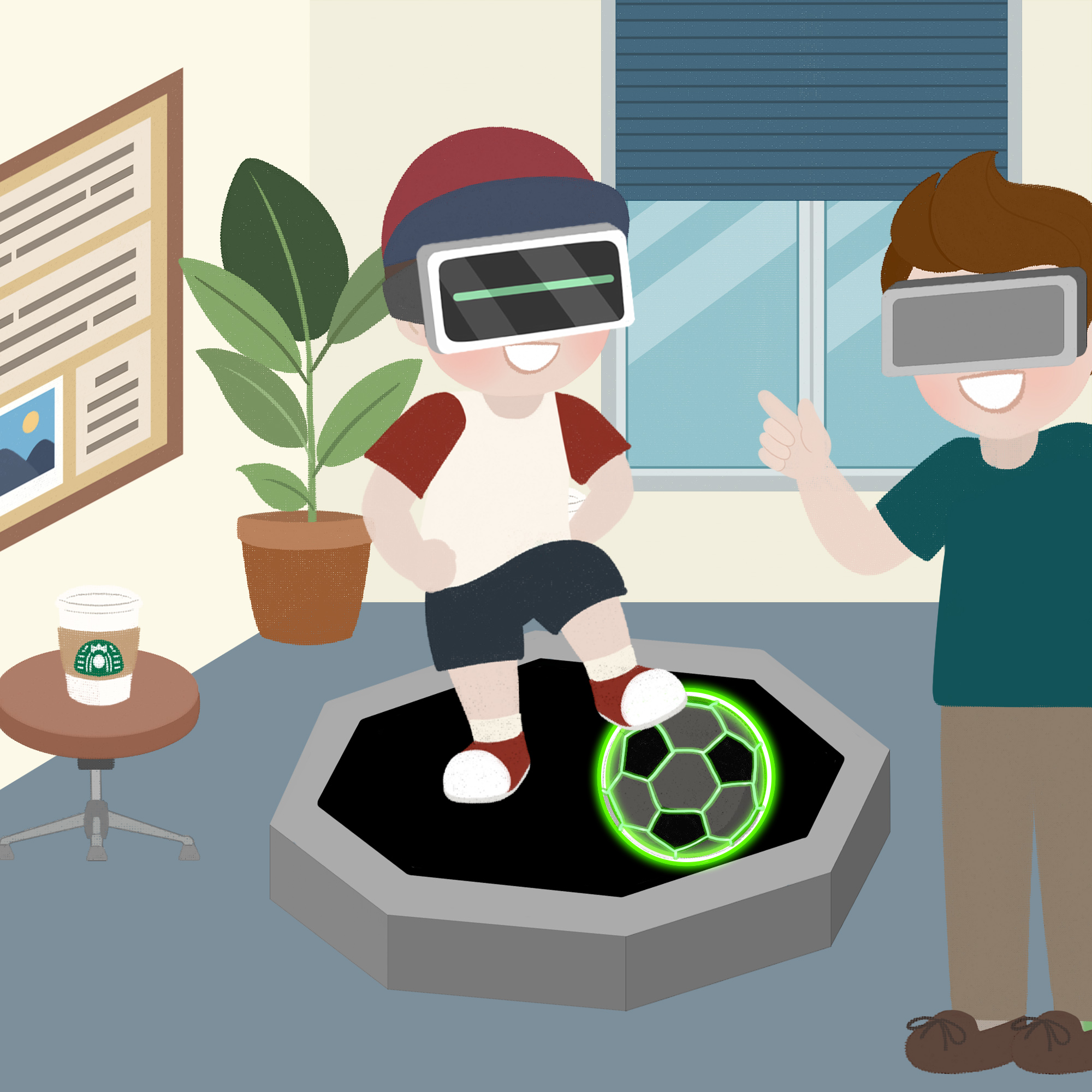
360 VR is a type of VR that is commonly used in education. It offers immersive experiences by using specialist cameras and equipment to capture real-world locations. The content is then viewed on VR headsets or projected onto walls. Students don’t have to leave their classrooms or spend a lot of money to travel to locations that were once imagined. Virtual trips can happen anywhere and anytime as long as the students have the right equipment.
In a world where it is increasingly becoming difficult to attract students’ attention, engage them or keep them motivated to pursue studies, virtual reality technology seems to have the potential to provide at least a partial solution. It is associated with a range of benefits that we are going to explore together today.
The 7 Vivid Ways Virtual Reality can Transform School Education
What are your thoughts about students vividly seeing what is being taught rather than imagining things? STEM subjects such as biology, computer science, and architecture require hands-on experience for students to obtain a deeper understanding of the concepts and to build their expertise. Virtual reality allows educators to embed really impactful learning experiences into their curricula.
We live in a world that is increasingly dependent on technology and obtaining digital skills is seen as the way forward for future professionals. Using virtual reality in schools helps to provide in-depth knowledge to students on what is being taught. They can zoom in and out of locations that are a thousand miles away, observe how human blood flows throughout the body and even conduct specialized surgery.
VR brings things closer to students and makes things a reality that could have been impossible to relate to otherwise. It also allows students to interact with objects, chemicals or scenarios that could be too dangerous to interface with in the real world.
#2: Intricate concepts are simplified
There is nothing that hurts quite like like teaching a concept to students and then receiving negative feedback at the end of it. Teaching is a profession that requires patience, especially when describing and explaining difficult concepts or topics to students who may not have the ability to grasp the content immediately.
VR technology can help students to decipher intricate concepts with the help of images, videos, or virtual tours. VR is also an excellent add-on to a range of active-learning strategies since users are immersed in, and interact with, 3D worlds.
Intricate concepts are not easy to unpack and yet they also vary in their degree of complexity. Cases where learners can’t visualize what a teacher is talking about tend to produce confusion. Students tend to become passive learners in such scenarios, which negatively affects their performance. VR technology offers a solution in that it can be introduced to classrooms to help students get a clear view of the concepts being taught.
#3: Increases engagement
Unlike traditional teaching methods, Virtual Reality can fully immerse students in the lesson being taught. Seeing something for the first time or that which seemed impossible increases enthusiasm and also maintains a high level of attentiveness. With the help of virtual reality tools, students can connect to worlds and objects which are normally out of their reach.
VR also stimulates higher levels of imagination which helps students understand concepts better than when just reading about them. The interactions enabled by VR help to keep students’ engagement high throughout the lesson.
#4: Increases practicality
Reading about something is different from having hands-on experience. Students that put more emphasis on learning concepts than practicing them find themselves increasingly left out. In simple terms, knowledge without practicality has a limited impact on students. For certain fields like biology, engineering and computer science, practical skills are vital to survival in an increasingly competitive world.
VR can increase students’ ability to understand concepts, implement what is learned and think of new ways of doing something better. Reading about something and learning how it works helps students believe that they are set on the right path. Also, it helps them set SMART Goals which are believable and achievable. With that, virtual reality offers a new meaning to education, by letting students know that they can put to use what’s learned.
Teaching makes a difference when learners are able to put what’s learned into use. In today’s world where skills are the top need of the hour, in-school training is essential and VR can help out. Using VR in class lays a platform for deep learning which helps students understand content better than when only surface learning takes place.
#5: It’s all-inclusive
Virtual reality has a wide range of applications in the education sphere. It can be used in architecture, philosophy, design or even in science classes. Videos can also be produced in a range of languages. On the other hand, it is suitable for all types of classes whether those occur in-person or remotely. Additionally, every student gets the chance to participate in and enjoy the experience: something which cannot be said for the majority of traditional teaching methods.
#6: Increases Retention
The purpose of teaching is to offer knowledge that can help students academically perform better and excel in their careers. However, the traditional teaching approaches, which tend to be text-based, do not offer optimal learning outcomes. With this approach, students tend to easily get bored, lose interest in science subjects and even perform poorly in exams due to low retention levels.
VR is changing students’ school experiences by enabling effective learning to take place. Scientifically, the brain processes images better than text. This means that students can easily learn, retain and memorize what is taught in class with the help of VR technology. VR can also rewire the brain and enhance the neural relationships that are required for memory and learning to take place.
We welcome you to join the Richard James Rogers online community! Join us on Facebook and Twitter for regular updates, giveaways of Richard’s books, special offers, upcoming events and news.
Technology permeates almost all of the day-to-day things we do as teachers. Today, I’ve invited Kiara Miller from The Speakingnerd to share her ideas on how educational technology can be used to improve student attainment.
The education industry is evolving at great speed, all thanks to technology. We now see things like online courses or remote learning conquer the education sphere. If we at one point had to gather all that we need in a physical classroom in order to teach, the present scenario proves to be different. Similarly, if it was once compulsory for us to travel miles away from our homelands to get into Harvard University or any other world top college, that’s not really the case today. In simple terms, it’s your choice!
Right in the comfort of your home or office, you can enroll in any university or college seven thousand miles away from your locality. You can learn virtually with some of the world’s smartest students and gain incredible insights or enroll in an online master’s program of your interest. By the way, that’s just a piece of the cake!
As technology evolves and continues to conquer every aspect of life, we believe it has illuminated the education sphere in several ways. If parents or guardians were once worried about the negative impact of screen time and social media apps, there is another side of the coin that is really interesting.
Nowadays, education is quite affordable because of remote learning. Students can access more learning material and interact with specialists for quality ideas, which is reflected in their performance. Therefore we believe learning technologies have a more substantial impact on student outcomes as explained below.
#1: Time Tracking Tools
Effective learning can’t occur without the proper management of time. Whether it’s on the teacher’s side or the students’ end time management is essential for efficiency. With the modern learning technologies, students’ time management skills are enhanced greatly as they are able to set SMART Goals and manage their time accordingly. Many students use the SMART approach when setting goals and it helps them prioritize time wisely.
My award-winning book for teachers.
Whether it’s research on a topic, group assignments, or during an examination, the time tracking tools help students complete tasks within a given amount of time. Managing time effectively lessens classroom stress levels, creates time for other tasks, and also helps students to realize greater goals. McGraw-Hill indicates that 35% of students reported reduced stress levels related to studying or exams when asked about the effect of technology on their learning and grades.
Besides the time tracking tools, students can also leverage productivity tools such as spreadsheets, databases, graphics, presentation software, and word processors among others for more efficiency. These productivity tools can be utilized depending on the student’s grade or area of interest.
#2: Collaboration Tools
Collaboration is crucial in learning as it helps students gain new insights and share perspectives about a topic or concept. Modern learning technologies today have taken learning to a better level by replacing teacher-centered and text-based education with collaborative learning tools. All of these create better and more meaningful experiences which make learning more adventurous.
Collaboration tools have also made it easier for students to share learning resources or work on group assignments while studying remotely. Tools like Zoom, Slack, and video conferencing allow timely collaboration between students. Similarly, collaboration tools do improve communication between the teacher and students as they allow both parties to share information, or add comments.
#3: Learning Applications
There is a wide range of educational and learning applications/software that students can leverage today to up their grades. A range of these top-notch learning applications come with a variety of features and capabilities that help students of all levels learn better remotely.
Generally, learning applications are designed to help students develop an interest in learning, understand new concepts easily, or get more creative. They also allow gamification which makes learning fun and engaging when compared to traditional learning approaches.
Similarly, they are fundamental to personalization. Personalized learning helps students with unique learning abilities and needs to learn better. With a perfect learning application, a student can get more acquainted with concepts that may seem complicated in the classroom. These applications also enable self-paced learning as they allow flexibility.
#4: AR & VR
Augmented Reality (AR) and Virtual Reality (VR) offer immersive experiences in any area of application. When it comes to the education sector, AR and VR are ice breakers, especially when it comes to higher education. AR and VR technologies use 3D imagery, simulation, and advanced audio-visual effects to optimize learning outcomes.
These technologies are highly reliable when it comes to practical or non-theoretical concepts, or we can say science, engineering, architecture etcetera. Augmented Reality alters the existing reality using sound, or images whereas virtual reality is a superior form of technology. It generally creates a new and simulated environment that provides a new dimension to a concept.
Although both engaging and interactive, virtual reality makes learning immersive since it helps students learn intricate concepts as though in the physical world. For example, a Biology student can utilize VR to understand the intricate parts of the human brain and the nervous system. This provides a deeper and more accurate understanding of what the student is learning about. More purely, VR and AR increase curiosity in learners which helps them to go for even the once-difficult subjects or areas.
#5: Better Retention
Learning and putting into practice what is learned is essential in modern life. There is no way learning is useful unless the concepts are practically displayed. When it comes to education, technology has helped students master concepts and perform better in class. Learning is even more interesting.
The application of AR and VR in the education sphere is the finest example of how technology has impacted learning positively. Findings prove that the human brain responds to and processes visual data better. Above all, 90% of the information passed on to the brain is visual. It means that students can learn better and deeper when concepts are presented via visualization.
It also makes memorization easier as some students find it difficult to remember what they learn in class. Additionally, students easily put what they learn into practice when learning technology (i.e. AR & VR), or gamification is utilized during the teaching process.
Conclusion
In summary, learning technologies are simplifying learning and they have made education more accessible to learners. More so, it is also helping students understand concepts better which helps them to perform better. However, the effective use of technology in learning requires thoughtful consideration not to complicate things for the students. Teachers must guide students when selecting the learning technology depending on the purpose, and where. It will increase engagement and make learning more exciting.
We welcome you to join the Richard James Rogers online community! Join us on Facebook and Twitter for regular updates, giveaways of Richard’s books, special offers, upcoming events and news.