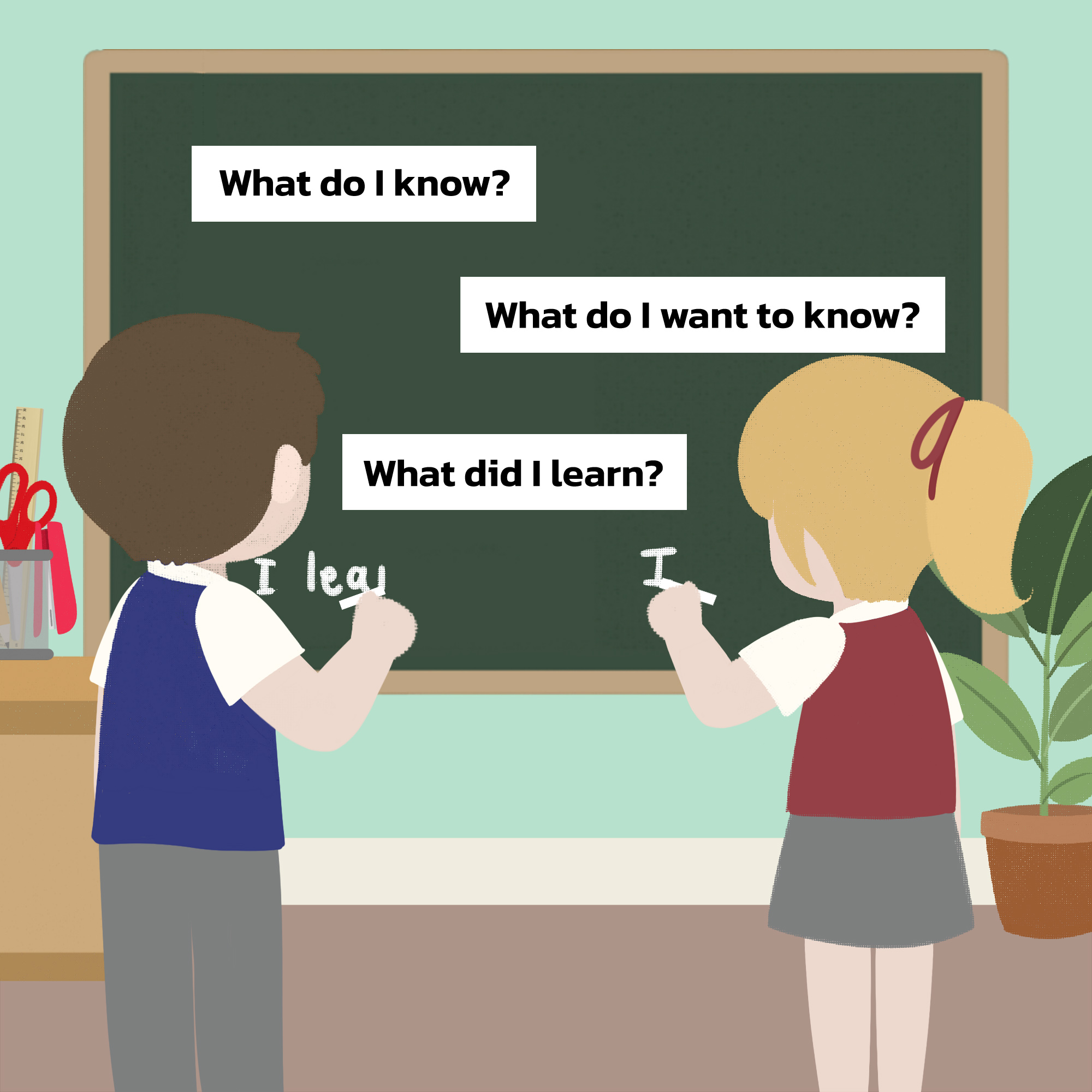
An article by Richard James Rogers (Award-Winning Author of The Quick Guide to Classroom Management and The Power of Praise: Empowering Students Through Positive Feedback). This blog post has been beautifully illustrated by Pop Sutthiya Lertyongphati.

Accompanying podcast episode:
Anyone who is new to the teaching profession is bound to make mistakes. There’s so much to learn and so much is at stake: the future careers of young people are literally in your hands. The pressure can be overwhelming at times, and this can cause trainees to panic.
Relax! This blog post was made for you!
I will go through the top five mistakes that trainee high school teachers are making all over the world as I write this – and please do not be embarrassed if this article reads like a self-summary of what you are doing wrong at the moment. We’ve ALL been there. We’ve ALL made mistakes, and I’ve personally made every mistake in this list too (so I’m a real expert on this subject matter).
Let’s get started!
#1: Getting the marking balance wrong
We are eager to impress when we are trainees, but there’s no need for that eagerness to translate into late evenings, busy weekends and overloaded school holidays in which we are covering every piece of student work with lengthy written feedback. I’ve been there, and I can tell you from first-hand experience – it’s not worth it!
Grading every single piece of student work by hand is not the most effective, or efficient, means to provide feedback anyway. Consider utilising the following techniques:
- ‘Live’ Marking: This is a personal favorite of mine, as ardent followers of this blog and my podcast will know. The reason I love ‘live’ marking so much is because it is the ultimate feedback strategy – it’s efficient, personal and effective. It’s also simple to do – either walk around the class with a marking pen in your hand and mark student work in real-time, as they are doing a task, or call each student to your desk one at a time. Make sure you have a short conversation with each student as you write feedback on their work.
- Verbal Feedback: This needs to be done properly, but it can be just as efficient and effective as ‘live’ marking. Have conversations with your students and either write/stamp ‘VF’ or ‘Verbal Feedback Given’ on the students’ work or (even better) ask the student to write down what you said in a different colour (e.g. “Mr Rogers said that I should label my diagrams using a ruler”). Since the students must process what you said in order to write down the feedback you have given, it acts as a great tool for building long-term memory.
- Peer and self-assessment: Get your students to swap their work and mark each other’s or allow them the opportunity to assess their own work. Just make sure that the students have the official mark scheme/set of answers (otherwise this whole technique won’t work as efficiently as it should – and, before someone says it, no – I don’t think students should be spending time thinking about what the answer ‘should be’ and trying to upgrade answers without a mark scheme – unless you have a surplus of time in which to carry out this very exhaustive activity). Students should be encouraged to make corrections to wrong questions rather than just putting a cross or a zero next to answers, and they should be using a different coloured pen/text than the original answer was written in.
- Automated assessment: There’s so much software available today that will set student work and grade it all for you. If your school has such systems available, then use them! Live quiz apps, such as Blooket, Kahoot!, Rolljak and others can be used for this purpose (set them in ‘assignment’ mode) as well as bespoke software such as MyMaths (for maths), Educake (for various subjects), Lexia Learning (for English) and others.
- Learning Journals – as a recurring method of reflection, summarizing and revision, it really doesn’t get better than this. Used digitally (e.g., through Google Docs) or manually (e.g. through physical notebooks) learning journals offer stduents a creative and personal way to record their learning journeys. Make sure that you collect them in on the same day every week (or two weeks) and return them as per an agreed schedule too. In terms of satisfying a homework timetable, learning journals offer an interesting and feasible solution too – students are very unlikely to forget this ‘recurring’ homework due to its regularity and, due to their personable nature, learning journals can be really fun tools to work with. The students can fill them with whatever they like – mind maps, flash cards, past-paper questions, lists, etc.
The essential message here is to increase the range of assessment methods you are using – focusing heavily on efficiency and quality rather than how many scribbles you are able to pen onto student assignments during your weekends (which, by the way, is time that you should be spending relaxing).

I’ve written at length about efficient and effective marking strategies in the past. If you are interested in learning more about the various techniques available (and how to implement them), then check out these blog posts of mine:
- 5 Efficient Marking and Assessment Strategies – Richard James Rogers
- 5 Awesome Live Quiz Apps You Can Use in The Classroom – Richard James Rogers
- Peer or Self-Assessment? Benefits and Challenges – Richard James Rogers
- Effective Feedback: The Catalyst of Student Progress – Richard James Rogers
- Learning Journals: A Powerful Student Feedback System – Richard James Rogers
My second book, entitled The Power of Praise: Empowering Students Through Positive Feedback, is also a great read if you are serious about exploring a range of feedback methods that that have a positive impact on your students’ learning experiences. Click on the image below to be taken to its Amazon page:

#2: Trying to be friends with the students
There’s a concept in education that has, unfortunately, become somewhat forgotten these days: Professional Distance.
The best description I could find on the concept of Professional Distance comes from an article by James Barron at start-teaching.com:
In the context of education, the concept of “professional distance” plays a vital role in maintaining clear boundaries between teachers and students. As emphasised by Gould and Roffey-Barentsen (2014), teachers must be mindful of preserving a degree of professional distance to prevent any blurring of lines between their personal lives and their roles as educators.
James Barron (2023), The Relationships and Boundaries Between the Teaching Role and Other Professional Roles’ [Online]. Available at https://start-teaching.com/the-relationships-and-boundaries-between-the-teaching-role-and-other-professional-roles/
In today’s world of social media, IG influencers and digital side-hustles, maintaining Professional Distance between us and the students we teach has become more challenging than ever before. In essence, however, the fundamental concept is the same as it always was: whether you are a 22-year-old trainee or a 52-year-old seasoned educator, you are seen as an authority figure in the classroom. The students are NOT your friends. They are young people that we help, support and educate, and that’s where our professional relationship with them ends. We do not add them as friends on social media. We do not accept their follow requests. We do not chat with them on any non-school approved channel.
I’ve written a separate blog post on the issue of Professional Distance in the digital realm, which you can read here: How Should Teachers Behave on Social Media? – Richard James Rogers
#3: Failing to consult with colleagues or line-managers
As a trainee teacher, or even a seasoned educator with twenty years under your belt, you are not expected to know everything. No question is too stupid to ask, so please ask!

I remember feeling really anxious one day as a relatively new 29-year-old teacher at an international school in Thailand. I had a question about the next topic to teach in a program of study, and I THOUGHT THAT MY HEAD OF DEPARTMENT WOULD THINK I WAS INCOMPETENT IF I ASKED ABOUT IT. Sure enough, after fretting over the issue for a day or two, I had to go and see him and ask about this – I needed the information.
I’ll never forget what he said at the end of the conversation: “Richard, I just want to say thank you for asking about this. Because when people don’t ask, they mess things up.”
Wow! That wasn’t what I had expected. My nervousness over asking questions, no matter how silly I thought they were, vanished that instant.
Your colleagues and line-managers will ALWAYS be your best resources at school. They will know how you should deal with certain students, back stories to issues, which printer to use and for what purpose, and who the key people are in school who can help you with other issues. This is why it is SO IMPORTANT for teachers to be cordial and collegiate with all staff at school.
If you’re interested in learning more about how to utilize the ‘colleague domain’ to work productively with your coworkers at school, then this blog post of mine that I wrote some time ago is a great place to start: Seeking Help from Colleagues: Tips for Teachers (Secret no. 11) – Richard James Rogers
#4: Engaging in gossip or inappropriate staffroom talk
Gossip is ALWAYS toxic. It generates distrust, adds to an overall atmosphere of negativity in a school and, worse: it can even get you fired. Gossip has this juicy allure to it that is very attractive – it reels people in and can often make one lower their normal professional defenses – causing people to add their ‘two cents’ worth without seriously considering their words beforehand.

Do not engage in gossip and stay away from people who gossip (if you can). Just your physical association with known gossipers can be a red flag for senior management – and, as a trainee teacher, you don’t want that!
I once remember sitting in the staffroom at a North Wales school during my PGCE (teacher training year) back in 2005. Two colleagues in my department had an altercation over something curriculum based and one teacher told the other to “F…. off”, in front of everyone!
The gossip soon followed the next day. Even the science technicians were in on it: “He should have received a slap for saying that” chirped one individual in the prep room that day. My Head of Department was there too, and I was being quiet and minding my own business (i.e. doing what you should do in this situation). Finally, he asked me, “What do you think about this whole thing, Richard”.
I replied with “I’m staying out of it. I have enough to focus on with my day-to-day work as it is.” (or something like that). My Head of Department was clearly impressed and responded with “That’s the best way to be, Richard”.
I later found out that he wrote a glowing review of my performance to my university.
In line with the subject of gossip is that of inappropriate information. You DO NOT need to share all of the details regarding your personal life with your colleagues – in fact, the less you share, the better!
One of my favourite quotes regarding this subject matter is as follows:
Never talk about your salary, your love life or your next move”
Unknown
If anyone can help me cite that quote (or its derivative), then please let me know. Whilst it is a little tongue-in-cheek, it does point to a very important concept in the workplace: your colleagues are not your friends – they are the people you work with. Whilst you can, of course, have very positive professional relationships with your colleagues (and they should be willing to help you out when you need it too, and you should help them when they need it), you must remember that egos are involved at the workplace, competition anxiety is real thing and that your colleagues are always capable of reporting you to senior management at any time.
In short – keep every interaction with your colleagues professional. Keep personal information to yourself.
#5: Planning day-by-day and not taking a long-term view
This is a common mistake that trainee teachers make but, thankfully, it’s usually an easy one to solve.
As trainees, we are often very new to the lesson planning process, and it can be difficult to think in the long and medium term as we are often so fixated with just planning lesson-by-lesson, or week-by-week.
It is crucial, however, that you know what the overall plans are for the academic year as a whole. This is called ‘curriculum mapping’, and the best teachers are also the best curriculum mappers.

In essence, it means that you must know when topics are supposed to be taught and what the key milestones are during the academic year, such as:
- End of unit tests
- Half-termly/mid-semester tests
- End of term/semester tests
- End of year exams
- Coursework deadlines for students
Having a long-term view like this will allow you maintain an appropriate pace and will also ensure that you maintain consistency of instruction with some of your more experienced colleagues in the department – you certainly don’t want to be behind them in the teaching schedule, unless there’s a good reason (e.g. you are teaching a bottom set at a slower pace).
Summary
These are the top five mistakes that I have witnessed trainee teachers making over the past 17 years of my career, and I have also been guilty of all of these on occasion:
- Marking inefficiently
- Trying to be ‘friends’ with the students
- Failing to seek help from colleagues when in doubt (remember, no question is too stupid to ask)
- Engaging in gossip and/or revealing too much personal information about yourself to your colleagues
- Planning in the short-term rather than the long-term
Review your own practices and daily behavior against the five points above to see if there are things that you could do differently.


We welcome you to join the Richard Rogers online community. Like our Facebook page and follow us on Twitter for daily updates.