10 Ways to Apply Rosenshine’s Principles to Your Lessons

An article by Richard James Rogers (Award-Winning Author of The Quick Guide to Classroom Management and The Power of Praise: Empowering Students Through Positive Feedback).

Illustrated by Sutthiya Lertyongphati.

As a teacher, it’s important to have a solid understanding of the principles that underpin effective instruction. One set of principles that has gained widespread recognition is the set proposed by Barak Rosenshine, a former professor of educational psychology at the University of Illinois at Urbana-Champaign. In this blog post, we’ll explore 10 ways you can apply Rosenshine’s principles to your lessons to help your students achieve their full potential.

#1: Start with a clear objective

According to Rosenshine’s principles, the first step in effective instruction is to start with a clear objective. Before you start your lesson, make sure you have a clear understanding of what you want your students to learn.

You may wish to use the ‘Three As‘ to present objectives to the students via a self-discovery process (very powerful). The ‘Three As’ stand for Assign, Analyse and Ask. It’s a simple three-step process for starting each lesson, and allows for the teacher to be as creative as he or she wishes when articulating lesson objectives:

  • Assign a starter activity, that links to the topic somehow. This can be as simple as a video playing on the screen as the kids walk in, a worksheet or even a learning game.
  • Analyse the starter activity: This may involve peer-assessing the task, having a class discussion, quick-fire questions or a ‘True or False’ activity
  • Ask the students: What do you think we are learning about today? This may generate some discussion, but if the ‘Assign’ and ‘Analyse’ parts have been designed properly, then it should be obvious.

For ideas on good starter activities, this blog post is really useful.

#2: Use a variety of examples

Using a variety of examples is a great way to help your students understand the concepts you’re teaching. Use different types of examples, such as visual aids, case studies, or real-life scenarios, to help your students better understand the material.

Different types of examples can help students to better grasp the concepts being taught, as they provide a range of contexts and perspectives from which to view the material. Visual aids, for instance, can be especially effective in conveying complex information in a way that is easy to understand and remember. Case studies and real-life scenarios, on the other hand, can help students connect abstract concepts to real-world situations and make the learning experience more meaningful.

When selecting examples to use in your lessons, it’s important to choose ones that are relevant to your students’ interests and experiences. For instance, if you’re teaching a science lesson on environmental sustainability, using examples that relate to your students’ local community or region can help to make the material more relatable and engaging. Additionally, it’s important to use a mix of examples that are both challenging and accessible. Providing examples that are too easy may bore your students and cause them to disengage from the lesson, while using examples that are too difficult can lead to frustration and discouragement. Striking the right balance between challenging and accessible examples can help to keep your students engaged and motivated throughout the lesson.

#3: Provide guided practice

Guided practice is an effective way to help your students develop their skills and knowledge. Provide your students with opportunities to practice what they’ve learned, but make sure you’re there to guide them through the process.

During guided practice, the teacher provides students with guidance and feedback as they work through problems or exercises related to the material being taught. This can help students to develop their skills and knowledge more effectively than if they were simply left to work independently. Guided practice can take many forms, such as structured activities, group work, or one-on-one interactions with the teacher.

When implementing guided practice in your lessons, it’s important to provide clear instructions and expectations to your students. Make sure they understand what they’re supposed to be doing, and provide them with any necessary resources or materials. Additionally, it’s important to monitor your students’ progress and provide feedback along the way. This can help them to identify areas where they need to improve and make adjustments accordingly. Finally, it’s important to ensure that guided practice is appropriately challenging for your students. Providing practice that is too easy or too difficult can lead to disengagement or frustration. By providing practice that is appropriately challenging, you can help your students to develop their skills and knowledge more effectively.

#4: Use frequent checks for understanding

Frequent checks for understanding can help you gauge how well your students are understanding the material. Use questions, quizzes, or other methods to assess your students’ comprehension of the material throughout the lesson.

Checks for understanding help to ensure that students are comprehending the material being taught and can identify areas where additional support or instruction may be needed. Frequent checks for understanding can take many forms, such as questions, quizzes, or discussions. By incorporating frequent checks for understanding into your lessons, you can help to ensure that students are engaged and actively learning throughout the lesson. Verbal questions are often all that’s needed, just ensure you are not asking the same students to answer. Consider using random name generators (my favorite is the Wheel of Names). Live quiz apps, such a Blooket, Kahoot!, iSpring Quizmaker and others are also great ways to frequently check understanding within lessons, in real-time.

When using frequent checks for understanding in your lessons, it’s important to provide feedback to students on their performance. This can help them to identify areas where they may need additional support or instruction and make adjustments to their learning strategies. Additionally, it’s important to vary the types of checks for understanding used in your lessons to accommodate different learning needs and abilities. For example, some learners may benefit from diagrams or graphic organizers, while other learners may benefit from class discussions or lectures. By using a variety of checks for understanding in your lessons and providing regular feedback, you can help your students to develop a deeper understanding of the material and achieve their learning goals more effectively.

#5: Scaffold your instruction

Scaffolding your instruction can help your students learn more effectively. Start with simpler concepts and gradually increase the complexity of the material to help your students build a strong foundation of knowledge.

Scaffolding your instruction means breaking down complex concepts into smaller, more manageable pieces that build upon each other. This approach can help students to understand and retain information more effectively by giving them the opportunity to build a strong foundation of knowledge before moving on to more complex material. Scaffolding can take many forms, such as providing students with background information, asking leading questions, or providing step-by-step instructions for completing tasks. By gradually increasing the complexity of the material, students can develop their skills and knowledge in a structured and supportive environment.

When implementing scaffolding in your lessons, it’s important to keep in mind the needs and abilities of your students. This means providing scaffolding that is appropriate for their level of understanding and adjusting your approach as needed. Additionally, it’s important to make sure that scaffolding does not become overly restrictive or limiting for your students. While providing structure and support is important, it’s also important to allow students the opportunity to explore and make their own connections between concepts. By striking a balance between structure and flexibility, you can help your students to develop a strong foundation of knowledge while also allowing them the opportunity to think critically and creatively.

#6: Provide feedback

Feedback is an important component of effective instruction. Provide your students with feedback on their performance, both positive and constructive, to help them improve.

I’ve written a LOT about feedback in the past, and there’s lots that we could explore here. However, if I were to distil the essentials into a few bulletpoints, they would be as follows:

#7: Use models and examples

Using models and examples can help your students better understand the concepts you’re teaching. Provide your students with examples of how to apply the material to real-life situations to help them make connections.

Models and examples can take many forms, such as diagrams, charts, or simulations. By providing students with concrete examples of how a concept works, you can help them to build a mental model of the concept and understand how it can be applied in different situations. Additionally, using a variety of models and examples can help students to see the same concept from different perspectives, which can lead to deeper understanding and better retention of the material.

When using models and examples in your lessons, it’s important to choose ones that are appropriate for your students’ level of understanding. Providing examples that are too complex can lead to confusion and frustration, while using examples that are too simple can lead to boredom and disengagement. Additionally, it’s important to provide students with opportunities to interact with the models and examples, such as by asking them to explain how they work or to identify different features. By providing opportunities for active engagement with the material, you can help students to develop a deeper understanding of the concepts being taught.

#8: Use a variety of instructional strategies

Using a variety of instructional strategies can help keep your students engaged and interested in the material. Use different methods such as lectures, discussions, group work, or hands-on activities to keep your students engaged.

Every student has unique strengths, and by using a variety of instructional techniques, you can help to accommodate these differences and ensure that all students are able to engage with the material being taught. Some effective instructional techniques include direct instruction, group work, hands-on activities, and multimedia presentations. By varying your approach, you can keep students interested and engaged in the learning process, which can lead to deeper understanding and better retention of the material.

When using a variety of instructional techniques in your lessons, it’s important to keep in mind your learning objectives and the needs of your students. Different techniques may be more effective for different types of learning objectives or for different groups of students. Additionally, it’s important to provide clear instructions and expectations for each technique you use. This can help to ensure that students understand what they’re supposed to be doing and how the technique relates to the material being taught. By using a variety of instructional techniques in your lessons, you can help to create a dynamic and engaging learning environment that supports the needs and interests of all your students.

#9: Review and revise

Review and revise your instruction to ensure that you’re meeting your students’ needs. Regularly assess your students’ progress and adjust your teaching methods accordingly.

Providing opportunities for regular review is an essential part of effective instruction. Review allows students to reinforce their learning and connect new concepts to previously learned material. It also helps to identify areas where students may need additional support or instruction. Regular review can take many forms, such as quizzes, games, or discussions. By incorporating review into your lessons, you can help to ensure that students are retaining the material being taught and developing a deeper understanding of the concepts.

When implementing regular review in your lessons, it’s important to provide opportunities for both formal and informal review. Formal review activities, such as quizzes or exams, can help to provide a structured and systematic approach to review. Informal review activities, such as class discussions or games, can be more flexible and allow for more creative and interactive review. Additionally, it’s important to provide regular feedback to students on their performance during review activities. This can help them to identify areas where they may need additional support or instruction and make adjustments to their learning strategies. By providing regular review opportunities in your lessons, you can help your students to develop a deeper understanding of the material and achieve their learning goals more effectively.

#10: Provide closure

Provide closure at the end of your lesson to help your students solidify their understanding of the material. Summarize the key points of the lesson and provide your students with an opportunity to ask any remaining questions they may have.

Channeling the energy of your students in a healthy and competitive way should be one of the core aims of all plenaries. Reviewing the content and skills learnt in class in a fun, competitive and energetic way can really help with memory and concept retention. Do this consistently each and every lesson and watch your students make tremendous progress as the weeks and months roll by!

See my blog post entitled 7 Plenary Activities for PGCE Students and Newly Qualified Teachers for some great ideas for ending your lessons with a fun review of the concepts and skills taught, thereby providing closure.

Conclusion

By applying Rosenshine’s principles to your lessons, you can help your students learn more effectively and achieve their full potential. Remember to start with a clear objective, use a variety of examples, provide guided practice, use frequent checks for understanding, scaffold your instruction, provide feedback, use models and examples, use a variety of instructional strategies, review and revise, and provide closure.

We welcome you to join the Richard James Rogers online community! Join us on Facebook and Twitter for regular updates, giveaways of Richard’s books, special offers, upcoming events and news. 

Combating Wokeness in Schools: A Guide for Teachers

An article by Richard James Rogers (Award-Winning Author of The Quick Guide to Classroom Management and The Power of Praise: Empowering Students Through Positive Feedback)

Illustrated by Sutthiya Lertyongphati

As teachers, it can be challenging to navigate the diverse groups of students in our classrooms while also upholding the values and principles we believe in. With the current trend of progressive ideologies being pushed in schools, it can feel overwhelming at times to combat ideas that are contrary to our own. However, there are strategies that teachers can implement to promote critical thinking, encourage diverse viewpoints, and foster an open-minded learning environment. Here are some ways to combat ‘woke’, or ‘progressive’, ideologies in schools:

#1: Promote Critical Thinking

One of the most effective ways to combat progressive ideologies in schools is to promote critical thinking. Encourage your students to think independently, question assumptions, and analyze facts. Give them the tools they need to evaluate arguments objectively, and let them come to their own conclusions. Encourage debate and discussion, and create an environment where students feel comfortable expressing their viewpoints without fear of judgment or ridicule.

Here are some good resources that can help you facilitate the critical thinking process in your lessons:

#2: Teach the Value of Diversity

Another way to combat progressive ideologies in schools is to teach the value of diversity. Encourage your students to appreciate different cultures, religions, and perspectives. Emphasize the importance of tolerance and respect, and create opportunities for your students to learn from one another. When students understand the value of diversity, it becomes harder for progressive ideologies that promote exclusivity to take hold.

#3: Encourage a Growth Mindset

Progressive ideologies often promote victimhood, entitlement, and a lack of personal responsibility. To combat these ideologies, teachers can encourage a growth mindset. Teach your students that they are capable of achieving anything they set their minds to, and help them develop a sense of personal responsibility for their own success. Encourage them to embrace challenges and see failures as opportunities for growth.

Here are some resources that can help you get your students to adopt a growth mindset:

#4: Help Students Develop Strong Values

To combat the influence of progressive ideologies in schools, it’s important for teachers to help students develop strong values. Encourage your students to think about what they believe in, and teach them the importance of virtues such as honesty, integrity, and respect. When students have a strong sense of values, they are less likely to be swayed by ideologies that conflict with their beliefs.

#5: Stay Informed

Finally, it’s important for teachers to stay informed about the progressive ideologies that are being promoted in schools. Attend workshops and seminars, read blogs and articles, and participate in discussions with colleagues. By staying informed, we can better equip ourselves to combat these ideologies and promote a learning environment that is free from political bias.

Conclusion

In conclusion, it’s possible to combat progressive ideologies in schools by promoting critical thinking, teaching the value of diversity, encouraging a growth mindset, helping students develop strong values, and staying informed. As a teacher, it’s our responsibility to create an environment that fosters intellectual curiosity, promotes debate and discussion, and encourages students to think independently. By doing so, we can help our students become well-informed, thoughtful, and responsible citizens who are able to make a positive impact on the world.

We welcome you to join the Richard James Rogers online community! Join us on Facebook and Twitter for regular updates, giveaways of Richard’s books, special offers, upcoming events and news. 
5 Excellent Ways Educators Can Foster Creativity in Students

As learning becomes more software-driven, and cognitive offloading becomes more frequent via apps like ChatGPT and Google Bard, we are sure to see ‘soft skills’ (i.e., those skills unique to humans which cannot be replicated by computers) become more important for students to master.

Colin Salmon, Head of Faculty for Technology and Life Sciences at The City of Liverpool College, has this to say about AI and soft skills:

I think one of the biggest misconceptions about AI is that it will overtake soft skills such as creativity, critical thinking and emotional intelligence and, while AI can replicate certain tasks, it cannot yet replicate the human touch or the level of creativity that is required in many industries.

Colin Salmon, Courtesy of FE News [Accessed April 2023]

Today, I’ve invited Jessica Robinson, educational writer at The Speaking Polymath, to share her insights and tips for getting the creative juices flowing with your students.

Introduction to Creativity in Students

Creativity involves breaking out of unexpected patterns in order to look at things in a different way.

Edward De Bono

Creativity helps students use their imagination to their fullest. It helps them to learn new things by opening doors to new thoughts, emotions and expressions. This is the reason why it is important to foster creativity in young minds so that it can improve their future prospects. A student’s learning experience is enhanced when they put their own creativity into a subject, lesson, task or project. 

Every student develops skills that reflect their own set of creativity. When they learn subjects using their creativity, it helps them to:

  • Make learning fun
  • Work upon their emotional quotient (EQ)
  • Manage stress
  • Boost critical thinking
  • Improve communication skills

Let us discuss the 5 best ways educators can foster creativity in their students.

5 Best Ways for Educators to Foster Creativity in Students

#1: Engage students in activities that encourage creativity

In order to foster creative thinking, teachers need to engage students in activities that promote creativity. Though these activities, teachers should guide students to develop and improve their creative skills such as problem solving, innovation and communication skills through inquiry-based learning.

Let us consider an activity that fosters creativity in a student in the early years. Teachers can ask students to make different structures using building blocks. Students can bring in their creativity and make something that isn’t commonly made by students of that age. Teachers can tell students to creatively think upon the uses of the structures they have made.

Teachers can boost creativity in students when they actively engage students in learning activities. In addition to the above, other activities such as storytelling, writing poetry, generating musical ideas, completing the incomplete figure to create new figures, etc., also help to expand creative thinking skills.

These activities can help students to become more mindful and conscious of their creative skills in this manner. Teachers who encourage such innovative solutions foster creativity and flourish a genuine output. It is a teacher’s role to brainstorm a students’ mind in a positive way to foster curiosity and view varying perceptions and their impacts thereof.

#2: Think outside of the box

There is no denying the fact that the role of teachers is to encourage creativity in the classroom by allowing varying ideas to be welcomed and discussed. Allowing students to think outside of the box, beyond boundaries might help them in deciphering something unusual and new. But also, it is important to know that creativity is a skill that not every student is born with. It is the role of a teacher to help a student discover such capabilities. There are various methods to do so. 

Richard’s Award-Winning Book. Available on Amazon now.

One method is where a teacher can challenge students by questioning them about the dynamic aspects of a topic and how outcomes can vary with changing inputs. Each aspect (input) could foster different levels of creativity in a student and help the student to engage in innovative learning methods that would be useful to develop problem solving skills.

A What-if Analysis can be an excellent way to foster creativity in students. A teacher can ask a student, “What if the prices of your favorite pizza in the market increases?” or “What if Covid persisted for a longer period of time? How would it have affected your education?” Pondering upon the asked questions, students would automatically start thinking over it, considering their own creative sense. Henceforth, it would encourage students to have a growth mindset and improve on their own personality traits.

3. Give constructive feedback

To give students the right direction for initiating creative processes, it is important for educators to provide them with constructive feedback. Appreciations and criticism, both form an integral part of feedback. It forms a great tool to induce ideas into a student’s mind.

Educators can relate giving constructive feedback to students with a Pareto analysis. The Pareto principle emphasizes on focusing on the 20% of work needed to achieve 80% of the output.  Educators can foster creativity by letting students know which activities form the major portion that can help to deliver maximum output. With this belief, students can focus more on the 20% to achieve a lucrative output, through an educator’s valuable feedback

The concept of constructive learning from educators helps in providing the right guidance to students for constructive learning and training methodologies.

There are 3 constructive feedback techniques that teachers might use in classrooms for an effective study environment:

  • Feedforward – As coined by Marshall Goldsmith. While feedback focuses on past events, feedforward is the antonym for it. This approach helps educators or teachers to describe the correctness of future probabilities to a student with respect to the current solution of processing information. The main aim is to let a student know beforehand the adversity or favorability of their current performance and take their creativity in the right direction.
  • DESC – Elaborating the abbreviation, DESC stands for describe, express, specify and consequence. It defines valuable feedback as elaborating to a student the reason behind what could have been done to improve upon the given solution. This fosters a way to diligently assess a student’s creative performance and establish effective standards to calculate the positive and negative effects of that performance.
  • What & Why – This is the simplest of the above methods that can easily be applied in classrooms.  Explaining to students, or asking them to explain, the What and Why ofa situation or outcome could enhance creativity.

#4: Promote the sharing of ideas

Sharing concepts in the classroom can broaden the range of viewpoints of the audience on a certain topic. Teachers should encourage such a classroom environment as it increases students’ productivity. It simultaneously fosters a competitive environment as each student is given a voice to shed light on their own creativity and spread it to others.

Instead of having a feeling of being judged and afraid of criticism, teachers encourage students by guiding them to increase their scope of improvement.

Sharing techniques used by teachers in classrooms to promote creativity are mentioned below:

  • Think-Pair-Share – Brainstorming of ideas in pairs, writing those ideas and later sharing them with the entire class helps to indulge in and accept different perspectives and fosters creativity.
  • Sticky-Note Storm – Thinking out of the box in small groups within a stipulated period of time helps to activate the brain cells and generate as many answers as possible.
  • Quiz, Quiz and Trade – This activity is very good in engaging students to be as creative as they can. Teachers hand out cue cards to students and students exchange and circulate them to their peers. At last, whosoever is left with the number of cue cards gets to put in their creativity and answer those questions.

#5: Put breaks into routines

It is usual for students to feel lethargic with the same monotonous routine in their daily life. This situation has a direct impact on their creativity because creativity decreases with repetitive and unexciting methods of learning.

Teachers who acknowledge this bored atmosphere again and again in their classroom environment, can find ways to foster creativity in their students by not teaching in the same way, continuously.

Teachers can do something different from their routines and increase students’ creative thinking skills.

Conclusion

To conclude, creativity is one of the most important aspects of a child’s development and needs to be integrated in children from a very young age. Hence, it becomes the responsibility of the educator to foster creativity in children at a young age. That being the case, the above given tips can effectively help educators in making their students more creative. 

We welcome you to join the Richard James Rogers online community. Like our Facebook page, follow us on Instagram and check out our Twitter feed for the latest news, blog posts and commentary.

A Teacher’s Christmas Holiday

An article by Richard James Rogers (Award-Winning Author of The Quick Guide to Classroom Management and The Power of Praise: Empowering Students Through Positive Feedback).

Illustrated by Pop Sutthiya Lertyongphati 

Follow me on Instagram

Originally posted December 2017. Updated December 2022.

The Christmas vacation is finally here. Many of us in the teaching profession can now look forward to a good couple of weeks of much-needed rest and recuperation. 

Our students deserve a break too.

jenga

I agree that time spent with family and friends is an absolute essential right now, but I’m also mindful of the workload and duties that will hit me like a tornado when I return to school in January.

When it comes to school holidays, I always see them as time to ‘go at my own pace’. The way I see it, I have two choices:

  1. Do nothing for the whole holiday and totally chill out, returning to the normal barrage of work that hits every teacher at the start of Term 2
  2. Still have a holiday and some rest but do some little things to get a head-start on things before I return to school

I’ve always found that trying to do option 2 is the best, even if I don’t get through all of the ‘head-start’ work that I plan to do.

Is this an admission of failure before I even begin? Maybe, but here are my plans made as realistic as possible: meaning that I can have a rest and do around 50% (minimum) of these things too:

  • Requisitions and orders: I’m a Science Teacher, so I need to order chemicals and equipment for my lessons each week. This Christmas my first priority will be to get all of my requisitions done for each week of Term 2, ahead of time. This will save me many a long night when I get back to school, and will help me to plan ahead and reinforce my long-term curriculum mapping.
  • Termly review: Every Christmas I make it a priority to evaluate where I am at now, and where I want to be with my classes by the end of the term. This kind of self-analysis allows me to see where I’m behind and where I’m ahead and how to address those issues. This is really important for final-level exam classes as they must have covered the whole syllabus and have revised by the time the terminal exams come along. 
  • Getting back to gym: I’ve been slacking off lately (I said this back in 2017 too!). No excuses this time. I’ve got every day free for a few weeks so I’ll be up early and out for a jog before hitting the weights later in the day.
  • Responding to student e-mails: Some students in my exam classes will be e-mailing me with questions about past-papers, coursework and subject-specific stuff. If I can help, then I will help. However, if not urgent, then I will deal with these queries when I am back at school.
  • Clothes: I’m running out of a few things (such as shirts that actually fit me!). Time for a wardrobe mini-makeover so that I continue to look half-decent at work.
  • Writing my next book: My first book was quite well-received, as was my second (The Power of Praise: Empowering Students Through Positive Feedback) so I’ve decided to have a go at writing another.  Ten Techniques Every Teacher Needs to Know will explore the themes of classroom management and assessment to inform learning in even greater depth and breadth than my first book, and will build upon the fundamentals covered in one of my most popular blog posts. I see this as ‘downtime’ for me because I really love writing. Can I count this as ‘relaxation’?
  • Going back to karate: Another thing I’ve been putting off. Time to get a regular schedule set up.
  • Contacting people I should have contacted ages ago. Chasing up old leads and projects that I’ve allowed to slip.

on the bike

Of course, as well as all of this I plan to enjoy my freedom in Thailand as much as possible. A trip to Pak Chong (where The Big Boss was filmed), along with my long-awaited visit to the Death Railway in Kanchanaburi (still haven’t done that yet – it needs to go on the list!).

How will you use your free-time this Christmas? Is it all one-big holiday or can you think of some small ways to make your life easier when you get back to school?

Happy New Year from richardjamesrogers.com

richard-rogers-online

Like our Facebook page and follow us on Twitter for daily updates.

Latest hybrid

How to Teach Sustainability to School Students

Teenagers and young people really can be the agents of change the world needs when it comes to sustainability. Fortune Magazine, for example, recently told the story of how global giant UPS was started by two teenagers and a bike back in 1907, and how the company went back to being eco-friendly with its e-bike delivery service in Hamburg back in 2012 (a service which has now expanded to many more cities). Today, I’ve invited Claire Maguire from online student magazine, The Day, to describe some great ways in which teachers can teach sustainability to their students.

Accompanying podcast episode:

How do we teach sustainability to school students?

World news is dominated by reports of extreme flooding, droughts, forest fires and severe storms. It can seem overwhelming for young people; the generation who will increasingly shoulder responsibility for tackling climate change. 

What can educators do to empower young people to take positive action?

With more global sustainability events happening around the world every day, it’s the perfect time to bring students into the conversation

Whether it’s discussing world events such as COP27 or confidently tackling conversations around climate disasters such as floods and fires, there’s no rulebook on how to teach sustainability to school students. But there are a number of approaches that can be effective to really engage young people to take positive action.

The complexities and political implications of sustainability can make it a challenging topic to teach. By following this guide, we hope sustainability can be accessible for your classroom, and you can confidently learn how to teach sustainability to school students in a way that inspires and empowers your class to really engage with these critical issues.

Fortunately, there are so many resources out there to help you tackle these topics. 

Online newspaper for schools, The Day, has a team of journalists covering the big issues behind the headlines in climate change in a child-friendly way that aids healthy debate and discussion in the classroom. For example, The Day’s free Build the Change resource, developed in collaboration with the LEGO Group, focuses on a sustainability news topic every week and challenges pupils to come up with creative solutions to environmental issues.

Keep it relevant

Students are much more likely to pay attention if something affects them directly, or it’s something they’ve heard about already. By using the news as a guide, it can transform conversations that might take place at the dinner table or on the bus into a learning experience. From discussions about veganism to debates on electric cars, by honing in on current issues, students are more likely to engage with topics that affect their everyday lives. As sustainability is so broad and intricate, by focusing on specific issues, it can be easier to teach and to digest as a student. 

By using the news as a starting point, real-world events become an opportunity for learning. It might be learning that the eighth billionth person will be born and thinking about if the world can cope with the volume of people that really gets your class thinking. Or it might be discovering Sir David Attenborough receiving a knighthood for his sustainability efforts that engages a child who is particularly fond of the English broadcaster and biologist. 

Let them have an opinion

Young people are going to be the most affected by the impact of sustainability issues. Encouraging them to form their own point of view on different issues is the best way to really ignite a passion for sustainability.

With the “you decide” feature of the Build the Change resources, students are posed with a thought-provoking question and an option to agree or disagree with the statement.

As sustainability issues are highly debated anyway, it offers the chance for students to work out where they stand on key issues affecting our planet.

Is climate change history repeating itself? Can children save the world? Can the planet cope with 8 billion people? Presenting students with questions like these is a great way to teach sustainability to school students as it allows them to think beyond the news and really analyse the facts, evidence and information in front of them.

You can set up a whole class debate or put students into groups to challenge each other’s way of thinking, and see if they can form a judgement on the topic.

Slot sustainability into the school day

83.1% of educators wish sustainability issues were more broadly implemented across the curriculum*. Time is a luxury most teachers don’t have, and with a jam-packed curriculum having to take priority, sustainability education tends to have to take a backseat.

Yet 45.4% of educators believe sustainability education is very important, and if we want to help students become agents of change, we need to give them the tools to make a difference.

When sustainability lends itself naturally to different subjects across the curriculum, it can be threaded through different lessons over the course of the day. For example, you might learn about passive houses in a science lesson, or rising sea levels might be a conversation topic in a geography class.

The Build the Change weekly resources cover sustainability from a range of angles and allow you to pick and choose activities. This means it can be incorporated into lessons or the school day whenever makes the most sense. You might decide to weave this Build the Change resource on how smart computers can save forests into a technology lesson, or get your science class fascinated by the idea of lab-grown hamburgers. Yet it can also fit nicely into short pockets of the day, with short bursts of activity suited to form time or after lunch.

Source ready-to-go resources

We know lesson planning can be the bane of educators’ lives. Sustainability is a huge topic that young people have lots of questions on, so planning lessons can be time-consuming. But there are a whole host of engaging sustainability resources out there that you can simply get up on the interactive whiteboard or print off and use with your class.

The Build the Change Tuesday worksheets are free, no-prep, no-fuss resources written by journalists and educators that can be used instantly to bring children up to speed on sustainability issues and enable them to voice their opinions. Members of The Day can also receive other climate resources as part of their subscription, from whether economic growth is preventing us from meeting climate targets to whether the world has done enough to prevent climate change. 

Think practical and simple

Inspiring the next generation of changemakers starts by getting them to think about how they would tackle these issues. That doesn’t mean students need to solve global warming, but they can begin to explore solutions and ways of living that cause less harm to the planet, such as creating a habitat for endangered animals to survive.

The aim is to engage young people in the issues and inspire them to feel they can make a difference. By giving them practical design, problem-solving or creative challenges to address sustainability issues, they can begin to feel empowered.

Every Build the Change Tuesday article features a hands-on Build the Change challenge related to the news story. For example, an article about rising sea levels inspires students to think about how humans might one day live underwater and challenges them to build an underwater habitat using craft materials or LEGO® bricks. These ideas can be shown to real-life sustainability figures by entering the LEGO competition, where a photograph of students’ ideas just needs to be submitted to the gallery. You can download this pack to find out more. 

Empowering your students

When you’re thinking about how to teach sustainability to school students, the most important thing to remember is that you’re preparing them to make a real difference. 

Igniting a passion for sustainability where they understand the impact of human actions and genuinely want to make a difference is the best way to give students the tools to become agents of change. How does what they read in the news affect their local community, their home life, or their school?

Put learning into practice

When you’re thinking about how to teach sustainability to school students, think about your school. How sustainable is it? How can you make it more eco-friendly?

Giving students projects that can enable a change right away is a fantastic way to put their passion for sustainability into practice.

Could they create a rooftop nature garden on the school grounds? Or think of ways their school building could be more eco-friendly? 

You can use students’ ideas to put real-life projects to improve your school’s sustainability by entering The Day’s competition with the LEGO Group. Winning entries can win £2,000 for their school to put towards these projects and take the next step in sustainability. 

We welcome you to join the Richard Rogers online community. Like our Facebook page and follow us on Twitter for daily updates.

Effective Feedback: The Catalyst of Student Progress

Written by Richard James Rogers (Award-winning author of The Quick Guide to Classroom Management)Illustrated by Pop Sutthiya Lertyongphati.

Updated: Nov 2022

It was a mid-spring morning in 1996. I was 13 years old enjoying Science class with one of my favourite teachers up on the top-floor lab at North Wales’ prestigious St. Richard Gwyn R.C. High School

I loved Science. The feel of the lab, decorated with preserved samples in jars and colorful posters and periodic tables and famous Scientists on the walls, along with the cool gas taps and Bunsen burners that rested on each desk. This was my favorite part of the school.

Today’s lesson was special though, and I remember it for a very unexpected reason.

We were receiving back our Forces and Motion tests today. I loved getting my tests back, not least because I always revised really hard and was used to getting at least 75% on each one.

Q & A

I always used to do two things whenever I got my tests back:

  1. Check that the teacher had added up the scores correctly
  2. Check how to improve my answers

On this particular day I had lost marks on a question that was phrased something like this: ‘If a rocket is travelling through space, what will happen to the rocket if all of the forces on it become balanced?’

In my answer I had written: ‘The rocket will either continue travelling at a constant speed or will not move at all.’ 

Now, how do I remember this seemingly obscure moment in a sea of moments from high school, most of which I cannot recall? Well, that’s simple: My teacher came over and took the time and effort to verbally explain where I’d gone wrong.

I should have just written that the rocket will continue at a constant speed, not “or will not move at all”.

Giving feedback
A one-to-one conversation that I’ll remember forever

This moment of personal, verbal feedback from my teacher was powerful and precious. Not only did it serve to maintain my momentum in Science learning, but it left me with visual impressions of the memory itself: My friends in the Science lab, the posters on the wall and even the sunlight shining over the glistening Dee Estuary which was visible from the Science lab windows. 

This little story shows us the power of verbal feedback, and therefore the caution we should place on what we say to our students. Young girls and boys grow up to become men and women, and their teachers leave a number of impressions on them, some of which are permanent.

The trick is to ensure that the permanent impressions are useful, positive and productive: As was the case with my conversation with my teacher that day. 

And not all impressions need to be verbal. Written feedback can be just as memorable.

Explaining
Do you empower your students with the feedback you give?

Let’s now explore the fundamentals of effective student feedback that are easy to implement, and useful.

Peer Assess Properly – The Traditional Method

I first learnt the power of peer assessment back in 2008, when I had just moved to Thailand. 

As a keen young teacher with two years of UK teaching experience, I found myself teaching students who were all very keen to do their best. Homework assignments and classwork seem to come my way on a real-time, live-stream basis, and I soon found myself inundated with work to mark. 

At first, I tried the traditional methods of using a green or red pen to write lengthy comments on each piece of work. I had learned from my training in Assessment for Learning in the UK, that written comments that help the student to improve were much better than a letter grade or a score followed by a ‘Well Done’. I’d learnt about the ‘two stars and wish rule’ where I’d write two positive things about the work and then one item or target for improvement.

These ideas were great in theory, but I found that my weekends became shorter and shorter as I tried to write effective comments on every piece of work that came in. I was spending less and less time doing the hobbies I enjoyed, and I became quite the old grouch.

I finally expressed my concerns in the staff room one day and a colleague of mine said “You should do more peer assessment”. She was right.

I instantly started getting my students to mark their own work, and reflect upon it, and the results were astounding: My weekends became ‘me time’ again, and students seemed to learn better than they would from receiving my comments.

teaching with laptop
When students reflect on their work they develop a ‘growth mindset’

As I continued to develop my skills in assigning proper peer-assessment, I discovered that I was sometimes making some catastrophic errors. I refined my strategy over the years, and came up with this six-step system:

Step 1: Make sure that the work you set has an official mark scheme or set of model answers associated with it. There’s nothing worse than trying to ‘guess’ the best answers along the way as you’re trying to get the kids to assess the work. Make your own mark scheme if necessary, but make sure the answers are clear.

Step 2: When it comes time for the kids to assess the work, ask them to swap their work with someone else in the class. Alternatively, if this doesn’t work for your particular class, then collect the work in and redistribute it.

Marking work
Peer assessment saves you time and energy, and is effective

Step 3: Ask each student to get a colored pen ready to mark with. Red and green are good. You may wish to have a set of special ‘marking pens’ somewhere in class that the kids can use whenever they mark each others’ work.

Step 4: Print the official mark scheme and give a copy to each student. This has the advantage of providing a permanent copy for each student to keep, and allows you time to help students as they mark. Projecting the answers onto a screen canalso work, but you may find that students cannot see and that you may have to scroll through at a pace that’s not suitable for every student. Printing a copy, or sharing it on the schools VLE so that students can access it via a tablet or laptop, is best.

Step 5: Make it very clear that students should tick the answer if it’s correct, and make full corrections if it is wrong. The mere act of writing out the model answer onto the work being marked will reinforce the concepts into the subconscious mind of the student.

Step 6: Let the students give the work back. Collect it in at the end of the lesson so that you can glance through and check that everyone has peer assessed properly. If anyone hasn’t, then make them do it again.

discussing-homework

Once work has been peer-assessed, you can sit down with individual students and have ‘progress conversations’ designed to pin point areas of weakness and highlight areas of strength

You have to be quite organised with this method (e.g. making sure you print the mark schemes on time). However, this will save you loads of time and will definitely help the kids to learn properly.

Experiment with automated assessment

I wrote a blog post about the effective use of ICT in lessons some weeks back, and I mentioned the first time I came across MyiMaths. 

It was back in 2013, and it totally transformed my work life. 

Why? That’s simple. Students would go into the ICT lab, or use their laptops or tablets in class, and literally be taught mathematics by the computer! The program would even assess the work immediately, and differentiation wasn’t a problem because students could work through the tasks at their own individual pace. The benefits were enormous:

  1. All of the students were focused and engaged
  2. All of the students were challenged
  3. The teacher had more time to spend with individuals working on specific problems
  4. The content was relevant and stimulating
  5. No behavior management issues as the students were all quietly working
  6. No time was needed by the teacher for marking and assessment. The program did all that for you. All you had to do was collate the data.

it integrated
Instructional software can provide quick and comprehensive feedback to students, with little involvement from the teacher

There are numerous instructional software programs on the market today that save the teacher lots of marking time, and provide the students with engaging material to learn from, Whilst I wouldn’t advocate using instructional software every lesson, it certainly can become a big and effective part of your teaching arsenal. 

Give verbal feedback the right way

Verbal feedback is a great way to have a personal one-to-one conversation with a student. It can help you to address systemic, widespread issues (e.g. not writing down all of the steps in calculations) and it can be a great way to motivate each student.

However, many teachers are only going so far with verbal feedback and are not using it as the powerful tool it is.

Take this piece of KS3 Geography work for example:

Geography not marked
Geography work from an 11 year old, shown to me on 21st June 2016

I received this work from a parent at dinner, who knew I was an educational author, on 21st June 2016.

You’ll undoubtedly have noticed the dates on the work: 1st December and 8th December 2015. I’m sure you’ll have shuddered upon the realization that this work hadn’t been marked in seven months! No peer-assessment, no self-assessment and no comments from the teacher. There aren’t even any ticks! Add this to the fact that this boy’s entire notebook was completely unmarked, just like this, and you can begin to understand why I nearly had palpitations in front of several avid noodle and rice connoisseurs!

When I asked the boy about why it wasn’t marked, he said that this teacher never marked worked, he just gave the occasional verbal feedback. My next obvious question was to ask what verbal feedback he’d received about this work. He said he

With teacher workloads increasing globally, this kind of approach is, unfortunately, not uncommon, However, verbal feedback need not be time-consuming and can be executed in a much better way than is seen here in this Geography work. Here are my tips:

  1. 1. Set your students a task to do and call each student one-by-one to have a chat about their work. Be strict with your timings – if you have a 40 minute lesson and 20 students in the class then keep each conversation to two minutes.
  2. Mention the points for improvement and use sincere praise to address the good points about the work. Ask the student to reflect on the work too.
  3. Once the conversation is over, write ‘VF’ on the work, and ask the student to make improvements to it. Agree on a time to collect it in again so that you can glance over the improvements.

As you can see, this simple three step approach to verbal feedback generates a much more productive use of time than simply having a chat with the student. Action has to be taken after the discussion, and this places the responsibility of learning solely in the hands of the student, which is where it should be.

Be specific in your comments

Sometimes it is appropriate to collect student work and scribble your comments on it with a colored pen. When you do this, make sure your comments are specific and positive, Take a look at these examples, which all serve to empower the student:

Slide2
A piece of IBDP Biology homework. Comments are designed to empower and motivate the student, and address areas of weakness

Slide1
An end of semester test. Comments refer to specific progress made, and areas that require further attention.

Krishi Classnotes 1 electricity marked
This piece of work was sent as a photograph via Skype. The teacher has added word-processed comments and an encouraging smiley. 

Peer Assess Properly – The Technological Method

A growing trend that is proving popular with teachers is to use Google forms in the peer assessment process. I wrote about this in my book, and I’ve included the extracts here:

Slide1.JPG

Slide2.JPG

Slide3.JPG

Slide4.JPG

Google Doc 3.jpg

Google Doc 2.jpg

A good form for students will look something like this:

Using Google forms in education-page-0

Using Google forms in education-page-1

Using Google forms in education-page-2

There are many alternatives to using Google forms. For example, you may wish to create a form via your school’s VLE, or even get the students to send each other their work through e-mail or a chat application (although this will remove anonymity). Either way, peer assessment with technology will save you time and provide your students with quick, detailed feedback.

Make sure students improve their work

A common theme you may have spotted in this week’s blog post is that of improvement. Students should always improve the work that’s been marked or assessed. This serves two purposes:

  1. The student will get into the habit of giving their best effort each time. After all, a great first attempt means less effort needed in the improvement phase
  2. The process of improving a piece of work serves to firmly cement concepts in the subconscious mind of the student, aiding memory and retention

Don’t forget to use rubrics, mark schemes and comments – students can’t possibly improve their work without these. 

img_5938

richard-rogers-online

We welcome you to join the Richard Rogers online community. Like our Facebook page and follow us on Twitter for daily updates.

Latest hybrid

Advertisements

Occasionally, some of your visitors may see an advertisement here

Homework: A Headache We Can All Easily Cure

An article by Richard James Rogers (Award-Winning Author of The Quick Guide to Classroom Management and The Power of Praise: Empowering Students Through Positive Feedback).

This blog post has been beautifully illustrated by Pop Sutthiya Lertyongphati

Updated: October 2022 (Originally posted May 2017)

I received a message from a very stressed out Newly Qualified Teacher a few weeks ago. It pertains to a problem that many educators face: dealing with homework. When I told her that I was planning to write an article about this very issue, she agreed to share her message with all my readers:

Dear Richard. I’m about to finish my first year in teaching and I’m really ashamed to admit that I haven’t been able to mark my students’ homework on time each week. In fact, I’ve set so much homework that it has just piled up and piled up over the course of this year, to the point where I now have a literal mountain to deal with! I’m kind of hoping that most of my students will forget that I have their work, and this seems to be happening as some of it is months old. I’m so stressed out! How can I make sure that this never, ever happens again?! – G 

work overload
A letter from a stressed-out NQT. Are you facing similar challenges?

Being overwhelmed with marking, particularly that caused by homework, is a common problem for new and experienced teachers alike. In this article, I’ll examine the best ways to design and organise homework, as well as ways to avoid being bogged down and ‘up to your eyeballs’ in paperwork. If you would like an audio version of my strategies, then please listen to this excellent UKEdChat podcast (highly recommended for anyone who wants to get better at assigning and organizing homework) here.

with-ukedchat
An AMAZING book! A must read for all teachers!

Consideration #1: Homework is not pointless

It’s really important to make this point from the outset. A number of articles have come out in recent years causing us to question the merits of setting homework. At one point, this mindset became so mainstream that I remember sitting-in on a departmental meeting in which a number of teachers suggested that we shouldn’t set homework at all, as it is totally pointless!

This might be a nice excuse to use to avoid some paperwork and marking, but unfortunately it’s not true at all.

In my experience, homework is only pointless if the kids never ever receive feedback, or if the homework doesn’t relate to anything on the curriculum. Then, of course, their time has been wasted.

Marking work

I’ll always remember one school I worked at where all of the teachers had set summer homework for their students. Piles and piles of homework were set, including big, thick booklets full of past-papers. Guess what happened when those students returned to school the next academic year; many of the teachers had changed, and the work was piled up in an empty classroom and never marked. What a tragedy!

We’ll explore some ways in which we can give feedback in a timely manner today, as well as ways in which we can design our homework properly. 

Consideration #2: Think carefully about the purpose of each piece of homework you set

This is crucial. Ideally, all homework should fall into one of four categories:

  1. To review concepts covered in class
  2. To prepare students for new content they will cover in class
  3. To prepare students for examinations (e.g. with exam-style questions, revision tasks and past-papers)
  4. A combination of two or three of the above

If the homework you are setting does not fall into these categories then you are wasting both your time and the students’ time by setting it.

Consideration #3: Think carefully about how much time the students will need to complete each piece of homework 

Explaining
Homework affects whole families, not just the kids you teach

This is an important consideration. Put yourself in the students’ shoes. Is this homework too demanding, or too easy for them? Will they actually have enough time to complete it? Is your deadline reasonable? 

Consideration #4: How much self-study or research will your students have to do to complete your work? Where will they get their information from?

If the piece of work you are setting involves preparation for content or skills soon to be covered in class, then your students might have to do some research. Is the level of self-study you are asking of your students reasonable? Are they old enough, and mature enough to be able to find this information on their own? If not, then you may need to give some tips on which websites, textbooks or other material to look at.

Too much homework

Consideration #5: Can you mark this work?

This is such an important consideration, but can be overlooked by so many teachers who are in a rush. 

self-assessment

Think carefully: if you’re setting a booklet of past-paper questions for ‘AS’ – Level students, then how is it going to be marked? Crucially, how will the students receive feedback on this work? And remember: homework really is pointless if students don’t get any feedback.

Be honest with yourself. If you honestly don’t have enough time to mark such large pieces of work, then it’s much better to set smaller, manageable assignments. At least that way your students will get some feedback, which will be useful to them. 

Peer assessment

Also, don’t try and do everything yourself when it comes to marking. Use peer-assessment, self-assessment and even automated assessment (such as that found on instructional software) on a regular basis. Be careful though –  make sure you at least collect in your peer-assessed and self-assessed assignments afterwards just to be sure that all students have done it, and so that you can glance over for any mistakes. Students can be sneaky when they know that the teacher is trusting them with self-assessment each week by simply providing the answers to the work. 

Automated assessment.jpg

Another good tip is to spend some time on the weekend planning your homework for the week ahead. What exactly will you set, and when, to allow you enough time to mark everything? How can you set decent homework that’s not too big to mark? An hour spent planning this on a Saturday is much better than four hours cramming in a marking marathon on a Sunday because you didn’t think ahead. 

Consideration #6: Are you organised enough?

Not to sound patronizing, but are you, really? 

If you’re a primary school teacher then you’ll be collecting in assignments relating to different subject areas each week. If you’re working in the high school, then you’ll you’ll be collecting in work from potentially more than a hundred students on a regular basis.

You need to have some kind of filing system in place for all of this work. Maybe a set of draws? Folders? Trays? Electronic folders?

Teacher-led assessment.jpg

One strategy that absolutely works for me is that I get all of my students to complete their homework on loose sheets of paper, not their notebooks. Why? Because if they do it in their notebooks, and I haven’t had time to mark their work by the very next lesson, then it’s a nightmare having to give back notebooks again and collect them in continuously.

With loose paper its easy. I collect it in, and put each group’s assignments in a set of trays. I have one set of trays for work collected in, and one set for work that is marked. It stops me from losing students’ work and losing my sanity at the same time! The students then glue the work into their notebooks afterwards.

In addition to organizing my paperwork, I also organise my time. I use every Saturday morning for marking, which really saves me lots of headaches during the week. Do you set aside a fixed slot each week to do your marking? 

Summary

  1. Think carefully about the purpose of each piece of work you set
  2. Don’t set work that will take the students too long, or too little time, to complete
  3. Think carefully about the demands of any research that students will have to do. Maybe you need to point them in the right direction?
  4. Use a variety of assessment strategies to mark student work. Don’t make assignments so big that you just don’t have time to make them.
  5. Make sure you have some kind of filing system in place, so that you don’t lose work.
img_5938
richard-rogers-online

We welcome you to join the Richard Rogers online community. Like our Facebook page and follow us on Twitter for daily updates.

Latest hybrid

A Back-to-School Checklist for Teachers

An article by Richard James Rogers (Author of The Quick Guide to Classroom Management and The Power of Praise: Empowering Students Through Positive Feedback).

Illustrated by Sutthiya Lertyongphati

Originally posted on August 18th 2019. Updated on September 3rd 2022.

Accompanying video:

Getting back into the swing of things can be a challenge: especially after a long summer vacation. Our body clocks are normally out of sync and we’ve probably been taking life a bit easy for a while (and rightly so).

The new academic year pounces on us like a monkey from a tree. 

In order to be prepared for the craziness ahead I’ve devised a list of ten things to do prior to the first day back at school. Follow these magic tips and you’ll be energized, prepared and ahead of the game. 

Tip #1: Create a regular sleeping pattern

Get up at your normal ‘work day’ time each day for at least a week before school starts. This will calibrate your body clock so that it’s easier to get up when school begins.

It’ll be hard at first – if you’re like me then you’ll be exhausted at 6am. Just try it – force yourself to get used to getting up early. 

be enthusiastic

Tip #2: Set up a morning ritual 

Come up with a sequence of events that will inspire, empower and energize you each morning. For me, my morning routine looks like this:

  1. Get up at 4.30am
  2. Go to the gym (it opens at 5am)
  3. Work out at the gym
  4. Shower at the gym
  5. Have coffee and breakfast at the gym lounge
  6. Read over e-mails and lesson plans for the day ahead
  7. Leave the gym and be at school by 7am

Getting the hardest things done in the morning (e.g. exercising) is a very empowering way to start the day. This ritual of mine also serves to give me energy – I’m not rushing to school and I’m fully breakfasted, coffee’d-up and mentally prepared before the school day even starts!

Tip #3: Learn about the A.C.E. method of post-pandemic teaching

The best way that we can re-integrate our students after so much disruption due to lockdowns is by facilitating the following:

  • Action: Include lots of kinesthetic activities in your lessons.
  • Collaboration: Get students working together in groups (see my blog post here for more advice about how to do this).
  • Exploration: Encourage deep learning through problem-solving and research-based tasks.

I’ve a quick video all about the A.C.E. strategy here:

Tip #4: Read ahead

Whether you’re teaching the same subjects again this year, or if you’re teaching something totally new – it always helps to read ahead. 

Go over the textbook material, watch out for subtle syllabus changes and make sure you read over the material you’ll actually give to the kids (PPTs, worksheets, etc.).

woman-reading

Tip #5: Prepare ahead

Linked to reading ahead but involves the logistics of lesson delivery – make sure your resources are prepared.

Don’t forget – every teacher will be scrambling for the photocopier on the first day back. Prepare your paper resources in advance, or plan to do photocopying at ‘off-peak’ times (e.g. late after school one day).

Tip #6: Set personal targets

Is there anything that you could have done better last year?

If you’re a new teacher, then what are some life-challenges that have held you back in the past? Procrastination? Lack of organization?

We all have things that we could do better. Think about what those things are for you and write down a set of personal targets in your teacher’s planner. Read them every day.

One of my targets, for example, is not to set too much homework but to instead select homework that achieves my aims most efficiently. 

The Power of Praise
Available for Pre-Order on Kindle now. ONLY $3.99

Tip #7: Get to know your new students 

Spend time talking with your new students and take an interest in their hobbies, skills and attributes.

Look at previous school reports if possible and find out if any of your new students have any weaknesses in any subject or behavioral areas. Talk with members of staff at your school about ways to accommodate and target such needs if necessary.

I’ve written a separate blog post about getting to know your new students here (highly recommended).

img_0068

Tip #8: Contact key colleagues

You may be working very closely with certain individuals this year. Perhaps there’s a school event coming up after Christmas that will involve collaboration with a colleague.

Maybe you’re running an after-school club that requires assistance from another person. 

Find out who these ‘key colleagues’ are, and start reaching out to them early. Professional relationships between colleagues are built on trust and, crucially, time. 

Tip #9: Get your planning documents ready

These documents may include:

  • Schemes of Work
  • Curriculum Maps
  • Unit plans
  • Individual lesson plans in your teacher’s planner (the absolute minimum)

Here’s a video I made about efficient lesson planning which you may find helpful:

Tip #10: Prepare your marking schedule

Look at your new timetable, when you get it, and figure out:

  • When you’ll set homework and when you’ll collect it in (you may need to refer to your school’s homework timetable too)
  • When you’ll mark notebooks

Look at your free periods, after-school time and times when you’re not in-contact with the kids. Try to maximize on this time by getting a regular marking schedule in place. 

You may also want to think about:

Don’t forget – your weekends belong to you. Don’t use those for marking (I recommend) – life is too precious. 

Giving feedback

Tip #11 – Get your clothing sorted

Don’t under-estimate the importance of this. We don’t need to break the bank and splurge on a new wardrobe every year, but we do need to:

  • Make sure we look presentable
  • Make sure our clothes are in good condition

Think about:

  • Making repairs to old clothes (three of my suit jackets needed buttons replacing this summer, for example)
  • Shoes – I like to have a few pairs so that they last longer. When I’ve worn the same pair of shoes every day for a year they’ve tended to wear out quickly.
  • Socks – they get holes in them and the elastic can fail
  • Dry cleaning – some of my ties and suits really needed a good dry-clean this summer

We welcome you to join the Richard Rogers online community. Like our Facebook page and follow us on Twitter for daily updates.

3 Ways to Keep a High School Student Motivated

An article by Richard James Rogers (Award-Winning Author of The Quick Guide to Classroom Management and The Power of Praise: Empowering Students Through Positive Feedback)

Illustrated by Sutthiya Lertyongphati

Accompanying podcast episode:

As your children’s high school career nears its end, achieving good grades becomes ever-more important. There’s a lot at stake, in particular, the range of colleges from which they can choose after graduation. And with the cost of a college education being so high, excellent grades could be worth money in the form of bursaries and sponsorships. Even kids that don’t want to study further need to work hard. If a high school diploma is to be their highest educational achievement, it will be with them for the rest of their working careers.

While being a pushy parent can be counter-productive, keeping your children motivated in their final years of high school can be a challenge. Try the following strategies to improve their chances. 

#1: Get Help From a Private Educational Counsellor

Can you offer the right guidance for your child to get into top colleges? Chances are, you need an inside edge. Going Ivy College Consulting works with your children to help them map out their future for themselves, choosing the right courses and the right elite colleges to set them up for success. 

If going ivy isn’t on the cards, career counselling can still be enormously beneficial. Having an impartial third party to talk to about their future helps your children to feel more in control of their future learning and career paths. With a future they decided for themselves to look forward to, the chances of giving their final years at school their best effort becomes more likely.

#2: Be Supportive

Parents want to see their children embarking on a secure career. Sadly, this can lead to conflict and a lack of motivation at school.  For example, your daughter says she wants to study drama. You’re horrified and suggest accounting instead. With your support for what she really wants to do being absent, how motivated will she be as her final high school year draws to a close? Will your support for her exam preparation make a difference?

If you think your child is making a risky career choice, tell them about your concerns by all means, but never withdraw your support. Your aspiring drama student will open several career paths through her studies. For example, if she isn’t able to become a movie star, she can still apply her skills to teaching theatrical skills to kids. Whatever happens, remember that it’s up to your children to choose their careers, and not up to you

#3: Give Them Time

Although you feel that choosing a future career is an urgent matter, your high schooler may not feel ready to commit. Let’s be fair. A school student has no experience of the working world, and may not have found his or her passion yet. Some kids need to spend a year or two in the working world before they discover what they really want from a career. Push too hard, and your children might end up studying something they committed to on a whim only to find that it isn’t really for them. 

By all means, provide opportunities for them to explore possible careers, but make it clear that you aren’t pushing for a big decision just yet. When they find a career they can fall in love with, you’ll be ready to support them. Until they find their path, you’ll still be there for them whenever they need you. Apply too much pressure, leave your child with the impression that it’s about you and not about them, and they might decide the whole thing is a nasty business and start underperforming at school. 

Strike the Balance

We all have ambitions for our children, but ultimately, their future is up to them. Although you may not be sure that your children are making the right decisions, your role is that of wise counsellor and ardent supporter. It can be difficult, but the decision maker in this instance is your child. Opposing their wishes or pushing too hard will be counter-productive. Help your child to build a vision of his or her future that’s all their own. 

We welcome you to join the Richard Rogers online community. Like our Facebook page and follow us on Twitter for daily updates.

6 Ways Virtual Reality Can Transform High School Education

Updated: 17th July 2022

Accompanying podcast episode:

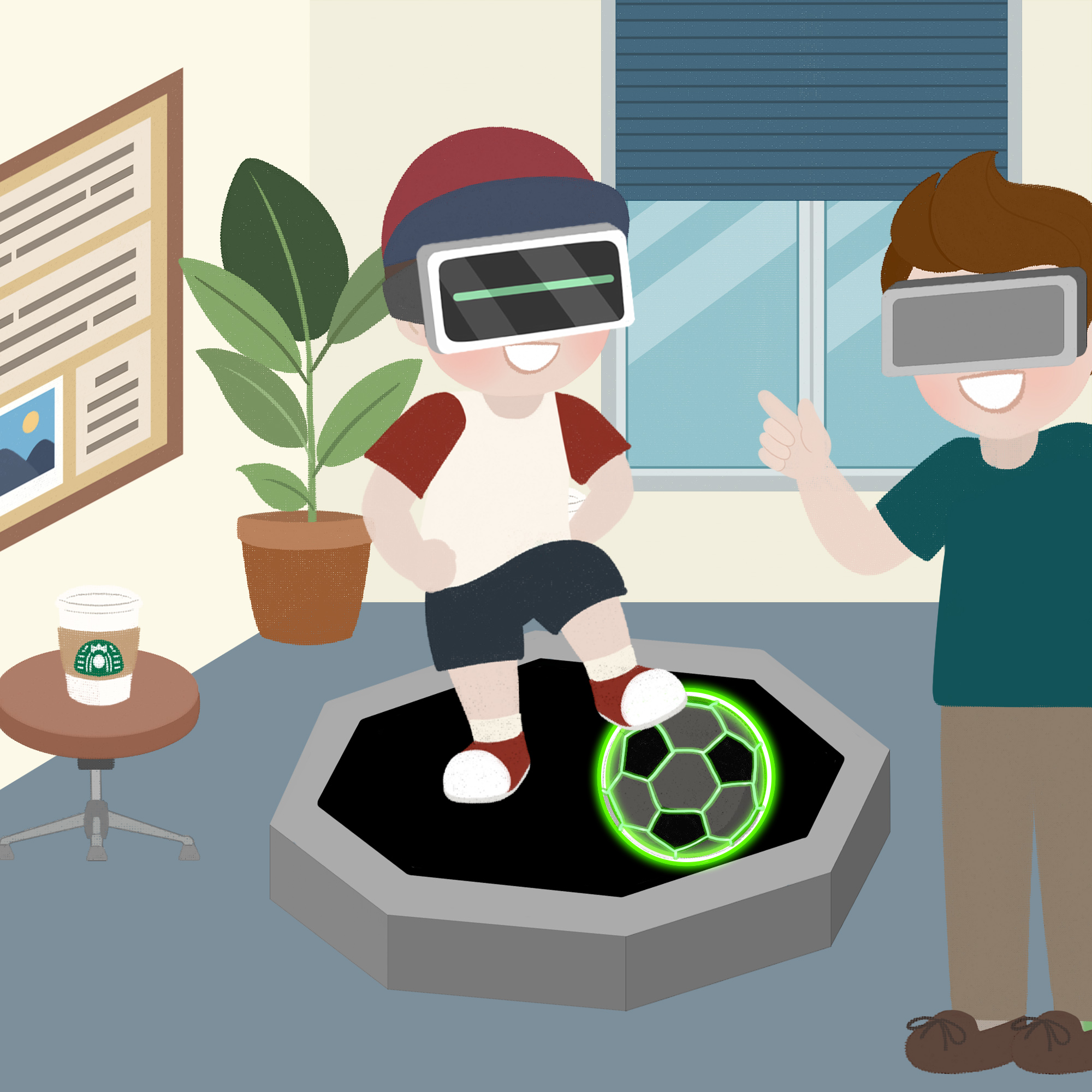
According to Fortune Business Insights, the global virtual reality in education market is booming, and is projected to grow by an average of 45.2%, every year, between now and 2029. Teachers everywhere would be wise to skill-up and take courses in Virtual Reality EdTech in order to get prepared for the exciting changes we will soon see in our classrooms. Today, I’ve invited Kiara Miller from The Speakingnerd to share her insights into how VR will change the way we do things as educators for many years to come.

Kiara Miller

Gone are the days when all you had to do was walk into a classroom, explain a concept, dictate notes, and call it a day. These days you can offer your students more than that, thanks to technology. Technology in the education sphere is a hot topic and trust me, it will remain so as long as the world continues to embrace it.

Nowadays, teachers can offer students meaningful and impactful learning experiences using Virtual Reality technology (VR). According to this recent report by Global News Wire, the virtual reality market in the education sphere is expected to reach $8.66 billion in 2022, at an annual growth rate of 36%. In fact, 97% of students in technologically developed/developing countries would like to study a VR course.

360 VR is a type of VR that is commonly used in education. It offers immersive experiences by using specialist cameras and equipment to capture real-world locations. The content is then viewed on VR headsets or projected onto walls. Students don’t have to leave their classrooms or spend a lot of money to travel to locations that were once imagined. Virtual trips can happen anywhere and anytime as long as the students have the right equipment.

In a world where it is increasingly becoming difficult to attract students’ attention, engage them or keep them motivated to pursue studies, virtual reality technology seems to have the potential to provide at least a partial solution. It is associated with a range of benefits that we are going to explore together today.

The 7 Vivid Ways Virtual Reality can Transform School Education 

#1 VR offers amazingly immersive in-class learning experiences

What are your thoughts about students vividly seeing what is being taught rather than imagining things? STEM subjects such as biology, computer science, and architecture require hands-on experience for students to obtain a deeper understanding of the concepts and to build their expertise. Virtual reality allows educators to embed really impactful learning experiences into their curricula.

We live in a world that is increasingly dependent on technology and obtaining digital skills is seen as the way forward for future professionals. Using virtual reality in schools helps to provide in-depth knowledge to students on what is being taught. They can zoom in and out of locations that are a thousand miles away, observe how human blood flows throughout the body and even conduct specialized surgery.

VR brings things closer to students and makes things a reality that could have been impossible to relate to otherwise. It also allows students to interact with objects, chemicals or scenarios that could be too dangerous to interface with in the real world.

#2: Intricate concepts are simplified

There is nothing that hurts quite like like teaching a concept to students and then receiving negative feedback at the end of it. Teaching is a profession that requires patience, especially when describing and explaining difficult concepts or topics to students who may not have the ability to grasp the content immediately.

VR technology can help students to decipher intricate concepts with the help of images, videos, or virtual tours. VR is also an excellent add-on to a range of active-learning strategies since users are immersed in, and interact with, 3D worlds.

Intricate concepts are not easy to unpack and yet they also vary in their degree of complexity. Cases where learners can’t visualize what a teacher is talking about tend to produce confusion. Students tend to become passive learners in such scenarios, which negatively affects their performance. VR technology offers a solution in that it can be introduced to classrooms to help students get a clear view of the concepts being taught.

#3: Increases engagement 

Unlike traditional teaching methods, Virtual Reality can fully immerse students in the lesson being taught. Seeing something for the first time or that which seemed impossible increases enthusiasm and also maintains a high level of attentiveness. With the help of virtual reality tools, students can connect to worlds and objects which are normally out of their reach.

VR also stimulates higher levels of imagination which helps students understand concepts better than when just reading about them. The interactions enabled by VR help to keep students’ engagement high throughout the lesson.

#4: Increases practicality

Reading about something is different from having hands-on experience. Students that put more emphasis on learning concepts than practicing them find themselves increasingly left out. In simple terms, knowledge without practicality has a limited impact on students. For certain fields like biology, engineering and computer science, practical skills are vital to survival in an increasingly competitive world.

VR can increase students’ ability to understand concepts, implement what is learned and think of new ways of doing something better. Reading about something and learning how it works helps students believe that they are set on the right path. Also, it helps them set SMART Goals which are believable and achievable. With that, virtual reality offers a new meaning to education, by letting students know that they can put to use what’s learned.

Teaching makes a difference when learners are able to put what’s learned into use. In today’s world where skills are the top need of the hour, in-school training is essential and VR can help out. Using VR in class lays a platform for deep learning which helps students understand content better than when only surface learning takes place.

#5: It’s all-inclusive

Virtual reality has a wide range of applications in the education sphere. It can be used in architecture, philosophy, design or even in science classes. Videos can also be produced in a range of languages. On the other hand, it is suitable for all types of classes whether those occur in-person or remotely. Additionally, every student gets the chance to participate in and enjoy the experience: something which cannot be said for the majority of traditional teaching methods.

#6: Increases Retention

The purpose of teaching is to offer knowledge that can help students academically perform better and excel in their careers. However, the traditional teaching approaches, which tend to be text-based, do not offer optimal learning outcomes. With this approach, students tend to easily get bored, lose interest in science subjects and even perform poorly in exams due to low retention levels. 

VR is changing students’ school experiences by enabling effective learning to take place. Scientifically, the brain processes images better than text. This means that students can easily learn, retain and memorize what is taught in class with the help of VR technology. VR can also rewire the brain and enhance the neural relationships that are required for memory and learning to take place.

We welcome you to join the Richard James Rogers online community! Join us on Facebook and Twitter for regular updates, giveaways of Richard’s books, special offers, upcoming events and news.