10 Destructive Habits Every Teacher Should Avoid

An article by Richard James Rogers (Award-winning author of The Quick Guide to Classroom Management)Illustrated by Pop Sutthiya Lertyongphati.

In the quest to better ourselves on a daily basis we often consume self-help advice from places like YouTube, blogs and books. Most of this advice focusses on proactive things we should do to achieve success. With titles to choose from such as 4 Straight Forward Steps to Success and If You Commit to Yourself, Here’s What Will Happen, there’s certainly is no shortage of motivational and personal growth guidance out there.

Most of this self-help material, however, focusses on new things we should implement on a regular basis. Strategies that provide us with new things to do to improve productivity, health or wealth.

Many people use to-do lists to clarify priorities for the day, week or longer. How many of us, however, have thought to use not-to-do lists?

Few resources focus on what NOT to do, and this is a pity as such advice can often be the clearest and simplest to understand.

One video that really inspired me two weeks ago was 10 Habits You Should Stop Having with Ben Bergerson (embedded below):

This video resonated with me because of its simplicity, and my somewhat skewed opinion that it’s easier to stop myself doing destructive things than it is to implement a completely new habit. Perhaps I felt that I should stop doing destructive things first, and get used to that, before implementing some new strategies in my life.

So, let’s get right into how the past 14 days of trialing these 10 habit-stoppers went.

Habit Stopping Tip #1: Don’t hit the snooze button

This is something I’ve ashamedly preached about before, but in my daily life I’ve found it really difficult to implement. My warm bed entices me to climb back into it when my alarm goes off, and this is further compounded by an extreme feeling of tiredness for at least 10 minutes after waking (something that has gotten worse, I think, as I’ve grown older).

I managed to do this on 9 out of 14 days.

On those days that I did get right out of bed as soon as the alarm sounded, I found that I was in a much better mood during my teaching day (and in a state of better physical alertness) than on those days when I snoozed. I also found out that if I have an immediate ‘get out of bed’ ritual to follow, then I am much more likely to actually get out of bed. At the moment, that ritual involves switching off my alarm and immediately walking to the nearest 7-11 convenience store to buy coffee and breakfast – this acts as a kind of reward for not hitting snooze. If I were to snooze, then I probably wouldn’t have time for this.

As a result of not hitting the snooze button on 9 out of 14 days I was able to eat breakfast before school started, read over lesson plans and even avoid traffic because I left my home earlier, which brings me on to tip number 2…………

Habit Stopping Tip #2: Don’t get mad at traffic

Leaving home earlier (because I didn’t snooze) meant that there was less traffic to get mad at, so tip number one definitely rippled into tip number 2.

I have gotten mad at traffic many times in the past – and at my taxi driver for not driving fast enough; not turning quickly enough or even for going along a route I didn’t prefer. All of this mental complaining would put me in an angry frame of mind before my school day had even started.

“An AMAZING book for teachers!”

I managed to not complain at traffic for 14 out of the 14 days, and I found that I was in a better mood at school because of it.

Habit Stopping Tip #3: Don’t be late

This is one I’ve always advocated, and it’s significance will surely be obvious to the readers of this blog. When we’re late, then what we are saying is that ‘Your time is not valuable enough for me to be on-time’.

A good analogy I was once told is that if you had to turn up at a designated location to receive 10 million pounds in cash at 6am tomorrow, then you would certainly be there on-time, perhaps even arriving very early for this appointment.

We turn up early and on-time to those things we consider important enough to be punctual for. We therefore need to assign a high-level of importance to meetings, duties and any other activities/events that require us to be punctual.

Once again, tip number 1 (Don’t hit the snooze button) allows us to be on-time, every time.

Habit Stopping Tip #4: Don’t tolerate gossip

This is a principle I have (thankfully) had the sense to follow since day one of my teaching career, and I wrote about the devastating effects that gossip can have for teachers in my debut book, The Quick Guide to Classroom Management.

When we gossip, we show people that we cannot be trusted. Secretly, our coworkers are thinking “I can’t trust him – what if he gossips about me one day”. Gossip also circulates quickly, and so-called friends can very often be duplicitous: acting as ‘double-agents’ who pass on information to those who have been gossiped about.

Just don’t gossip – it’s that simple.

Not tolerating gossip takes this principle to another level – the advice being that if you hear gossip, then you should shut it down with, perhaps, a statement like “I don’t think it’s appropriate for this conversation to be happening”. This advanced-level step, however, requires bravery, and its consequences will depend on your workplace ethos and culture. You may just wish to take the easy way out by simply standing up and walking out of the room, or walking away from the gossip, whenever you hear it.

Habit Stopping Tip #5: Don’t watch the news

I found this one SO DIFFICULT to implement, and this really surprised me! By consciously attempting to stop myself from reading the news, I discovered that I often scroll through news websites because I’m simply bored. I’m hooked – and it was hard to break to this habit.

The idea behind this is that news is a distraction, and is very often biased anyway. The majority of the news we read is bad news, and most of it describes events that are beyond our control. Why waste our time and energy feeling sad about things we can’t change?

On those days that I stopped myself reading the news, I found myself with little else to distract me besides work. This increased my productivity.

Habit Stopping Tip #6: Don’t pass judgement

I’ve fallen out of the sky many times in my life. I started from nothing, and I know what it feels like to have nothing. I’m not trying to paint myself as someone special here – many people can relate, I’m sure. However, I try my best not to look down on people where possible because:

  • I never know the full story
  • I’m far from perfect myself
  • I know what it feels like to be inadequate – both in terms of skill and finances

Passing judgement is just another one of life’s energy drainers that we could all be better without.

Habit Stopping Tip #7: Don’t eat and scroll…….

…………and don’t scroll at any social gathering, for that matter.

When I see couples or families at restaurants and coffee shops, and all they are doing is playing on devices, it makes me very sad (but also happy that I have a great relationship with someone in which this never happens). People are quickly losing the ability to interact physically, in my opinion.

The principle behind this habit-stopper is presence – we should be present in everything we do if we’re to get the most out of it. As I write this blog post, for example, I’ve mostly ‘gone dark’ – my phone is out of reach as I know that if I check it I’ll never get this blog post finished.

I’m more productive and present when I’m not on my phone, unless I’m using my phone for a specific purpose.

Habit stopping tip #8 – Don’t check e-mail before noon

Does this apply to teachers? I’m not sure.

E-mail has become an essential part of my job, but some would say it is yet another distraction. I’m still on-the-fence about this one, as important announcements often come to me by e-mail, and they often need to be acted upon quickly. Are there e-mails that I don’t need to check before noon? Probably. E-mail is evolving quickly into a messaging tool, however, and as teachers we are fast-approaching a stage where we need to be reachable at all times at work. GMail, for example, is becoming more skewed towards Google Hangouts and instant messaging. As workplace messaging technology evolves, teaching will surely evolve with it.

Habit Stopping Tip #9: Don’t leave dishes in the sink

I loved seeing how this particular habit affected my life. It was very powerful.

I am typical ‘dish-leaver’, and once I started to pro-actively wash dishes as soon as I used them I found myself also doing laundry right away; tidying up after myself right away; putting my work clothes in my wardrobe instead of over the back of a chair; putting old cosmetics’ bottles in the bin right away, and on and on it went.

My home became tidier more quickly – and less clutter at home meant an overall sense of happiness.

I highly recommend this tip.

Habit Stopping Tip #10: Don’t wait for perfect

In the video provided at the start of this blog post, Ben uses the phrase “Jump, and grow wings on the way down”. As a result of this one statement, I found myself going to the gym more often, despite being in not-so-perfect shape.

That’s got to be a good start, right?

Have you grown your wings yet, or are they still growing?

We welcome you to join the Richard James Rogers online community! Join us on Facebook and Twitter for regular updates, giveaways of Richard’s books, special offers, upcoming events and news. 

richard-rogers-online

8 Ways to Increase Lesson Clarity

An article by Richard James Rogers (Award-winning author of The Quick Guide to Classroom Management). Illustrated by Pop Sutthiya Lertyongphati.

Accompanying video:

Our lessons need to be clear in order for students to understand the subject content they are expected to learn. This is particularly important for older students who are preparing for exams, and who are therefore expected to memorize, understand and apply vast amounts of information.

An unclear teacher who presents information in a confusing way can be a source of dread for students who are expected to perform highly on end-of-unit tests and exams. A clear teacher, on the other hand, can make students feel confident, relaxed and comfortable with the learning process contained within each lesson.

The good news for us is that it is easy to make our lessons clearer with just a few, simple, proactive tweaks. In today’s blog post I offer my top eight suggestions for maximizing lesson clarity: all of which have been distilled from just over 16 years of experience. Within these paragraphs I will present the conclusions garnered from the many mistakes I have made in my teaching career, so that you don’t have to make those same mistakes yourself.

Lesson Clarity Tip #1: Share resources with your students in advance of each lesson

When we share instructional resources with our students in-advance of each lesson we provide an opportunity to read-ahead. And, of course, we should be encouraging our students to read-ahead before each lesson anyway, as this process will cement some foundational principles before greater detail is presented within each lesson itself.

Nowadays most teachers are competent in the use of Virtual Learning Environments (VLEs) such as Google Classroom, Firefly, Moodle and so on. However, one aspect of this digital realm that’s not fully exploited is the ability to upload PowerPoints, Google Slides, PDF summaries, worksheets and other resources in advance of each lesson.

One big challenge that this poses for teachers is that these resources actually need to be ready and stored somewhere, in an organized fashion, before they can be uploaded en masse. This problem becomes further compounded when syllabuses change, and resources need to be adapted accordingly.

Where possible, we should have a sequence of slideshows, worksheets, summaries and other resources mapped out for a course before the course begins. Then, when day one of the course starts, all of the resources needed for the entire course can be ready for students to access right away. At the moment, for example, all of my PowerPoints for my entire two year IB Diploma Chemistry course are uploaded on the students Google Classroom, and are classified on there by topic.

Advantages to us, as teachers, when we do this are:

  1. We don’t have to scramble to upload resources on the day of teaching. Our time can be better spent on other things.
  2. We don’t have to scramble to find resources on a USB drive or some kind of shared folder. The resources are all in one place, online, ready to go.
  3. Students can view the presentations, worksheets, PDF textbooks and other materials on their individual device screens in real-time, as the lesson is happening. This aids our instruction, reduces note-taking time for students and even saves paper for printing (students can view worksheets on their screens, without the need for a printed copy, for example).

Lesson Clarity Tip #2: Don’t put too much information on slides

  • Keep text large and clear.
  • Make diagrams and illustrations as large as possible (as large as the slide is perfect, where possible).
  • Avoid ‘crowding’ slides with too much information. A slide filled with paragraphs of small text can be very off-putting for students, not least because the the text can be difficult to read when it’s so small.
  • Keep information digestible – present material in bitesize chunks. Avoid presenting tons of information all at once.

Lesson Clarity Tip #3: Avoid irrelevant information

It can be tempting to bring-in content that’s indirectly related to the material we are presenting: often to provide an extra dimension of fun and interest to the subject. A good example I can think of from my experience is when I was teaching physics to young teenagers some years ago. The topic they were learning was entitled ‘Sound and Hearing’, and the students had to learn about sound waves, the Doppler Effect and how human ears work.

In my youthful stupidity, however, I thought (for some bizarre reason) that it would be a good idea to teach the students about sign language. I thought that it would bring a bit of fun to the classroom and allow my learners to empathize with those in society who cannot hear properly. This proved to be a mistake on my part, however, as some students were confused about what exactly they needed to know for their upcoming test.

“Do we need to know about sign language for our test, Mr Rogers?” was a question I was asked.

The answer was no, of course. I had essentially wasted a good portion of teaching time bringing-in extra material that was unnecessary. That time could have been better spent reinforcing the foundational concepts needed to pass the test.

We must keep our lessons focused on the curriculum statements we are expected to teach. When we want to bring in topical information, then let’s do that after the students have learnt the main material. At the end of a recent physics lesson, for example, I played a short video of the recent Mars Perseverance Rover landing from NASA, as this was related to velocity, acceleration and distance (concepts we had been exploring in class). This NASA video didn’t form the main-body of the lesson, but was rather a short ‘treat’ for the students at the end of an hour of hard-work.

Lesson Clarity Tip #4: Always assign focused activities

Have you ever been in a rush at school and quickly found an online quiz or web-activity that relates to your topic, only to share it with your students and later find out that the activity wasn’t quit up-to-standard?

I’ve fallen into this trap many times in the past. I’ve assigned Quizlets, Wordwalls, Kahoot! activities and other online quizzes in a rush, only to later find the following errors:

  • Spelling, punctuation and grammar mistakes.
  • Content mistakes (in some cases).
  • Too much information (more than the students needed to know).
  • Too little information (not enough for the task to be substantial).
  • Irrelevant information (content that the students didn’t need to know).
  • Poor usability (problems with software interactivity and the user experience).

It’s vital that we check our third-party content thoroughly before we assign it to our students. This level of due process needs to be extended to offline resources, such as textbooks, too.

Lesson Clarity Tip #5: Speak loudly and clearly

We must avoid the following:

  • Mumbling.
  • Using colloquialisms that our students may not understand.
  • Speaking with an accent that may be unclear to some learners.

I quickly learnt the importance of the above three points when I moved to Thailand in 2008 to teach Chemistry at an international school. My students mostly had Thai as their first language, so I had to lose my thick North Wales accent (which even native English speakers would find difficult to understand at times) and I had to speak classical, textbook English. I’m “sound as a pound” became “I’m fine, thank you”, “That doesn’t quite cut the mustard” became “This work is not up-to-standard”, and so on.

We must ensure that our speech is clear and, just as importantly: loud. This latter point is of more importance now than ever before as teachers all over the world are wearing masks and visors when speaking. One thing that surprised me when I wore a visor to teach last summer was that my voice sounded louder to myself when I wore the visor, then when I took it off (due to vibrations and bone conduction).

Lesson Clarity Tip #6: Speak slowly

Our students need time to process information: especially when it is presented verbally. We must include pauses in our speech, and check for understanding along the way. It may be necessary to repeat key sentences a few times too, especially if the concept being explained is advanced, or technically challenging to understand.

Lesson Clarity Tip #7: Reinforce key words

Technical vocabulary feature prominently in official mark schemes, and are often the core components of a well-formulated answer to an exam-style question. Consider the following strategies:

  • Ask students to say key words when they appear in your lessons. In a recent chemistry lesson, for example, I said “Everyone say the word ‘resonance'”, after which the whole class said it. Forcefully getting students to articulate key words through deliberate speech can be a good way to prime the brain to remember those words when they are used in some thought process later on in the lesson.
  • Use exam-style questions and official mark schemes to show students just how important it is to write key words within an acceptable context during an exam.
  • Differentiate texts to make key words more digestible.
  • Encourage students to highlight key words in their notes along the way.

Lesson Clarity Tip #8: Use everyday language to explain advanced concepts (where possible)

Rephrasing sentences that contain subject-specific vocabulary can be a good way to help students understand the underlying concepts being taught. Here are some examples:

  • The train accelerated = the train sped up
  • The bond enthalpy of the C-C bond is…… = the energy contained within the C-C bond is…….
  • The dinner was sublime = the dinner was superb

We can prompt this process by repeating technical sentences in an everyday format, and we can ask our students “What does ___________ mean?”. This can lead to meaningful discussion that will serve to reinforce key words (Tip #7) and clarify the underlying theory of the lesson.

We welcome you to join the Richard James Rogers online community! Join us on Facebook and Twitter for regular updates, giveaways of Richard’s books, special offers, upcoming events and news. 

richard-rogers-online

My Top 5 Tips – From an NQT During a Pandemic

richardjamesrogers.com is the official blog of Richard James Rogers: high school Science teacher and award-winning author of The Quick Guide to Classroom Management. This blog post is illustrated by Pop Sutthiya Lertyongphati.

We’re facing tough times as teachers during a pandemic right now. In today’s exclusive guest blog post, Tayla Elson (who’s a UK-based Newly Qualified Teacher and Blogger) shares her tips for succeeding as an educator during Covid. Enjoy!

Hey! My name is Tayla and I was asked by Richard to write a short piece on teaching from the NQT standpoint. It is not my full intention to write from a pandemic standpoint, but as someone who lost half of my training year to Lockdown 1, barely survived face to face teaching in Lockdown 2 and is now teaching online during Lockdown 3 – it’s all I’ve really got. And it’s been hard. So, I wanted to used this time to give you my top tips, from a realistic standpoint. We haven’t got the privilege right now to talk inspirational classrooms and a roaming classroom presence so I’m going to try and be a bit more practical and honest. 

#1: Remember how you got here. Just like your peers you trained hard to get here, and no one trained for this, and we’re doing the best we can. A year on, it is easy to forget that we are all living through a crisis, we cannot be expected to work and live ‘as normal’ right now. So, stop feeling guilty that you’re not.

#2: Be Creative. This is probably one of the hardest things, both right now whilst we are teaching online, but also when you’re faced with a really difficult group. It always feels safer to teach in a simpler, easier way, but often times it is when I have been a bit more creative and daring that it has paid off the most. Teach in a way that gets you excited, especially with the groups that are the hardest to teach. Smile, show them you care.

#3: Teach the basics. It almost feels criminal to add this as a tip as it is something I have only just (stupidly) realised for myself, but I wanted to include it in case, like me, you just had no idea. We are there to teach our students, we often know our subject well, and of course we know we need to teach students how to behave. But after focusing on how to improve my behaviour management, a book highlighted something pretty obvious to me. We need to teach students what good behaviour looks like. For some students, they simply do not know what it looks like, so how can we expect them to just do it when we ask? So, I have included this in the list, teach them the basics. This will be my sole focus when we return to face to face teaching. The basics. Right from the start, the simplest of actions. That’s something they really don’t teach you in your training year.

“An AMAZING Book!”

#4: This is a career. Remember what this job really is, no one is expecting you to become an amazing teacher in your first year. That’s why they say it is the hardest teaching year. Comparison is the thief of joy. I often find myself comparing my own teaching abilities to those around me, those that have behaviour management in the palm of their hand, those that are organised beyond belief and those that have simply been in the school for a much longer time. THESE THINGS WILL COME. They just take time; this career is not a quick fix – accept it and work hard to improve in the long run.

#5: Breathe. If you’ve made it this far through the blog post without breathing, then I really suggest you take a deep breath right now! Some days will be hard, some days will be so hard you cry after your first lesson of the day, or you cry at home wondering what the heck you are doing trying to be a teacher. And yes, I am totally speaking from personal experience. This job is hard. But we’re all here for a reason, so just breathe through it and keep turning up. And remember: we are living through a global crisis, this is not normal. No-one is expecting you to work as it is.

So, if you’ve made it this far (and taken that deep breath we talked about) then I would like to thank you! Thanks for taking the time to listen to the panic-stricken reality of a very much bewildered NQT. I am currently an NQT at a secondary school in Worcestershire, teaching Geography as my subject specialism as well as some History to year 7. I write on my own blog, which you may have guessed is more ramblings, and tweet sometimes too.

We welcome you to join the Richard James Rogers online community! Join us on Facebook and Twitter for regular updates, giveaways of Richard’s books, special offers, upcoming events and news. 
richard-rogers-online

Four tips to reignite your students’ interest in learning as they return to school

richardjamesrogers.com is the official blog of Richard James Rogers: high school Science teacher and award-winning author of The Quick Guide to Classroom Management. This blog post is illustrated by Pop Sutthiya Lertyongphati.

Is it possible to rekindle our students’ interest in their subjects and a generate a love of learning when they finally return to school? Jessica Robinson of The Speaking Polymath believes so, and today I’ve invited her to share some expert tips on how to get our learners stimulated, on-task and determined to succeed. Enjoy!

As the number of active Covid cases has started declining globally and the vaccination processes have begun, lockdowns and other restrictions are slowly being lifted in various countries. As a result, educational institutions have also started reopening and again blooming with students’ presence. Although it is immensely joyous for us teachers to have our students back with us in schools, somewhere in our minds, there is a distant alarm that tries to draw our attention towards some impending challenges which we are likely to face. The loss of our students’ interest in learning is a major one of those potential challenges. 

No doubt online learning has helped us keep the flow of education somehow uninterrupted during the pandemic, but it has also led to many students losing their sincerity towards studies. Now that our students are back with us in school, we have a vast new responsibility to reignite their learning interest. We have to direct our efforts only towards effective teaching and ensure that our students get back on track and start learning efficiently. Yes, I know it will be challenging, but believe me, we, the teachers, have all the willpower and enthusiasm required to reestablish our students’ curiosity for learning despite all the hardships. 

So, ardent teachers, let’s embark on this new mission with courage and gaiety. Now, here are four tips to support you in the mission of reigniting your students’ interest in learning as they get back to school.

#1: Gamifying the learning process

The first tip we have here is to gamify the learning process. It involves converting the learning process into play for the students. This tip works well! The reason is the same as is already in your mind that children of all age groups love playing. You ask them to play a game at any time; they are always ready! So, if you gamify learning for your students, you’ll take a big step of success towards reigniting their interest in learning. Now, you may be wondering how you can add the play element to studies? It will just need a little bit of searching the internet and thinking. To help make things more transparent, let us consider an example.

Suppose you are a Social Studies teacher and you have to make your students learn about the location of different countries on the world map. You can then search the internet for popular games to play with students and then find one such game that can help you gamify world map learning. One example is Pictionary

You can first help your students identify different countries’ outlines as depicted on the world map. You can then give them around 5 to 10 minutes to remember the outlines of different countries and move towards playing Pictionary with them. For this, you can divide your students into two or three groups. Turn by Turn, one group will draw the outline of a country on the board, and the rest two groups will discuss among themselves, guess and write the name of the respective country on a sheet of paper. The team which gives the maximum number of correct answers will win the game. 

This way, you can gamify the learning process and make studies interesting for them. This gamification technique will, over time, enhance your students’ academic performance.

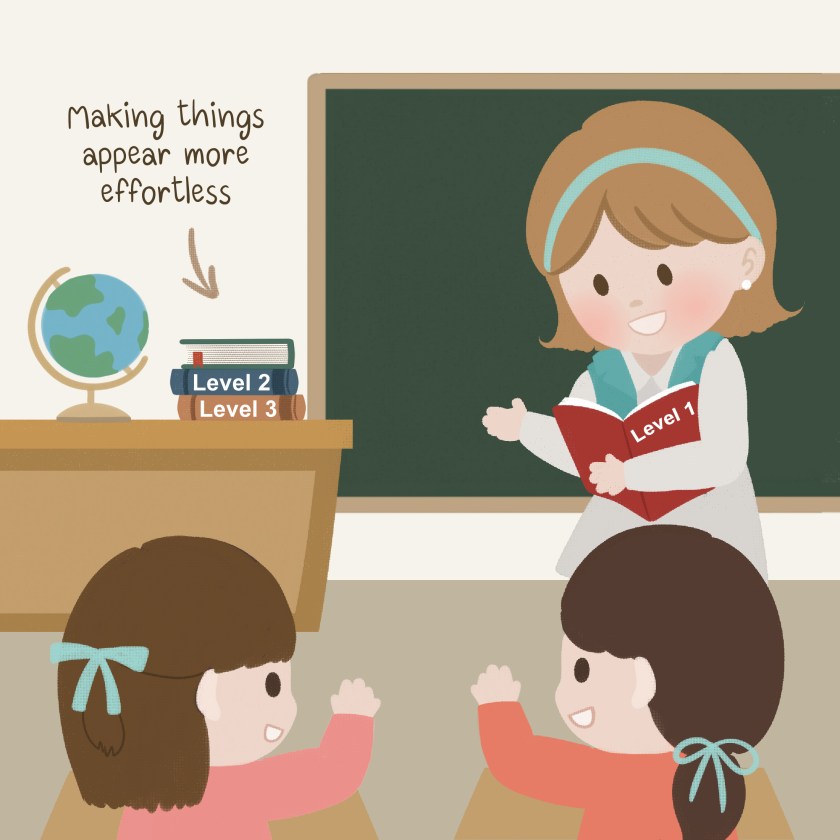
#2: Making things appear more effortless

Simple and easy things always attract us more. This is because the nature of our mind is like that only. For example, if given a choice to solve a word puzzle or a mathematical problem, most of us are likely to go with the form one as most find mathematics problematic. If we go with this basic understanding of the human mind, students are likely to be more interested in learning more straightforward concepts than complex ones.

One effective way to reignite the students’ curiosity for learning is to make things appear more effortless.  For example, in the initial days after schools reopen, we can start teaching more straightforward concepts. Along with this, we cannot spend the entire session on teaching. Instead, we can teach for some time and then indulge in interacting with our students. This will help them feel relaxed and not much burdened. Further, assigning less and more comfortable homework can also motivate them to learn effectively. This is again because students are more likely to do their homework with sincerity when they find it easy. Later on, as the flow becomes continuous, we can teach complex concepts to our students.

#3: Extend regular appreciation and rewards to your students

Appreciation and recognition are two of the biggest motivation boosters. If you appreciate a student for his class performance, you motivate him to perform even better and kindle in the rest of the students a wish to be appreciated. This wish further inspires them to start paying more attention towards studies. 

Here we have another effective way to rekindle our students’ interest in learning and extend regular appreciation and rewards to them. Whenever a student appears to be attentive in class, submits his homework in time, or gives the right answers to the questions you pose in class and does anything like that, you can try to shower words of praise on him.

“An AMAZING book for teachers!”

Moreover, you can also give rewards to the most receptive students weekly or fortnightly. To find out the most receptive students, all you’ll have to do is ask some questions regarding what you have taught on a particular day in class. The students who give the maximum number of correct answers during the decided period, maybe weekly or fortnightly, will be eligible to receive the reward.

#4: Reconnecting with the students at an emotional level

Students are more likely to exhibit a greater interest in learning when their favorite teacher teaches them. This implies that our emotional bonding is also a factor that impacts their curiosity towards studies. As a long period of physical separation during the pandemic might have caused damage to our emotional connection with our students, we’ll have to reconnect with them. For this, we can do two critical things.

The first is to portray open and cordial body language. It includes having a smile on our face, a relaxed body posture without much stiffness, and covering up more space with hand gestures. When we have open body language, we are perceived as friendly. This brings our students closer to us and makes them feel more comfortable.

The second is to have regular interactions with them. We can try to spend 5 to 10 minutes on alternative days, having informal conversations with our students regarding life, the problems they are facing, their life stories, etc. Such conversations are useful in making a way to children’s hearts. You can also share your childhood stories with them. As you keep having these interactions with your students, they’ll develop a strong emotional connection with you over time. This connection will be of great help in rekindling their interest in learning. 

Conclusion

Our students might have lost their interest in learning while staying back in the comforting ambiance of their homes for such a long period. As they start coming back to school, we’ll have to direct our efforts to rekindle their interest in learning. Otherwise, we won’t teach effectively despite giving our best. Further, we can utilize the different tips given above to make our students curious about studying again. I wish you All the very best and a good time with your lovely students.

We welcome you to join the Richard James Rogers online community! Join us on Facebook and Twitter for regular updates, giveaways of Richard’s books, special offers, upcoming events and news. 

richard-rogers-online

Five Tips for Becoming a Happy Teacher

richardjamesrogers.com is the official blog of Richard James Rogers: high school Science teacher and award-winning author of The Quick Guide to Classroom Management. This blog post is illustrated by Pop Sutthiya Lertyongphati.

Happy teachers make happy students. When we’re happy we have energy, passion for the job and a greater sense of overall purpose in life. Happiness can be difficult to achieve, however, when we’re dealing with the daily stresses of being a teacher: duties such as paperwork, writing reports, meeting tight deadlines, marking, and even trying to teach remotely and face-to-face at the same time (a very recent challenge that teachers all over the world have had to deal with). Today, I’ve invited Jessica Robinson, educational writer at The Speaking Polymathto share her insights and tips for being, and staying, happy in your role as a teacher.

If we look closely, everything we do in life is focused on one thing – becoming happy. The same is true for our profession. Most of us have chosen teaching as our profession, most likely for two reasons. One is that we feel happy to teach students. The second is to earn money. If we look at both these reasons, they are related to happiness. Teaching gives us happiness, and money helps us buy things we need to be happy. Now here is an important question we need to ask ourselves: Are we delighted? The answer is most likely a no. This is because teaching is a stressful profession. Every day we have to deal with several stressful events as teachers. Noisy students, teaching effectively, and shouldering our responsibilities well are all in some way causes of stress for us, and when there is stress, there cannot be true happiness. But, we all need happiness, right? As discussed above, it is the primary goal behind everything we do. Now, the question is how to become happy teachers? Here are five tips that will help you.

#1: Cultivate acceptance for your students’ behavior

One of the biggest causes of stress we face every day is our students’ wrong behavior. Even if we are thrilled, it takes just a single lousy remark from a student to make us feel stressed and unhappy. However, if we simply understand that kids are kids, then we will be in a much better place of acceptance. They will make such mistakes, and there is no need for us to take things personally. Instead, we can try to help them become better human beings. This simple acceptance of our students’ behavior can help us become happy teachers. So, we should all try to cultivate acceptance for our students’ behavior and then take steps to improve their behavior without being impacted by them.

“An AMAZING book for teachers!”

#2: Spend some time playing with your students

Playing is the key to feeling happy. I know we are teachers, but don’t we all have a little child who is always excited to play? Yes, we do! At times, we should try to let this inner child out and spend some time playing with our students. There is nothing terrible in playing with kids for 10 to 15 minutes. When we play with our students, they become more connected to us. As a result, they pay more attention in our classes, which is the key to effective classroom management. So, if you like, you can give this tip a try. I’m sure if you do, you’ll end up falling in love with it. [Note from Richard: This can be done with students of any age, even high-school students. Read my blog post entitled 10 Learning Games to Play With Your Students here.].

#3: Make meditation a part of your daily routine

A calm mind is a happy mind. There are no two opinions regarding it. This implies that to become satisfied teachers, we need to cultivate a relaxed mindset. For this, one of the best techniques which we can practice is meditation. It doesn’t mean that there will be no fluctuations once you start meditating, and your mental state will always remain calm. No, it is not so, but with regular meditation, you will be able to re-establish a relaxed mental state soon after your peace gets disturbed. This implies that the duration of your unhappy cycles will get significantly reduced. So, to become a happy teacher, you should try to make meditation a part of your daily routine. You can use guided meditation videos to meditate initially, and later you can switch to meditating all by yourself.

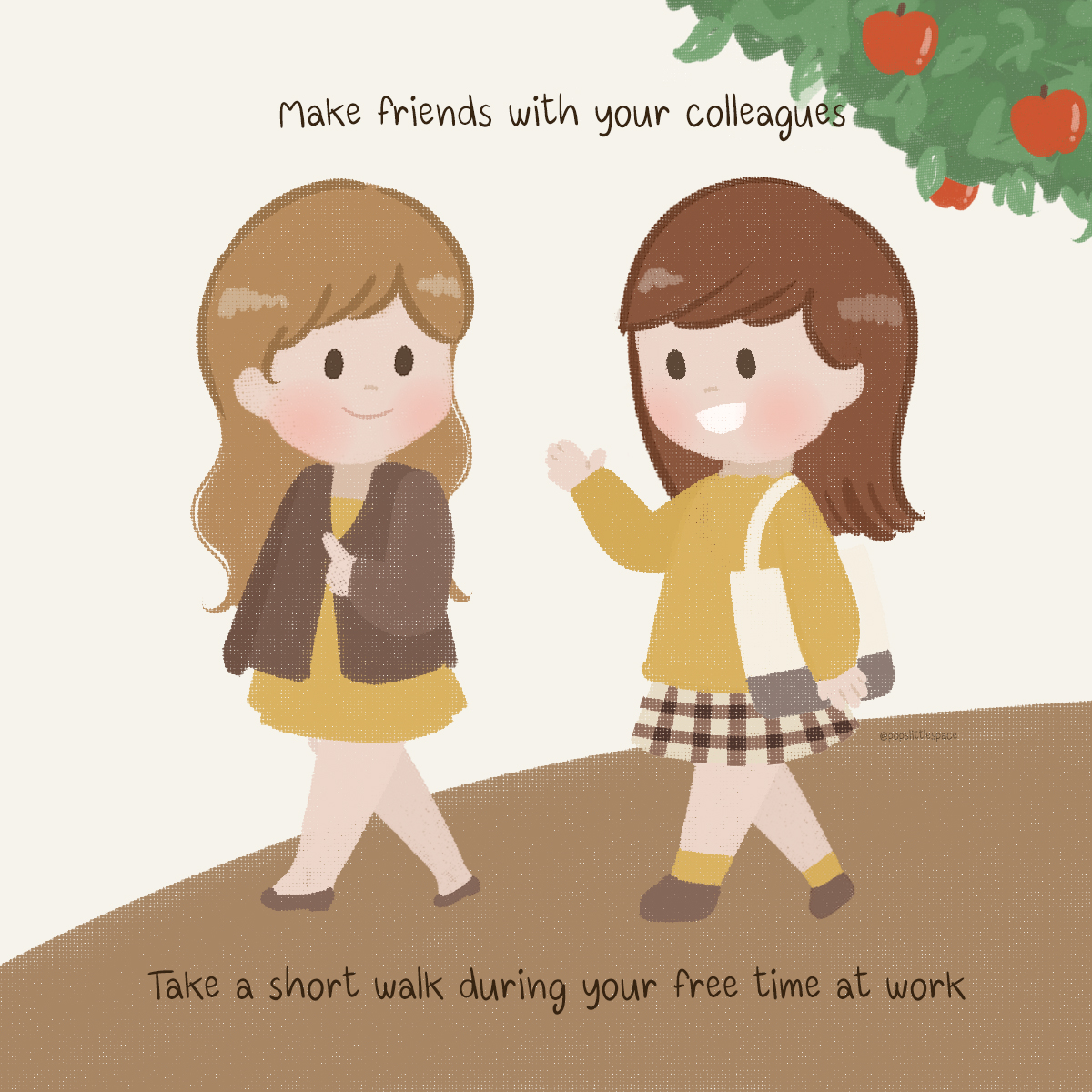
#4: Make friends with your colleagues

Does spending time with your near and dear ones make you feel good? The answer is a yes, as it is right for all of us. Whenever we spend time with our loved ones, our body gets flooded with oxytocin: a happy hormone that triggers positive feelings and reduces our stress levels. One trick to stay happy at work is to have some loved ones. This means that we should try to make friends with our colleagues. We can try to cultivate a big friend circle at work. This will help us significantly increment our happiness levels as teachers. If something goes wrong in class, we can share it with our friends, or if we are feeling stressed, we can share our feelings with them and feel lighter.

#5: Take a short walk during your free time at work

It has been scientifically proven that exercise is good for our physical health and mental health. When we exercise, our brain secretes happy hormones like serotonin, dopamine, and oxytocin, which trigger positive feelings and make us feel satisfied. Although you cannot exercise at work, you can still take a short walk during your free time at work. This will help you induce positive feelings and feel happier.

Conclusion

Happiness is the primary motive behind everything we do. So, becoming happy teachers should be one of our goals despite all the stress associated with our profession. We can utilize the above-mentioned tips for the fulfillment of this goal. Now, I wish you all the Best and have a happy time teaching!

We welcome you to join the Richard James Rogers online community! Join us on Facebook and Twitter for regular updates, giveaways of Richard’s books, special offers, upcoming events and news. 

richard-rogers-online

The Importance of Body Language in Teaching

richardjamesrogers.com is the official blog of Richard James Rogers: high school Science teacher and award-winning author of The Quick Guide to Classroom Management. This blog post is illustrated by Pop Sutthiya Lertyongphati.

Effective communication between teachers and their students is crucial for effective learning to take place, but how many of us are aware of how our subliminal cues via body language are interpreted and processed? What are some key non-verbal strategies that teachers can use with students? Today, I’ve invited Jessica Robinson, educational writer at The Speaking Polymath, to share her insights and tips for educators.

Teaching is a profession that requires effective communication. Only through effective communication you can teach well and help your students learn excellently. Now, communication becomes effective only when there is a perfect blend of verbal and non-verbal means of communication. With non-verbal means like facial expressions, body postures, hand gestures, and verbal messages become clear and better understandable. For example, if someone asks you which direction should he go in to find the washrooms, and you say- right. Then, he will take a second to think and then start moving in the right direction. But, if you say right and point in the right direction, he’ll immediately start moving in the right direction, even without thinking for a second. This is how magical the effect of non-verbal means of communication is.

After coming across the significance of non-verbal means of communication, let us discuss the importance of body language in teaching. Body language is the superset of the different non-verbal means of communication like facial expressions, hand gestures, and body postures. This implies that all the hand gestures, facial expressions, and body postures we make come under body language. Now let’s proceed to discuss the importance of body language in teaching.

  1. Influential body language helps in classroom management:

When you portray persuasive body language, you naturally captivate your students’ attention. When your students are attentive in class, their mind is engrossed in learning. As a result, they don’t engage in mischief, and your classroom becomes well managed. So, one of the most significant benefits of portraying clear body language is that it makes classroom management more straightforward for you.

“An AMAZING book for teachers!”
  1. Your body language impacts the energy level of your students:

Imagine meeting someone having a high energy level who uses powerful hand gestures and facial expressions while interacting with you. How do you feel? Your answer will most likely be one of the following terms- energetic, attentive, and enthusiastic. Isn’t it? Whatever it is, it is undoubtedly positive. This implies that a person with powerful and animated body language positively impacts your energy level. From this, we can conclude that our body language has a significant impact on the people around us. If you portray energetic body language in class, your students will most likely start feeling energetic and studying well. This makes it crucial for every teacher to teach powerful body language.

  1. Your body language impacts your relationships with your students:

Have you ever experienced that you feel more comfortable around some people and slightly uncomfortable around others, even when you have just met them for the first time? I’m sure that you have because almost all of us feel so in the presence of different people. Now, if we explore why does it happen that some people make us feel comfortable while others don’t? The answer to this question is their body language.

When we look at people, the first thing we notice about them is their body language. If someone has a closed body language like doesn’t have a smiling face or relaxed body posture, we get an impression that the person isn’t friendly. As a result, we start feeling uncomfortable. This implies that our body language impacts our relationships with others. If you have an open and relaxed body language, your students will consider you friendly and loving. As a result, they’ll get inclined towards you and develop good relationships with you. When you have good relationships with your students, they naturally pay more attention in class, heed your advice, and teaching them gets more straightforward for you.

  1. The use of supportive body language with verbal instructions helps in increasing students’ attention in class:

When you accompany your verbal instructions with suitable hand gestures, facial expressions, and body postures, your students are likely to be more attentive in class. For example, if you say look towards the left and your students aren’t listening attentively but blankly looking at you, chances are they’ll not respond. But, if you accompany your words with your finger pointing towards the left, your students are more likely to start looking towards the left. This is simply because even when they are not actively listening to you, they look at you. This way, body language helps increase your students’ attention in class.

  1. Influential body language enhances your confidence level:

When students become too noisy and don’t listen to us, we start feeling disheartened. Then, the loop of disappointment begins, and we start questioning our abilities as a teacher. Although we feel as if we are on the verge of breaking, we also know that we cannot give up as we are teachers in our inner world. Under such circumstances, your body language can help you feel better and regain your confidence. Then, you can again start directing your efforts to quieten your students.

You can question how body language can help you increase your confidence level? Let me answer this question for you with the help of an example. When we feel afraid, our body contracts a bit. Have you ever felt that? I’m sure you have, as it is our body’s natural reaction to fear. On the contrary, when you are happy, your body expands. You feel lighter, isn’t it? This is because your emotion impacts your body language and vice versa is also true. So, whenever you feel that your confidence level is getting low, you can make some simple changes in your body language to replenish it. Now, what changes can you make? It is effortless; just try covering more space, like standing in a relaxed manner, with your arms spread out. This will give your brain a signal that your body is comfortable and everything is okay. As a result, your confidence level will increase, and you can then try to quieten your students again.

Your body language can help you teach better and more effectively. The same has been illustrated by the importance of body language in teaching, as described above. So, you can enhance your teaching skills by simply improvising your body language. Now, wishing you All the best and have happy teaching.

An ardent writer, Jessica Robinson, works forThe Speaking Polymath’. She uses this platform to weave her magical words into powerful strands of content and share with her readers.

We welcome you to join the Richard James Rogers online community! Join us on Facebook and Twitter for regular updates, giveaways of Richard’s books, special offers, upcoming events and news. 

richard-rogers-online

Good Teachers Are Also Good Students

An article by Richard James Rogers (Author of The Quick Guide to Classroom Management)

Accompanying video:

I have always loved mathematics, but I’ve not always been ‘good’ at maths. I got a grade A for GCSE Mathematics when I was 16 years old (a grade I worked really, really hard for) but I struggled with mathematics at ‘AS’ and ‘A’ – Level (the UK’s pre-university qualifications). 

img_0413
“An AMAZING Book!”

It just so happened that mathematics wasn’t a subject I needed as a prerequisite for my university course anyway. So, in a sense, I committed the cardinal sin of thinking that it ‘didn’t matter’. I was planning to study molecular biology at university, and my admissions tutors were mainly interested in my biology and chemistry grades.

3.1-01

I achieved my goal of going to uni and doing my PGCE in order to become a fully qualified Science teacher in 2006. I was happy for several years, but my failure to complete my mathematics education at school kept gnawing at me like an annoying itch. I needed to do something about it. 

I decided to complete the Certificate in Mathematics course with the Open University in 2009, after three years of being a full-time science teacher. This course covered everything in my ‘A’-Level syllabus with some extra, university-level topics thrown in. It was challenging and offered me just what I needed: closure. As a distance-learning course, it also offered me the chance to study and work as a teacher at the same time. 

2-01

As I started studying the course and handing in assignments (which had to be snail mailed to the UK  – I was living in Thailand at the time), I began to realise how much I had become disconnected from the student experience as a teacher. It had been around three years since I had ever studied anything seriously, and this mathematics course was teaching me how difficult it was to:

  • Meet deadlines
  • Seek help when in doubt
  • Have the self-discipline needed to study at a regular time-slot each day

These skills were, of course, things I had to do whilst completing my degree course and schooling earlier in life, but it had been a few years since I had been immersed in serious study like this. I was slowly losing empathy for my students: that was until this course gave me a wake-up call. 

Another big thing I took from this experience was just how stressful it can be to prepare for a difficult exam (and to complete it). I had to fly to the UK to take the end of course mathematics exam (a three hour beast), and along with the intense revision that came in the few days running up to the exam I had the misfortune of not sleeping so well the night before the big day. And then, once sat down and actually completing the paper, three hours felt like it went by in an instant.

img_0482

I guess I’m trying to make a number of points in this trip down Memory Lane – namely that by immersing ourselves in the ‘student experience’ we can, as teachers:

  • Regain, or enhance, our true understanding of just how many hurdles await our students on their race to the exam finish-line.
  • Learn new skills and concepts that can be applied to our roles as classroom managers, leaders and ‘purveyors’ of specialist knowledge.
  • Build self-discipline, and pass on the lessons learned to our students in our roles as mentors, homeroom teachers, form tutors and coaches.

One final point to stress is that, whilst we can study almost any subject we want via online platforms like EdX and Coursera these days, it’s also important that we take the time to thoroughly reflect on a regular basis. Keeping a journal of things we’ve done well, and things we messed up, can be a great way to have a written record to read over when we want to celebrate successes and remind ourselves of lessons we have learned on our journeys as educators. This video I made a few years ago goes into this in more detail:

IMG_5938

We welcome you to join the Richard James Rogers online community! Join us on Facebook and Twitter for regular updates, giveaways of Richard’s books, special offers, upcoming events and news. 

richard-rogers-online

How a TEFL Gap Year Will Benefit Your Future

You may be doing your TEFL course and teaching abroad as a ‘gap year’ before starting a career which you studied for at university. Many people will ask you ‘Why do you want to teach English abroad? Aside from a so-called year off, how will it benefit you?’. Today, I’ve invited Rose-Anne Turner, Admissions Director at Destination TEFL, to share her thoughts with us.

A year of teaching abroad can benefit you in number of ways:

You’ll gain confidence 

So many parts of this experience will help you to gain confidence – from travelling alone abroad to a new place, to experiencing new cultures, to doing something new, to learning to speak in front of people.

Your communication skills will improve

Techniques learnt on the course and practiced in the classroom thereafter, will improve your general communication skills. You will be far more aware of whether or not you have been understood, and will adjust the way you speak and listen to people in general. You will also become more confident speaking to large groups of people, as well as on a one-to-one basis.

Clay class

Your time management skills will improve

You’ll become the master of checklists! There’s nothing like leaving behind your materials and wasting all your hard work and effort to make you more organised! Carefully planning your lessons according to a time schedule will also be great practice for time management.

img_0413

You’ll become more aware of other cultures

As you’ve moved to another country and are teaching students who are not from your culture, you will become acutely aware of the differences between cultures, and the pitfalls of dealing with people from other cultures. These include misunderstandings, doing things in different ways, and knowing that what is acceptable in one culture, may not be so in another culture. In the corporate workplace one day, this will be a valuable asset to have, particularly in jobs where you’ll be dealing with international clients.

award

Networking

You will make friends for life – after meeting people you would never have met back home. These could be your fellow classmates on the TEFL course, your fellow teachers while teaching, or neighbours and other locals, as well as your students. Having an international network of friends and past colleagues can also advance your career in ways you may never know – as you never know where the future may take you.

You’ll mature and grow as a person

All the challenges and hardships of living abroad will give you a tough skin and mature you in ways that staying at home in a familiar environment won’t do. Moving out of your parental home is testing enough for many young adults – but doing so in a different country really challenges!

Well there you have it. There are many more reasons to sail away from familiar shores, but these reasons are ones that you can proudly mention in interviews and cover letters. So what are you waiting for? 

If you’re thinking of getting a TEFL qualification and teaching overseas, then Destination TEFL can help you!

DT-Email-Header

IMG_5938

We welcome you to join the Richard James Rogers online community! Join us on Facebook and Twitter for regular updates, giveaways of Richard’s books, special offers, upcoming events and news. 

richard-rogers-online

International Teaching: Dealing With Culture Shock When Moving to a New Country

Teaching internationally can be very rewarding and enjoyable. You’ll most certainly pick-up new skills, experience a new culture and become part of a new and diverse community. For some, however, the move to a new country can be a big ‘shock to the system’.

Today, I’ve invited Rose-Anne Turner, Admissions Director at Destination TEFL, to share her advice on how to deal with culture shock when moving to a new country.

Culture Shock – a much used term for those who travel. But what does it mean exactly?

Culture shock is what you experience after leaving the familiarities of your home culture to live in another cultural or social environment. Even those who are open-minded and well-travelled are not immune to culture shock. Symptoms include homesickness, anger, loneliness and boredom. Everyone will experience culture shock to some extent, but there are ways to deal with it and minimise the effects.

chatting in class

Firstly, understand what you are going through and why you feel insecure or anxious. You are faced with a different climate, unfamiliar with your surroundings, as well as people with different values, attitudes, lifestyles, and political and religious beliefs, and oftentimes, you can’t even understand them due to language barriers! Understanding why you feel the way you do will help you to overcome the feeling.

Once you understand, the next step is to accept and adapt to your new culture. Just because something is different, doesn’t mean it is wrong, so learn to do things the way the locals do, and accept that it’s the way it’s done in your new home.

Learn as much as possible about your destination before leaving home. Be open-mined and it will be easier to understand the differences and see things from a different perspective. If you know why people do things the way they do them, it’s easy to accept the differences.

img_0413

Having a positive attitude can make all the difference. This goes with anything in life, but is especially true when travelling and interacting with new people in new surroundings.

Block building

Stay in touch with those back home. But… if you spend all your time connecting with family and friends back home, you’ll just keep feeling homesick and won’t feel up to making new friends. Rather spend your time exploring and meeting new people, and then you have something to tell loved ones back home when you do chat.

Don’t compare your home culture to your new culture! Noticing the differences is normal, and can be fun, but see the differences as just that – different and exciting, not inferior to home. Take the opportunity to learn as much as possible about your new location and culture.

Keep yourself busy. Particularly enjoy the things you can’t do at home. Try new foods, swim in the sea, explore, make new friends, take full advantage of the time abroad rather than being afraid and hiding in your hotel room or apartment. Don’t have regrets later by saying ‘if only I had done this or seen that…’

Laugh at yourself! If you get lost, just think of it as a way to discover a new place that you didn’t expect to see. Surrounding yourself with positive people can make all the difference. Don’t get sucked into the inevitable groups of ‘grumpy old expats’ who should have gone back home long ago, and now love trashing their new home.

There are different phases of culture shock, and knowing which you are going through will also help you to overcome it.

The Honeymoon Phase: This is a fun time, when all is great, exciting, and new. You embrace the differences, go out of your way to try the weird and wonderful food and relish meeting exotic new people. This phase can last days, weeks, or months.

Continent Investigation

The Honeymoon is Over Phase: During this phase, you start observing differences, however slight, and not always in a good way. You’ve had enough of the food, and miss home comforts and tastes. The local attitudes annoy you, and things are just so much better at home. During this phase, you may feel sad, irritable, angry or anxious. You miss holidays from home such as Christmas or Thanksgiving, and feel sad when you miss out on events such as birthday celebrations back home.
 
The Negotiation Phase: Now you decide if you will give in to negativity or power-on past it to make the most of your experience. If you’re successful, you regain your sense of perspective, balance, and humour, and move on to the next phase.
 
The All’s Well, or Everything is Okay Phase: You start feeling more at home with the differences in the new culture. After a while, you may feel as if the culture isn’t in fact new, but that you belong here now, or you may not exactly feel part of the culture, but you’re comfortable enough with it to enjoy the differences and challenges. You don’t necessarily have to be in love with the new country (as in the honeymoon phase), but you can navigate it without unwarranted anxiety, negativity, and criticism.

The Reverse Culture Shock Phase: This happens to most who have lived abroad a while. Once you’ve become accustomed to the way things are done in a different country, you can go through the same series of culture shock phases when you return home.
 
Culture shock can present itself at any time, and it’s often the small things we feel the most – like navigating a grocery store with unfamiliar products in currencies we are not familiar with. Working abroad has its own challenges, as aside from day-to-day cultural differences, there are also the differences in the work place. For example, if you are typically organised and punctual, you may struggle to adapt working to a culture with a more relaxed working environment. Or, if you’re a woman, you may find it difficult to adapt in a country where there is gender inequality.
 
It’s most important to be patient – in time, things that once were strange will be the norm. Be kind to yourself, and don’t place high expectations on yourself until you have adjusted to your new life. While moving to a new country is daunting in many ways, it can be equally rewarding, and by not giving it a try, you’ll always have regrets.

DT-Email-Header

IMG_5938

We welcome you to join the Richard James Rogers online community! Join us on Facebook and Twitter for regular updates, giveaways of Richard’s books, special offers, upcoming events and news. 

richard-rogers-online

Teaching Overseas for the First Time: Advice From Teachers

An article by Richard James Rogers (Author of The Quick Guide to Classroom Management, The Power of Praise: Empowering Students Through Positive Feedback, 100 Awesome Online Learning Apps and The Rogers Pedagogical Planner: A Teacher’s Planner for Serious Professionals)

Accompanying podcast episode:

COVID-19 has clearly had a devastating effect on the aviation industry. With international travel brought to a virtual standstill, some airlines have found themselves laying off staff, downsizing and even going bankrupt

This is, of course, an unprecedented and horrific situation for the airline industry as a whole. In addition to this, restrictions on international travel have caused ripples to permeate throughout a wide variety of other industries: not least international education. Some effects that have been experienced by teachers (some of whom are my colleagues) are as follows:

  • Teachers who were appointed to roles overseas cannot leave their current country of residence to actually start their jobs.
  • Dependents, such as spouses and children, are often not able to move abroad with the appointed teacher as it’s difficult for many countries to get the necessary clearance and paperwork approved.
  • Teachers who were ‘on the fence’ about teaching overseas are now regretting the fact that they didn’t ‘take the plunge’ and move abroad sooner, as now their ability to travel has been restricted.
card games

That last bullet-point is an interesting one. It’s an ‘imaginary’ scenario based only on the anecdotal evidence I could currently acquire – a number of my readers have written to me to say that they regret not having made the decision to teach overseas sooner. 

Whilst I cannot be sure that this is a systemic or widespread regret that applies to the teaching profession as a whole, it is an understandable and logical emotional response to COVID-19 that we can consider. I imagine that when COVID-19 is ‘over’ (will it ever be really over?), and flight paths reopen, we will see a surge in applications for overseas teaching posts. 

Class Q and A

In anticipation of this, I’ve conducted a rather unconventional experiment this week. As a teacher with 13 years of overseas teaching experience (12 years in Thailand, 1 year in China), I decided to post my top 5 suggestions/tips for teachers who are considering moving overseas to teach. I posted these tips in the popular Teachers in Thailand Facebook group, to see what kind of responses I would get. After a bit of distillation (tallying up the responses with the most likes), I’ve come up with a fairly comprehensive and balanced list of pre-teach-abroad tips for all budding globe-trotters (I hope!):

Rule #1: Try to learn the local language – even a few words will show others that you are trying and you’ll be respected all the more for it.

In some countries, of course, this won’t be necessary. If you’re a native English speaker moving to Singapore, Australia, America or the UK (or another English speaking country), then you may only have to learn some of the local colloquialisms and get used to some unusual dialect. However, if you move to a country like China, for example, it’s a whole different story. 

Sometimes, learning the local language is essential. When I worked in Chongqing, China; for example; very few people could understand English (Starbucks baristas tended to be the best speakers – so hats-off to them). I had to learn some Mandarin just to survive. Learning the local language does have other benefits, too, however:

  • Language and culture are often very closely intertwined. Learning the local language can help you to understand why the local people think the way they think. This can lead to better relationships, less frustration and more common-ground and mutual understanding.
  • When you at least try to use the local language, you are showing that you have some respect for the local people and the country in which you are a guest (more on that later). In my experience, this goes a long way to building trust with others (e.g. that hairdresser you have to see every week, or that bar tender you see on the occasional Friday night). People tend to admire you more if you show that you are willing to learn, and you don’t just expect everyone around you to speak your language and accommodate you.
new doc 27_4

Teachers in Thailand Response

This rule was generally well-received. A noteworthy response that offers some extra-insight is given below (of course, remember that this is Thai-centric, but could be applied to any native language):

“I had the advantage of a thorough pre-field language training (it leads to some interesting conversations with Thai adults — like “how can my English get as good as your Thai” — but even if you have much less Thai than that it can still be a bridge-builder that can make your life easier — and fortunately, there are now FB groups designed specifically for foreigners trying to learn Thai. Take it easy, and you will gradually get better at it.”  – Edwin Zehner

Rule #2: Do not leave home because you are trying to run away from problems – finances, crime, family issues – get any of these issues resolved first before you move overseas (or your problems might travel with you).

I must admit that this was a tricky one for me to phrase correctly in one sentence, and it did receive a little bit of backlash in the Facebook group. Before I include a noteworthy response or two, I’d like to add an extract from my debut book, The Quick Guide to Classroom Management (final chapter), which goes into this a bit more:

Extract from THE QUICK GUIDE TO CLASSROOM MANAGEMENT

SECRET NUMBER 46: Your Problems May Follow You When You Fly Away

If your motivation to leave your home country revolves around personal
problems you have such as debt, a broken relationship or family
issues, then don’t assume that all of these problems are going to vanish
as soon as the landing gear hits the tarmac in your new city. Certain
problems, especially those concerning money, can actually be
exacerbated when you leave your home country. Here are my top tips
for making sure that a problem at home doesn’t become a nightmare
abroad:

  1. Money: Think long and carefully about any debt-related or financial issues you have, and aim to resolve them before you board the plane. Many expatriates find it difficult to transfer funds back to their home country once they’re abroad, and this can have consequences in terms of meeting credit card and bill payment dates. You must ensure that you’ve inquired beforehand about the ways in which you can deal with your finances abroad, and you must remember to follow through. When one is residing in a foreign country, it can be easy to forget about the financial commitments you have in your home country. In the early stages, this can manifest as an awkward message or letter from your creditor, progressing to international criminal action if the issue is not dealt with. It might be a good idea for you to leave some savings in your native bank account which you can use to pay your bills and loans in the first few months of your new adventure. You may wish to get a trusted friend or family member back home to help you with this.
  2. Relationships: Don’t burn any bridges before you fly away. You may be travelling to an exotic new country to start a wonderful new chapter in your life, but you never know when circumstances may force you to return home to your native country. Try not to upset people before you leave, for example, by venting your pent-up grudges that you’ve had for years. You may also want to keep in touch with people at your old school as you may need to call upon them for advice, resources and help.
  3. Health: Try to bring all of your medical records with you when you travel, and have them deposited at the hospital you plan to use when you start at your new school. Whilst medical care provided overseas can be of an extremely high quality (especially when your school pays for private medical insurance as part of your package), it can be very difficult for doctors to suggest a suitable course of treatment if your exact medical history is unknown. If you end up spending a great deal of time teaching overseas, then you may find yourself moving
    from hospital to hospital, or even country to country! It is essential that you do not underestimate the importance of keeping your medical records safe, accessible and updated. Unfortunately, however, this is the one aspect of international teaching that is most overlooked by teachers.
  4. Crime: If you’ve committed any kind of serious criminal offence in your home country, then you almost certainly will not get a job at a reputable international school overseas. Most will require you to complete a criminal records check before you leave your home country but even if your school does not require this, you must still be upfront and honest about any criminal history you have. The ramifications for you can be severe if your school finds out about it later.
  5. Online: Clean up your online profile. Look at all of the social media channels you have, all of your blog posts, forum replies, comments and any other material you’ve submitted online. Also, remove anything that puts you in a bad light: international school managers are using ‘internet screening’ more and more often these days. Additionally, be very careful about who you connect with through social media, and never connect with current students. Whilst it’s important to keep in touch with your former students (through school-authorized alumni channels), you still have to be careful about what they can read about you, or from you, online. Your former students may be connected with your current students, and they can pass on information easily. You’ll also find that the student world of international teaching is just as small as the teacher world, and students in different international schools do communicate and connect with each other.
Q & A

I received some interesting responses about this in the Teachers in Thailand Facebook group:

“I do not agree with your point 2. We left SA because of a few of your nr 2 reasons and we soooo happy in Thailand!”

“Sometimes it’s impossible to resolve problems at home. Nonetheless you can be an effective teacher.”

I guess a balanced viewpoint on the issue is needed. A fresh start in a new country can offer you the chance to leave the past behind, and build a new future. My point, however, is that you should try to solve as many personal problems as you can before you move over. Avoid ‘burning bridges’ too – you never know when you might need to cross them again. 

Rule #3: Remember that you are a GUEST in a foreign country. Be respectful, and remember that for every action you undertake you will be scrutinized more excessively than the natives.

I’m not sure if being ‘scrutinized more than the natives” applies in EVERY country, but that’s certainly been my experience in Thailand and China – and that’s understandable. I am a foreigner. I have to be respectful of the local rules, culture and environment. 

I think it is important to realise that the world is an incredibly varied place. If you’ve lived your whole life in one country (as I did before moving out to Thailand in 2008) you’re going to find that your new home will be different in many ways. The most profound of these differences, however, is that people probably won’t even ‘think like you think’ on many issues. 

poll-everywhere

Being understanding and accepting of the host culture and environment kind of comes with the job of being an international school teacher. If it gets too much for you, you can always move back home later (or to another country). 

Rule #4: Get as many qualifications as you can (and as much experience as you can) back home before moving out – it’ll all look good on your resume/CV and you’ll definitely use the skills and knowledge you’ve learnt.

International schools tend to have more difficulties recruiting specialists than, say, a domestic school in western country would. This, coupled with the fluid nature of international education (schools at different phases of development) means that you may be asked to teach subjects outside of your specialism. 

Before moving out, try to get skilled-up in anything pedagogical – accelerated learning techniques, Assessment for Learning, teaching ESL students in mainstream classrooms training, etc. The skills you learn on courses like these will definitely come-in handy when you teach overseas.

Online learning is, of course, great for this. There a large number of high-quality, inexpensive courses available on places like edX, Coursera and Udemy. You can also take my Classroom Management Fundamentals certificate course with UK Ed Academy.

img_0064

Some notable additions

“Make sure your social media accounts are private and that your profile pic is respectable. Recruiters often check you out on social media. Do an in-class or hybrid course. There is so much to be said for REAL PRACS with real students. Do an intro video if you can – either just introduction, or even better of you in the classroom showing your rapport with students. Be punctual for any interviews!” – Rose-Anne Turner, Founder of Destination TEFL

“Get someone to proofread your c.v and covering letter. The number of applications we get with poor punctuation and spelling mistakes…” – Kate Lloyd, Director of Studies at London School of English, Ukraine. Check out her website for teachers at What Kate and Kris Did.

“Expect things to go a bit wrong/unplanned from time to time but make sure you’re flexible and ok with that” – Stefan Hines, Secondary Science Teacher

Rule #5: Kinda linked to number 2: make sure you are going overseas for the right reasons – to inspire and help your students, to gain teaching experience and to gain a unique cultural experience. You’re not coming over to have a big, never-ending holiday, or to find a local boyfriend or girlfriend (although that last one might be a nice by-product).

This is quite an important one. If you don’t have the right mindset before you come out, then you could be in for quite a shock. 

International schools (and local public schools) tend to have very high professional standards. In addition to this, there often comes the added pressure of being expected to perform well. Thing about it: your school has most likely paid for your flight, immigration visa, work permit and maybe even housing and a competitive salary. You’ll be expected to measure-up. 

Have a holidays at holiday time. Experience the local culture and food all that good stuff, but remember that you must be just as professional at your job as you were back home. 

box seats

IMG_5938

We welcome you to join the Richard James Rogers online community! Join us on Facebook and Twitter for regular updates, giveaways of Richard’s books, special offers, upcoming events and news. 

richard-rogers-online