A dangerous culture has quietly found its way into a large number of American and British schools in the past decade. Like a wolf in sheep’s clothing that seems pretty on the surface but harbors malice within; over-rewarding continues to take hold like a malignancy to this day.
Betty Berdan was an American high-school junior at the time of writing thisexcellent opinion piecein the New York Times. She eloquently summarizes her thoughts on over-rewarding as follows:
Like many other kids my age, I grew up receiving trophy after trophy, medal after medal, ribbon after ribbon for every sports season, science fair and spelling bee I participated in. Today the dozens of trophies, ribbons and medals sit in a corner of my room, collecting dust. They do not mean much to me because I know that identical awards sit in other children’s rooms all over town and probably in millions of other homes across the country.
Rewarding kids with trophies, medals and certificates for absolutely everything they do, including participation in a sports event, seems harmless at first glance: what’s wrong with encouraging kids to take part, right?
My thoughts on this are simple:the real-world doesn’t reward mediocrity, and if school’s are designed to prepare kids for the real world, then they shouldn’t be rewarding mediocrity either.
Your boss doesn’t give you a pay-raise or certificate for turning up to a meeting: it’s a basic expectation. You don’t get instant recognition and brand awareness for starting an online business: you have to slog your guts out and make it happen.
The world is cruel, but it’s especially cruel to high-school graduates who’ve been babied right the way through their schooling and come out the other side believing that they’re entitled to everything: that they’ll receive recognition for doing the bare-minimum.
Some teachers may feel that rewarding everyone, but keeping ‘special rewards for winners’ is a good way to go. But what benefits can be extrapolated from removing first, second and third place prizes at a sporting event, or even removing winner’s trophies completely?
According toAlfie Kohn,author of Punished by Rewards:
A key takeaway here is that awards aren’t bad just because the losers are disappointed; everyone (including the winners) ultimately lose when schooling is turned into a scramble to defeat one’s peers
Really, Alfie? So awards are bad because losers and winners feel bitter? I think school culture has got a lot do with that. In school’s where students are encouraged to celebrate each other’s achievements, and aspire to do their best, overall achievement and attainment increases. A massive study by the University of East Tennessee, for example, found that classroom celebrations of achievement enhanced:
Group solidarity
Sense of belonging
Teacher’s ability to find joy and meaning in teaching
I don’t see much about bitterness there, Alfie.
Here’s another one I pulled-up: Ameta-analysis of 96 different studiesconducted by researchers at the University of Alberta found that (look at the last sentence especially):
…….reward does not decrease intrinsic motivation. When interaction effects are examined, findings show that verbal praise produces an increase in intrinsic motivation. The only negative effect appears when expected tangible rewards are given to individuals simply for doing a task.
This confirms what teachers have known for years (at least those with brains in their heads): that awards have no value when they are given to everyone, but have lots of value when they have to be earned. This coincides with the Four Rules of Praise that I wrote about in 2018 (supporting video below).
Conclusion
Teaching profession, some words of wisdom: Awards and rewards only work to improve motivation, attainment and achievement when the students have had to earn them. Foster a school culture of collective celebration when students achieve success (such as using awards assemblies), and articulate the skills and qualities needed to achieve success to those students who sit and watch the winners, hopefully with smiles on their face and pride in knowing that one of their own made it happen, and they can too.
We welcome you to join the Richard Rogers online community. Like ourFacebook page and follow us on Twitter for daily updates.
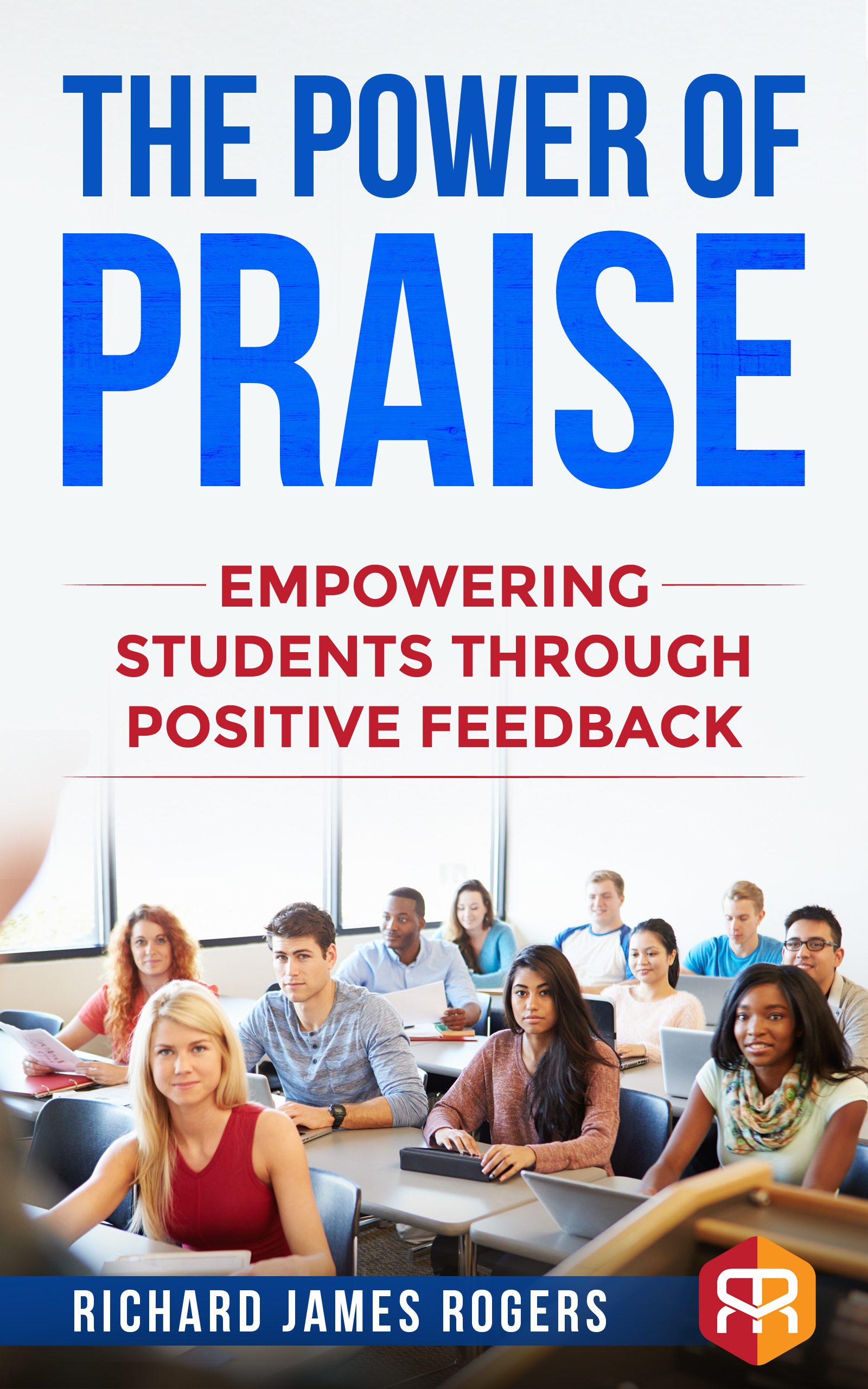
I’m very happy to announce that my second-book, which has (to my shame) been in the pipeline for many years, has finally been published on the Amazon Kindle store. The paperback will be released in mid-September. If you click on the image below, it’ll take you directly to the Amazon sales page.
My new book is split into three sections:
The philosophy of praise (why praise is important and what its effects can be)
The mechanics of praise (how to actually implement the various tactics available)
Ways to accentuate the efficiency of praise (how to ensure that praise and feedback only takes up the time and effort that it needs to)
From the outset I make the point that praise in the form of marking provides acknowledgement for work completed. This is essential, as every student needs to know that their time and effort has been noticed, is being monitored and has been recognized.
The implication of this statement is that quick turn-around of work is necessary so that students understand the reasons behind their feedback, gain empowerment maximally and receive positive reinforcement of the skills, knowledge and concepts that they are currently learning in class.
Teachers (me included) can find it a challenge to provide high-quality feedback in a timely manner, however. This is where praise mechanics and efficiency come into play.
There are a number of techniques that teachers can employ to save time whilst providing excellent feedback. In this new book, you’ll find sections on:
Peer-assessment
Self-assessment
The effective deployment of verbal feedback
Automated assessment – the use of software to test our students
Live marking
Many others
You can purchase my book here if you’d like a good, deep exploration of of a variety of praise-based techniques. As a little teaser for you, however, I’d like to share a particularly powerful technique with you.
‘Diffusive’ and ‘Absorptive’ live – marking
Diffusive live-marking is when the teacher walks around the classroom when the kids are working on a a task, pen-in-hand, and marks student work in real-time (i.e. ‘diffusing’ through the students).
Absorptive live-marking is when the teacher sits at a designated point in the classroom and calls the students to his or her desk. one-at-a-time, and marks work in real-time (i.e. figuratively ‘absorbing’ the students).
Coupled with verbal feedback, both techniques can be incredibly powerful. If you train the students to write “Mr Rogers said that………….(insert feedback here)” in a different color on their work, then you allow the students to process your feedback on a very deep-level, and this builds long-term memory. Obviously, use your name instead of mine!
Eventually, students will remember key mistakes that are repeating in their work and they will act to rectify those (they won’t like writing the same things over and over again).
We welcome you to join the Richard Rogers online community. Like ourFacebook page and follow us on Twitter for daily updates.
Accompanying podcast episode (audio version of this blog post, read by Richard):
Teaching is definitely a stressful job. In fact, a February 2019 study by England’s National Foundation for Education Research found that 20% of teachers feel tense about their job most or all of the time, compared with 13% of those working in similar professions. Additionally, as if that wasn’t startling enough, a recent Organisation for Economic Cooperation and Development (OECD) survey found that teachers in England have one of the highest workloads in the world.
The statistics themselves are worrying enough – that’s one-in-five teachers in England carrying a burden of worry and stress on a regular basis.
As a teacher myself, I have certainly had my fair share of work-related stress over the past 16 years. Some of the problems I encountered were the result of self-sabotage and inexperience, and some were beyond my control.
Whatever the causes of your stress are, there are effective ways to deal with them and I’d like to share what I’ve found to be the best ways to do just that.
Stress Tip #1 – When your lessons are not going well
This is often a result of poor or rushed lesson-planning and is normally avoidable. I have fallen into this trap many times in my career – using my ‘free periods’ to write rough lesson plans or spending a few minutes before a lesson to think about what I’ll actually do.
Sometimes this works. Sometimes it causes problems.
Take the time to spend a whole morning or afternoon each week to plan a week’s worth of lessons (I use my Sunday mornings for it). Get a good teacher’s planner and think about:
Where the kids will sit at different points during the lesson. Will they need their books at all times? Do you need a seating plan so that ‘problem’ students are not sat next to each other?
Breaking up the lesson into ‘chunks’ – variety is key if you want your lessons to be engaging and ‘fun’. Read myblog post about learning gamesyou can use here.
Syllabus content you will cover – with some classes you’ll have a lot of content to get through in a short space of time. Get your PowerPoints, presentations, quizzes, and other resources ready well in-advance of these kinds of lessons. You might also want to read my blog post aboutkeeping up with your teaching schedule here.
Stress Tip #2 – When you have too much marking to do
Marking tends to come in ‘waves’ in teaching: There are times of the academic year when you’ve just got normal, regular homework and classwork to mark; and there are times when high-intensity marking hits us like a bolt of lightning. For example:
When a ‘work scrutiny’ comes up and a line-manager wants to see your class notebooks
When you have a load of end-of-unit tests or exam papers to mark
When parents’ evenings/parents’ consultations come up and you need to mark a lot of work so that you have some good points to discuss in the meetings
Marking can be a big-problem for teachers, but again: it’s easily avoidable when a little bit of time is spent planning in-advance:
In your weekly planning, think of peer and self-assessment techniques you can use to quickly deal with homework and classwork. Read myblog post on peer and self-assessment here.
Use the technique of ‘Live Marking’ to keep those notebooks up-to-date. Live-marking is basically when you either call the students to your desk one-at-a-time and mark their work in front of them, or you walk around the classroom with a pen in-hand and mark student notebooks in ‘real time’. Read myblog post about ‘Live-marking’ here.
Take a deep breath and plan your time – if you find yourself with a tonne of exam papers to mark within 48 hours (I’ve been there), then the first thing you must do is sit somewhere quiet and plan your time for an hour. Think about your targets – which papers need to be marked by when? Should some papers be marked before others? Is it possible, or appropriate, to use peer/self-assessment for some exam papers?
Try using stamps and stickers – they’ll save you some writing time
Make sure you’ve got a set of model answers ready for your kids – this will save you writing out the correct answers for the kids by hand in their books (never do that, by the way).
Stress Tip #3: When you’re in trouble with your boss over something
One of the main causes of stress for teachers, I believe, is that we are held to a far-higher professional standard than those in most other professions. As ‘role-models’, we have to be extra careful about:
How we interact with our students and former students
We do need to be mindful of these things on a daily basis, but even then we may make mistakes. If you are called to a meeting with your boss over something, then don’t panic! Take a deep breath and think about your side of the story and the facts of the matter at hand.
In your discussion, focus on:
Solutions to what’s happened (‘How can we solve this?’ should be your mentality).
If you’ve done something wrong, then admit it. Covering something up will only cause more problems later on.
If you feel that you’ve been unfairly treated then speak with a union representative or a lawyer before making any big decisions (e.g. choosing to resign).
I know that this is not a nice subject to talk about, but unfortunately it’s one that does come up. Protect yourself and your reputation, do your best everyday and just let life roll – some things are just beyond our control.
Another thing, by the way, is that absolutely everyone makes mistakes. I know that’s cliched, but it is true. Keep a written record of the mistakes you’ve made in life somewhere, and read over it on a weekly basis at least. When people tell us to ‘learn from our mistakes’, they can sometimes miss the fact that in order to learn from mistakes we have to remember those mistakes. Keeping a record and consistently reading over it is a good way to do this.
Stress tip #4: When student behavior is poor
It takes time and experience to build up our skills as good ‘behavior managers’.
Things to bear in mind are:
‘Boring’ lessons can cause some kids to play up. Try to introduce a variety of activities into your lessons if possible, and be vigilant in watching your students carefully during practical activities, computer-based work and group work.
Praise, when used effectively and with sincerity, can be one of the most powerful behavior management tools out there. Readmy blog post about The Four Rules of Praise here, and take the time to watch my video below:
Good behavior management can only really be achieved with a long-term strategy: effective lesson planning, good use of praise, fair and consistent use of sanctions if necessary and good use of ‘professional intelligence’ to reinforce our students’ sense of self-worth and character. Readmy blog post on Subtle Reinforcement here.
There are many facets to being a good behavior manager, but it basically all comes down to the relationship, or ‘rapport’, that you build with your students. Please read my blog posts onbuilding rapportandbehavior management.
Stress tip #5: When a colleague doesn’t like you (or is causing problems)
When you begin to have a positive effect on your students and you gain a reputation as a ‘good teacher’, you may create some enemies. Some of your colleagues may not like you simply because you are ‘better’ than they are.
You need to be careful in these situations. Here are my tips:
Control your speech at all times when in the presence of your colleagues. Off-the-cuff remarks like “I’m behind with my marking” or “I got totally wasted on Friday night” can be used against you by conniving and jealous colleagues who want to secure your destruction.
Don’t gossip, and don’t associate with gossips. Gossips are notorious for being negative and untrustworthy. Just don’t do it. If you’re asked directly or prompted to gossip about a colleague, for example, you can respond with a “I don’t think I should talk about that” or even a “I don’t like to gossip about people”.
If a colleague is genuinely causing problems for you, then make a record of all interactions with that person (hand-written if necessary). Speak with your line-manager about it and ask for suggestions. It’s much better to tackle this issue in a professional way from the outset, rather than submitting a formal complaint when the problem has gotten out-of-hand.
If appropriate, speak with the colleague you are having issues with. You may wish to ask a third person to attend as a witness. Be polite. Be respectful. Show that you are the mature person in this scenario.
Keep all discussions with colleagues academic in nature. Try not to discuss politics or ‘touchy issues’ in society (e.g. Brexit, 2SLGBT+ rights, third-wave feminism, etc.). We live in a time, unfortunately, in which people can be easily ‘triggered’ by an alternative view you might have that challenges their perception of the world. Feel free to discuss this stuff with close friends or family outside of work, but don’t make the mistake of believing that your colleagues are your friends – they’re not. Your colleagues are the people you work with, and all interactions with them need to be professional in nature. If something is not related to your work or the curriculum, then you don’t need to discuss it. It’s that simple.
Conclusion
Teachers today are more stressed than we have ever been in history. Relax, plan-ahead, deal with issues head-on and don’t worry.
Two books I highly recommend for consistent worriers are given below:
How to Stop Worrying and Start Living’ by Dale Carnegie (click on the image to buy the book):
The Power of Now, by Eckhart Tolle (click on the image to buy the book):
We welcome you to join the Richard Rogers online community. Like ourFacebookpage and follow us onTwitter for daily updates.
My teenage years were brilliant, and one of the reasons for this is that I was involved in so many active clubs and hobbies. I was an army cadet, I did karate and I even tried hockey and acting for a short while.
Me as an Army Cadet, aged 14
The Extra-Curricular Activities I did as a kid shaped my character more than my lessons in school. I can say that with conviction.
In my ECAs I made new and lasting friendships and learnt cool skills (such as how to start a fire with potassium permanganate, and how to disarm an attacker with a pistol).
I still do karate to this day – it gave me self-discipline and the understanding that life can be painful; but instead of crying in a corner like a little wimp I need to man-up and fight back, and persevere through every storm that comes my way.
Yes: karate, and the Army Cadets, really taught me that.
Now, as a teacher, I warmly reflect on my childhood experiences and the enrichment that was brought to me through these extra dimensions in my life. I try, as best as I can, to offer modern and meaningful ECAs to my students in my current practice.
An AMAZING Book!
Why offer an ECA?
There are numerous benefits which compensate for the extra time it takes to run an ECA:
You get to build closer and more meaningful professional relationships with your students, and other students you might not teach
You become ‘that cool teacher‘ who goes the extra mile to run good clubs with the kids
You learn a few surprising things about the kids in your club – such as skills and abilities they have which you didn’t know about before
You will develop new skills along the way (e.g. I currently teach FinTech in one of my ECAs, which is a new area of knowledge that I’m learning about too)
You may change lives, literally. One of my former students 10 years ago attended a German language ECA that I ran. She’d never learnt German before, and absolutely loved the club. I later found out that she did a degree in German at university and now works as a translator here in Thailand.
What kind of ECAs can we offer?
Anything that’s:
Fun
Modern
Useful
Active
Good ECA types include:
Anything involving a sport (e.g. football, hockey, tennis, etc.)
Languages that aren’t offered in the normal curriculum
Anything practical and hands-on (e.g. robotics, cookery, Science experiments, etc.)
Exam and study support
I tend to go with things I’m interested in that will also be fun and useful for my students.
How can we offer ECAs if our skills are limited?
We don’t have to be experts in the things we want to offer as ECAs. In fact, some of the best clubs I’ve run have been dynamic classes in which I learnt new things with the kids.
Running an ECA can even be a good way for us to skill-up as teachers.
Take a club I’m running at the moment, for example: Platform Building and Money Management. Now, I don’t know an awful lot about these subjects, but I’m learning FinTech with the University of Hong Kong and I’m reading books to learn about digital marketing and personal finance. The good news is this – each week, when I learn something new in my studies, I can then pass this on to my students in the ECA.
It’s a great way to help me with my self-discipline in my learning, and it keeps my ECA modern and relevant. The kids love it!
We welcome you to join the Richard Rogers online community. Like ourFacebookpage and follow us onTwitterfor daily updates.
Illustrated byTikumporn Boonchuaylue and Sutthiya Lertyongphati
I was fortunate enough to go to a great university to do my bachelor’s degree, and the lecturers were absolutely brilliant. They cared about their students, fundamentally.
However, I look back with mixed emotions on my overall education as I was growing up.
Primary school – not so good (I’m sorry to say)
Secondary school – brilliant overall (but it was hard at first, especially because I was bullied – but that’s another story for another blog post)
University – loved it, but I found it a real challenge to live on my own and be independent
Online learning with the Open University, and later with HKU – just brilliant. Hard work, but brilliant. If you’ve never done a distance learning course, then now is the best time to start as technology has come a long way with MOOCs and online learning platforms. Check outedXfor amazing online learning courses (very highly recommended, and affordable).
Why were the best, the best?
There’s a number of reasons why some of my educational experiences were better than others – the quality of teaching, the social setting, my personal maturity, etc. Bangor University stands out as being one of the best educational experiences I had, however, because my lecturers always took the time to give me high-quality feedback in a timely manner.
I commend them for that, because that’s not always easy to do.
“An AMAZING book!”
There was that time, for example, when I printed out pictures of molecular models using an old-style Kodak digital photo printer, and glued them onto my assignment. My professor wrote ‘Wow!’ next to the picture with a big, specific explanation of why he liked my essay.
Then there was that time when I and my friend just wanted to sit and chat with another professor in his office. Bangor’s lecturers were like that – approachable and happy to chat with students. I could tell he was busy, but he made us both a cup of tea and chatted with us about a range of different scientific issues. Shortly after the meeting has finished, I got an e-mail from him in which read ‘I really appreciate your enthusiasm, Richard. I really enjoyed our discussion about molecular chirality’.
That was powerful.
Then, there was a time when I had a dispute with the answer to one of my questions on a test – I had named a chemical wrong. I asked my professor about it, and he said he liked my answer because (and then proceeded to tell me why), and then he told me why my answer was wrong.
I left feeling dignified and educated.
Specific praise is powerful praise
Last weekI wrote about the importance of positivity and praise, and the role that sincerity and collectivism plays in that dynamic. Those are important foundational principles, but in order to ‘turbo-charge’ our praise we must make it as specific as possible.
But what does ‘specific’ mean?
I used to think that ‘specific’ praise meant highlighting the positive areas of a student’s work by using subject-specific language.
That’s important, but I’ve since learnt that it’s not enough.
When we praise our students, we need to make it emotional. It needs to stir up thoughts and feelings of achievement and empowerment. To do that, we must acknowledge:
1. The effort that’s gone into the work:
“When I was reading this homework, I could tell that you’d put a lot of time and effort into it, Richard. Well done”
“I really like how you’ve written both the word and symbol equations. That must have taken a lot of time, Well done for having such a good learning attitude”
2. Novel creativity that’s evident: To do this we must give our students the opportunity to be creative, and design tasks which naturally extract creativity from our students.
“You’ve designed the perfect predator here! Just brilliant! I love the sharp teeth and large wings!”
“I love this model of the atom that you’ve build. What a great idea to use different-colored bottle caps to represent the protons and neutrons”
3. The skills used to generate the output: this requires good task-design too, and we must try to capitalize on our students’ interpersonal, problem-solving and critical thinking skills.
“You guys worked together as a great team. John delegated well as a good leader, and I think he made sure that everyone knew what they were doing. Stacey made sure that all of the slides were really clear and presentable, and I know that everyone in the class could read the information properly. And Joe – good use of diagrams to show the processes of crystallization, distillation and filtration”
Oh come on, that’ll take ages
You don’t have to write all of this feedback, and you should only give specific praise if a student has earned it.
Consider delineating your praise in the following ways:
Written comments
Verbally – very memorable and effective
Via e-mail
Through technology such as VLEs and MOOCs
By asking other teachers to also praise the student (collective praise)
Certificates and awards
Assemblies
Merits and points (but make sure the associated reason is made clear to the student)
Phone calls and letters/e-mails to parents
A discussion with a colleague in front of a student (e.g. when waiting in the lunch queue or if a student walks into the staff room or your office)
Showcasing work (e.g. on a noticeboard or just by holding it up to show other students)
Another point of happiness in my childhood was when my karate sensei told my dad, in front of me, that I had a ‘good attitude’. How come I can remember that when it happened 20 years ago? Because it made me feel good.
It made me feel proud.
Emotion goes hand-in-hand with praise, and that’s why all praise must be sincere.
Youth is a time when so many things are happening, both positive and negative. Young people at high school are involved in a range of human-relationship dynamics which involve family, school, friends and the people associated with their hobbies or interests.
Humans are full of energy at this time, and the interconnections between the life of a student both inside and outside of the classroom create opportunities for us to channel this energy positively and:
• Build trust • Use humour within lessons • Create a sense of importance and empowerment in our students • Offer guidance and support to students with difficulties • Create an environment of cooperation and compliance • Encourage our students to formulate their own learning goals • Personalise our lessons
Becky’s story
Becky was an experienced and well-liked teacher of secondary science. She got on very well with her students, and parents would often mention that they appreciated her ‘special attention’ to their children. She was liked by her colleagues, and she enjoyed her work.
One day, her physics student came to school with a broken arm in a plaster cast. Josh, a keen gymnast, mentioned that he had fallen very hard in a training session two days ago. Becky immediately knew that this was golden information for her lesson planning.
In Josh’s next physics lesson, Becky was teaching the class about forces and motion. As Josh entered the class, she presented him with a starter activity revolving around the forces that act upon a gymnast when taking off and landing on a springboard. She also asked Josh how he was doing (and she was sincere in asking). He said he was healing well, and Ms Becky mentioned that “We can use your experience to help the class today, would that be okay?”. Josh said “sure”.
After completing and peer assessing the starter worksheet, Ms Becky asked for Josh to tell the class what had happened to his arm. He gladly told his story, and Ms Becky asked for everyone to clap after he had finished. Using humour and good teaching practice, she said “So using Josh’s story to help you, what do you think one of today’s objectives could be”?
One student mentioned a funny comment about how you should always land on your feet and not on your arm like Josh did, which Ms Becky responded to with a smile and a giggle. After this, and with some prompting from their teacher, some students spoke about the importance of gravity in determining the force upon impact, and the speed of free fall.
At the end of a very interesting and varied lesson, Becky allowed her students the opportunity to sign Josh’s plaster cast, if they hadn’t done so already.
This example demonstrates the power that taking an interest in your students can have on the quality of a lesson.
Let’s examine what Becky did that made this lesson (and her rapport, or relationship with her students, so special):
• Becky used the hobby of her student to generate a lesson activity (the starter worksheet) • Becky shows a sincere care and concern for her student • Becky was genuinely interested in the life of her student outside of the classroom (as she was with all of her students) • Becky uses student experiences and ‘expertise’ to enhance the lesson content (she asks Josh to talk to the class about what had happened) • Becky is tasteful in her humour, and she makes sure that Josh is happy to share his story before she asks him to do so. • Becky rewarded the class for their good work by allowing them a few minutes at the end to sign Josh’s plaster cast. Not only did this subtly reveal her caring and ‘human’ nature, but it also bonded the class together as a whole.
Conclusion
It was the great John Steinbeck himself who said that “And, of course, people are only interested in themselves. If a story is not about the hearer he will not listen. And I here make a rule – a great and lasting story is about everyone or it will not last. The strange and foreign is not interesting – only the deeply personal and familiar”. If you and I are to build positive relationships with our students, then we need to try and make our lessons deeply personal and familiar, and show a genuine interest in our students.
Building rapport begins and ends with showing a sincere, professional attentiveness to our students and if we are to be good classroom managers, then the first thing we must do is establish a good rapport with our kids.
I’ve also made a video to go with this blog post here:
At this time of the year we start thinking about possible ‘New Year’s Resolutions’: things that we resolve to do better next year. Targets we aim to achieve. New goals that we set for ourselves.
I believe that teachers should have a separate set of ‘teacher resolutions’, and I’d like to share mine with you for 2019. Maybe some of my New Year Teacher Promises can become your promises too?
1. Iwillprovide high-quality feedbacktoallofmy students
Feedback is everything in teaching. It is the best way to help students improve. However, do we always give the best feedback we can?
John Hattie knows the power of good feedback:
Ask why we ever set tests; indeed, the best answer to this question is ‘so that we, as teachers, know who we taught well, what they mastered or failed to master, who made larger and smaller gains, and what we may need to re-teach’. Tests are primarily to help teachers to gather formative information about their impact. With this mind frame, the students reap the dividends.
The way I would put it is this: Students need to know WHAT they’ve done wrong and HOW to fix it. They also need to know what they’ve done well, so that they can keep doing that in the future.
I was rather alarmed in 2015 when the son of a family friend brought home this maths homework that had been returned to him from his school:
From this we see that the student had been told which questions were wrong, along with the correct answers, but had not been shown HOW to get those answers.
He hadn’t been shown the mode of operations needed to calculate the areas (the formula you see on the work, consequently, is my annotation as I was tutoring him that day).
The teacher who marked this work was probably very busy, as most teachers are. However, there are a number of well-established methods for showing students how to fix their problems which don’t eat into our free time:
Peer-assessment: providing students with the official worked solutions and allowing them to swap work and make full corrections
Self-assessment: same as peer-assessment except the student marks their own work
Automated assessment: this is when a computer programme marks work for the student. Programmes and websites like Kahoot!, MyMaths, EduCakeand ProProfs are becoming more and more popular because they provide instant feedback and require zero marking time from the teacher.
’Live-marking’: this one is simple. Go around the class whilst the students are doing a task and mark their work in ‘real-time’. Alternatively, call students to your desk one-at-a-time and mark their work in front of them, then-and-there.
Live-marking, the last one I mentioned, is so powerful that I made a whole-video about it here:
There’s no way around the issue of marking – it’s vital. Marking doesn’t always have to be written traditionally by a teacher, but somewhere along the line the feedback needs to be written somewhere – whether that’s on a Google Doc by another student, on a test by the student who took it or on a piece of homework by a teacher.
My first promise is an important one – my students will always receive deep, meaningful feedback. It’s the only way they can improve.
2. IwillcareandIwillshowthatIcare
Caring is possibly the most important thing a teacher does every day. We entered this profession because we care, and when we care we have the following effects on our students:
We raise their self-esteem
We increase their enjoyment of our subject
We remind them of their achievements and character, which builds self-identity and resilience
We can show that we care in very simple ways:
Saying ‘Hi’ and “Good morning’ to our students and having conversations with them: this builds up rapport and shows that we value them and that we have a genuine interest in their well-being
Gathering professional intelligence: remembering our students hobbies, interests and life-events and capitalizing on those in the lesson-planning and assessment process
Being vigilant: remembering the things they’ve done well and immediately addressing and slip-ups and ‘falls’ in attainment. Providing ‘second-chances’ for students to redeem themselves. Following up. Monitoring progress on a regular basis.
3. I will communicate effectively with parents
Parents are our friends, not our enemies. They generally want the best for their children, which is what we want too.
Our parents are our customers, and we have a duty to provide the highest-level of service to them.
When parents feel valued and encouraged to contribute to the life of the school, they can often bring amazing logistical help, resources, ideas and contacts to the school-community
I honestly believe that the full deployment of parents in the teaching profession has the power to make big changes to schools.
Some ways that teachers can build-up good professional relationships with parents are as follows:
E–mail: After any chat or parent’s evening/consultation, e-mail the parent to summarise what was discussed (just like you would with an important business client or customer)
Say ‘Thankyou’: I recently received some beautiful Christmas presents from a number of students and parents. It was a lovely gesture and a lot of thought (and expense) went into those gifts. I had to e-mail my gratitude.
Chat: When we see parents at school or out of school, we should take the time to say ‘hi’. Conversations like these can yield very interesting insights into the ‘home-lives’ of our students and can often provide new information and open new doors.
A good example of the ‘fruits’ of a good chat came to me only last month.
I bumped into a parent in my school’s coffee shop and we had a short conversation. I found out that she worked with a number of scientists in her professional life, and as a result of our conversation she agreed to put one of my CREST Award students in touch with a scientist to act as her mentor.
Who knows where that contact could lead in the future?
Howabout you?
What are your ‘teacher promises’ for 2019? Have my promises inspired you to make some of your own? Feel free to comment in the box below and please share this article!
Happy holidays!
Richard
We welcome you to join the Richard Rogers online community. Like our Facebook page and follow us onTwitterfor daily updates.
I was very excited when I handed my homework to her. I was 16-years-old and a very keen GCSE Science student.
That piece of Chemistry homework took me ages to complete – a good few hours if I remember correctly. I really tried hard to write the displacement reactions neatly and clearly, and in a different colour to the explanations.
I knew my Chemistry teacher would be impressed, and I really wanted to impress her. I think that as a teacher almost two-decades later, I am mindful of the fact that my students look-up to me, and they want to impress me.
That gives me a huge task (I won’t say ‘burden’, because it’s not a burden): the task of being responsible and caring enough to give my students the feedback they deserve, in a timely manner.
I waited weeks and weeks for that Chemistry homework to get back to me. Finally I summoned up enough courage to ask her where it was.
“Oh, I am sorry, Richard. I completely forgot about it. I’ll get it back to you pronto.”
She was honest, and I respected her for that. When it did finally get back to me, she added to the written feedback (which I can’t fully remember, if I’m honest) with “Richard, I could tell that you put a lot of time and effort into that work.”
That felt good.
Juggling many things at once
Looking back on those bright and happy days as a teenager I can now see what my Chemistry teacher was suffering with – she was clearly very busy with a number of different things and my homework was low on her list of priorities at that time.
I don’t blame her or condemn her for that at all.
I’ve found myself in the same situation many times in the past, and it was all because I wasn’t organised. Here are the key mistakes I would make in my first ten years (yes, ten – it was slow learning curve!) of teaching:
I would give homework to different classes on random days each week. So, for example, Year 8 Science would get homework on a Monday one week, then on a Tuesday the week after, then maybe on a Thursday the week after that.
Since I was setting homework on random days each week, I would receive it back randomly too. This would mean that I would have ‘cluster’ days when I would get back, say, four classes of homework in a single day.
The net effect was that I couldn’t mark it as quickly or as effectively as I really wanted to, and on some days I would stay at school very late to mark it all
So, what’s the solution to all of this chaos? Well, today, I can very happily say to you that I no longer have problems with marking and returning homework. In fact, I’m almost astonished to say that it has even become an enjoyable process!
So what are these four strategies? Let’s explore them together now.
Strategy #1: Create and implement a homework setting, marking and returningtimetable
Sounds obvious doesn’t it? It wasn’t obvious to me for a very long time (granted: I am slow at learning certain things!).
Many schools will have a homework ‘timetable’ in place, but this normally only extends to the setting of homework. Even if you follow that timetable, you still need a schedule in place for the marking and returning of that homework.
And that’s another point I must make: if your school has a homework timetable in place, then please follow it! I know I’ve been very relaxed about this at certain points in my career, but I now realize that that strategy didn’t help me or my students: they would find themselves overwhelmed with homework on certain days because their teachers didn’t follow the timetable.
Here is my current setting, marking, receiving and returning timetable:
Feel free to download and enlarge the above picture and share it with colleagues if you wish.
Strategy #2: Use Learning Journals
Learning Journals are a form of ‘recurring’ homework and are very powerful because:
They quickly build routines into your students’ lives
They reinforce the importance of constant revision, reflection and reviewing of work done in class
The are cumulative, and provide a record of the work done by the student to-date
They provide an excellent revision resource prior to exams
Students receive quick, effective feedback
Students can customize the work using their own styles, colours and sequence of revision. They even get to purchase their own ‘special’ notebook for this, making the experience uniquely personal.
So, how do we implement a ‘Learning Journals system’? Here are the steps I suggest:
Students purchase their own ‘special’ notebook. A school notebook can be given to students who can’t afford this/don’t want to buy their own.
Students fill their learning journals with revision notes, past-paper questions, Mind-Maps®, summaries and exam-preparation work. Students do this every week. A page from Pop’s Learning Journal (one of the first students I piloted this technique with about 9 years ago) is given below.
Students bring their Learning Journals to class on an assigned day each week. For this academic year, my IGCSE students bring their Learning Journals to me on a Thursday, and my IBDP kids bring them on a Friday (this spreads-out my marking a bit and matches the kids’ timetables)
Students sign on a big sheet on the wall when they hand-in their Learning Journals (please see below). Please note that the following image is one year old (sorry). I now collect in my journals on a Thursday and Friday, not a Monday like it says in the photo:
I put one and only one post-it note of feedback into each learning journal each week. This keeps my feedback focused on what’s most relevant to the student, and it ensures that I don’t spend too much of my free-time marking piles of work. Please see the example below:
The process repeats itself every week, providing a clear and productive routine for myself and my students
In addition to this, I’ve turned my Learning Journals into a ‘live-marking’ recurring feedback system: I mark them in class, with the students. It means that I lose no free time, and I am able to give one-to-one feedback to each student that is meaningful and specific.
Strategy #3: Live marking
‘Live’ marking is an incredibly powerful feedback technique, but it is rarely used effectively in the teaching profession. However, with just a few tweaks our daily routines, that can change.
I’ve made a quick video that outlines the technique of ‘Live-marking’ below:
I have personally wasted so much of my free time both at school and at home marking student work. Many late nights; many lost weekends. All for nothing.
Well, not completely for nothing – at least now I’ve seen sense and can pass on my experiences to you so that you don’t go through the same pain.
You see, I now know that feedback only works if it is relevant, specific and somewhat emotional. How do we achieve this? – we must mark student work with the students. They have to be involved too.
As soon as I started doing these things, my impact skyrocketed:
Simply walk around the classroom with a colored pen in hand. Tick, flick and mark student work as you walk around.
For larger pieces of work, set the kids on a task and call the students to your desk one at a time. Sit with the student and discuss the work, adding written comments in front of the student along the way. Use praise effectively and remember – praise only works if it is sincere, specific and collective (tell your colleagues and get them to praise the student too).
Use peer-assessment and self-assessment, but don’t do this for everything. Students still need to receive acknowledgement from their teacher.
I’ve written a useful article about peer and self-assessment techniqueshere. Some general advice on giving feedback can be foundhere.
Here’s a video I made about the Four Rules of Praise:
Strategy #4: Self and peer assessment
I first learnt the power of peer assessment back in 2008, when I had just moved to Thailand.
As a keen young teacher with two years of UK teaching experience, I found myself teaching students who were all very keen to do their best. Homework assignments and classwork seemed to come my way on a real-time, live-stream basis, and I soon found myself inundated with lots of work to mark.
At first I tried the traditional methods of using a green or red pen to write lengthy comments on each piece of work. I had learned from my training in Assessment for Learning in the UK that written comments that help the student to improve were much better than a letter grade or a score followed by a ‘Well Done’. I’d learnt about the ‘two stars and wish rule’ where I’d write two positive things about the work and then one item or target for improvement.
These ideas were great in theory, but I found that my weekends became shorter and shorter as I tried to write effective comments on every piece of work that came in. I was spending less and less time doing the hobbies I enjoyed, and I became quite the old grouch.
I finally expressed my concerns in the staff room one day and a colleague of mine said “You should do more peer assessment”. She was right.
I instantly started getting my students to mark their own work, and reflect upon it, and the results were astounding: My weekends became ‘me time’ again, and students seemed to learn better than they would from receiving my comments teh traditional way.
As I continued to develop my skills in assigning proper peer-assessment, I discovered that I was sometimes making some catastrophic errors. I refined my strategy over the years, and came up with this six-step system:
Step 1: Make sure that the work you set has an official mark scheme or set of model answers associated with it. There’s nothing worse than trying to ‘guess’ the best answers along the way as you’re trying to get the kids to assess the work. Make your own mark scheme if necessary, but make sure the answers are clear.
Step 2: When it comes time for the kids to assess the work, ask them to swap their work with someone else in the class. Alternatively, if this doesn’t work for your particular class, then collect the work in and redistribute it.
Peer-assessment saves you time and energy, and is effective
Step 3: Ask each student to get a colored pen ready to mark with. Red and green are good. You may wish to have a set of special ‘marking pens’ somewhere in class that the kids can use whenever they mark each others’ work.
Step 4: Print the official mark scheme and give a copy to each student. This has the advantage of providing a permanent copy for each student to keep, and allows you time to help students as they mark. Projecting the answers onto a screen can also work, but you may find that students cannot see and that you may have to scroll through at a pace that’s not suitable for every student. Printing a copy, or sharing it on the schools VLE so that students can access it via a tablet or laptop, is best.
Step 5: Make it very clear that students should tick the answer if it’s correct, and make full corrections if it is wrong. The mere act of writing out the model answer onto the work being marked will reinforce the concepts into the subconscious mind of the student doing the marking.
Step 6: Let the students give the work back. Collect it in at the end of the lesson so that you can glance through and check that everyone has peer-assessed properly. If anyone hasn’t, then make them do it again.
Once work has been peer-assessed, you can sit down with individual students and have ‘progress conversations’ designed to pin point areas of weakness and highlight areas of strength
You have to be quite organised with this method (e.g. making sure you print the mark schemes on time). However, this will save you loads of time and will definitely help the kids to learn properly.
Self-Assessment
Not surprisingly, self-assessment has similar perks to that of peer-assessment. This great overviewby the University of Sydney advocates for the wide-use of self-assessment with students for the following key reasons:
It encourages student involvement and participation, so it’s great for students who normally find group activities or active class-tasks a little uncomfortable
When used in conjunction with group work it can be a great way to assess one’s personal role and contribution in the group experience and learning process
Academic appraisals aside, I’ve found from my own personal experience that both self and peer-assessment are absolutely invaluable to the modern practitioner. They save you oodles of time as a teacher and students learn so much from each process.
There are a number of different ways that self and peer-assessment can be used in the classroom. My experience has taught me (the hard way!) that the following tasks work really well:
Making corrections to tests and assessments: When any important test or assessment comes up, I don’t think it is appropriate to have students marking these themselves. They’ll get it wrong, even with a mark scheme to use, and will be overly generous on themselves and their peers (unless they’ve been trained for a period of time). However, a great activity is to mark the tests yourself, then give the tests back to the students along with a printed or online mark scheme. The students could then use a coloured pen to make full and detailed corrections to their test papers. You could turn this into an AfL exercise, with students writing down the question numbers they got wrong on the whiteboard, or on an anonymous piece of paper. You could then go through these questions afterwards to clear up common misconceptions. If you run a regular Learning Journals system (as I currently do), then students could write down the questions and the model answers in their Learning Journals. This causes very deep-learning to take place and is great for building long-term memory!
Assessing homework, classwork and regular assignments: A great time-saver for teachers. Just make sure the kids have access to the model answers. Don’t forget to collect the work in too – you need to know that the kids actually did the work you asked them to do.
Past-papers: Exam-level students really need to become familiar with the official mark schemes provided by exam boards. They need to become comfortable with key vocabulary, language and command terms. Provide exam-level students with regular past-papers to do as homework. Provide mark schemes too, so that they can self and peer-assess their work in class later. For older students (e.g. ‘AS’ – Level, SAT and IBDP learners) I’ll sometimes give them past papers and mark schemes to take home. Their task is to complete the past-papers under timed conditions and mark them using the mark schemes. The student then hands me the papers completed and marked (this is essential – I need to know that they have completed the assignment). I then check the papers for common misconceptions and target those in class.
Technological means: There a number of ways in which technology can assist in the peer and self-assessment process. Google forms are great; as are online quizzes provided by trusted third parties (e.g. BBC Bitesize and MyiMaths) and online quizzes that teachers can build by themselves (e.g. Quizlets). Make use of these and others (e.g. Kahoot– great for getting kids to use their mobile devices), as they are really interactive and can offer a nice break from traditional methods.
Stategy #5: Make use of ‘Intangibles’
Intangibles are those pieces of work which aren’t really marked, but are still really important. They count as homework, but they save you time because no feedback (or only limited feedback) is needed.
Intangibles include:
Revising for tests and quizzes
‘Reading ahead’ prior to starting a new topic
Completing a group presentation using software like Google® Slides (presumably, the kids would stand-up and present the presentation in class, allowing you to give real-time feedback verbally to them, in the moment)
Automated systems, such as Educake, MyMaths and Lexia. Computer programmes like these assess the work for the students, saving you time. You may, however, wish to follow-up by keeping records and sharing some verbal feedback with your students.
Conclusion
Make homework a powerful and enjoyable process of providing high-quality feedback and learning opportunities for your students. Implement the following strategies today!:
Create a homework marking, setting, receiving and returning timetable for yourself, and stick to it!
Create a Learning Journals system – this will build routines and get your students into the habit of reviewing, customizing and summarizing their work on a regular basis
Try ‘Live-marking’: it’s such a powerful technique and it saves you so much time!
Use peer-assessment and self-assessment – why mark things yourself if the students can do it (and they’ll learn more from the process)?
Make use of intangibles, but don’t overuse them
We welcome you to join the Richard James Rogers online community! Join us on Facebook and Twitter for regular updates, giveaways of Richard’s books, special offers, upcoming events and news.
Student happiness and motivation are so vitally important that without them, kids simply won’t want to learn.
If kids don’t want to learn, then they won’t learn. It’s that simple.
I remember reaching a point in my ‘A’ – Level studies at 17-years-old when I just didn’t perform well in Chemistry class. I was convinced that the teacher didn’t ‘like’ me, and her brutal critiques (like the time when I broke a beaker by heating it up directly with a Bunsen Burner), were enough to make me feel dejected and disinterested.
“Are you thick?” she said, as the glass bottom of the beaker smashed.
Now I can respond: “No, you were the thick one. You didn’t demonstrate the method before we all got to work on the practical. You just gave us the sheet and told us to get on with it, whilst you did some marking or something. We also didn’t receive enough practical training in high school in general. You’re lucky that nobody got hurt, because then you would have been in serious trouble.”
“An AMAZING book!”
Phew. That’s given me some closure after all these years. I can say those words with conviction today: I’m a chemistry teacher.
Keeping students motivated and ‘on your side’ is a multi-faceted, complex and full-time job in itself. However, it’s a lot of fun and it pays a lot of dividends: students get better grades and are better prepared for life at the end of their time at school.
I’ve made a video on the subject matter here:
This article plus the above video compliment each other well and will provide you with an array of powerful techniques to keep your students’ focus, well: focused!
Don’t let your students hold grudges against you for years because of silly little behavioral mistakes on your part. Let’s learn how to keep our students determined, focused and motivated!
Tip #1: Greet your students, and greet them with sincerity
Our students are human and, as humans, they require emotional connections in order to feel that they ‘matter’; in order to feel that they ‘belong’ to something.
The simple technique of just saying ‘Hello’, ‘Good morning’ and ‘How are you?’ to students who we see at school can absolutely work wonders for their motivation. When we’re on duty, as we’re walking around corridors or even on our way out of the building at the end of a school day: a quick conversation with a student can really show that we genuinely care about them.
And that’s really what student motivation all boils down to: showing kids that we really, truly care about them. When students know that someone in this world cares about them, they feel empowered and validated. We can then use that self-empowerment to get our students to push themselves onwards and upwards to better and greater things.
Tip #2: Notice sadness, sickness or ‘out of character’ behaviour
When you’ve known your students for a short while, it becomes easy to notice a sad face or quiet disposition when normally there would happiness and light.
In these situations, walk over to the student or ask them to stay behind for a minute or so. Ask the student:
“Is everything okay?”
“I notice you’re a little sad today, is there anything I can help with?”
Reassure your students that you’re here for them and that they can talk to you if they ever feel the need to do so.
Our kids bring all kinds of emotional baggage to school to with them. A sullen or grim-looking face could have been caused by any one of a myriad of different things: a conflict at home, an argument with a friend at school, a detention from another teacher or even a remark that was taken the wrong way.
Sometimes all our kids need is a good listener to offload their problems to. That can be the conversation that literally turns a child from depressed and stressed to empowered and happy.
Don’t forget to refer students to a school counselor to take it to the next level if the student reveals that something serious is causing the sadness that he or she is facing. Never guarantee confidentiality – always make students aware that if you feel that they need extra help, then you may have to talk with a senior teacher or someone else in the school community.
Don’t ignore sickness too, and wish for your students to ‘get well soon’. Ask about sports injuries if you notice any – a quick conversation can reveal information about a student that you never knew before and can help you to build up a good professional relationship.
Tip #3: Use professional intelligence
It is possible for a teacher to motivate his or her students so much that they areconstantly driven to succeed. This is a life-changing process.
We can only do this, however, if we get to know our students really, really, really well!
I’ve written about Professional Intelligence a lot in thepast, so hopefully you’ve already got your notebook set up! ;-D
To cut the explanation short: you should get a notebook and keep all non-confidential information about each student you teach in there. Write down their dreams, aspirations, hobbies, ECAs, talents and significant events that have occurred, or that are coming up in their lives.
The short conversations I mentioned earlier can provide you with lots and lots of useful professional intelligence.
This information can then be used to generate good professional rapport – the key cornerstone of all great teaching. Kids always learn most effectively when they like and respect their teachers. There’s only one way to get your kids to like and respect you – build up a good rapport with them.
Use your professional intelligence to:
Strike up conversations with your new students during lessons when activities are happening or even at impromptu times such as when you’re on duty or walking around school. This will show that you’re interested in their wellbeing and that you remember what they’ve said. Kids and young adults love being listened to and, deep-down, they all want to recognised and admired for their skills and abilities.
Inform your lesson planning by dividing the class into skills groups for activities, or even link the hobbies and interests of your kids to the content.
Speak with students when they slip up or fall behind. I remember once having a one-to-one conversation with a 17 yr old boy who wanted to be a restaurant manager one day. His attitude and focus had been slipping in class, so I had a one-to-one chat with him. I reminded him of the dream and goal he once told me – that he wanted to be a restaurant manager. The effect was profound and deep, and he quickly put himself back on track.
Tip #4: Give regular, positive, genuine feedback
Praise is one of the most powerful motivational techniques out there, but only if it’s implemented properly.
Here are the ‘Four Rules of Praise’ that every teacher needs to know:
Rule #1: Praise must be sincere
If you don’t mean it, then don’t say it. Kids are not easily tricked. Praise is only ever effective when the teacher saying the nice words of encouragement truly means it.
Rule #2: Praise must be specific
Does the student know exactly why they’ve done a great job? Does the student know what they did well?
Be specific. Here are some examples:
“Well done, John, for drawing your diagrams with a ruler. They look really neat and tidy, and I can tell that you’ve put time and effort into this work. I am very pleased. Keep it up”
“I’m so pleased with the excellent progress you have made this term, Rosie! Just look at these results: You’ve gone from a level 5 in test 1, then to a level 6 and now you’re working at a level 7. That’s very impressive, Thank you for your hard work and commitment”
Rule #3: Praise must be recorded and remembered by the teacher
Try keeping a professional intelligence journal.
I’ve written about the power of this techniquebefore, but I’ll go through the process again for clarity.
Basically, at the start of every academic year you should purchase a new notebook. Make sure there are enough pages in it for every student. Every student gets a page.
On each page write down and record any significant interactions with the student. Record their birthdays, hobbies they have, times when they were praised, significant achievements in extra-curricular activities, etc.
Once this information has been recorded, it can be effectively reinforced (pleasesee my post on ‘subtle reinforcement‘ for more info about this powerful technique).
Rule #4: Reinforce the praise at significant points in the future
Praise must be collective if it is to be truly effective. When a student does a great piece of work, tell your colleagues and your line manager. Ask them to reinforce your praise by giving their own praise to the student.
Reinforcement should also be self-driven – remind your students of previous achievements in order to empower their momentum.
“I remember the excellent Chemistry student who built the atomic structure model in Term 1. She said ‘I’ll find a way to suspend the protons in the middle’. Jessica, you’ve already shown me what a hard-working, committed student you are. This is your moment to shine once again. Put your best effort into this, I believe in you. I know you can do this!”
#5: Recognize wider achievements
Our students are engaged in a wide-range of activities that generally go beyond the scope of what we teach them in class.
We must learn to recognize the achievements of every student, whatever the achievement may be (yet another reason to gather Professional Intelligence).
I recently had a conversation with one of my students on the corridor one break-time. I don’t actually teach her, but I learned that she had recently been accepted onto a national symphony orchestra because her musical talent was so high.
I congratulated her on the corridor and the effect on her disposition was amazing. She was thrilled that news of her achievement was widely known in the school community, and she talked to me about her future plans to make a career out of her musical composition and performance.
I told her to “Go for it, all the way”.
That conversation may have acted as one more beacon of guiding light, urging her on to reach her goals and achieve her dreams.
That’s inspirational.
Tip #6: Monitor, track and recognise progress
We all need to know where our students are at, and where they are going.
I personally keep a spreadsheet of all of my kids’ grades on end-of-unit tests. I use this spreadsheet to take action in the following ways:
Notice any drop in performance at the earliest instance and intervene with one-to-one conversations. This tells the students that I’m ‘on their case’ and that I simply will not allow or accept negative performance (i.e. going down in grades).
Praise and make a fuss out of achievements, such as when students go up a grade in subsequent tests
Most teachers collect data, but few teachers positively act on that data. When we are mindful of which students are rising and which students are falling, we can intervene quickly and literally change their lives.
I’ve seen many students over the years come into IBDP Chemistry having never learnt chemistry before, and then coming out with level 7s (the highest level possible) in end-of-unit tests. I had one student last year who came into IGCSE Chemistry year two having never learnt any chemistry before. After one year of my help, using the techniques I’ve mentioned today (and especially this idea of using data intelligence), she pushed herself to achieve a grade A*: a truly phenomenal achievement by any pedagogical measure.
It’s not a miracle when something like this happens – it’s been carefully engineered and crafted by a teacher who knows their students and who is relentless in taking massive action on a daily basis.
Tip #7: Talk with parents
Parents can be great allies in our fight to keep students motivated and driven, but only if we communicate with them on a regular basis.
I’ve written a separate blog post about working with parentshereand I would strongly encourage you to read it if you feel that this is an area in which you could develop further.
Tip #8: Praise must be collective in order to be effective
I’ve kind of covered this already, but I’m repeating it in order to stress its importance.
Most teachers are good are dishing out praise.
Some teachers are good at dishing out genuine, meaningful praise that actually has a positive psychological effect on the student.
Very few teachers are good at sharing meaningful praise with colleagues so that those colleagues can also praise the student and reinforce the empowerment you’ve created.
Be mindful of the power of the collective – when a number of different voices are providing positive, meaningful and sincere praise for the same action or achievement, then that turns student self-motivation into drive: a life-changing personality trait.
Tip #9: Use points and rewards
These work with kids at any age.
If your school doesn’t have a points or rewards system in place, then you can invent your own or even use an online system such asClass Dojo(highly recommended)
Tip #10: Love what you teach
I hope this is an obvious one.
If me and you walk into work sad, tired or fed-up, then you can guarantee that our students will pick-up on that (and emulate it).
Whatever issues we have going on in our lives, our students deserve our highest level of passion and energy, even if we’ve got to fake it on certain days.
Building up subject-knowledge can be a great way to become more passionate about the content we are teaching, along with learning new techniques and skills.
I hope you can see my level of enjoyment in this short clip of me teaching my students in China:
Energy is infectious, so make sure you have lots of it!
Thank you to all of my regular readers and followers for your kind and continuing support – I love you all!
Richard
We welcome you to join the Richard James Rogers online community! Join us on Facebook and Twitter for regular updates, giveaways of Richard’s books, special offers, upcoming events and news.
It’s a warm mid-summer day in muddy Swynnerton, England. I’m at an army base for Summer Camp. I’m a 15-year-old army cadet.
The Territorial Army had some of their boys in to inspire and help us. They needed a cadet to help with the radio and signals work during night exercises. I can’t remember if I volunteered or if I was chosen, but I very quickly found myself listening in on the radio transmissions, recording the call signs and messages in the log book and taking action where needed to pass on vital information about group movements and conditions, along with any emergencies.
I loved it. It was ace!
I just immersed myself in the process and did the best job I could. I was told what to do by the T.A. lads and I just got on with it.
Later that night, they all shook my hand and told me I had done a good job.
The next day came and I was approached by my home platoon sergeant. I can still remember her words, two decades later: “Corporal Rogers I’m hearing brilliant things about you from the T.A. Keep it up! You’re doing Flint Platoon proud”.
That felt amazing, and it spurred me on to work harder.
“An AMAZING Book!”
Praise only works when it is used properly
The Army Cadets were an excellent model of good teaching. To be honest, I really think they turned my life around. I went from a shy, weak and rather timid boy to a confident and rather ambitious young man in the space of about three years, thanks to their help.
I’m going to summarise what I’ve found to be the very best ways to use praise to empower and push our students forward. They worked for me when I was being taught as a kid, and they’ve worked for thousands of students that I’ve helped in my twelve years as a high school teacher.
Rule #1: Praise must be sincere
If you don’t mean it, then don’t say it. Kids are not easily tricked. Praise is only ever effective when the teacher saying the nice words of encouragement truly means it.
Rule #2: Praise must be specific
Does the student know exactly why they’ve done a great job? Does the student know what they did well?
Be specific. Here are some examples:
“Well done, John, for drawing your diagrams with a ruler. They look really neat and tidy, and I can tell that you’ve put time and effort into this work. I am very pleased. Keep it up”
“I’m so pleased with the excellent progress you have made this term, Rosie! Just look at these results: You’ve gone from a level 5 in test 1, then to a level 6 and now you’re working at a level 7. That’s very impressive, Thank you for your hard work and commitment”
Rule #3: Praise must be recorded and remembered by the teacher
Try keeping a professional intelligence journal.
I’ve written about the power of this techniquebefore, but I’ll go through the process again for clarity.
Basically, at the start of every academic year you should purchase a new notebook. Make sure there are enough pages in it for every student. Every student gets a page.
On each page write down and record any significant interactions with the student. Record their birthdays, hobbies they have, times when they were praised, significant achievements in extra-curricular activities, etc.
Once this information has been recorded, it can be effectively reinforced (please see my post on ‘subtle reinforcement‘ for more info about this powerful technique).
Rule #4: Reinforce the praise at significant points in the future
Did you notice that my platoon sergeant praised me the next day? That was powerful, because she wasn’t actually there when I did the signals work, but someone had spoken with her.
Praise must be collective if it is to be truly effective. When a student does a great piece of work, tell your colleagues and your line manager. Ask them to reinforce your praise by giving their own praise to the student.
Richard’s second book
Reinforcement should also be self-driven – remind your students of previous achievements in order to empower their momentum.
“I remember the excellent Chemistry student who built the atomic structure model in Term 1. She said ‘I’ll find a way to suspend the protons in the middle’. Jessica, you’ve already shown me what a hard-working, committed student you are. This is your moment to shine once again. Put your best effort into this, I believe in you. I know you can do this!”
We welcome you to join the Richard Rogers online community. Like ourFacebook page and follow us on Twitter for daily updates.