What is The Best Way to Mark Student Work?

By Richard James Rogers, author of the award-winning book: The Quick Guide to Classroom Management

Accompanying video:

There are many ways in which teachers provide feedback on written work.
Some methods work well, but may involve a huge time-investment on the part of the teacher. Other methods provide deep, rich acknowledgement and constructive advice, whilst eating into ZERO hours of teacher free-time.

So, is there a ‘sliding scale’ of assessment methods that pitch effectiveness against inconvenience? Is there one method (or a select few) that is the ‘best’ overall?

In this blog post, I aim to answer these questions.


Traditional written feedback (taking the work home and scribbling penned comments all over it)


I’ve tried this method to death, and I almost died whilst trying! I used to be the ‘super-keen’ (but stupid) teacher who took piles of books and assignments home with me (at one point via train and taxi – a nightmare), and then spent hours and hours writing detailed comments on student work.

The results of this exercise in self-punishment (because that is exactly what it was) were the best illustration I could receive of this method’s ineffectiveness:

  • I couldn’t keep up: I was burning the midnight candle at both ends. I should have been relaxing at home, or pursuing my hobbies and interests, or spending quality time with my family. In contrast, I was miserable, tired and inactive on the hobby-front.
  • When the students got their books back, they read the comments, but they rarely acted on them (a crucial point).
  • I was carrying very heavy bags of books home: often not having time to mark them all, and then bringing those unmarked books back to school the next day (or a few days later). It was insanity.

In conclusion, traditional pen-and-paper marking takes a very long time, isn’t particularly effective, and can be very stressful. Another point of frustration regarding the issue of marking is that research on the topic (not surprisingly, in my honest opinion), is inconclusive. The so-called experts who spout their musings from ivory towers are still not sure about what makes marking effective. That, at least, was the main finding of the Education Endowment Foundation’s recent review on written marking.

The experts are not teaching in the classrooms on a daily basis like me, and most of my readers. The EEF might not know what makes marking effective, but I and other experienced educators do.

Peer and Self-Assessment

This saves the teacher tons of time (because the marking is done in class), but students will nearly always pick up misconceptions along the way and the work may need to be double-checked by the teacher afterwards anyway.

I use peer and self-assessment a lot, and to make my life easier I always provide a written mark scheme for each student to use. I also encourage students to come to my desk and ask for clarity if they are not sure how many marks to award for a response.

Absorptive live-marking: Calling the students to your desk, one at a
time and marking the work in front of each student

Mark the work WITH each student

Where possible, this is best form of marking/feedback to use. It ticks so many boxes:


• It doesn’t eat into your free-time, because you can do it whilst the students are completing a task in class
• You can provide verbal feedback and written feedback at the same time
• You can ask the students to write down what you said afterwards (saving you further time, and forcing the students to process your feedback)
• It’s a great rapport-builder


You can read more about live marking
here.

A final note on Automated Assessment: Using software for assessment purposes

Automated assessment systems are still in their infancy, but do work really well with multiple choice questions and any test involving a sequence of steps that need to be completed (e.g. the Google Certified Educator exam, or a Data Science Jupyter Notebooks assessment).

I’ve written a detailed blog post comparing the benefits and disadvantages of both peer and self-assessment here.

Automated systems should form a part of our everyday marking strategy, as they save us time and allow rapid (often instantaneous) feedback to occur.

Automated systems will get better as we enter the 2020s (a decade in which, I believe, teaching will become almost completely computerized). We are told to embrace technology as teachers, but most of us do not consider the possibility that AI, robotics, edtech software and surveillance systems may one day replace us.

You don’t have to pay a surveillance system a salary. A software program only requires a subscription fee and updates to run properly. A robot does exactly what it’s told to do: no water cooler gossip at break time, no risk of sexual harassment, no inefficiency in completing daily duties. All of these advantages make the automation of teaching a lucrative and tempting prospect for governments and astute entrepreneurs.

My message to teachers is this: Use automated assessment, but recognize the need to skill-up fast. When teaching becomes fully automated, you want to be the person designing the edtech software, or facilitating it’s deployment. You don’t want to be the person who is replaced by tech because you don’t have the skills to adapt.

714symbol
richard-rogers-online

We welcome you to join the Richard Rogers online community. Like our Facebook page and follow us on Twitter for daily updates.

desrypt define delineate

Good Teachers Are Also Good Students

An article by Richard James Rogers (Author of The Quick Guide to Classroom Management)

Accompanying video:

I have always loved mathematics, but I’ve not always been ‘good’ at maths. I got a grade A for GCSE Mathematics when I was 16 years old (a grade I worked really, really hard for) but I struggled with mathematics at ‘AS’ and ‘A’ – Level (the UK’s pre-university qualifications). 

img_0413
“An AMAZING Book!”

It just so happened that mathematics wasn’t a subject I needed as a prerequisite for my university course anyway. So, in a sense, I committed the cardinal sin of thinking that it ‘didn’t matter’. I was planning to study molecular biology at university, and my admissions tutors were mainly interested in my biology and chemistry grades.

3.1-01

I achieved my goal of going to uni and doing my PGCE in order to become a fully qualified Science teacher in 2006. I was happy for several years, but my failure to complete my mathematics education at school kept gnawing at me like an annoying itch. I needed to do something about it. 

I decided to complete the Certificate in Mathematics course with the Open University in 2009, after three years of being a full-time science teacher. This course covered everything in my ‘A’-Level syllabus with some extra, university-level topics thrown in. It was challenging and offered me just what I needed: closure. As a distance-learning course, it also offered me the chance to study and work as a teacher at the same time. 

2-01

As I started studying the course and handing in assignments (which had to be snail mailed to the UK  – I was living in Thailand at the time), I began to realise how much I had become disconnected from the student experience as a teacher. It had been around three years since I had ever studied anything seriously, and this mathematics course was teaching me how difficult it was to:

  • Meet deadlines
  • Seek help when in doubt
  • Have the self-discipline needed to study at a regular time-slot each day

These skills were, of course, things I had to do whilst completing my degree course and schooling earlier in life, but it had been a few years since I had been immersed in serious study like this. I was slowly losing empathy for my students: that was until this course gave me a wake-up call. 

Another big thing I took from this experience was just how stressful it can be to prepare for a difficult exam (and to complete it). I had to fly to the UK to take the end of course mathematics exam (a three hour beast), and along with the intense revision that came in the few days running up to the exam I had the misfortune of not sleeping so well the night before the big day. And then, once sat down and actually completing the paper, three hours felt like it went by in an instant.

img_0482

I guess I’m trying to make a number of points in this trip down Memory Lane – namely that by immersing ourselves in the ‘student experience’ we can, as teachers:

  • Regain, or enhance, our true understanding of just how many hurdles await our students on their race to the exam finish-line.
  • Learn new skills and concepts that can be applied to our roles as classroom managers, leaders and ‘purveyors’ of specialist knowledge.
  • Build self-discipline, and pass on the lessons learned to our students in our roles as mentors, homeroom teachers, form tutors and coaches.

One final point to stress is that, whilst we can study almost any subject we want via online platforms like EdX and Coursera these days, it’s also important that we take the time to thoroughly reflect on a regular basis. Keeping a journal of things we’ve done well, and things we messed up, can be a great way to have a written record to read over when we want to celebrate successes and remind ourselves of lessons we have learned on our journeys as educators. This video I made a few years ago goes into this in more detail:

IMG_5938

We welcome you to join the Richard James Rogers online community! Join us on Facebook and Twitter for regular updates, giveaways of Richard’s books, special offers, upcoming events and news. 

richard-rogers-online

Online Learning: A Risk-Assessment List for Teachers

An article by Richard James Rogers (Author of The Quick Guide to Classroom Management, The Power of Praise: Empowering Students Through Positive Feedback and 100 Awesome Online Learning Apps)

Accompanying video:

Teaching online can be a very productive and worthwhile experience for both the teachers and students involved. However, at this time of widespread school closures due to COVID19, many teachers have had to quickly adapt their skills to teaching online without full knowledge of the heightened risks involved. 

This blog post aims to educate teachers everywhere about the things we can do to protect ourselves when teaching online. I believe that this list is so important that I’ve included it in my upcoming book for teachers: 100 Awesome Online Learning Apps (Release date: 8th April 2020 on Amazon globally). 

100 Awesome Final Cover
Available on Amazon from 8th April 2020 onwards

‘The List’: What do we need to be aware of? 

  1. Anything we say or do online can be recorded, stored, edited and forwarded without our knowledge. Google Hangouts Meets, for example, can be set to autonomously record your meetings and auto-generate a transcript of what was spoken and by whom. We must keep every interaction with our students professional and clean. The same high standards of personal conduct that are expected of us in the classroom apply even more when we are teaching online.
  2. Know when your camera and microphone are switched on. When you start doing video conferencing for the first time, you might inadvertently set your students on a task after a live stream video briefing and then proceed to make a coffee; yawn and stretch in front of the camera; or even chat casually about how messed-up life is with your spouse who’s also working from home. Be careful. This is a very easy trap to fall into (I’ve come close to doing this myself on several occasions!). Make sure your camera AND MICROPHONE are switched off when you no longer need to engage with your students in real-time. In addition, be equally aware of video conferencing apps that can auto-generate captions. If you switch your camera off, but fail to switch off your microphone, then that next YouTube video that contains expletives and blares out of your mobile phone will not only be audible to your students, but captions may even appear on their screens!
  3. Parents will watch you teach, so be prepared for that. In my experience, many students like to switch off their cameras towards the beginning of a lesson and, unbeknownst to you, a parent could be watching. This places us, as teachers, under even greater pressure to deliver high-quality lessons than when we are snug and comfortable in our respective classrooms. Be professional and keep standards high. If we aim to be clear, caring and professional, then our students and their parents will respect and appreciate our efforts all the more for it.
  4. Be aware of chat features that are built into apps. These can contain casual emojis that one can choose to use; but we must be careful not to chat casually with any student (even by adding emojis to our messages). Keep all communication conducted through integrated chat as professional as you would in the classroom. I expand on this advice in a separate blog post (How Should Teachers Behave on Social Media?). This section is well-worth a read if you want to see some real examples of teachers who lost everything because of their lack of alertness to this point!
  5. If you are not sure about an app’s appropriateness for use, then check with your school’s Senior Leadership Team or your line manager. Some schools like to keep all their prescribed online learning apps under the control of their domain (e.g. schools that use Google Classroom and Gmail may prefer to use Google Hangouts Meets as their video conferencing system, as opposed to Zoom). A great story that illustrates this point is a slight blunder that a former colleague of mine made several years ago. Knowing that Flipgrid was a popular video-exchange system used by many American schools, she recommended it to her colleagues in an upcoming collaborative teacher-training session. However, the school’s head of ICT followed up on that training session by e-mailing all the secondary teachers to tell them not to use Flipgrid – because it wasn’t a system under direct control of the school.
  6. Check student well-being on a regular basis. When students work from home they can feel lonely, extremely bored and anxious. At this very moment, for example, as I write this prose; the novel coronavirus pandemic has snared much of the world’s population with fear and confusion. This fear and confusion is certainly being felt to varying degrees by many of the students I currently teach. Check that your students are having regular breaks and are sticking to a routine. E-mail parents of the students you are responsible for to find out how things are going. Recommend any tips you can for working from home productively and maintaining a personal sense of happiness and wellness. Share any tips that your school counselor or Student Welfare Officer sends out. When interacting on a video-call, check how your students look and feel. Are they dressed properly? Are they tired or stressed-out? Are there any student-wellbeing issues that come to your attention? Is the technology working correctly for your students?
  7. Effective online teaching requires effective technology. This can be a challenge when using old hardware or software (or both) and when internet connections are slow. We must adapt: no matter what it takes. Set work via e-mail if video conferencing is not an option. Experiment with using the apps listed in my book (100 Awesome Online Learning Apps) on your phone if you don’t have a tablet or notebook/laptop. Figure out how your device’s integrated microphone works if you don’t have a headset. Go through the apps in this book that seem appealing and test the efficiency of each when setting tasks through the technology that’s available to you. Check-up on your students regularly – do they have the technology required to access and complete the tasks you are setting?

IMG_5938

We welcome you to join the Richard James Rogers online community! Join us on Facebook and Twitter for regular updates, giveaways of Richard’s books, special offers, upcoming events and news. 

richard-rogers-online

100 Awesome Online Learning Apps (Release date: 8th April on Amazon Globally)

Release date: Wednesday 8th April 2020 on Amazon Globally [ISBN 979-8629490937]

Great news!: My GAME-CHANGING book, 100 Awesome Online Learning Apps, is now LIVE on Amazon. Copies can be ordered here: https://www.amazon.com/dp/B086PSMYRN/

The book covers:

1. Not-so-obvious things to be aware of when doing online learning
2. A big list of 100 Awesome Apps with suggestions for their use in online learning

100 Awesome Final Cover

Book description

2020 marked a definitive year in the world of teaching. For the first time in history, teachers and schools all around the world were forced to quickly apply their skills to online learning as a result of widespread school closures in the wake of the novel coronavirus pandemic. This book is timely and long-awaited, and meets the needs of educators who are required to deliver high-quality teaching via online apps and platforms. This book takes the reader through 100 tried-and-tested online learning platforms, with suggestions as to how each one could be used to enhance teaching or assessment. As a high-school science teacher and a Google Certified Educator himself, Mr Richard James Rogers has first-hand experience of using each platform and speaks from a wealth of involvement rather than from a lofty and disconnected position in elite academia. This is a practical book for those who want to make a difference in their students’ lives, no matter how volatile local circumstances may be.

About the Author

Richard-James-Rogers.jpg

Richard James Rogers is the globally acclaimed author of The Quick Guide to Classroom Management: 45 Secrets that all High School Students Need to Know. As a Google Certified Educator, he utilizes a wide-variety of educational technology in his day job as an IBDP chemistry teacher at an international school in Bangkok, Thailand. Richard actively writes about all issues related to teaching at his weekly blog: richardjamesrogers.com

IMG_5938

We welcome you to join the Richard James Rogers online community! Join us on Facebook and Twitter for regular updates, giveaways of Richard’s books, special offers, upcoming events and news. 

richard-rogers-online


My Top Three Tips for Teachers

An article by Richard James Rogers (Bestselling author of The Quick Guide to Classroom Management and The Power of Praise: Empowering Students Through Positive Feedback).

Accompanying Video:

I like it when colleagues share golden nuggets of hard-earned information: things that took a long time to figure out. Things that really work and are easy to implement.

If you could list only three things that would maximize a teacher’s impact in the classroom, then what would those three things be? 

The aim of today’s blog post is for me to share my three top tips with the whole world – in the hope that those reading this will implement my suggestions. 

The Power of Praise
“Simply Brilliant!” – Readers’ Favorite

So, without further-a-do and without a lengthy CPD lesson plan that would be impossible to implement in real-life, let’s take a deep-dive into some easy-to-implement strategies that offer maximum return-on-investment.

img_0533

Top Tip Number 1: Get up early!

Getting up and out of bed well-before school starts is a habit that has paid me massive dividends in my career as a high-school teacher. Getting up early allows me to:

  1. Read over my lesson plans for the day ahead.
  2. Take my time in the morning and not rush, which puts me in a good mood.
  3. Have breakfast and some coffee – helping me to be biochemically and physiologically ready for the day ahead (a subject matter which is not discussed enough in the teaching profession, in my personal opinion).
  4. Get clear about any meetings or events I have to attend.
  5. Do a little bit of exercise – giving me a good energy boost and a feeling of accomplishment before my day even starts!
  6. Read over any topics I am unfamiliar with – giving me the confidence I need to deliver all of the content I need to.
  7. Leave home on-time, and get to school on time.

Getting up early is a really basic skill but few adults ever really master it. I must admit that for me personally it took years to get into a good ‘waking-up routine’. Once I had built-up momentum, however (through tremendous and painful self-discipline), the benefits came quickly. I was in a better mood at the start of each day and my lesson delivery improved dramatically. 

2-01

Top Tip Number 2: Plan lessons well in-advance

Time invested in lesson-planning always pays dividends. By waking up early on a Sunday morning to plan my week-ahead, I find that I can get really clear about:

  1. The topics I’ll be covering.
  2. The activities I need to do.
  3. Any resources that I need to upload to my school’s virtual learning environment (Google Classroom, in my case).
  4. The logistics of each lesson (where students will sit, where they will move during activities, etc.).
  5. Any homework I need to set and collect in.
  6. When I’m going to mark work.
  7. Any meetings or events I need to attend in the coming week.
  8. Any reading-ahead that I need to do.
  9. Any printing that I need to do.

I don’t believe in planning lesson-by-lesson too far into the future: plans may change as time goes by (e.g. I may get through more material than planned on any particular lesson). However, I believe that a week’s worth of planning, in advance, is highly appropriate and beneficial. 

3.1-01

Top Tip Number 3: Use ‘Live-Marking’

‘Live-Marking’ is basically a way of providing feedback to students in real-time (saving you a ton of after-school and weekend marking). There are two main live-marking strategies:

Strategy 1: Diffusive Live-Marking

This is really simple:

  1. Set a task for your students to complete (it could be a Google Slides presentation, a worksheet to complete, some questions from their textbook to do, etc.)
  2. When a few minutes have passed, ‘diffuse’ through the classroom by walking around with a marking pen in hand (I use a red pen). 
  3. Mark student work in real-time, as they are doing it. Of course – reinforce your written comments with verbal feedback (and you can even write ‘verbal feedback given’ or ‘VF’ on the work).

Hey presto – you just saved yourself an hour or so of after-school marking time!

Strategy 2: Absorptive Live-Marking

In this scenario, one can imagine the teacher being like a ‘sponge’ that ‘absorbs’ the students: instead of walking around the classroom to mark work in ‘real-time’, you sit at your desk (or at a designated ‘consultation point’ in the room) and call the students to your desk one-at-a-time. 

Q & A

Same result – you just saved yourself a ton of after-school marking time. 

Which is better – absorptive or diffusive live-marking?

In my personal opinion, both forms of marking have their place. 

Diffusive live-marking can actually double-up as an excellent behavior management technique – when you walk around the classroom and check work in real-time, pockets of low-level disruption tend to fade away because of the teacher’s proximity. The disadvantage of diffusive live-marking is that it can be difficult to stand behind, or to the side, of a student and mark work on a crowded desk. 

I tend to use absorptive live-marking more than diffusive as I am lucky enough to work in a school where the overwhelming majority of the students are very well-behaved. This means that I can call them to my desk one-at-a-time and the class will still stay on-task. A big advantage of the absorptive method is that I can give more detailed and personal feedback to each student and I have my whole desk-space to neatly mark the work on. 

Here’s a video I made about live-marking (very highly recommended):

IMG_5938

richard-rogers-online

We welcome you to join the Richard Rogers online community. Like our Facebook page and follow us on Twitter for daily updates.
Latest hybrid

Exciting New Online Course for Teachers!

UKEd-Acad

The Fundamentals of Classroom Management: An online course designed by Richard James Rogers in Partnership with UKEd Academy 

I’m very excited to announce that I’ve been busy building an online course that covers all of the fundamental concepts in my widely acclaimed debut book: The Quick Guide to Classroom Management, in partnership with my good friends at UKEd Academy. Details are given below:

Course link: https://uked.academy/product/cmf/

Price: £30.00 (which includes a copy of my book) or £20.00 if you’ve already got a copy of my book (you’ll have to enter a discount code found within the book)

Launch date: October 21st 2019 (but you can start the course at anytime)

End of course certificate?Yes, endorsed by UKEd Academy and Richard James Rogers 

Course structure: Videos, quizzes, study notes, reflections and activities

Course schedule: Flexible (work at your own pace)

After successful completion of this course you’ll earn a certificate that will look very impressive on your C.V. and you will gain lots of knowledge, new techniques, tools and skills.  

I look forward to mentoring and guiding you through the key concepts that make an excellent teacher, well, excellent!

If you have any questions at all about this exciting course, then please e-mail me at info@richardjamesrogers.com

IMG_5938

richard-rogers-online

We welcome you to join the Richard Rogers online community. Like our Facebook page and follow us on Twitter for daily updates.

Latest hybrid

The Disconnect: How Over-Rewarding Fails Students

An article by Richard James Rogers (Author of The Quick Guide to Classroom Management and The Power of Praise: Empowering Students Through Positive Feedback).

Illustrated by Sutthiya Lertyongphati

Accompanying podcast episode:

A dangerous culture has quietly found its way into a large number of American and British schools in the past decade. Like a wolf in sheep’s clothing that seems pretty on the surface but harbors malice within; over-rewarding continues to take hold like a malignancy to this day. 

Betty Berdan was an American high-school junior at the time of writing this excellent opinion piece in the New York Times. She eloquently summarizes her thoughts on over-rewarding as follows:

Like many other kids my age, I grew up receiving trophy after trophy, medal after medal, ribbon after ribbon for every sports season, science fair and spelling bee I participated in. Today the dozens of trophies, ribbons and medals sit in a corner of my room, collecting dust. They do not mean much to me because I know that identical awards sit in other children’s rooms all over town and probably in millions of other homes across the country.

Rewarding kids with trophies, medals and certificates for absolutely everything they do, including participation in a sports event, seems harmless at first glance: what’s wrong with encouraging kids to take part, right? 

jenga

My thoughts on this are simple: the real-world doesn’t reward mediocrity, and if school’s are designed to prepare kids for the real world, then they shouldn’t be rewarding mediocrity either. 

Your boss doesn’t give you a pay-raise or certificate for turning up to a meeting: it’s a basic expectation. You don’t get instant recognition and brand awareness for starting an online business: you have to slog your guts out and make it happen.

The world is cruel, but it’s especially cruel to high-school graduates who’ve been babied right the way through their schooling and come out the other side believing that they’re entitled to everything: that they’ll receive recognition for doing the bare-minimum. 

Some teachers may feel that rewarding everyone, but keeping ‘special rewards for winners’ is a good way to go. But what benefits can be extrapolated from removing first, second and third place prizes at a sporting event, or even removing winner’s trophies completely?

award

According to Alfie Kohn, author of Punished by Rewards: 

A key takeaway here is that awards aren’t bad just because the losers are disappointed; everyone (including the winners) ultimately lose when schooling is turned into a scramble to defeat one’s peers

Really, Alfie? So awards are bad because losers and winners feel bitter? I think school culture has got a lot do with that. In school’s where students are encouraged to celebrate each other’s achievements, and aspire to do their best, overall achievement and attainment increases.  A massive study by the University of East Tennessee, for example, found that classroom celebrations of achievement enhanced:

  • Group solidarity
  • Sense of belonging
  • Teacher’s ability to find joy and meaning in teaching

I don’t see much about bitterness there, Alfie. 

Here’s another one I pulled-up: A meta-analysis of 96 different studies conducted by researchers at the University of Alberta found that (look at the last sentence especially):

…….reward does not decrease intrinsic motivation. When interaction effects are examined, findings show that verbal praise produces an increase in intrinsic motivation. The only negative effect appears when expected tangible rewards are given to individuals simply for doing a task.

This confirms what teachers have known for years (at least those with brains in their heads): that awards have no value when they are given to everyone, but have lots of value when they have to be earned. This coincides with the Four Rules of Praise that I wrote about in 2018 (supporting video below). 

Conclusion

Teaching profession, some words of wisdom: Awards and rewards only work to improve motivation, attainment and achievement when the students have had to earn them. Foster a school culture of collective celebration when students achieve success (such as using awards assemblies), and articulate the skills and qualities needed to achieve success to those students who sit and watch the winners, hopefully with smiles on their face and pride in knowing that one of their own made it happen, and they can too. 

richard-rogers-online

We welcome you to join the Richard Rogers online community. Like our Facebook page and follow us on Twitter for daily updates.

Latest hybrid

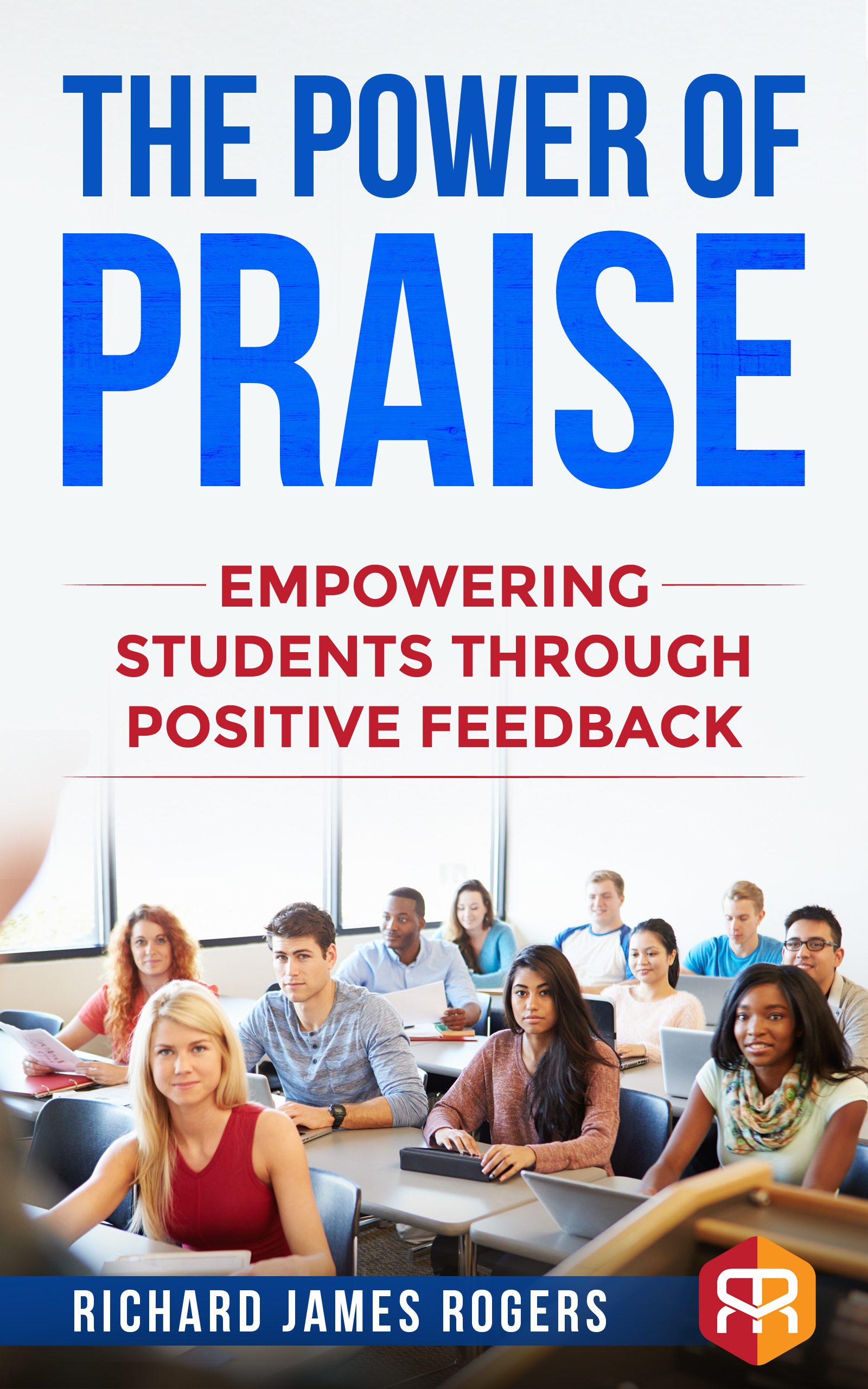
The Power of Praise: My Second Book

An article by Richard James Rogers (Author of The Quick Guide to Classroom Management and The Power of Praise: Empowering Students Through Positive Feedback).

Illustrated by Sutthiya Lertyongphati

I’m very happy to announce that my second-book, which has (to my shame) been in the pipeline for many years, has finally been published on the Amazon Kindle store. The paperback will be released in mid-September. If you click on the image below, it’ll take you directly to the Amazon sales page. 

The Power of Praise

My new book is split into three sections:

  • The philosophy of praise (why praise is important and what its effects can be)
  • The mechanics of praise (how to actually implement the various tactics available)
  • Ways to accentuate the efficiency of praise (how to ensure that praise and feedback only takes up the time and effort that it needs to)

From the outset I make the point that praise in the form of marking provides acknowledgement for work completed. This is essential, as every student needs to know that their time and effort has been noticed, is being monitored and has been recognized.

The implication of this statement is that quick turn-around of work is necessary so that students understand the reasons behind their feedback, gain empowerment maximally and receive positive reinforcement of the skills, knowledge and concepts that they are currently learning in class.

jenga

Teachers (me included) can find it a challenge to provide high-quality feedback in a timely manner, however. This is where praise mechanics and efficiency come into play. 

There are a number of techniques that teachers can employ to save time whilst providing excellent feedback. In this new book, you’ll find sections on:

  • Peer-assessment
  • Self-assessment
  • The effective deployment of verbal feedback 
  • Automated assessment – the use of software to test our students 
  • Live marking
  • Many others

You can purchase my book here if you’d like a good, deep exploration of of a variety of praise-based techniques. As a little teaser for you, however, I’d like to share a particularly powerful technique with you.

‘Diffusive’ and ‘Absorptive’ live – marking

Diffusive live-marking is when the teacher walks around the classroom when the kids are working on a a task, pen-in-hand, and marks student work in real-time (i.e. ‘diffusing’ through the students).

Absorptive live-marking is when the teacher sits at a designated point in the classroom and calls the students to his or her desk. one-at-a-time, and marks work in real-time (i.e. figuratively ‘absorbing’ the students).

Coupled with verbal feedback, both techniques can be incredibly powerful. If you train the students to write “Mr Rogers said that………….(insert feedback here)” in a different color on their work, then you allow the students to process your feedback on a very deep-level, and this builds long-term memory. Obviously, use your name instead of mine!

Eventually, students will remember key mistakes that are repeating in their work and they will act to rectify those (they won’t like writing the same things over and over again). 

IMG_5938richard-rogers-online

We welcome you to join the Richard Rogers online community. Like our Facebook page and follow us on Twitter for daily updates.

Latest hybrid

News: Schoolgirl Put in Isolation 240 Times

An article by Richard James Rogers (Author of The Quick Guide to Classroom Management).

Illustrated by Tikumporn Boonchuaylue and Sutthiya Lertyongphati

I’m experimenting with a new format and schedule for my blog, and I hope that it will make my content even more interesting and useful for my readers (that’s the plan anyway!).

Every mid-week I’ll give my synopsis of a current education-related news story, along with my regular ‘teaching tips’ blog post on a Sunday. That’s two blog posts per week from now on.

This week I want to discuss my thoughts on a BBC News story that broke this week – that a schoolgirl in England had been sent to the ‘isolation room’ at her school at least 240 times since Year 7 (Grade 6).

Colorful classroom without student with board,books and globe - rendering

What’s an ‘isolation room’ anyway?

It’s a place where the naughty kids are sent, basically. If the teacher feels that a student is being so disruptive that their behavior is affecting the learning of other students, then some schools will allow the teacher to send that kid to the isolation room.

Many UK schools have isolation rooms. They’re designed to be quiet places where kids can sit and do work, often supervised by a special ‘isolation room monitor’ (who is normally a fully qualified teacher too).

Many prominent figures in UK education support the idea of isolation rooms. Take Tom Bennet, author of The Behaviour Guru: Behaviour Management Solutions for Teachers, who has stated that using isolation booths is a perfectly normal, useful and compassionate strategy that is so common across the school sector that anyone expressing shock to discover it has, I can only assume, spent very little time actually working in a school.”

mess around in class

Well, Tom, I’ve spent many years working in schools (and yes, I worked in the UK in a school with an isolation room), and I can tell you: I don’t support this strategy at all.

Let me tell you why.

1. They’re too easy to use

I remember working in North Wales at a school with an isolation room over a decade ago. I had a teenage girl in one of my classes who had spent 50% of a previous half-term in the isolation room. She missed a lot of school, and the resources in the isolation room were not designed to match the curriculum she was following.

As a newbie back then I found the isolation room very supportive: if a kid played up I could just send him or her to the room. I filled in a slip and off the kid went.

Problem solved, right?

Wrong.

I found myself giving up on students at the first instance of misbehavior. This was especially true if a kid had a history of being sent out to isolation. If everyone else is sending this kid there, then I can do it too!

It became too easy to send kids out, and I didn’t like who I was becoming. I hated myself for it, to be honest, and I decided ‘no more’.

The next time that girl was chatty in class and a little disruptive was when we were learning about the extraction of chlorophyll from a leaf. Instead of sending her out, I got her involved.

“Come and help me”

She came and used the Bunsen Burner to heat up the solution. Everyone clapped. She felt empowered.

lab girls

I‘ve written tirelessly about the importance of making our students feel important and valued. It’s a core principle of good behavior management and overall student training. Isolation rooms completely subvert this solid fact and principle, and tend to cause more problems than they solve (such as leading to depression and suicidal thoughts in some cases, which we see in this particular case with the girl in the BBC report).

2. When is enough, enough?

After 240 times of being sent to the isolation room, one would have thought that someone in the school with at least two brain cells to rub together would have realized that the isolation room strategy isn’t working for this student.

What about counseling? Discussions with parents? Teacher-meetings to discuss strategies for this student? Extra time to complete homework? Collective praise when this girl did something great?

There are many ways to solve long-term poor behavior. Sending students to an isolation room is not the answer.

3. Since when did UK schools become prisons for kids?

With the advent of compulsory schooling in 1880, followed by fines for parents who didn’t send their kids to school beginning in 2004, and then later the advent of isolation rooms, one sees a rather grim picture emerging.

School is supposed to be a happy place for children. A place where they learn new skills and become better people. A place where they mature into adults.

When schools become like prisons, however, with more and more power being taken away from parents as the years pass, one wonders if home-schooling shouldn’t become more pervasive.

chatting in class

In the UK, parents can home-school their kids provided that they have permission from the school headteacher. However, government inspectors can make an informal visit and can serve a ‘school attendance order’ if they feel that the child is not receiving an adequate education.

Maybe homeschooling would have worked with this girl? Maybe it wasn’t feasible.

4. IEPs need to be considered

Sophie, the schoolgirl mentioned in the BBC article, had selective mutism and didn’t start speaking until she was 8-years-old. She also had autism.

Surely she would have had an IEP in place (an Individual Education Plan). Did this document recommend that she be sent to the isolation room every day from January to mid-March, as the BBC report states?

I very much doubt it.

What we learn from this story is that IEPs need to be well-designed and shared, proactively, with every teacher in the school. That means reading them, discussing them, and coming up with strategies as a team.

Isn’t that what INSET days could be used for?

Q & A

Isolation rooms should be banned

I am of the opinion that isolation rooms should be banned in schools. Put the kids on detention – yes. Send them to a senior manager. Phone home. Allow extra time for homework. Meet with parents. Use collective strategies.

But don’t let a kid spend half a term, each and every day, and all day every day, in an isolation room with poor-quality work to complete (and poor-quality guidance).

Schools are not prisons. Schools are supposed to be happy places where kids learn things.

If schools can’t achieve this, then give the kids back to their parents. They can probably do a better job.

714symbol

richard-rogers-online

We welcome you to join the Richard Rogers online community. Like our Facebook page and follow us on Twitter for daily updates.

Latest hybrid