International Teaching: Dealing With Culture Shock When Moving to a New Country

Teaching internationally can be very rewarding and enjoyable. You’ll most certainly pick-up new skills, experience a new culture and become part of a new and diverse community. For some, however, the move to a new country can be a big ‘shock to the system’.

Today, I’ve invited Rose-Anne Turner, Admissions Director at Destination TEFL, to share her advice on how to deal with culture shock when moving to a new country.

Culture Shock – a much used term for those who travel. But what does it mean exactly?

Culture shock is what you experience after leaving the familiarities of your home culture to live in another cultural or social environment. Even those who are open-minded and well-travelled are not immune to culture shock. Symptoms include homesickness, anger, loneliness and boredom. Everyone will experience culture shock to some extent, but there are ways to deal with it and minimise the effects.

chatting in class

Firstly, understand what you are going through and why you feel insecure or anxious. You are faced with a different climate, unfamiliar with your surroundings, as well as people with different values, attitudes, lifestyles, and political and religious beliefs, and oftentimes, you can’t even understand them due to language barriers! Understanding why you feel the way you do will help you to overcome the feeling.

Once you understand, the next step is to accept and adapt to your new culture. Just because something is different, doesn’t mean it is wrong, so learn to do things the way the locals do, and accept that it’s the way it’s done in your new home.

Learn as much as possible about your destination before leaving home. Be open-mined and it will be easier to understand the differences and see things from a different perspective. If you know why people do things the way they do them, it’s easy to accept the differences.

img_0413

Having a positive attitude can make all the difference. This goes with anything in life, but is especially true when travelling and interacting with new people in new surroundings.

Block building

Stay in touch with those back home. But… if you spend all your time connecting with family and friends back home, you’ll just keep feeling homesick and won’t feel up to making new friends. Rather spend your time exploring and meeting new people, and then you have something to tell loved ones back home when you do chat.

Don’t compare your home culture to your new culture! Noticing the differences is normal, and can be fun, but see the differences as just that – different and exciting, not inferior to home. Take the opportunity to learn as much as possible about your new location and culture.

Keep yourself busy. Particularly enjoy the things you can’t do at home. Try new foods, swim in the sea, explore, make new friends, take full advantage of the time abroad rather than being afraid and hiding in your hotel room or apartment. Don’t have regrets later by saying ‘if only I had done this or seen that…’

Laugh at yourself! If you get lost, just think of it as a way to discover a new place that you didn’t expect to see. Surrounding yourself with positive people can make all the difference. Don’t get sucked into the inevitable groups of ‘grumpy old expats’ who should have gone back home long ago, and now love trashing their new home.

There are different phases of culture shock, and knowing which you are going through will also help you to overcome it.

The Honeymoon Phase: This is a fun time, when all is great, exciting, and new. You embrace the differences, go out of your way to try the weird and wonderful food and relish meeting exotic new people. This phase can last days, weeks, or months.

Continent Investigation

The Honeymoon is Over Phase: During this phase, you start observing differences, however slight, and not always in a good way. You’ve had enough of the food, and miss home comforts and tastes. The local attitudes annoy you, and things are just so much better at home. During this phase, you may feel sad, irritable, angry or anxious. You miss holidays from home such as Christmas or Thanksgiving, and feel sad when you miss out on events such as birthday celebrations back home.
 
The Negotiation Phase: Now you decide if you will give in to negativity or power-on past it to make the most of your experience. If you’re successful, you regain your sense of perspective, balance, and humour, and move on to the next phase.
 
The All’s Well, or Everything is Okay Phase: You start feeling more at home with the differences in the new culture. After a while, you may feel as if the culture isn’t in fact new, but that you belong here now, or you may not exactly feel part of the culture, but you’re comfortable enough with it to enjoy the differences and challenges. You don’t necessarily have to be in love with the new country (as in the honeymoon phase), but you can navigate it without unwarranted anxiety, negativity, and criticism.

The Reverse Culture Shock Phase: This happens to most who have lived abroad a while. Once you’ve become accustomed to the way things are done in a different country, you can go through the same series of culture shock phases when you return home.
 
Culture shock can present itself at any time, and it’s often the small things we feel the most – like navigating a grocery store with unfamiliar products in currencies we are not familiar with. Working abroad has its own challenges, as aside from day-to-day cultural differences, there are also the differences in the work place. For example, if you are typically organised and punctual, you may struggle to adapt working to a culture with a more relaxed working environment. Or, if you’re a woman, you may find it difficult to adapt in a country where there is gender inequality.
 
It’s most important to be patient – in time, things that once were strange will be the norm. Be kind to yourself, and don’t place high expectations on yourself until you have adjusted to your new life. While moving to a new country is daunting in many ways, it can be equally rewarding, and by not giving it a try, you’ll always have regrets.

DT-Email-Header

IMG_5938

We welcome you to join the Richard James Rogers online community! Join us on Facebook and Twitter for regular updates, giveaways of Richard’s books, special offers, upcoming events and news. 

richard-rogers-online

The Rogers’ Pedagogical Planner: A New Kind of Teacher’s Planner

An article by Richard James Rogers (Author of The Quick Guide to Classroom Management). 

The Rogers’ Pedagogical Planner is finally published and ready after two-and-a-half years of painstaking work and research. It is, quite simply, the product of my mission to create the world’s most useful teacher’s planner.

I’m going to be completely honest with you – the aim of this blog post is to advertise The Rogers’ Pedagogical Planner and to inform teachers about how it can be used to make life easier for us. However, I’m also going to try and throw in some useful lesson-planning tips in here too, and links to other blog posts about lesson-planning will be given throughout this article. 

Rogers ped

Here’s a brief overview if you’re just looking for what the planner gives you, and where to buy it (but keep reading if you want some background and links to helpful articles and blog posts about planning and classroom management):

+ 45 weeks of double-page lesson planning templates for you to write all of your lesson plans on

+ A full A4 ‘notes’ page for every week of lesson planning

+ A full A4 ‘targets’ page for every week of lesson-planning

+ 45 pedagogical articles from this blog (richardjamesrogers.com) – one for each week of lessons

+ 578 pages

+ $22.99 and available globally on Amazon

Here are some extracts from the book, so you can see what the inside looks like:

Each week contains an article from my blog to provide insights into classroom management techniques, behavior management methods, active engagement strategies, tips for using technology in teaching and even advice on how to work with colleagues and parents:

Slide1


Each week comes with a full A4 ‘Pedagogical Targets’ page which is designed to help you formulate goals for your own continuous development:

Slide2


Two A4 pages of lesson-planning boxes/grids are provided for each week (45 weeks in total), giving you plenty of space to write your plans:

Slide3


A full A4 ‘Notes’ page is provided for each week of planning: great for recording the details of meetings, incidents that have happened, events that are coming up, notes from training sessions, reflections, etc:

Roger's Pedagogical Planner

The planner is available as a beautiful A4 paperback from Amazon here ($22.99). However, for those of you who like to use stylus devices (e.g. the iPad Pro) or who want to print the planner yourself, I am selling the pdf version for only $15.00. E-mail me at info@richardjamesrogers.com to request your instant copy (payments are made via PayPal). 

My story (briefly)

I graduated from Bangor University (UK) with a bachelor’s degree in Molecular Biology in 2005, and followed that up with a PGCE in Secondary Science Education (also from Bangor) in 2006. I taught at UK State Schools for two years, before meeting my lovely wife, Nicki, after she finished her master’s degree in 2007. She is Thai, and had to fly back to Thailand as soon her her student visa ran out. I followed her to Thailand in the new academic year of 2008 and I have been teaching at international schools in Thailand (plus a brief one-year stint in China) ever-since. 

My books, and why I started writing

To be honest, I always found teaching to be enjoyable and fun, even when dealing with the ‘problematic’ students (e.g. those who required the active adoption of behavior management techniques to handle). However, my boyish energy and hyper-enthusiasm led me to make a number of silly mistakes over the years: little things, usually, that caught me off-guard when I wasn’t paying attention, such as:

  • Not thinking about where students would sit at different points in the lesson.
  • Setting too much homework, and not having the time (or effective strategies) to mark it quickly and properly.
  • Not pacing my lessons to get all of the content finished on-time.
  • Focusing too much on short-term positive reinforcement, and not considering the long-term effects that consistent praise can have on a child’s life (see my blog post about subtle reinforcement for more on this).
  • How much I allowed myself to relax at staff-parties (often overlooked in teacher-training courses).
  • The effects of physiology and biochemistry on my ability to function during the day (waking up early, having breakfast, exercising, etc.).

I knew that I had to learn from my mistakes, but I realized that I could only do that if I remembered my mistakes. I’ve always had problems with remembering things, so I decided to write my first book (The Quick Guide to Classroom Management) as a no-holds-barred record/journal of the blunders I had made (and seen others make) during my then 10-years of teaching experience. My goal was to simply have a record for my own reference in book-form.

I was surprised, and happy, when that book hit the bestsellers’ list for classroom management (number 1 spot) on Amazon on no less than three occasions.

Conclusion

I hope I have provided you with a good overview of what The Rogers’ Pedagogical Planner is, and why I think it is a great tool for educators everywhere. If you do happen to purchase the book, then THANK YOU (and enjoy!).

Skip to the end for links to lesson-planning blog posts I have written


Lesson-planning blog posts (great advice for teachers):

The Importance of Planning

The Top 7 Strategies for Efficient Lesson Planning

My Top Three Tips for Teachers

Can Progress be ‘Engineered’ from the Start?

IMG_5938

We welcome you to join the Richard James Rogers online community! Join us on Facebook and Twitter for regular updates, giveaways of Richard’s books, special offers, upcoming events and news. 

richard-rogers-online

100 Awesome Online Learning Apps (Release date: 8th April on Amazon Globally)

Release date: Wednesday 8th April 2020 on Amazon Globally [ISBN 979-8629490937]

Great news!: My GAME-CHANGING book, 100 Awesome Online Learning Apps, is now LIVE on Amazon. Copies can be ordered here: https://www.amazon.com/dp/B086PSMYRN/

The book covers:

1. Not-so-obvious things to be aware of when doing online learning
2. A big list of 100 Awesome Apps with suggestions for their use in online learning

100 Awesome Final Cover

Book description

2020 marked a definitive year in the world of teaching. For the first time in history, teachers and schools all around the world were forced to quickly apply their skills to online learning as a result of widespread school closures in the wake of the novel coronavirus pandemic. This book is timely and long-awaited, and meets the needs of educators who are required to deliver high-quality teaching via online apps and platforms. This book takes the reader through 100 tried-and-tested online learning platforms, with suggestions as to how each one could be used to enhance teaching or assessment. As a high-school science teacher and a Google Certified Educator himself, Mr Richard James Rogers has first-hand experience of using each platform and speaks from a wealth of involvement rather than from a lofty and disconnected position in elite academia. This is a practical book for those who want to make a difference in their students’ lives, no matter how volatile local circumstances may be.

About the Author

Richard-James-Rogers.jpg

Richard James Rogers is the globally acclaimed author of The Quick Guide to Classroom Management: 45 Secrets that all High School Students Need to Know. As a Google Certified Educator, he utilizes a wide-variety of educational technology in his day job as an IBDP chemistry teacher at an international school in Bangkok, Thailand. Richard actively writes about all issues related to teaching at his weekly blog: richardjamesrogers.com

IMG_5938

We welcome you to join the Richard James Rogers online community! Join us on Facebook and Twitter for regular updates, giveaways of Richard’s books, special offers, upcoming events and news. 

richard-rogers-online


Exciting New Online Course for Teachers!

UKEd-Acad

The Fundamentals of Classroom Management: An online course designed by Richard James Rogers in Partnership with UKEd Academy 

I’m very excited to announce that I’ve been busy building an online course that covers all of the fundamental concepts in my widely acclaimed debut book: The Quick Guide to Classroom Management, in partnership with my good friends at UKEd Academy. Details are given below:

Course link: https://uked.academy/product/cmf/

Price: £30.00 (which includes a copy of my book) or £20.00 if you’ve already got a copy of my book (you’ll have to enter a discount code found within the book)

Launch date: October 21st 2019 (but you can start the course at anytime)

End of course certificate?Yes, endorsed by UKEd Academy and Richard James Rogers 

Course structure: Videos, quizzes, study notes, reflections and activities

Course schedule: Flexible (work at your own pace)

After successful completion of this course you’ll earn a certificate that will look very impressive on your C.V. and you will gain lots of knowledge, new techniques, tools and skills.  

I look forward to mentoring and guiding you through the key concepts that make an excellent teacher, well, excellent!

If you have any questions at all about this exciting course, then please e-mail me at info@richardjamesrogers.com

IMG_5938

richard-rogers-online

We welcome you to join the Richard Rogers online community. Like our Facebook page and follow us on Twitter for daily updates.

Latest hybrid

The Disconnect: How Over-Rewarding Fails Students

An article by Richard James Rogers (Author of The Quick Guide to Classroom Management and The Power of Praise: Empowering Students Through Positive Feedback).

Illustrated by Sutthiya Lertyongphati

Accompanying podcast episode:

A dangerous culture has quietly found its way into a large number of American and British schools in the past decade. Like a wolf in sheep’s clothing that seems pretty on the surface but harbors malice within; over-rewarding continues to take hold like a malignancy to this day. 

Betty Berdan was an American high-school junior at the time of writing this excellent opinion piece in the New York Times. She eloquently summarizes her thoughts on over-rewarding as follows:

Like many other kids my age, I grew up receiving trophy after trophy, medal after medal, ribbon after ribbon for every sports season, science fair and spelling bee I participated in. Today the dozens of trophies, ribbons and medals sit in a corner of my room, collecting dust. They do not mean much to me because I know that identical awards sit in other children’s rooms all over town and probably in millions of other homes across the country.

Rewarding kids with trophies, medals and certificates for absolutely everything they do, including participation in a sports event, seems harmless at first glance: what’s wrong with encouraging kids to take part, right? 

jenga

My thoughts on this are simple: the real-world doesn’t reward mediocrity, and if school’s are designed to prepare kids for the real world, then they shouldn’t be rewarding mediocrity either. 

Your boss doesn’t give you a pay-raise or certificate for turning up to a meeting: it’s a basic expectation. You don’t get instant recognition and brand awareness for starting an online business: you have to slog your guts out and make it happen.

The world is cruel, but it’s especially cruel to high-school graduates who’ve been babied right the way through their schooling and come out the other side believing that they’re entitled to everything: that they’ll receive recognition for doing the bare-minimum. 

Some teachers may feel that rewarding everyone, but keeping ‘special rewards for winners’ is a good way to go. But what benefits can be extrapolated from removing first, second and third place prizes at a sporting event, or even removing winner’s trophies completely?

award

According to Alfie Kohn, author of Punished by Rewards: 

A key takeaway here is that awards aren’t bad just because the losers are disappointed; everyone (including the winners) ultimately lose when schooling is turned into a scramble to defeat one’s peers

Really, Alfie? So awards are bad because losers and winners feel bitter? I think school culture has got a lot do with that. In school’s where students are encouraged to celebrate each other’s achievements, and aspire to do their best, overall achievement and attainment increases.  A massive study by the University of East Tennessee, for example, found that classroom celebrations of achievement enhanced:

  • Group solidarity
  • Sense of belonging
  • Teacher’s ability to find joy and meaning in teaching

I don’t see much about bitterness there, Alfie. 

Here’s another one I pulled-up: A meta-analysis of 96 different studies conducted by researchers at the University of Alberta found that (look at the last sentence especially):

…….reward does not decrease intrinsic motivation. When interaction effects are examined, findings show that verbal praise produces an increase in intrinsic motivation. The only negative effect appears when expected tangible rewards are given to individuals simply for doing a task.

This confirms what teachers have known for years (at least those with brains in their heads): that awards have no value when they are given to everyone, but have lots of value when they have to be earned. This coincides with the Four Rules of Praise that I wrote about in 2018 (supporting video below). 

Conclusion

Teaching profession, some words of wisdom: Awards and rewards only work to improve motivation, attainment and achievement when the students have had to earn them. Foster a school culture of collective celebration when students achieve success (such as using awards assemblies), and articulate the skills and qualities needed to achieve success to those students who sit and watch the winners, hopefully with smiles on their face and pride in knowing that one of their own made it happen, and they can too. 

richard-rogers-online

We welcome you to join the Richard Rogers online community. Like our Facebook page and follow us on Twitter for daily updates.

Latest hybrid

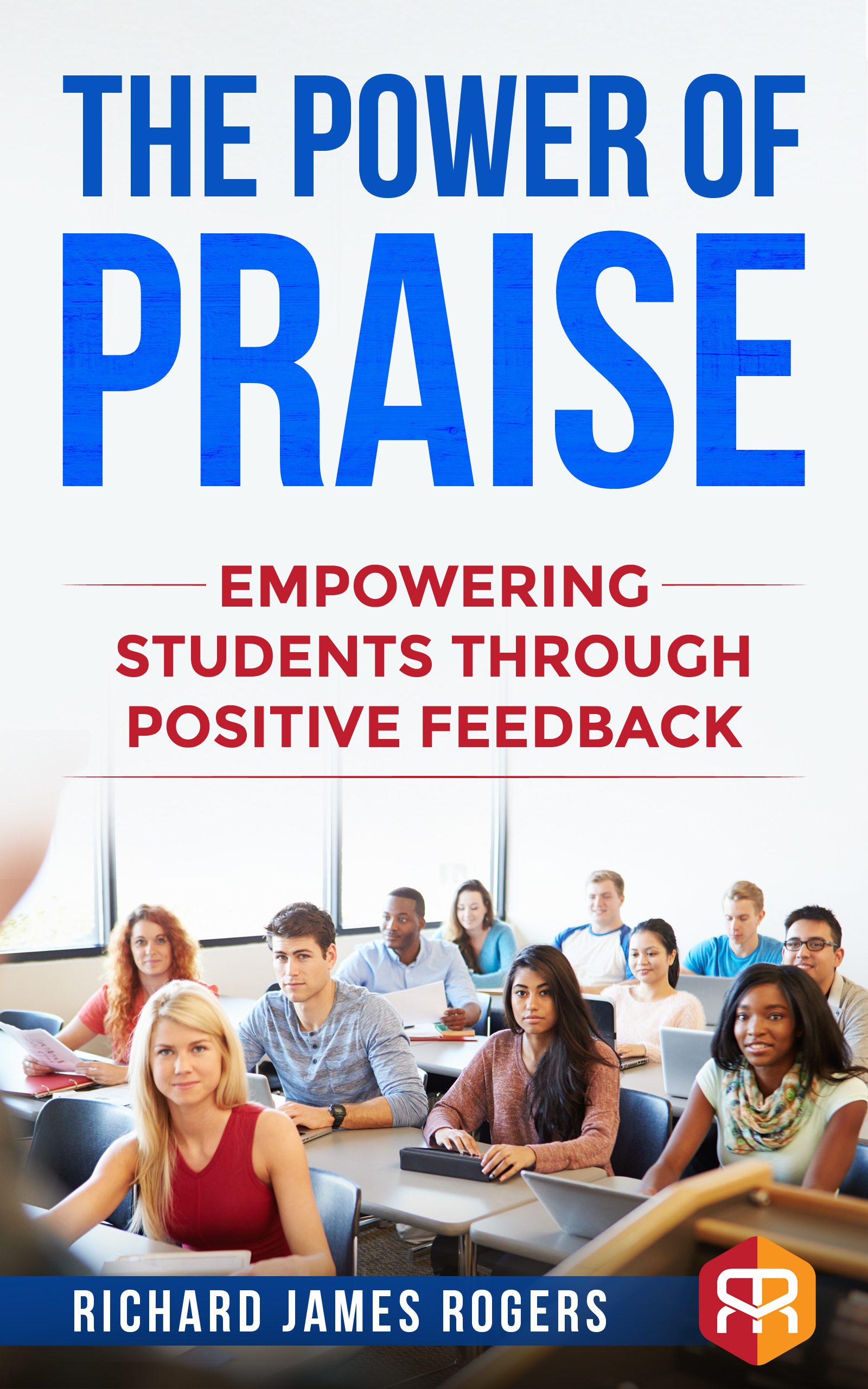
The Power of Praise: My Second Book

An article by Richard James Rogers (Author of The Quick Guide to Classroom Management and The Power of Praise: Empowering Students Through Positive Feedback).

Illustrated by Sutthiya Lertyongphati

I’m very happy to announce that my second-book, which has (to my shame) been in the pipeline for many years, has finally been published on the Amazon Kindle store. The paperback will be released in mid-September. If you click on the image below, it’ll take you directly to the Amazon sales page. 

The Power of Praise

My new book is split into three sections:

  • The philosophy of praise (why praise is important and what its effects can be)
  • The mechanics of praise (how to actually implement the various tactics available)
  • Ways to accentuate the efficiency of praise (how to ensure that praise and feedback only takes up the time and effort that it needs to)

From the outset I make the point that praise in the form of marking provides acknowledgement for work completed. This is essential, as every student needs to know that their time and effort has been noticed, is being monitored and has been recognized.

The implication of this statement is that quick turn-around of work is necessary so that students understand the reasons behind their feedback, gain empowerment maximally and receive positive reinforcement of the skills, knowledge and concepts that they are currently learning in class.

jenga

Teachers (me included) can find it a challenge to provide high-quality feedback in a timely manner, however. This is where praise mechanics and efficiency come into play. 

There are a number of techniques that teachers can employ to save time whilst providing excellent feedback. In this new book, you’ll find sections on:

  • Peer-assessment
  • Self-assessment
  • The effective deployment of verbal feedback 
  • Automated assessment – the use of software to test our students 
  • Live marking
  • Many others

You can purchase my book here if you’d like a good, deep exploration of of a variety of praise-based techniques. As a little teaser for you, however, I’d like to share a particularly powerful technique with you.

‘Diffusive’ and ‘Absorptive’ live – marking

Diffusive live-marking is when the teacher walks around the classroom when the kids are working on a a task, pen-in-hand, and marks student work in real-time (i.e. ‘diffusing’ through the students).

Absorptive live-marking is when the teacher sits at a designated point in the classroom and calls the students to his or her desk. one-at-a-time, and marks work in real-time (i.e. figuratively ‘absorbing’ the students).

Coupled with verbal feedback, both techniques can be incredibly powerful. If you train the students to write “Mr Rogers said that………….(insert feedback here)” in a different color on their work, then you allow the students to process your feedback on a very deep-level, and this builds long-term memory. Obviously, use your name instead of mine!

Eventually, students will remember key mistakes that are repeating in their work and they will act to rectify those (they won’t like writing the same things over and over again). 

IMG_5938richard-rogers-online

We welcome you to join the Richard Rogers online community. Like our Facebook page and follow us on Twitter for daily updates.

Latest hybrid

Dealing With Stress as a Teacher

An article by Richard James Rogers (Award-Winning Author of The Quick Guide to Classroom Management and The Power of Praise: Empowering Students Through Positive Feedback).

Illustrated by Sutthiya Lertyongphati

Accompanying podcast episode (audio version of this blog post, read by Richard):

Teaching is definitely a stressful job. In fact, a February 2019 study by England’s National Foundation for Education Research found that 20% of teachers feel tense about their job most or all of the time, compared with 13% of those working in similar professions. Additionally, as if that wasn’t startling enough, a recent Organisation for Economic Cooperation and Development (OECD) survey found that teachers in England have one of the highest workloads in the world. 

The statistics themselves are worrying enough – that’s one-in-five teachers in England carrying a burden of worry and stress on a regular basis.

As a teacher myself, I have certainly had my fair share of work-related stress over the past 16 years. Some of the problems I encountered were the result of self-sabotage and inexperience, and some were beyond my control.

Whatever the causes of your stress are, there are effective ways to deal with them and I’d like to share what I’ve found to be the best ways to do just that.

Stress Tip #1 – When your lessons are not going well

This is often a result of poor or rushed lesson-planning and is normally avoidable. I have fallen into this trap many times in my career – using my ‘free periods’ to write rough lesson plans or spending a few minutes before a lesson to think about what I’ll actually do.

chatting in class

Sometimes this works. Sometimes it causes problems.

Take the time to spend a whole morning or afternoon each week to plan a week’s worth of lessons (I use my Sunday mornings for it). Get a good teacher’s planner and think about:

  • The starter activities you will use (read this blog post about starter activities). Make sure you plan for your lessons to begin promptly (this blog post about a prompt start will help).
  • Where the kids will sit at different points during the lesson. Will they need their books at all times? Do you need a seating plan so that ‘problem’ students are not sat next to each other?
  • Breaking up the lesson into ‘chunks’ – variety is key if you want your lessons to be engaging and ‘fun’. Read my blog post about learning games you can use here.
  • Syllabus content you will cover – with some classes you’ll have a lot of content to get through in a short space of time. Get your PowerPoints, presentations, quizzes, and other resources ready well in-advance of these kinds of lessons. You might also want to read my blog post about keeping up with your teaching schedule here.

Stress Tip #2 – When you have too much marking to do

Marking tends to come in ‘waves’ in teaching: There are times of the academic year when you’ve just got normal, regular homework and classwork to mark; and there are times when high-intensity marking hits us like a bolt of lightning. For example:

  • When a ‘work scrutiny’ comes up and a line-manager wants to see your class notebooks
  • When you have a load of end-of-unit tests or exam papers to mark
  • When parents’ evenings/parents’ consultations come up and you need to mark a lot of work so that you have some good points to discuss in the meetings
work overload

Marking can be a big-problem for teachers, but again: it’s easily avoidable when a little bit of time is spent planning in-advance:

  • In your weekly planning, think of peer and self-assessment techniques you can use to quickly deal with homework and classwork. Read my blog post on peer and self-assessment here.
  • Use the technique of ‘Live Marking’ to keep those notebooks up-to-date. Live-marking is basically when you either call the students to your desk one-at-a-time and mark their work in front of them, or you walk around the classroom with a pen in-hand and mark student notebooks in ‘real time’. Read my blog post about ‘Live-marking’ here.
  • Take a deep breath and plan your time – if you find yourself with a tonne of exam papers to mark within 48 hours (I’ve been there), then the first thing you must do is sit somewhere quiet and plan your time for an hour. Think about your targets – which papers need to be marked by when? Should some papers be marked before others? Is it possible, or appropriate, to use peer/self-assessment for some exam papers?
  • Try using stamps and stickers – they’ll save you some writing time
  • Make sure you’ve got a set of model answers ready for your kids – this will save you writing out the correct answers for the kids by hand in their books (never do that, by the way).
Marking work

Stress Tip #3: When you’re in trouble with your boss over something

One of the main causes of stress for teachers, I believe, is that we are held to a far-higher professional standard than those in most other professions. As ‘role-models’, we have to be extra careful about:

being-told-off

We do need to be mindful of these things on a daily basis, but even then we may make mistakes. If you are called to a meeting with your boss over something, then don’t panic! Take a deep breath and think about your side of the story and the facts of the matter at hand.

In your discussion, focus on:

  • Solutions to what’s happened (‘How can we solve this?’ should be your mentality).
  • If you’ve done something wrong, then admit it. Covering something up will only cause more problems later on.
  • If you feel that you’ve been unfairly treated then speak with a union representative or a lawyer before making any big decisions (e.g. choosing to resign).

I know that this is not a nice subject to talk about, but unfortunately it’s one that does come up. Protect yourself and your reputation, do your best everyday and just let life roll – some things are just beyond our control.

always learn

Another thing, by the way, is that absolutely everyone makes mistakes. I know that’s cliched, but it is true. Keep a written record of the mistakes you’ve made in life somewhere, and read over it on a weekly basis at least. When people tell us to ‘learn from our mistakes’, they can sometimes miss the fact that in order to learn from mistakes we have to remember those mistakes. Keeping a record and consistently reading over it is a good way to do this.

Stress tip #4: When student behavior is poor

It takes time and experience to build up our skills as good ‘behavior managers’.

Things to bear in mind are:

  • ‘Boring’ lessons can cause some kids to play up. Try to introduce a variety of activities into your lessons if possible, and be vigilant in watching your students carefully during practical activities, computer-based work and group work.
  • Praise, when used effectively and with sincerity, can be one of the most powerful behavior management tools out there. Read my blog post about The Four Rules of Praise here, and take the time to watch my video below:

  • Good behavior management can only really be achieved with a long-term strategy: effective lesson planning, good use of praise, fair and consistent use of sanctions if necessary and good use of ‘professional intelligence’ to reinforce our students’ sense of self-worth and character. Read my blog post on Subtle Reinforcement here.
Q & A

There are many facets to being a good behavior manager, but it basically all comes down to the relationship, or ‘rapport’, that you build with your students. Please read my blog posts on building rapport and behavior management.

Stress tip #5: When a colleague doesn’t like you (or is causing problems)

When you begin to have a positive effect on your students and you gain a reputation as a ‘good teacher’, you may create some enemies. Some of your colleagues may not like you simply because you are ‘better’ than they are.

Chapter 7 - gossiping

You need to be careful in these situations. Here are my tips:

  • Control your speech at all times when in the presence of your colleagues. Off-the-cuff remarks like “I’m behind with my marking” or “I got totally wasted on Friday night” can be used against you by conniving and jealous colleagues who want to secure your destruction.
  • Don’t gossip, and don’t associate with gossips. Gossips are notorious for being negative and untrustworthy. Just don’t do it. If you’re asked directly or prompted to gossip about a colleague, for example, you can respond with a “I don’t think I should talk about that” or even a “I don’t like to gossip about people”.
  • If a colleague is genuinely causing problems for you, then make a record of all interactions with that person (hand-written if necessary). Speak with your line-manager about it and ask for suggestions. It’s much better to tackle this issue in a professional way from the outset, rather than submitting a formal complaint when the problem has gotten out-of-hand.
  • If appropriate, speak with the colleague you are having issues with. You may wish to ask a third person to attend as a witness. Be polite. Be respectful. Show that you are the mature person in this scenario.
  • Keep all discussions with colleagues academic in nature. Try not to discuss politics or ‘touchy issues’ in society (e.g. Brexit, 2SLGBT+ rights, third-wave feminism, etc.). We live in a time, unfortunately, in which people can be easily ‘triggered’ by an alternative view you might have that challenges their perception of the world. Feel free to discuss this stuff with close friends or family outside of work, but don’t make the mistake of believing that your colleagues are your friends – they’re not. Your colleagues are the people you work with, and all interactions with them need to be professional in nature. If something is not related to your work or the curriculum, then you don’t need to discuss it. It’s that simple.

Conclusion

Teachers today are more stressed than we have ever been in history. Relax, plan-ahead, deal with issues head-on and don’t worry.

Two books I highly recommend for consistent worriers are given below:

How to Stop Worrying and Start Living’ by Dale Carnegie (click on the image to buy the book):

carnegie worrying.jpg

The Power of Now, by Eckhart Tolle (click on the image to buy the book):

ImageHandler.jpg
IMG_5938
richard-rogers-online

We welcome you to join the Richard Rogers online community. Like our Facebook page and follow us on Twitter for daily updates.

Latest hybrid

Opinion: Should University be Free?

An article by Richard James Rogers (Author of The Quick Guide to Classroom Management).

Illustrated by Sutthiya Lertyongphati

For a long time I’ve been of the opinion that any country that doesn’t offer university for free is basically doing only one thing – punishing people for trying to better themselves.

The UK seems to be an extreme example of how the state punishes those who work hard in life and do the ‘right’ things; and rewards those who drop-out of school and make bad choices in life.

Although this is a very simplistic analysis of the effects of the British welfare system, it’s also understandable why many people would feel this way.

Last week, a large-scale British government review of Higher Education was concluded and from that came a key recommendation: that university fees in the UK should be reduced to £7500 per year. They currently stand at around £9250 per year.

This recommendation doesn’t doesn’t go far enough, in my opinion.

Say, for instance, that you listen to your teachers in school, work hard and, despite all challenges that may come your way as a high-school student (domestic upheaval, working part time jobs, helping with the raising of siblings, etc.), you get good grades on your exams and go to uni (and get the recommended master’s degree, which employers now say is needed to get higher pay) – well, you’ll probably be saddled with debts in excess of £50,000, which you could be paying back well into your 60s.

Choose to drop-out of school and become unemployed, however, and here’s some benefits you can expect to receive:

Britain’s welfare system is so good that it even pays child benefit for almost anyone who raises a child in the UK. The current rate stands at £20.70 per week for an eldest or only child, and £13.70 per additional child.

All of this money, of course, comes from the taxpayer.

Whilst the intentions behind this system are that people who find themselves in difficult financial situations are helped out, some would argue that the system causes more problems than it solves.

Take Amber Rudd, the U.K. Work and Pensions Secretary, who admitted in February that it is the welfare state – created to prevent hunger and destitution – that is now actively causing it, with the shortcomings of the system responsible for increasing the number of Britons who are reliant on food banks to feed their families.

It’s the old ‘learned helplessness’ dogma in action, with devastating consequences. This pattern; of state welfare creating reliance and reinforcing the problem it’s intended to solve, has been noticed in other countries too. In a number of papers, including a large scale June 2008 American study in which the effects of “promoting employment and reducing dependenceon low-income children’s time-use was investigated, for instance, a positive correlation between parental employment and the achievement of low-income children was discovered.

Dependence vs rewards

But if dependence results in more misery for people, then why make students dependent on government grants for their university education?

That’s a good question, and for me I think it can be answered with the argument of rewards vs sanctions.

As teachers, we reward our students for good behaviour, effort and academic achievement, and we know from extensive research that rewards work better than sanctions when motivating students to achieve.

In other words, if you want a particular behavior to be repeated, then you reward that behaviour.

Whilst the British welfare system is designed to help those in need, it can be exploited rather easily. Take the hypothetical situation of a high school student who chooses to drop out of school and stay unemployed. That young person will probably be entitled to housing benefit, jobseeker’s and child benefit if his/her kids are involved too.

Stay in school and go to uni, however, and you’ll be rewarded with debt, and lots of it. You may even be paying off that debt well into later life.

I believe that if tax pounds were redirected from certain state benefits and funneled into higher education grants for struggling students (including living expenses), we would see a much greater motivation for children and young adults to work hard at school.

Conclusion

Any education system should reward those who put in the necessary time and effort to revise hard and pass their exams. I would argue that forcing students into astronomical amounts of debt is actually a form of punishment for making the ‘right’ choices in life.

Whilst there are ways around the system (my sister recently completed a degree with the Open University for example), one has to sacrifice considerable time to achieve the goal of getting a degree, debt free, in the UK. My sister was 26 when she graduated, for instance.

What are your thoughts? Please comment below.

Secret Number 6: Start Lessons Promptly

An article by Richard James Rogers (Author of The Quick Guide to Classroom Management).

Illustrated by Tikumporn Boonchuaylue

Related article: 7 Starter Activities for PGCE Students and Newly Qualified Teachers 

Accompanying video:

As a 17-year-old ‘A’ – Level student I was a typical lovesick teenager. I was easily distracted, and if I got the chance to slack-off, then I was sure to take it! I look back at those days and, to my embarrassment, I sometimes have to cringe! However, one question does come to mind quite often – which lessons were the most productive for me at a time when my human nature (and my attitude) led me to be quite a disillusioned and lazy teenager?

The answer: it was always, without exception, those lessons that began promptly and had a definite focus.

As teachers we’re always very, very busy. There’s so much to do in such a small amount of time, and it can be tempting for us to take a rest whilst we’re working. Whilst a relaxed environment is generally conducive to the learning process, there is a danger that we can cross the line and create an atmosphere that’s too relaxed: one that encourages our students to be unproductive. To illustrate this I can use an example from my personal journey.

Perhaps you have had a similar experience?

As a pre-university student all those years ago, I remember some of my chemistry and biology lessons particularly well, but for all the wrong reasons. These lessons would typically begin with the teacher having a nice, casual chat with all of the students in order to create a ‘relaxed feel’. Sometimes we would even begin by making a cup of tea for each other, and this made myself and my peers feel ‘adult’ and ‘special’: reinforcing the fact that we were the big kids in the school and that we had a certain status.

img_0413
“An AMAZING Book!”

This ritual would sometimes last for 15-20 minutes before any real learning took place, with one of my teachers in particular discussing anything that came to mind: whether it was a story from her past or an incident with another pupil. After this long ‘introduction’, in which approximately a quarter of the lesson had been eaten up, we would begin the lesson properly.

But were we motivated at this stage?

How had this casual entry into the lesson content affected our ability to learn thereafter?

The answer is that for many of us it had generated a lazy frame of mind, and it was difficult to come out of a relaxed state and go straight into a learning activity (which was often rushed, because of the time wasted at the start of the lesson).

Charles J. Givens, author and once a multi-million dollar business owner, summarizes this problem very eloquently:

Success requires first expending ten units of effort to produce one unit of results. Your momentum will then produce ten units of results with each unit of effort.

Charles J. Givens (Author of Wealth Without Risk and Financial Self Defense)


img_0532

From this we’re able to understand that for students to achieve results, they need to gain momentum within the lesson.

However, momentum can only be achieved if the teacher initiates it with an appropriate starter activity that requires at least some effort.

The Poorvu Center for Teaching and Learning at Yale University describe the start and end of the lesson as being “important moments” of instruction. They describe the signifiance of these critical times of the lesson in rather bold terms:

The events that occur during these windows can influence the engagement of students in their learning as well as their ability to synthesize major concepts.

So, as soon as the lesson starts (or better: as soon as the kids walk through the classroom door), give your students something to do!

This can be:

  • A quick quiz or worksheet (requiring around five minutes to complete)
  • A question written on the board that the students have to answer
  • A quick vocabulary game (more on games here)
  • An ICT based task (e.g. using iPads to find out how Oliver Cromwell died, completing an online quiz about dinosaurs or writing a short blog post)
  • A role-play or conversation starter with students working in small groups (particularly good for language classes)
  • A practical construction activity (e.g. ‘Use the coins to make fifty-five pence’, or ‘Use the molecular modeling kits to make a molecule of glucose’)
  • Cut and stick activities (e.g. matching words to descriptions, adding labels to diagrams, making pictures out of shapes, etc.)
  • Surprise scenarios (e.g. turning your classroom into a ‘crime scene’, and getting your students to take samples and follow clues)
  • A QR code treasure hunt (these are particularly good fun, and are also a great way to build ICT into your lessons).
  • A Kahoot! quiz

I’m sure that you’ll probably have other ideas to add to this list too, and that’s fantastic! If not, then don’t worry; formulating quick and productive starter activities is a learning process but the good news is that the more you do it, the more ideas you’ll have!

Remember: after the starter activity has finished, always review what was done. Get the students to mark each other’s quizzes, or comment on each other’s blog posts, or whatever assessment method you feel is appropriate for the activity.

Once that’s been done, you can move on to the next crucial step in the teaching and learning process: defining the learning outcomes (to be covered next week).

714symbol

richard-rogers-online

We welcome you to join the Richard Rogers online community. Like our Facebook page and follow us on Twitter for daily updates.

desrypt define delineate

Secret Number 5: Run an ECA (Why, What and How)

An article by Richard James Rogers (Author of The Quick Guide to Classroom Management).

Illustrated by Tikumporn Boonchuaylue

My teenage years were brilliant, and one of the reasons for this is that I was involved in so many active clubs and hobbies. I was an army cadet, I did karate and I even tried hockey and acting for a short while.

Me as an Army Cadet, aged 14

The Extra-Curricular Activities I did as a kid shaped my character more than my lessons in school. I can say that with conviction.

In my ECAs I made new and lasting friendships and learnt cool skills (such as how to start a fire with potassium permanganate, and how to disarm an attacker with a pistol).

I still do karate to this day – it gave me self-discipline and the understanding that life can be painful; but instead of crying in a corner like a little wimp I need to man-up and fight back, and persevere through every storm that comes my way.

Yes: karate, and the Army Cadets, really taught me that.

Now, as a teacher, I warmly reflect on my childhood experiences and the enrichment that was brought to me through these extra dimensions in my life. I try, as best as I can, to offer modern and meaningful ECAs to my students in my current practice.

An AMAZING Book!

Why offer an ECA?

There are numerous benefits which compensate for the extra time it takes to run an ECA:

  • You get to build closer and more meaningful professional relationships with your students, and other students you might not teach
  • You become ‘that cool teacher‘ who goes the extra mile to run good clubs with the kids
  • You learn a few surprising things about the kids in your club – such as skills and abilities they have which you didn’t know about before
  • You will develop new skills along the way (e.g. I currently teach FinTech in one of my ECAs, which is a new area of knowledge that I’m learning about too)
  • You may change lives, literally. One of my former students 10 years ago attended a German language ECA that I ran. She’d never learnt German before, and absolutely loved the club. I later found out that she did a degree in German at university and now works as a translator here in Thailand.

What kind of ECAs can we offer?

Anything that’s:

  • Fun
  • Modern
  • Useful
  • Active

Good ECA types include:

  • Anything involving a sport (e.g. football, hockey, tennis, etc.)
  • Gaming (e.g. retro computer gaming, chess, battleships, etc.)
  • Languages that aren’t offered in the normal curriculum
  • Anything practical and hands-on (e.g. robotics, cookery, Science experiments, etc.)
  • Exam and study support

I tend to go with things I’m interested in that will also be fun and useful for my students.

How can we offer ECAs if our skills are limited?

We don’t have to be experts in the things we want to offer as ECAs. In fact, some of the best clubs I’ve run have been dynamic classes in which I learnt new things with the kids.

Running an ECA can even be a good way for us to skill-up as teachers.

Take a club I’m running at the moment, for example: Platform Building and Money Management. Now, I don’t know an awful lot about these subjects, but I’m learning FinTech with the University of Hong Kong and I’m reading books to learn about digital marketing and personal finance. The good news is this – each week, when I learn something new in my studies, I can then pass this on to my students in the ECA.

It’s a great way to help me with my self-discipline in my learning, and it keeps my ECA modern and relevant. The kids love it!

714symbol

richard-rogers-online

We welcome you to join the Richard Rogers online community. Like our Facebook page and follow us on Twitter for daily updates.

desrypt define delineate