Can Sympathy and Empathy be Taught?

An article by Richard James Rogers (Author of The Quick Guide to Classroom Management)

Illustrated by Pop Sutthiya Lertyongphati 

Today is a remarkable and unique day. The suspense and the emotion fills the air. It surrounds us. We can even taste it.

A daring and incredibly dangerous rescue mission has been given the green light to go ahead. Today is the day that Royal Thai Navy Seal divers will begin the attempt to rescue the 12 schoolboys and their 25-year-old coach who’ve been trapped in the Tham Luang cave complex, Chiang Rai, for two weeks.

Thai Cave Rescue
The boys and their coach inside the cave, accompanied by a Thai Navy Seal diver. Image courtesy of the Royal Thai Navy Seal Facebook page.

Being based in Bangkok, Thailand, I have a close association with Thai people from all walks of life. This event has truly gripped the nation, and the world.

Before I talk about today’s subject matter, I’d like to ask all of my readers to please join me and all Thai people by praying for the safe rescue of all 12 boys and their coach (and the safe return of the rescuers).

Humans are natural carers

This cave rescue in Thailand has given me a fresh perspective on the topic of empathy. It’s made me ask the question: do children really need to be taught how to care for one another?

The outpouring of help for these trapped boys and their coach has been truly inspirational. I won’t even begin to attempt to write a list of all of those who have helped because that list would be so huge it would take months, maybe years, to research and collate. But it has been remarkable. People from all over the world have literally sacrificed their time, money, health and energy to do everything possible to help these boys.

One man even sacrificed his life: Petty Officer Saman Gunan, who fell unconscious and died shortly after delivering oxygen tanks in the cave complex.

When times are at their worst, humans will do everything they can to help. Mr Saman Gunan is a true hero who selflessly did the best he could to help people who were in desperate need.

Surely this is our highest and most prized quality as humans – selflessness. Few people, however, are both incredibly brave and selfless, as Mr Gunan was.

He will forever be remembered, and missed.

Teaching kids to care

I personally believe that the vast majority of people are natural carers. We empathise naturally – it’s part of who we are.

Colorful classroom without student with board,books and globe - rendering

According to Samantha Rodman (Clinical Psychologist and Author), however, there are six keys ways in which we can teach kids empathy. This would seem important in a world where youngsters are being increasingly detached from physical interactions with one another by the barriers of mobile technology.

Materialism also doesn’t escape the jury’s verdict.

According to research conducted by psychologists at Northwestern University, materialism is socially destructive. It is associated with depression, anxiety and broken relationships.

jenga

To further compound this issue a more startling picture of human empathy is portrayed by the research conducted by Sara H. Konrath and colleagues of the University of Michigan at Ann Arbor and published in Personality and Social Psychology Review. Her team conducted a 30-year study between 1979 and 2009 and discovered that Emphatic Concern and Perspective Talking is declining rapidly in college students. 

Maybe we do need to teach kids how to care, after all. 

So what are the six ways to teach empathy?

  1. Teach kids about emotions: Children need to know what emotions are, and how to identify them. Once kids have identified those emotions, they can then learn how to manage them. Progress in this area has been heavily fueled by the Mindfulness in Schools strategy, which teaches the importance of observing one’s thoughts and emotions, rather than reacting by reflex-action. Check out their website – it’s well worth a look!
  2. Read and watch TV with your children: I guess this could work in a parent-student, teacher-student and student-student dynamic. The key is to get the kids thinking about and discussing how the characters feel in different parts of the story. It still amazes me when I watch a movie in the cinema and people laugh when some character gets killed or something bad happens. Movies are strange entities because in some cases they play on human emotion positively by creating more empathy, but in some genres repeated watching can lead to desensitization. 
  3. After conflicts, have a reflection: This is a classic tried-and-tested technique, and it works well. “How do you think Sarah felt about what you said? How would you feel if someone said that about you?”. Getting young people to reflect on the emotional consequences of their actions can have profound, long-term effects on their character and personality.
  4. Set an example by resolving conflicts in your own life: Probably more applicable to parents than teachers, or teacher-parents, but well-worth mentioning. If you have an argument with your wife in front of your kids, for example, you must also make-up in front of them too. With your students in school, you could get them to shake hands after an argument and get them to say sorry to one another.
  5. Express feelings on behalf of those who cannot speak: Babies, pets and, in some cases, disabled people, cannot express their emotions verbally or through other means. Discuss with your students or children what the feelings of these individuals might be when the opportunity arises. 
  6. Be a good role-model of respect and decency: Show courtesy. Be respectful of people who have different opinions or beliefs than you do (unless those beliefs threaten life, health or safety – then you’ll have to take action in a sensible, emotionally-detached way). Let your students see you showing respect for those around you who may have a different religious belief system, or political opinion, than you do. It’s very sad to see politicians arguing on TV, for example, when they should show greater respect for one another. 

Conclusion

  • Research has shown that empathy is decreasing in young people
  • Materialism is associated with anxiety, depression and the breakdown of relationships
  • There is a case to be made for the rigorous and broad teaching of empathy to kids in schools
  • There are ways to deliberately teach empathy to children, and six have been identified here

IMG_5938

richard-rogers-online

We welcome you to join the Richard Rogers online community. Like our Facebook page and follow us on Twitter for daily updates.

Latest hybrid

Don’t Be A ‘Mediocre’ Teacher

An article by Richard James Rogers (Author of The Quick Guide to Classroom Management)

Illustrated by Pop Sutthiya Lertyongphati 

They stood at the front of the audience: seemingly ready to dazzle us all. They were all 18 years old and in the final term of high school. I was much younger then too – 26 years old and in my third year of teaching.

It was a Biology revision presentation. I’d invited my colleague to come along to watch (also a Biology teacher).

The presenters began their talk.

When it was over, I needed to take a paracetamol tablet. I was rather perplexed.

I let my colleague chirp in with some feedback first, thinking she would cover most of the points I wanted to raise.

“A great presentation. I loved the level of detail and research. Well done”

That was it?

studying with com

Now I found myself confused and furstrated. I thought back to the late 90s when my dad received a ‘stress reliever’ doll one Christmas. It was basically a squishy, red, head-shaped rubbery thing in a pot that you could squeeze when you got a bit mad. It was joke gift of course: designed to cause a giggle or two; but I wished I had one right now.

With UKEdChat
“An AMAZING book!”

“Mr. Rogers. What are your thoughts?” Asks my colleague.

After asking a series of questions to which the students responded with nervous looks and blank stares, I decided to give my merciless, but honest, feedback:

“Whilst I agree with my colleague that your research skills were good, there are still a few issues I’d like to address.

I’ll start with the negatives, then share my thoughts on what, if anything, was positive. All of you were reading directly off the slides and not making eye-contact with the audience. We can all read, so your method of presentation was not engaging. There was too much text on each slide. The material had not been properly referenced and the images you did use, though few, were of very low quality. You also superficially skimmed the surface of the topic, and didn’t even touch on issues such as splicing, introns and transposable elements.

On the positive side, you showed us all that you can describe some of the concepts in some detail.

Please speak with me tomorrow morning during registration so that we can arrange a time to do this again”

Giving feedback

The ‘respect’ factor

Unfortunately, many of us in the teaching profession have been conditioned to dish out praise all day long for the most minuscule of things. A kid hands in a complete dog’s dinner of a homework and it’s “Well done for handing this in on time. Meeting deadlines is important”. 

I could go on with the spectrum of ‘non-confrontational’, politically correct garbage that I was conditioned to spew for another 1000 words, but I think that would be tedious.

I used to be one of those ‘praise everything’ teachers. Guess what I found out:

  • Praise only works when it is sincere
  • Praise only works when it recognises significant, meaningful achievements that have taken some work to accomplish
  • Praise is extra effective when preceded (NOT followed by) points for improvement

And guess what else I’ve found out – students respect us more when we are honest. They respect us when we tell them that they need to improve. They respect us when we are vigilant.

Explaining

Lots of research supports these findings. Here are two good examples:

  • A 2016 summary by Vanderbilt University found that praise works well when it is behavior-specific, and that a ratio of 4 praise statements to one reprimand works well for improving performance (if 4 praise statements are available for the work being assessed). Here are some examples of language changes we can make to turn praise into a kind of ‘disguised reprimand’ or ‘behavior enforcer”:
BSP Vanderbilt
Behavior Specific Praise. Courtesy of Vanderbilt University, 2016. See the publication entitled ‘Behavior Specific Praise in the Classroom’. Tennessee Behavior Supports Project.

Whilst this table is useful, I think it’s important to remember that reprimands must be specific and direct. “We don’t take other people’s property, because that causes suffering to another person. When you’re older, you can also get into big trouble with the police for that. You’ll need to write a letter of apology to Simon for what you did.”

  • A 2015 blog post by Brian Gatens at the University of Portland made the point that when teachers show honesty and compassion, they build trust with their students. Compassion doesn’t mean making kids feel good all the time – it means letting them know when they’ve under-performed, and caring enough to do something about it! It also involves celebrating and recognising significant progress, performance and attainment.

‘Mediocre’ Versus ‘Vigilant’

Here are some statements I’ve come up with which sum up the ‘Mediocre’ teacher, versus the ‘Vigilant’ teacher. I don’t mean to offend anyone here – I was once the Mediocre Teacher. I share my findings as a means of self-reflection for all of us. I still get a bit ‘mediocre’ at times, but at least I’m aware of how to spot that now:

  • Mediocre teachers record attainment and progress. Vigilant teachers record attainment and progress, quickly identify under-performance and then intervene to improve that.
  • Mediocre teachers praise the smallest of things. Vigilant teachers reserve their praise for significant, meaningful displays of effort, attainment and progress.
  • Mediocre teachers sometimes bring up points for improvement with their students. Vigilant teachers leave ‘no stone unturned’, and relentlessly monitor their students’ weaknesses and do the best they can to improve those.
  • Mediocre teachers don’t feel the need to be a ‘role-model’ for their students. Vigilant teachers understand that their words, actions and subliminal cues will act as points of reference for their students for many years to come.
  • Mediocre teachers mark their students work. Vigilant teachers provide feedback that’s meaningful and specific. 

IMG_5938

richard-rogers-online

We welcome you to join the Richard Rogers online community. Like our Facebook page and follow us on Twitter for daily updates.

Latest hybrid

Subtle Reinforcement: Techniques to Gradually Build Confidence and Character in our Students

An article by Richard James Rogers (Award-Winning Author of The Quick Guide to Classroom Management and The Power of Praise: Empowering Students Through Positive Feedback)

Illustrated by Pop Sutthiya Lertyongphati 

Follow me on Instagram

He pulled me aside at the end of class as we were getting ready to go home. I had tremendous respect for my sensei and his words, though few, always hit-home hard.

“You a look a mess, Richard. Why isn’t your gi ironed”

“My mum didn’t have time to iron it today”

“Your mum shouldn’t have to iron it for you. What are you: a man or a weasel? Take responsibility for your own life. Iron your own flippin’ gi and make sure you look tidy next lesson!”

A ‘gi’ is a karate suit, just in case you didn’t know. It’s made typically of heavy cotton drill and it’s plain white. Easy to get dirty and hard to clean. Even harder to iron.

However, I wanted to win my sensei’s approval. I wanted to ‘be a man’ and take responsibility for my own karate, my own personal dress and personal presentation.

box seats

Short conversations

It’s funny when I think about it now, but that short conversation with my sensei totally changed my life. It felt like I’d gone down a peg or two in his sight and opinion.

With UKEdChat
“An amazing book!”

I worked harder than ever before to train and to be the ‘perfect’ student: My gi was freshly washed and ironed every time (I asked my mum not to help – I was 11 years old and my sensei wanted me to ‘man up’). 

Years later, when I went to a local karate shop to buy a new karate suit, I happened to bump into my old sensei there that same day. 

“Richard, it’s flippin’ great to see you!”

“Me too, how you doing”

“I’m good. You still training?”

“Yeah I joined a Shotokan Club at uni”

“That’s flippin’ great. You know, I remember the kid who didn’t iron his gi and was very clumsy. Remember that conversation we had in the changing rooms that day?”

“Wow! Yes, sure. I remember you telling me off”

“Haha, yes. Well, I noticed a massive difference in you after that day. I was sorry to lose you when you left for uni – you were the best brown belt in the dojo”

Wow!!!

Clay class

That felt good. The fact that my old sensei remembered me, and remembered our conversation. That he genuinely took an interest in me – that was inspirational.

It reminded me of who I was, which brings me to my first tip of Subtle Reinforcement.

Subtle reinforcement tip 1: Remind your students of who they are

This is different to reminding students of their achievements – it involves reminding students of their character.

As an NQT I was full of enthusiasm, as we all are. I wanted to change the world ‘one student at a time’.

Suddenly, my chance came like a clap of thunder.

Walking down the corridor one day I passed one of my Science students. He was looking very depressed, and divulged to me that his girlfriend had just dumped him.

High five

“John, I know how you’re feeling right now. Trust me, I’ve been there. But see this as your baptism by fire. This is the moment where you realise how strong you are. This is the moment where you gain back control and focus on what you’ve been letting slide in your life. It’s her loss and your gain – now you have more time to perfect your BMX biking and become the best geographer in the whole school.”

We part as men – his fist punches mine in a sign of solidarity. The lightning begins to fork in his soul. Already his mind is tuned-in to my words. Already he starts to fight back.

He comes to class extra early, and gives 110% to each lesson. There’s a renewed respect for me as his teacher – he knows that I actually care. 

Five months later his final exams are approaching and he’s getting stressed out. I ask him how his revision is going.

“To be honest, sir, it’s going badly. I’m just so stressed with it all”

To which I reciprocate: “I remember the man who who didn’t let life beat him down when his girlfriend decided to walk away. I remember the man who achieved grade As and Bs across the board and impressed everyone in school with his complete turnaround.”

Then I lower my voice.

“I remember the man who came second place in the BMX  showdown at Westminster Park” 

“You know about that?”

“Your mum told me”

He walks away trying his best to hide a grin that cannot be hidden. He remembers who he is. He remembers how all it took was a change of focus to create vastly different results in his life.

He went on to get 96% in his End of Year Science exam: the highest in his year group.

projector interactive

Reminding our students of who they are renews their faith in themselves. This can have a dramatic impact on their lives.

Subtle Reinforcement tip 2: Remind your students of their skills and achievements

We sometimes fall into the trap of thinking that the skills and achievements that students display outside of our subject areas are not relevant to us.

Nothing could be further from the truth.

Benjamin was struggling in Science class. He found experimental work difficult because his fine-motor skills were limited. His Special Educational Needs also affected his retention of written information in class. 

I started an ECA at school one year – website design. It was a very simple and easy ECA – the kids picked topics they loved and basically made websites about them. Each week they would update their content and share what they had done with the group.

Benjamin signed up for that ECA and absolutely took to it like a duck to water. I was actually quite surprised – his website was by far the best in the class. He just happened to have a ‘knack’ for it. 

Chapter 5 - drones and hacking

After the Christmas break I gave Benjamin a unique task:

“Benjamin – you are now my class Online Learning Chief. This is an important responsibility which I have not handed out lightly”

“Wow. Me? Why?”

“Because you are brilliant at web design. I’ve seen your great images on your site. I remember your portfolio of Minecraft tactics that you wrote in such a comprehensive way. From now on, I want you to do all of your homework online. When you’ve built up your website to a sufficient quantity, we’ll share it with the rest of the class as a revision resource. Deal?”

“Wow. Deal”

I follow through. For once in his school life, Benjamin actually gets recognized for something valuable. This wasn’t a participation medal for turning up on Sports Day. This was recognition of something significant that Benjamin actually possesses.

He goes on to raise his achievement by two grades that year – from an E to a C. This amounts to his biggest step-up in progress he has made in school, ever. 

robot

By reminding our students of their skills and achievements, we offer them solutions to daily problems. In a similar mission to that of differentiation, we aim to inspire the inner genius through methods that appeal to each student’s learning style.

Subtle Reinforcement Tip 3: Take the time to discuss progress

A quick two-minute chat is all it takes. Bring the student to your computer and show him his grades for the year thus far.

Use this to congratulate or to offer advice for improvement.

This shows each student that you are ‘on the ball’: that you are alert to their progress and that you care about their grades. 

This approach is guaranteed to have positive outcomes, if dealt with in the mood of ‘passing on information’ rather than dishing-out criticism. 

Subtle Reinforcement Tip 4: Be the person you want your students to be

This is the part of the article where I must try my best not to sound like a patronizing ignoramus. I’ll have a go.

Kids notice things about us. 

They notice the things we do, the way we look and the things we say, even when not spoken directly to the students who are listening.

Drawing upon our own life experiences can be a great way to get our students focussed on the right path.

The Science teacher who pulls out his vitamin box to show the students his daily supplementation for good health – this teacher is ‘living’ the subject. 

The maths teacher who takes part in World Maths Day along with the students shows that maths is fun – not just something for kids to do.

The P.E. teacher who genuinely stays in shape by hitting the gym a few times per week sets an excellent example for her students to follow, and respect. 

I want the very best for my students, but if my mouth is saying one thing whilst I do the exact opposite then I’ll end up becoming a laughing-stock. 

That’s not a good place to be.

robot

Student Reinforcement Tip 5: Be there when they need you to be there

My IB Chemistry students were an amazing cohort of hard-working individuals. 

They needed my help a lot though.

It was not uncommon for random students to turn up at my room at lunch times and after school to seek help with questions, homework and coursework.

I could have chosen the easy option and made myself unavailable – I would certainly have gained more time and less work that way. But what’s the point in living like that?

I wanted my students to do well. I was happy to help when I could. 

There was a limit, of course, and they knew that. I wasn’t prepared to stay all night and help them – I had a life of my own too. But I was prepared to stay for a significant and suitable amount of time to help them out when needed.

The results were profound – they worked harder, enjoyed the subject more and made better progress. 

To be honest, I also felt a sense of satisfaction too. To me that’s the best reward of teaching – the knowledge that you’ve touched someone else’s heart. The knowledge that you’ve really made a difference. 

IMG_5938

richard-rogers-online

We welcome you to join the Richard Rogers online community. Like our Facebook page and follow us on Twitter for daily updates.

Latest hybrid

The Effective Use of Detentions

An article by Richard James Rogers (Author of The Quick Guide to Classroom Management)

Follow me on Instagram

Illustrated by Pop Sutthiya Lertyongphati 

Like what you see? 🎯 Check out my shop for unique merchandise and products that support this blog. Every purchase helps me keep creating content you love. – Richard

The events in this article are based on actual occurrences. The names and, in some
instances, the genders of individuals have been changed to protect the individuals’
privacy.

He opened his laptop and started playing around, again. I hadn’t quite noticed until I’d gotten the rest of this Year 7 class to get their books open and start completing the questions that were on the whiteboard.

It took a good five minutes for them all to settle down.

They’d just been learning about the human body in the best way I could think of: They took apart a life-sized model of a human female (filled with plastic, life-sized organs) and completely rebuilt it.

It had gotten them quite excited; especially the boys, who thought that the mammary glands inside a female breast were completely hilarious!

The class then had to cut and stick a paper human body together – organs included. But he was taking too long.

mess around in class

Christopher was a happy and talkative kid, but his work-rate was slow. On two occasions that lesson I walked over to his desk to help out and remind him to speed up, as everyone else was ahead of where he was. He should have been able to get that work done quickly. He had no Special Educational Needs and his English proficiency had increased so much in three months that he had graduated from the E.L.D. programme.

with-ukedchat

The only thing slowing him down was his chattiness.

I should have moved him sooner in the lesson – my mistake. 15  minutes before the end of the class I moved him to the front to sit next to me, where he couldn’t chat with friends and be distracted.

It wasn’t enough time.

I pondered the idea of giving him a detention. Break-time was straight after this lesson, so it would be easy for me to keep him behind for ten minutes to get that work done. 

The concept and purpose of detentions

Before we can fully understand how to use detentions effectively, we must first remind ourselves of what detentions are and, therefore, what their purpose should be. 

A detention is a period of time that is purposefully taken away from a student’s extra-curricular or non-curricular time. It may involve a teacher-supervised activity during a morning break, lunch or after school. 

Detentions are given to students for a wide-variety of reasons; some of which are more logical than others. Reasons for detentions (starting with the most logical and useful) can include:

  • Failure to complete homework or classwork
  • Poor attendance
  • Persistent lateness/lack of punctuality
  • Disruption to class activities through poor behaviour
  • Receiving a certain, set number of ‘warnings’ or ‘demerits’

Christopher’s case as an example to follow

The most logical and useful way to use detentions is time-for-time: time not spent completing homework or classwork should be compensated by time spent on detention.

Colorful classroom without student with board,books and globe - rendering

In Christopher’s case I decided to give the break-time detention. Here are the reasons for my choice:

  1. The Science lesson ended at break-time, so it was convenient for me to keep him behind in my class (I didn’t have the problem of, say, giving him a lunchtime detention for the next day and then having to remember that he is coming and maybe chase him up if he doesn’t come along). 
  2. Christopher would be exchanging his breaktime for time spent completing his classwork. He must do this, as he will fall behind if he doesn’t.
  3. The detention serves as a reinforcement of the teacher’s authority, and a stern reminder that a poor work-ethic just won’t be tolerated. It turns out that after only two such break-time detentions, Christopher pulled up his socks and began working at a reasonable pace during lessons. 

General tips for detentions that will save you many problems

Every detention must attempt to address or solve the problem that it was given for.

Consider the following:

  • Detentions eat up the teacher’s time as well as the students, so we really should only be giving out detentions when it is absolutely necessary (as in Christopher’s case above)
  • For homework that’s not done on time: call the perpetrating student or students to your desk for a quick one-to-one discussion at the end of class, or during a class activity. Express your disappointment, and why meeting deadlines is important. Relate it to the world of work, for example “If I didn’t write your reports on time, what would happen to me? That’s right, I’d be in big trouble”. Allow the students an extra day or so to get the work done. No need for conflict, no need to spend your precious lunch time giving a detention.
  • If students still don’t hand in the homework even after extending a deadline, then it is necessary to give a detention. CRUCIALLY, however, the purpose of the detention MUST be to complete that homework. Print the sheet again if necessary, provide the necessary resources and get the student to complete the work. This makes the detention less confrontational and reinforces the reason why it was given in the first place. 
  • The same goes for classwork: give students the chance to take their books home and complete classwork if it isn’t done on-time in class. Persistent slow work-rates in class, if not caused by reasonable circumstances (such as Special Educational Needs), should be met with detentions that allow the student to catch up. In almost every case you’ll find that the students will cotton-on to the fact that they can’t get away with distraction and laziness in class, and they’ll soon improve. For those that don’t improve even after focused detentions, further action will be needed and may involve parents and senior/middle management. 
  • For poor behaviour, detentions need to be planned and crafted really well. Remember: the detention should attempt to address or solve the problem that it was given for. I remember a couple of years back when two boys got involved in a bit of a scuffle in the science lab. It wasn’t anything major, but one kid said a nasty word to the other and that kid decided to punch his mate in the arm quite hard. As a Science Teacher, this is something I must absolutely nip-in-the-bud because safety in the lab is paramount, and kids just can’t scuffle or fight in there: period. I gave them both a detention for the next day at 1pm. They came, and I spent the time explaining to them why their behavior was unacceptable. They wrote letters of apology to me and each other, and left the detention understanding exactly why I had taken their time away from them. I didn’t have a problem with them again.
  • Lessons that end at break times work well for giving detentions if necessary, as you can easily retain the students when the bell rings. If you do assign detentions for the next day or at a later time, then pencil those into your diary – this will serve both as a useful reminder and as a record of who’ve you’ve given detentions to and how often. 

Recurring work 

I’m a massive believer in the power of recurring work and journaling, and have written about it in detail here and here

Learning journals are just great for giving regular recurring feedback and for consolidating and reviewing cumulative knowledge gained throughout an academic year. But did you know that Learning Journals save you many a supervised detention too?

Many schools provide homework timetables for students and teachers to follow. With the very best of intentions, these timetables aim to distribute student and teacher workload evenly and fairly. However, they can prove difficult to follow when units include different intensities of work, and when school events get in the way.

That’s where Learning Journals come in!reading

Set Learning Journals as homework each week. The basic idea is that students buy their own notebook and fill it with colorful revision notes on a weekly basis (although they can be done online too: through Google Sites, for example). Perhaps your Year 10 class could hand-in their learning journals in every Wednesday, and collect them from you (with feedback written inside, see the articles cited above) every Friday. By setting up a register of collection that the students sign, you can easily see who hasn’t handed in their journal that week.

Then……follow the guidelines given above for dealing with late or un-submitted homework. You’ll find that after a few weeks of initiating Learning Journals you’ll get a near 100% hand-in rate, because the students are really clear about what is expected each week, because it is a recurring homework. 

Whole school considerations

Many schools adopt a popular (but massively problematic) ‘mass-detention’ system of some sort, which works something like this:

  1. The student receives the requisite number of ‘warnings’ in a particular lesson which lead to a break or lunch time detention being given
  2. The student is sent to a room with other students from the school who’ve also received detentions
  3. Teachers supervise the ‘detention room’ on a rotating basis, thereby (in theory), sharing the workload across the staff body
  4. The students are given generic tasks to do during the detention time, which may include filling in a form, completing homework or in the very worst cases just sitting still and being quiet for twenty minutes or so.

The problem with systems like this is that they are not personal to the students receiving the detentions. They do not follow the ‘golden rule’: that detentions should address or solve the problem that they were given for.

What’s much more effective in the long-term is to trust individual teachers to administer their own detentions. Perhaps provide a quick training session based on good practice (feel free to use this article if you wish), and allow the teachers to then use their judgement to decide when and how detentions should be given.

Conclusion

Student detentions are only effective when they have the ‘personal touch’. When detentions address the original issue by allowing more time to complete homework or classwork, or allow for a one-on-one discussion about behaviour, the following magical things happen:

  • The detention is given from a standpoint of care and concern, not confrontation and aggression
  • Students realise the reason why the detention was given as this reason is reinforced by the activities given during the time of the detention
  • Students improve. It’s that simple. Mass detention systems rarely work because they don’t pinpoint the personal reasons behind why the student is under-performing. Detentions with the ‘personal touch’ cause students to realise their errors and most, if not all, will improve in a short space of time. 

IMG_5938

richard-rogers-online

We welcome you to join the Richard Rogers online community. Like our Facebook page and follow us on Twitter for daily updates.

Latest hybrid

What is an ‘Authentic’ Teacher?

An article by Richard James Rogers (Author of The Quick Guide to Classroom Management)

Illustrated by Pop Sutthiya Lertyongphati 

It was lunchtime but I didn’t mind. Neither did my German teacher.

I ran upstairs and entered her room. She was free – success! I pulled out my listening exam script: a set of learned responses to verbal questions that could come up in my GCSE exam.

With UKEdChat

I’m sure she was hungry and I’m sure she wanted lunch. I didn’t think about that when I was 16 years old. I probably should have. 

She sat with me and helped me with my responses. Her dedication lunchtime after lunchtime was a major factor in the grade ‘A’ I achieved in the final exams. She went on to praise me publicly for my efforts and nominate me for a prestigious school award, which I won.

What makes some teachers go beyond the call of duty?

Not every teacher was like my German teacher, and understandably so. As teachers we work long hours and often give up parts of our weekends and school holidays for planning, marking and perfecting our work.

If I could write one phrase to describe my German teacher it would be this: She really cared.

Art class

That’s not to say that my other teachers didn’t care – they did. But my German teacher really cared.

The desire and drive within her to help one of her students had a profound effect on me – so much so that it acts as a huge reminder to me of the duty of care I have to my students today: almost two decades later. 

poll everywhere

How does ‘authenticity’ manifest itself?

I’ve been fortunate to receive wholehearted care from a number of great teachers in my life. I think their authenticity can be summed up in these main ways:

  • They don’t just teach their subject: My best teachers tried to help me out with problems I was having in life, not just in my studies. When I broke up with my girlfriend, my Biology teacher gave me some great advice and told me not to let it bother me. “It’s her loss”, he said. When I came into school looking exhausted because I’d had no sleep the night before, a number of teachers expressed concern for me and asked how I was and recommended that I get some sleep. When I was pelted with snowballs and came into my Head of Year’s office crying, he put his hands on my ears to warm them up and helped me to calm down.  
  • They take their duty as ‘role models’ seriously: “There’s no such thing as an off-duty teacher” – words spoken to me when I was an NQT. I think those words are true. I never saw any of my teachers drunk or smoking, and even on my graduation evening when some teachers came out for a drink at a local restaurant with the students, they acted responsibly.
  • They remember you after you leave: At high school reunions and when bumping into each other in the street, authentic teachers and former students talk with each other like it was yesterday. “How are you getting along, Richard”. “I’m doing fine”, I said. “I always knew you would be a success, you were always a very dedicated student”, my old physics teacher responded in 2006. That felt great. It was a reminder of who I was at my core, and a motivator to keep me on track for the future. 
  • They leave no student behind: I was in Year 10 when me and my classmates took a ‘formulae of ions’ test in Chemistry. About half of the class, including me, failed the test. To this day I still don’t know why that happened, but my Chemistry teacher just couldn’t let it go. She pulled aside all of us as a group, had a talk with us and made us resit the test the following week. On the second attempt, we all got above 80% (and it was an equally difficult test). Afterwards she said “Can you now see that the concept was really simple”. We all agreed. 
  • They give up some of their free time: I already know that this is not going to be a popular one with some of my readers, but it is true. Authentic teachers care so much about their students that they are happy to run classes or tutoring after school or at break and lunch times to help students out. They know that this dedication will pay dividends in terms of the rapport they are building and the results the students will get in the final exams. These payoffs are more valuable to them than their free time, which is very admirable. 

instructional software

What are the effects of ‘authenticity’?

Authentic teachers literally change their students’ lives. They realise that their influence doesn’t just last a day, or an academic year. They know that they are part of a mission to mold their learners into happy, responsible, good adults of the future. 

There’s a saying that was used in a Teacher recruitment campaign in the UK in the early 2000s – No One Forgets a Good Teacher.

I would say that no one forgets an authentic teacher, because only authentic teachers can be good teachers. 

img_0071

richard-rogers-online

We welcome you to join the Richard Rogers online community. Like our Facebook page and follow us on Twitter for daily updates.

richardjamesrogers

11 Female Teachers Who Changed the World: International Women’s Day 2018

An article by Richard James Rogers (Author of The Quick Guide to Classroom Management)

Illustrated by Pop Sutthiya Lertyongphati (The best illustrator in the world!)

Women perform a large number of essential and unique roles in society.

That fact is undeniable.

lab girls

From authors and actresses to CEOs and engineers: Women prove time and time again that they can perform any job just as efficiently and professionally as any man can.

As a high school Science and Chemistry Teacher I am truly honored to work with a team of incredibly dedicated female colleagues. Some of the best teachers in the whole world are women, and here’s why:

  • They are caring and nurturing: essential characteristics when teaching and helping children and young adults
  • They are efficient and incredibly organised
  • They are passionate
  • They are truly dedicated to the profession
  • They are just great teachers, period!

All teachers, male or female, are heroes and heroins: we inspire the next generation with our tireless efforts to educate, sustain, help and care for our learners.

This blog post celebrates the lives and works of ten truly exceptional female teachers who continue to inspire and influence educational thought, methodologies and practice in classrooms and universities all over the world. Their work not only benefits others but shapes and molds traditional pedagogy so that it continually evolves and improves as the years go by.

With any ‘11 Best’ list we have to very selective – not everyone can be included! If you feel that another female teacher is worthy of mention then please do comment using the box at the bottom of the page.

All but one these amazing women has a twitter handle. If you click on the twitter image it’ll take you to that person’s twitter page.

Why not send a nice message to your favourite out of these 11 women? In celebration of International Women’s Day 2018, a nice message on Twitter to thank one or more of these women for their amazing work will go a long way and will probably bring a smile to their faces.

If you’re reading this on a mobile device then it might be best to switch to ‘reader view’ now, as the many images below may make the layout a bit messy. 

So now let’s begin our celebration of women in education!

Sue Cowley

Sue Cowley Amazon Image

I was first introduced to Sue Cowley in 2008 when I was a struggling NQT. I walked into my local bookstore in Chester and a book title instantly attracted my attention: ‘Getting the Buggers to Behave’.

I read that book from cover to cover 3 times in 7 days: I found it completely compelling and totally ‘unputdownable’. The advice in the book: such as the dynamics of giving students a second chance to redeem themselves by not punishing immediately, really made sense to me. I just hadn’t thought about behavior management in this way before! It was a truly life-changing experience!

Sue Cowley Behave

I like books that are practical and entertaining and Sue’s book was definitely that. If you’re struggling with behavior management then you MUST get this book! It could save your career (and your sanity)!

12 years after I read ‘Getting the Buggers to Behave’ and we find that Sue has build up an impressive international reputation as an educational influencer, teacher-trainer, speaker and bestselling author of twenty books! Sue was even recently called to appear as an Expert Witness on behavior in schools for the Education Select Committee made up of MPs from the UK Parliament.

I think it’s right to say that Sue’s advice works!

Slide1

Her latest book:The Ultimate Guide to Differentiation’ (which is brand new, being published literally three days ago on March 8th!) seems set to rocket to the bestselling charts just like the legendary ‘Getting the Buggers to Behave’ did. Check it out on Amazon by clicking on the image below.

Sue Cowley Differentiation

Starr Sackstein

Sarr Sackstein 2

Starr Sackstein is one of those all-time inspirational grassroots teachers who discovered the right way to do things and the right way to tell the world about it!

Her teaching career started just over 16 years ago in Far Rockaway High School, where she was keen to have an impact and make a difference in the lives of so many. She quickly mastered rapport-building with her students and recognized, on a deep level, the most important part of teaching: relationships. To this day, Sackstein continues to elevate and develop her students by putting them at the center of their learning.

Slide2

Sackstein has authored a large number of truly uplifting, enriching and thought-provoking works including my personal favorite: Peer Feedback in the Classroom’. I’ve read this book a whopping three times and I can honestly say that it is perfect for understanding what meaningful feedback looks like (and it’s not about percentages and numbers!).

Peer Feedback

Most recently, Sackstein was named as an ASCD Emerging Leader and had the opportunity to give a TEDxTalk about throwing out grades called A Recovering Perfectionist’s Journey To Give Up Grades.

Education Write Now

Starr effectively balances her career of writing and teaching with being the mum to her 12 year old son: Logan. If ‘inspirational’ and ‘life-changing’ were adjectives that could be measured in numbers (contrary to Sackstein’s advice), then she would definitely score 100%. 

Check out her latest emotive and truly game-changing advice in the legendary book ‘Education Write Now’ which was published in January (available on Amazon).

Angela Watson

Angela-Watson-Portrait@2x

As an internationally recognized educational blogger, Angela brings a wealth of ideas and life-changing solutions to the teaching profession. She started blogging in 2003 with her trailblazing and groundbreaking website for educators everywhere: Ms. Powell’s Management Ideas for TeachersAs a place to share tips and techniques on behavior management, organisation and teaching methodologies, the site expanded and evolved into the world-famous The Cornerstone for Teachers in 2008. 

Slide3

I was personally very humbled, lucky and grateful to be invited to write a guest blog post which was featured on The Cornerstone for Teachers here: 4 Secrets to Building Rapport with Students 

Homepage The Cornerstone for Teachers

Since the launch of The Cornerstone for Teachers, Angela has been heavily involved in improving the work-life balance and effectiveness of teachers everywhere. Her writing has featured in thousands of magazine articles, newsletters and internet resources and her ideas are utilized extensively in teacher training and preparation courses across America. 

In addition to all of this, Angela founded Due Season Press and Educational Services, through which she has created printable curriculum resourcesonline courses4 booksthe Truth for Teachers podcastand the 40 Hour Teacher Workweek Club (which is absolutely brilliant).

The world ‘inspirational’ doesn’t go far enough to describe Angela’s work and influence in the field of education. Her teachings inform and benefit teachers all over the world and on International Women’s Day she rightly stands out as a role-model for educators everywhere.

Jennifer Chang-Wathall

Jennifer Wathall LinkedIn

I love mathematics. I love manipulating equations and applying mathematics to problems in Biology and Chemistry. Jennifer Chang-Wathall loves mathematics too: so much so that she developed a revolutionary new way of teaching it!

As a Lecturer at the prestigious University of Hong Kong, Jennifer stands out as woman who’s on a mission to improve how we teach mathematics forever. 

Published in 2016, her pioneering book: Concept-Based Mathematics, achieves what few subject texts can: it connects the dots!

Jennifer

As a former mathematics teacher myself I understand how easy it is to become topic-focused and super-concerned about getting my students to complete problem after problem until they finally ‘get it’. Lower down the school this approach can work to a limited extent, but for advanced students (such as IBDP learners) it’s important to relate mathematics to the ‘big picture’.

Concept Based Mathematics

With Jennifer’s Concept-Based approach, students see how calculus can be applied to radioactive decay or how arithmetic and geometric progressions can be used to model the spread of disease. These cross-curricular and cross topic links within mathematics define a modern approach that encourages real deep-learning, exploration and thorough understanding.

It looks like Jennifer has found a good way to get students to truly love mathematics again! 

Jennifer Wathall Website

In her day-to-day job of changing the world with her transformative mathematics pedagogy, Jennifer runs International Baccalaureate workshops and serves as a field representative for the IB.  She also works as a consultant helping maths departments and schools transition to concept-based curricula and instruction. Her website can be found at www.jenniferwathall.com 

Hanan Al Hroub

Hanan Al Hroub

Born in a Palestinian refugee camp, Hanan Al Hroub is an inspiration to so many. Changing lives one child at a time through her ‘No to Violence‘ message, Hanan Al Hroub uses a unique play she created to get kids to follow a peaceful path of life.

Having suffered from violence herself and having her own children traumatized by a shooting incident on their way home from primary school, Hanan decided to tackle the problem of youth violence head-on. 

Slide4

By developing trusting relationships with her students and emphasizing the importance of literacy, Hanan’s approach has led to a decline in violent behavior in school and has inspired colleagues to adopt similar methods.She describes how the violence that children experience on the streets gets brought into the classroom. However, after just a few months of following her programme, students show a dramatic improvement in their behavior towards each other.

Hanan was formally recognized for her work when she was crowned Winner of the Varkey Foundation’s Global Teacher Award in 2016. She has also written a game-changing book: We Play and Learn, which continues to inspire and inform Palestinian teaching to this day. 

Global Teacher Prize Winner

Adjima Thaitrong

Adjima

Adjima (nickname: Mod) has such a unique style of communication that she has earned herself the reputation of being one of the most famous Thai Language teachers in the world.

Her humorous and lively style appeals to expatriate, tourist and online learners alike. Her excellent website at http://learnthaiwithmod.com/ contains lots of excellent articles and great Thai language learning videos that make learning this beautiful language fun and easy.

Slide5

I’ve personally been an online student of hers for two years. Her videos and resources make learning Thai a really enjoyable experience. She has also has a unique way of ‘raising the bar’ each time without making the learner realise. Students of hers regularly comment that even though her material gets harder as you go along, it doesn’t feel that way because of the free and casual style of her teaching. 

That’s a unique skill that few teachers master.

Learn Thai with Mod

With a Facebook following of almost 28.000 people, Mod provides every netizen with ample and comprehensive access to Thai language learning. Doing away with traditional ‘rote’ earning, Mod’s playful style appeals to a new generation of multi-linguists.

What do I take from Mod on a daily basis? That’s easy – smile, don’t be too serious and have energy: your students will learn better because of it!

Annie Brock

Annie Brock Amazon Image

Annie Brock is a K-12 innovation specialist and the author of three great books: Introduction to Google ClassroomThe Growth Mindset Coach, and The Growth Mindset Playbook.

Annie’s pedagogical ideas have been well-received in the teaching profession, with her books receiving wide-acclaim for their excellent practicality and user-friendly format. The Growth Mindset Coach, for example, outlines a recurring month by month guide to actually developing the growth mindset with students in the classroom.

Slide6

I personally liked Annie’s book (which was co-authored by Heather Hundley – another inspirational teacher) for it’s ‘mantras’ that create a theme for each month. This makes the book really enjoyable and I can personally vouch for the fact that the techniques work!

The Growth Mindset

Her ‘not yet’ mantra for April, for example, really helped me to create formative and summative assessments that encourage students to go further and deeper with their learning, rather than accepting a point score and moving on. 

Annie lives in Holton, Kansas, with her husband, Jared, and their two children.

Heather Hundley

Heather Hundley

Heather Hundley is a Director of Curriculum and an Assistant Elementary Principal in Kansas. She co-authored of two pioneering and influential books with Annie Brock: The Growth Mindset Coach and The Growth Mindset Playbook.

Both books are absolutely brilliant and I would recommend them both. Additionally, The Growth Mindset Playbook is particularly good for improving communication with students and includes many great examples of engaging and effective lesson plans. 

Slide7

Bottom-line: Heather and Annie write sense! Read their books – they’ll change the way you see yourself and your students! 

Heather is also very active on Twitter, where she offers lots of advice and tips on how encourage a growth mindset with students, colleagues and even parents!

Growth Mindset Playbook

Now that’s useful!

Heather lives in Holton, Kansas with her husband and their three children.

Roberta Bondar

Roberta Bondar

Roberta Bondar is Canada’s first female astronaut and the first ever neurologist to go into space. After spending more than a decade as NASA’s head of space medicine, Roberta became a consultant and speaker in the scientific, business and medical communities.

Roberta’s work has touched so many lives and she has been recognised by many honours and awards including the Order of Canada, the Order of Ontario, the NASA Space Medal, over 22 honorary degrees and induction into the Canadian Medical Hall of Fame.

Slide8

Respected for her expertise and clear teaching style, Roberta has been a star guest on television and radio networks throughout the United States and Canada. She featured in the 1994 movie Destiny in Space, and has also co-presented the Discovery Channel’s coverage of space shuttle launches.

On the Shuttle

Roberta co-authored the legendary 1993 book (which is now a collector’s item): On the Shuttle. This book provides a mind-blowing look at life on the world’s first International Microgravity Laboratory and is great for teaching kids about life in Space.

Elizabeth E. Bailey

Bailey-sq

Bailey grew up in New York City, where she graduated from the Chapin School in 1956. She received her bachelor’s degree from the Radcliffe College, a master’s degree from Stevens Institute of Technology and her Ph.D. from Princeton University, where she was the first woman ever to receive a doctoral degree in economics. Bailey was the first woman appointed as a department head at Bell Laboratories (she led the economic research section there). Elizabeth worked in technical programming and economic research at Bell Laboratories from 1960 to 1977.

Bailey joined The Wharton School in July 1991, having served from July 1990 to June 1991 as a professor at Carnegie Mellon University, andas a visiting scholar at the Yale School of Organization and Management. She was elected a Fellow of the American Academy of Arts and Sciences in 1997. 

She is still incredibly busy and active despite her any years of outstanding contribution and service. She serves on the Board of Directors of TIAA-CREF, Altria, and CSX Corporation and is a trustee of The Brookings Institution and a member of the National Bureau of Economic Research. Elizabeth has also been the Vice Chairmen of Bancroft NeuroHealth since 1989.

Elizabeth’s best-known work is her book: Economic Theory of Regulatory ConstraintPublished in 1972, this iconic book is a collectors item and is still used as a staple reference for economics undergraduates all over the world.

Economic Theory of Regulatory Constraint

Elizabeth’s achievements and contributions to the fields of economics and organizational management are globally significant and nothing short of legendary.

Elizabeth Wharton

Ann Cotton OBE

Ann_Cotton_400x400

No list about about amazing and inspirational women would be complete without a girl from my home country: Wales.

Cardiff-born Ann Cotton gave up her regular teaching job and founded the Campaign for Female Education, also known as CAMFED, in 1993.CAMFED is an organisation that educates young women in rural Africa. Her work has supported African girls through school and helped to improve their living standards: lifting them out of poverty.

Slide9

By giving the opportunity of education to girls in poor African communities she has changed their lives forever.

Ann Cotton in Africa

That’s what heroins do, and Ann Cotton is definitely a heroin.

The model that she follows is to create sustainability in part through CAMA: a 25,000-member pan-African network of CAMFED graduates who are now rural businesswomen, and have become role models for their communities through the economic independence they have achieved for themselves. Almost 5,000 of these graduates have become teachers: further propagating the message of hope for so many.

Ann was awarded the Wise prize at an education summit in Qatar in 2014 and was recognised by the OECD for best practice in development innovation. She was also honoured with an Order of the British Empire (O.B.E.) in 2006 in the Queen’s New Year’s Honours List.

In Recognition

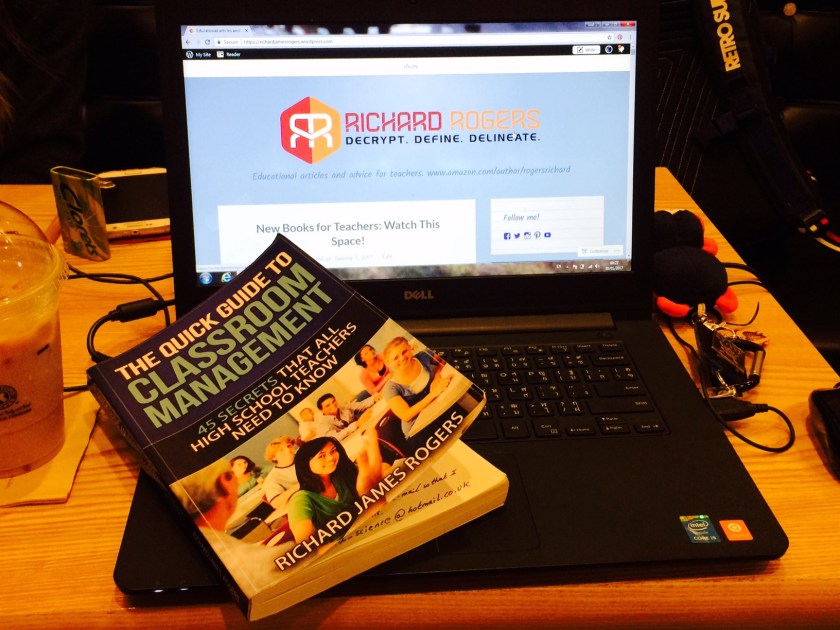
As a small token of gratitude from teachers everywhere, all of these inspirational women have been sent a copy of my book: The Quick Guide to Classroom Managementalong with a box of chocolates. May teachers everywhere be touched and inspired by the works of these amazing women for many more years to come.

img_0071

richard-rogers-online

We welcome you to join the Richard Rogers online community. Like our Facebook page and follow us on Twitter for daily updates.

richardjamesrogers