
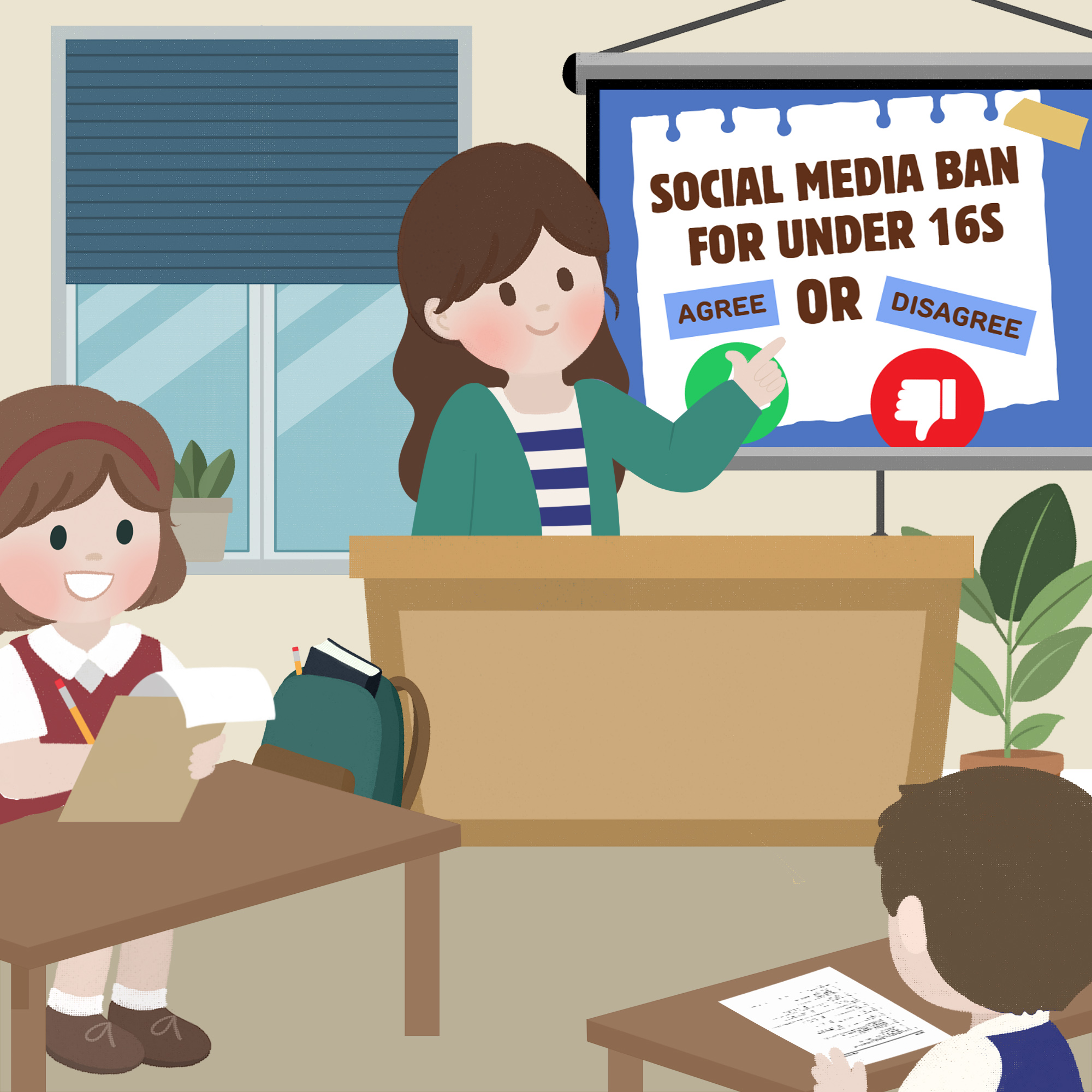
A blog post by Richard James Rogers (Award-Winning Author of The Quick Guide to Classroom Management and The Power of Praise: Empowering Students Through Positive Feedback). This blog post has been beautifully illustrated by Pop Sutthiya Lertyongphati.
Australia’s recent decision to implement a social media ban for under-16s has sparked heated debates. Whilst I, and many educators I am in contact with, are mainly pleased with this decision (as we can see the many benefits that the ban will have for children’s physical and mental health), the opposition remains large and vehement. People who are against the ban are mainly asserting that rights are being stripped away from children who have already had access to these devices; that children will be able to beat the system anyway using software like VPNs; and that regulation should have happened way back in the 90s, when the internet was first ‘let loose’ on the general public. John Roskam, Columnist at The Australian Financial Review, even went so far as to call the ban a “joke”.

From an educational perspective, however, I see this ban as a bold step toward safeguarding our students’ well-being. As educators, we are deeply invested in the holistic growth of our learners, and this move addresses several critical issues that have plagued young people in the digital age. Back in 2018, for example, I wrote a lengthy blog post that described the devasting effect that screen time was having on children’s health. Writing that blog post all of those years ago was an eye-opener for me, as I discovered that extensive and well-respected research had already shown that smartphone usage was causing, or correlating, with:
- Nearsightedness in children
- Obesity in teens
- Sleep-deprivation, as many children were playing on their phones in bed, close to, or after, bedtime
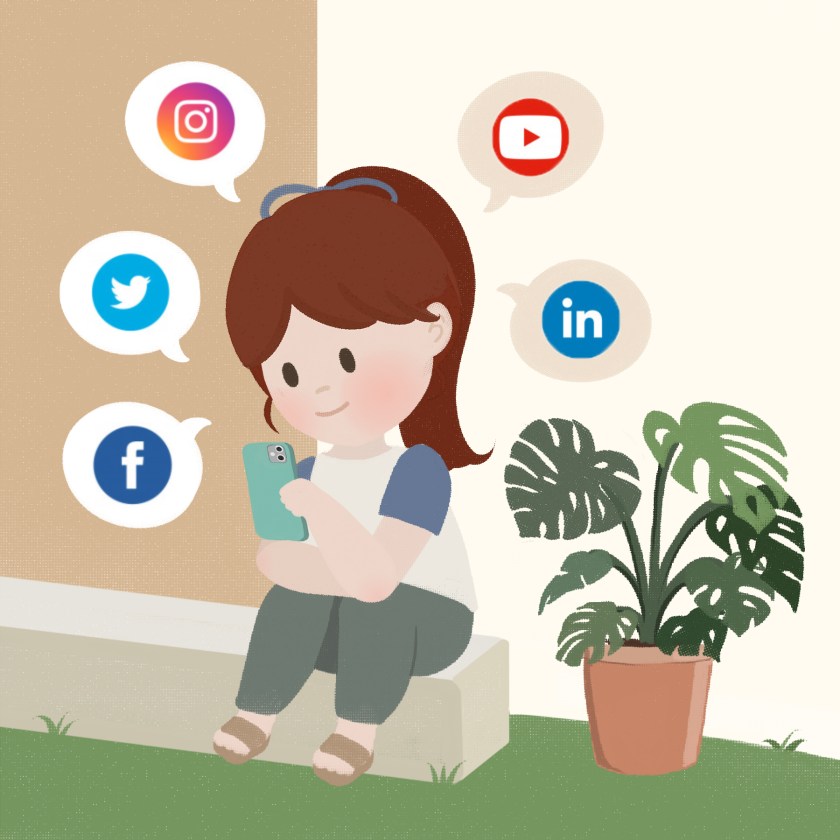
With respect to social media specifically, a research summary by the Telegraph stated that teenagers were spending “hours and hours” of free time scrolling through social media.
All of these negative effects of screen time were highlighted back in 2018, and even earlier in some cases. Things have gotten much worse since then, in my opinion. Perhaps the Australian Government have intervened too late, as some have already suggested, but isn’t being late better that than never doing anything?
What follows next are my thoughts on why this ban is, generally speaking, a good thing for the children of Australia.
Benefit of the Ban #1: Tackling Cyberbullying at Its Roots
Cyberbullying is an ever-present issue in schools. The anonymity and instant connectivity of social media have created an environment where hurtful comments and harmful behaviors can thrive. In my various roles over the years as a homeroom teacher, form tutor and in middle and senior management, I have seen firsthand the ways in which very young children sometimes use groups on social media to spread gossip and hateful posts about their peers. By restricting access for under-16s, this ban could significantly reduce the avenues for online harassment.

Imagine classrooms where students are less distracted by the emotional toll of negative online interactions. As educators, this gives us the opportunity to foster environments of respect and kindness without the shadow of digital cruelty hanging over our learners.
What Can Teachers Do?
We can use our curriculum time to reinforce positive communication skills in our classrooms. Role-playing exercises, restorative practices, collaboration tasks, and open discussions about empathy can help students build the tools they need for respectful interactions: both online and offline. A good PSHE curriculum can certainly facilitate this and hopefully prepare students for the world of social media when they are old enough to legally use it.
Benefit of the Ban #2: Protecting Reputations for the Long Haul
We’ve all seen it: students impulsively sharing photos, videos, or comments that seem funny or harmless in the moment but have lasting consequences. Social media has no “undo” button when it comes to reputations. Posts made in teenage years can resurface in adulthood, often causing embarrassment or even career challenges. Even teachers, the people that society respects and values so highly, can get caught up in the ‘free-spirited’ looseness of social media, posting content that can, and has, destroyed many careers.

By limiting access to social media, this ban gives students the chance to mature and develop better judgment before stepping into a world where every post becomes a permanent record. It’s an opportunity to teach our students about digital footprints and responsible digital citizenship. I, for example, use my Instagram and Facebook profiles to showcase this blog, my workshops and the professional content I produce. When social media is viewed as a ‘reputation builder’, it really can become quite powerful. In my case, it has even made me ‘Google Famous’ (see below):

What Can Teachers Do?
Integrate lessons on media literacy and online reputation management into your curriculum. Help students understand the weight of their online actions through scenarios, case studies, and class discussions. By equipping them with this knowledge now, they’ll be better prepared to navigate social media responsibly when the time comes.
Benefit of the Ban #3: Promoting Positive Body Image
Social media platforms are notorious for promoting unrealistic beauty standards. Algorithms often amplify content that emphasizes perfection, leading young people to compare themselves to heavily edited and curated images. This can contribute to anxiety, low self-esteem, and even eating disorders.
With this ban, we have a unique opportunity to reframe how our students see themselves. They can spend more time building self-confidence based on real-life achievements, relationships, and personal growth, rather than striving to meet unattainable online ideals.
What Can Teachers Do?
Encourage classroom activities that build self-esteem. Art projects that celebrate individuality, storytelling sessions where students share what they value about themselves, or even health lessons on media manipulation can help counteract the negative effects of social media. I’ve written a separate blog post on how teachers can build student self-confidence, here.
Supporting Students Through the Transition
Of course, this ban doesn’t come without challenges. Students who’ve grown up with social media may struggle to adjust. As educators, we are perfectly placed to guide them through this change with empathy and proactive strategies.
- Encourage Offline Connections: Create opportunities for students to engage in collaborative projects, clubs, and team-building activities.
- Focus on Digital Alternatives: Introduce educational platforms like Google Classroom, Seneca, or Desmos Classroom to show students the constructive ways technology can be used.
- Model Responsible Technology Use: Be transparent about how you use technology as a professional tool, demonstrating balance and intentionality.

A Golden Opportunity for Education
While the social media ban for under-16s is a bold move, I see it as a gift for educators. It’s a chance to reclaim our students’ attention, nurture their self-esteem, and equip them with the tools they need for a healthier, more mindful relationship with technology.
Whilst the opposition to the ban remains strong, I see the ban as passing a cost/benefit analysis: the benefits outweigh the costs.
What are your thoughts on the ban? Let’s continue the conversation in the comments!
Bibliography and recommended further reading
- BBC News. (2024) Australia social media ban for under-16s sparks debate. Available at: https://www.bbc.com/news/articles/c89vjj0lxx9o (Accessed: 1 December 2024).
- Sydney Morning Herald. (2024) Shame of denying access and rights to social media. Available at: https://www.smh.com.au/national/nsw/shame-of-denying-access-and-rights-to-social-media-20241201-p5kuul.html (Accessed: 1 December 2024).
- Australian Financial Review. (2024) Australia’s social media ban is a joke. Available at: https://www.afr.com/technology/australia-s-social-media-ban-is-a-joke-20241121-p5ksl0 (Accessed: 1 December 2024).
- Rogers, R.J. (2018) Digital disaster: Screen time is destroying children’s health. Available at: https://richardjamesrogers.com/2018/07/01/digital-disaster-screen-time-is-destroying-childrens-health/ (Accessed: 1 December 2024).
- The Telegraph. (2018) Children spend up to 10 hours a day mindlessly swiping their mobiles. Available at: https://www.telegraph.co.uk/news/2018/06/29/children-spendup-10-hours-day-mindlessly-swipingtheir-mobiles/ (Accessed: 1 December 2024).
- IamExpat. (n.d.) Dutch research: Smartphones to blame for near-sightedness in children. Available at: https://www.iamexpat.nl/expat-info/dutch-expat-news/dutch-research-smartphones-blame-near-sightedness-children (Accessed: 1 December 2024).
- Harvard T.H. Chan School of Public Health. (n.d.) Smartphone, tablet use linked with obesity in teens. Available at: https://www.hsph.harvard.edu/news/hsph-in-the-news/smartphone-tablet-use-linked-with-obesity-in-teens/ (Accessed: 1 December 2024).
- Przybylski, A.K. and Weinstein, N. (2017) Digital screen time limits and young children’s psychological well-being: Evidence from a population-based study, Frontiers in Psychology, 8, p. 575. Available at: https://pmc.ncbi.nlm.nih.gov/articles/PMC5102460/ (Accessed: 1 December 2024).
- Rogers, R.J. (2021) 10 groupwork activities that can be applied to any subject area. Available at: https://richardjamesrogers.com/2021/07/03/10-groupwork-activities-that-can-be-applied-to-any-subject-area/ (Accessed: 1 December 2024).
- Rogers, R.J. (2018) Can sympathy and empathy be taught?. Available at: https://richardjamesrogers.com/2018/07/08/can-sympathy-and-empathy-be-taught/ (Accessed: 1 December 2024).
- Rogers, R.J. (2018) How should teachers be professional with social media?. Available at: https://richardjamesrogers.com/2018/10/07/how-should-teachers-be-professional-with-social-media/ (Accessed: 1 December 2024).
- Psychology Today. (2024) Social media and unrealistic beauty ideals. Available at: https://www.psychologytoday.com/us/blog/perfect-me/202401/social-media-and-unrealistic-beauty-ideals?msockid=1c36687b9e49690f025366189ff66846 (Accessed: 1 December 2024).
- Rogers, R.J. (2020) Using Google Apps in teaching. Available at: https://richardjamesrogers.com/2020/03/24/using-google-apps-in-teaching/ (Accessed: 1 December 2024).

We welcome you to join the Richard James Rogers online community! Join us on Facebook for regular updates, giveaways of Richard’s books, special offers, upcoming events and news.

