An article by Richard James Rogers (Author of The Quick Guide to Classroom Management)
Illustrated by Pop Sutthiya Lertyongphati
They stood at the front of the audience: seemingly ready to dazzle us all. They were all 18 years old and in the final term of high school. I was much younger then too – 26 years old and in my third year of teaching.
It was a Biology revision presentation. I’d invited my colleague to come along to watch (also a Biology teacher).
The presenters began their talk.
When it was over, I needed to take a paracetamol tablet. I was rather perplexed.
I let my colleague chirp in with some feedback first, thinking she would cover most of the points I wanted to raise.
“A great presentation. I loved the level of detail and research. Well done”
That was it?


Now I found myself confused and furstrated. I thought back to the late 90s when my dad received a ‘stress reliever’ doll one Christmas. It was basically a squishy, red, head-shaped rubbery thing in a pot that you could squeeze when you got a bit mad. It was joke gift of course: designed to cause a giggle or two; but I wished I had one right now.


“Mr. Rogers. What are your thoughts?” Asks my colleague.
After asking a series of questions to which the students responded with nervous looks and blank stares, I decided to give my merciless, but honest, feedback:
“Whilst I agree with my colleague that your research skills were good, there are still a few issues I’d like to address.
I’ll start with the negatives, then share my thoughts on what, if anything, was positive. All of you were reading directly off the slides and not making eye-contact with the audience. We can all read, so your method of presentation was not engaging. There was too much text on each slide. The material had not been properly referenced and the images you did use, though few, were of very low quality. You also superficially skimmed the surface of the topic, and didn’t even touch on issues such as splicing, introns and transposable elements.
On the positive side, you showed us all that you can describe some of the concepts in some detail.
Please speak with me tomorrow morning during registration so that we can arrange a time to do this again”
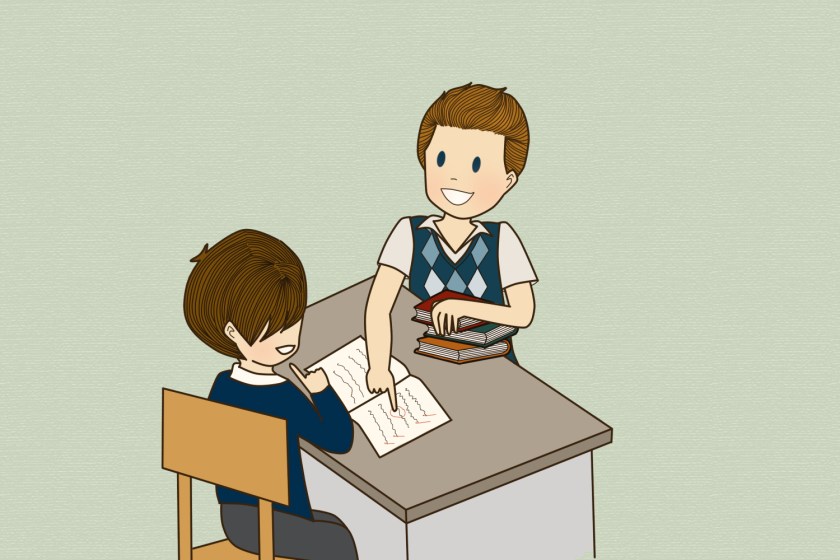

The ‘respect’ factor
Unfortunately, many of us in the teaching profession have been conditioned to dish out praise all day long for the most minuscule of things. A kid hands in a complete dog’s dinner of a homework and it’s “Well done for handing this in on time. Meeting deadlines is important”.
I could go on with the spectrum of ‘non-confrontational’, politically correct garbage that I was conditioned to spew for another 1000 words, but I think that would be tedious.
I used to be one of those ‘praise everything’ teachers. Guess what I found out:
- Praise only works when it is sincere
- Praise only works when it recognises significant, meaningful achievements that have taken some work to accomplish
- Praise is extra effective when preceded (NOT followed by) points for improvement
And guess what else I’ve found out – students respect us more when we are honest. They respect us when we tell them that they need to improve. They respect us when we are vigilant.


Lots of research supports these findings. Here are two good examples:
- A 2016 summary by Vanderbilt University found that praise works well when it is behavior-specific, and that a ratio of 4 praise statements to one reprimand works well for improving performance (if 4 praise statements are available for the work being assessed). Here are some examples of language changes we can make to turn praise into a kind of ‘disguised reprimand’ or ‘behavior enforcer”:


Whilst this table is useful, I think it’s important to remember that reprimands must be specific and direct. “We don’t take other people’s property, because that causes suffering to another person. When you’re older, you can also get into big trouble with the police for that. You’ll need to write a letter of apology to Simon for what you did.”
- A 2015 blog post by Brian Gatens at the University of Portland made the point that when teachers show honesty and compassion, they build trust with their students. Compassion doesn’t mean making kids feel good all the time – it means letting them know when they’ve under-performed, and caring enough to do something about it! It also involves celebrating and recognising significant progress, performance and attainment.
‘Mediocre’ Versus ‘Vigilant’
Here are some statements I’ve come up with which sum up the ‘Mediocre’ teacher, versus the ‘Vigilant’ teacher. I don’t mean to offend anyone here – I was once the Mediocre Teacher. I share my findings as a means of self-reflection for all of us. I still get a bit ‘mediocre’ at times, but at least I’m aware of how to spot that now:
- Mediocre teachers record attainment and progress. Vigilant teachers record attainment and progress, quickly identify under-performance and then intervene to improve that.
- Mediocre teachers praise the smallest of things. Vigilant teachers reserve their praise for significant, meaningful displays of effort, attainment and progress.
- Mediocre teachers sometimes bring up points for improvement with their students. Vigilant teachers leave ‘no stone unturned’, and relentlessly monitor their students’ weaknesses and do the best they can to improve those.
- Mediocre teachers don’t feel the need to be a ‘role-model’ for their students. Vigilant teachers understand that their words, actions and subliminal cues will act as points of reference for their students for many years to come.
- Mediocre teachers mark their students work. Vigilant teachers provide feedback that’s meaningful and specific.


We welcome you to join the Richard Rogers online community. Like our Facebook page and follow us on Twitter for daily updates.